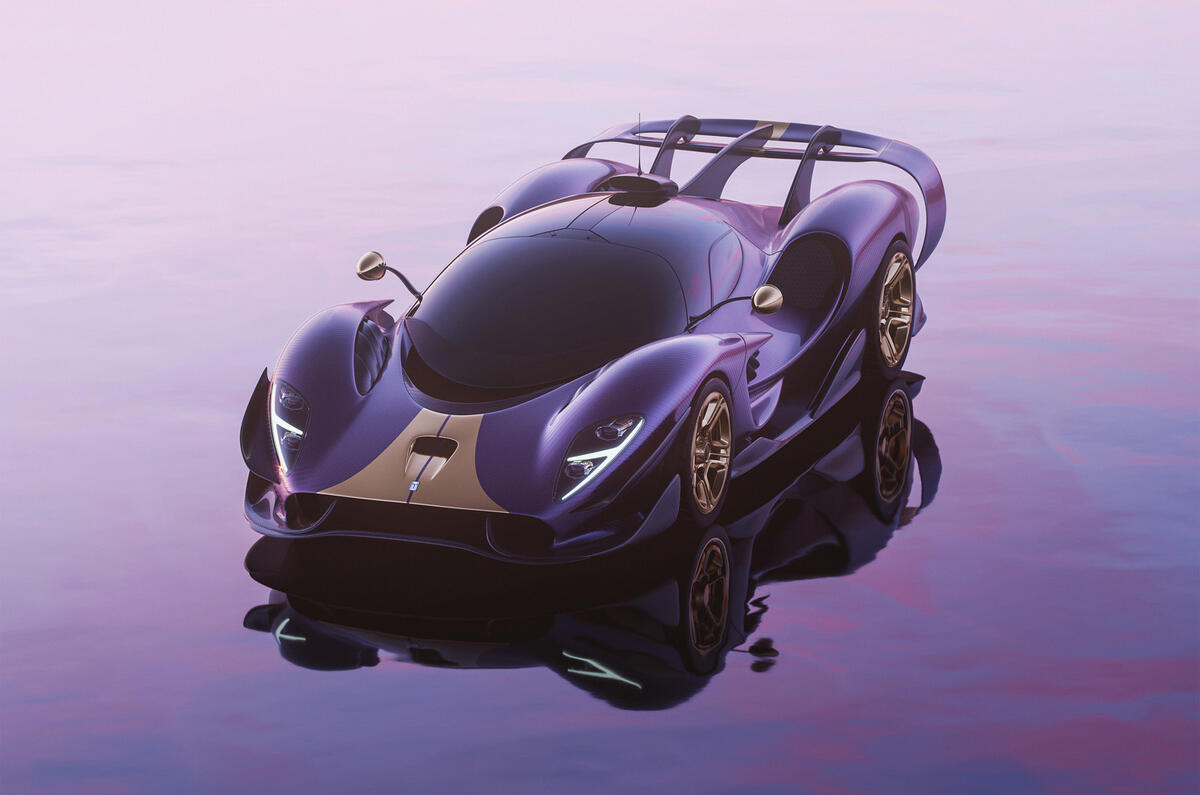

Good things come to those who wait, the saying goes, and De Tomaso seems to have proved the point with its new 888bhp (900 metric horsepower) V12 engine.
Announced in 2022 and originally expected in 2024, the final specification for the bespoke 7.0-litre V12 engine designed to power the forthcoming P900 was recently revealed by the Italian supercar firm.
The V12 is a collaboration between De Tomaso and Italian powertrain specialist Italtecnica, a company that focuses on designing and producing extreme specification engines for use in road cars and motorsport.
The engine is developed exclusively for track use and does without turbocharging or hybrid electric assistance.
The final specification is spectacular, with a no-expense-spared approach to the nuts and bolts. First of all, the performance. In 2022, talk was of an engine that would rev to 12,300rpm but the final design has a redline of 10,200rpm and develops maximum power at 9500rpm. The difference matters little in that the engine still achieves the maximum horsepower planned at the outset.
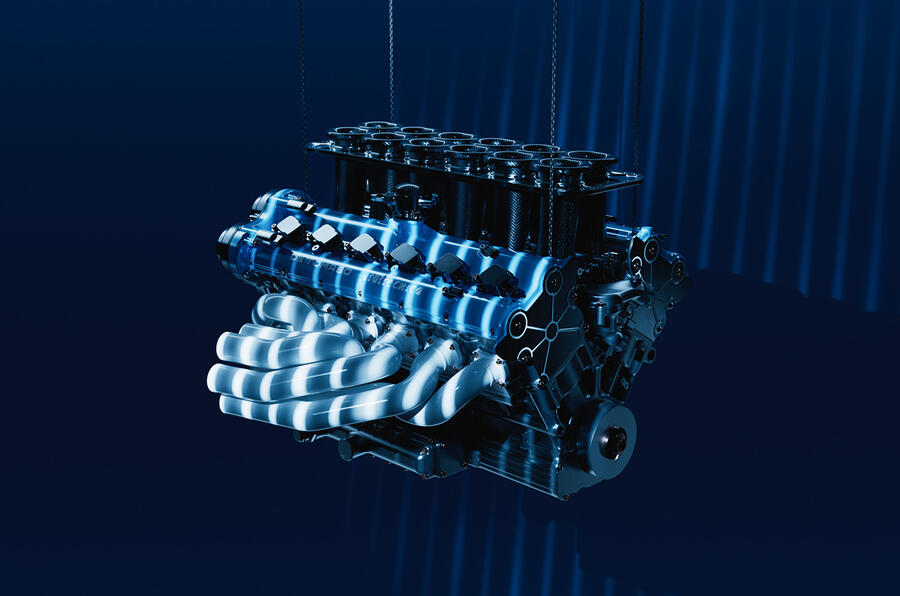
The cylinder banks are set at 65deg, rather than the traditional 60deg, matching that of later Ferrari V12s and the Murray T50, for example. It has an eight-stage drysump lubrication system to ensure a perfect supply of oil throughout the engine when undergoing extreme acceleration, braking and cornering forces.
There are quad cams, with double overhead camshafts operating the valves in each cylinder head. Rather than belts or chains, the engine designers have opted for a "full gear-driven cascade" - a gear train taking the drive from the camshaft to each of the four cams, ensuring extremely precise valve timing at the highest engine speeds.
Construction is described as billet aluminium with extensive use of titanium and carbonfibre for components. In practice, that equates to a crankcase machined from a solid billet (chunk) of aluminium alloy for lightness and rigidity, as are supporting components for the carbonfibre intake system.
The intake system is designed as much to produce an epic sound as give the most efficient airflow. A fairly traditional approach is taken to major internal components, with forged connecting rods and lightweight pistons helping reduce reciprocating masses, and there are titanium valves to reduce inertia as they open and close at massive speed.
The compression ratio is described as "high" to maximise power and efficiency but the figure is undisclosed at this stage.