8

Straight-six SUV aims to banish memory of four-cylinder plug-in hybrid

Find Mercedes-AMG GLC 53 deals
Other Services
Sell your car
84% get more money with

Just about anywhere must be up, you might well say, from where Mercedes’ mid-sized fast SUV - the Mercedes-AMG GLC - used to be. Along with the more prominent C63 super-saloon, this was one of the AMGs in which Affalterbach so contentiously succeeded a burbling V8 with a highly strung, plug-in hybrid four-pot back in 2023.

The resulting GLC 63 S E Performance was certainly powerful on paper (671bhp). But, as far as experiments in the potential for the effective gaslighting of wealthy performance car buyers go, it also proved reputationally chastening for Mercedes.

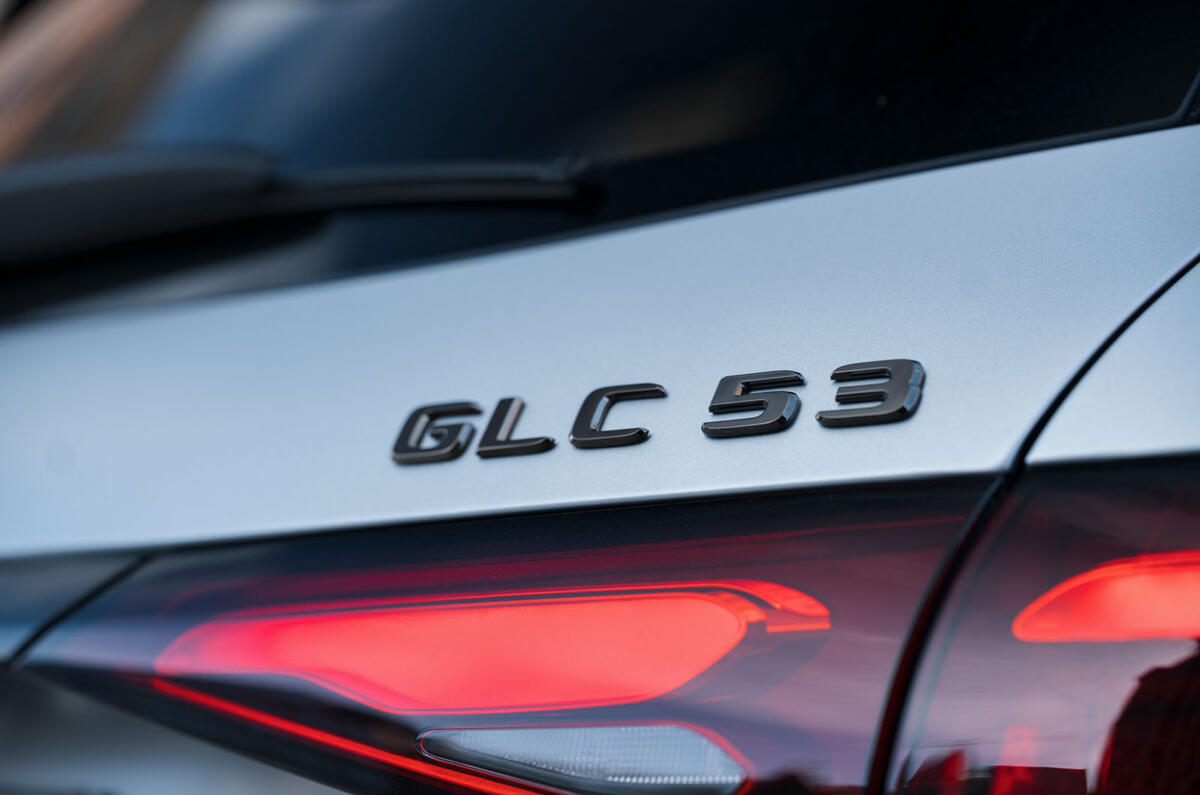
So now, where there used to be two four-pot GLC AMG models, we have just this one: the new Mercedes-AMG GLC 53 4Matic+.

The move mirrors changes already seen with the CLE 53 Coupé and Cabriolet, where AMG has begun moving away from heavily electrified four-cylinder powertrains in favour of larger-capacity six-cylinder engines with a more traditional character. The first-generation GLC 63 used a turbocharged 4.0-litre V8, however – still one of the defining engines of the modern AMG era. 

Advertisement

DESIGN & STYLING

8
Mercedes AMG5 3 reveiw 2026 002

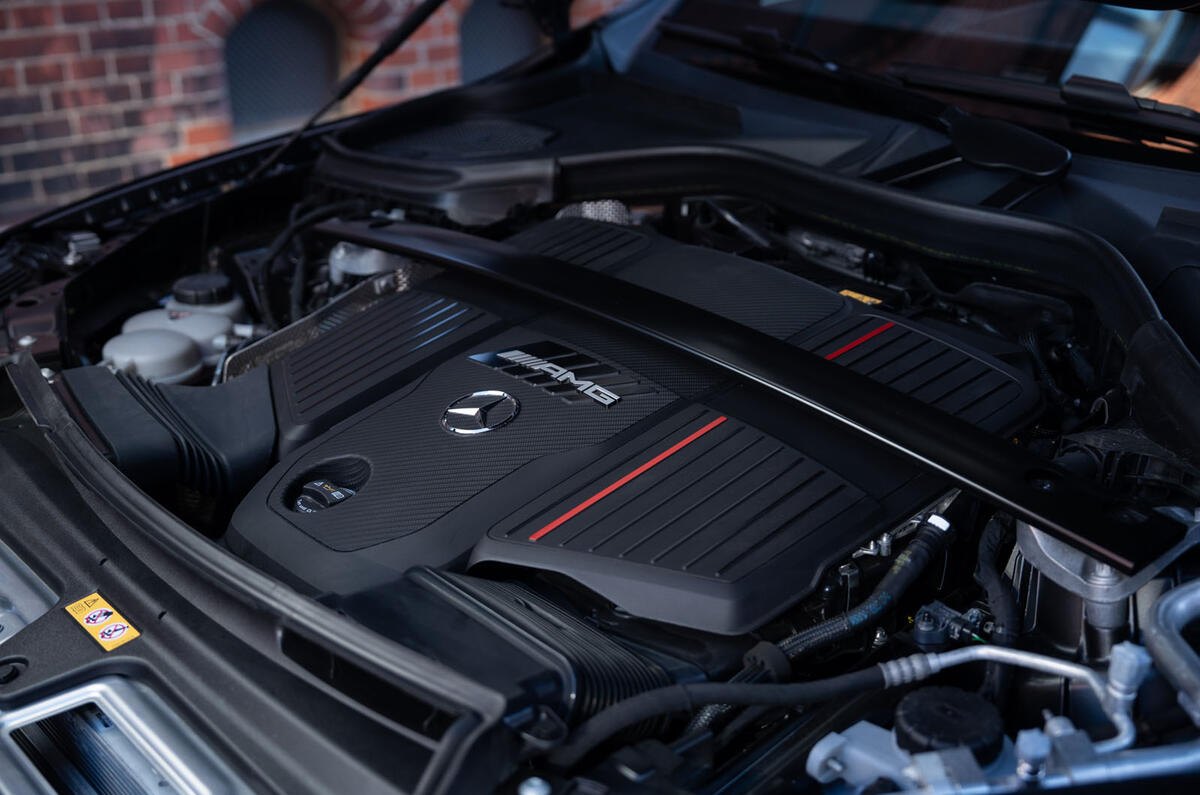
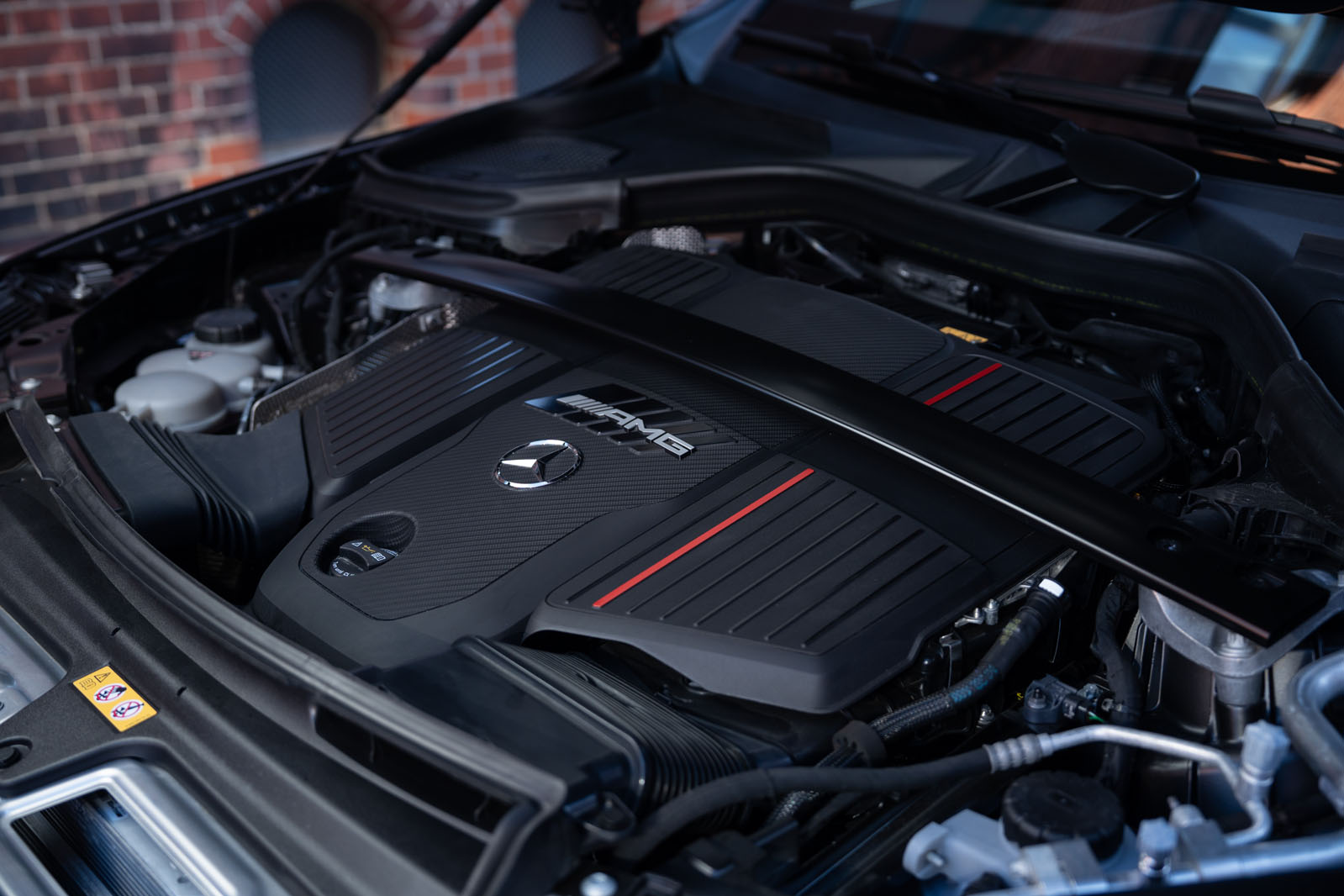
The GLC 53 is powered by a straight six with both a turbocharger and an electric supercharger, which means there’s still no trademark AMG V8 engine here. The second-generation Mercedes GLC was closely related to the contemporary C-Class saloon, you may remember – which wasn’t designed to take a longways V8. And so, presumably, the GLC can’t either. 

But while the company’s ‘M256’ straight six may not seem like the most emphatic way to apologise to the AMG faithful for the wrongs of the past three years, it is being deployed here in a class where most competitors - from the ICE-engined Porsche Macan GTS, to the BMW X3 M50, to the Alfa Romeo Stelvio Quadrifoglio - ‘make do’ with six cylinders. So, quite clearly, this car deserves a fair, fresh hearing.

It’s revealing that, in actually increasing this car’s cylinder count, AMG has managed to trim almost 200kg from its kerb weight compared with the outgoing GLC 63 S. Powertrain apart, however, the new 53 is no less technically complex a car than the hybrid 63 was – and is more so than most of its rivals. 

AMG still uses active anti-roll bars, active four-wheel steering and adaptive dampers to try to manipulate the hot GLC’s mass and rein in its body movements – just as the old 63 S did. But, having retuned the car’s steel coil suspension springs and its various active chassis systems, AMG has now added a mechanical torque-vectoring rear differential for the GLC’s 4Matic+ four-wheel drive system – and, inevitably, a rear-drive-only ‘drift mode’ driving setting.

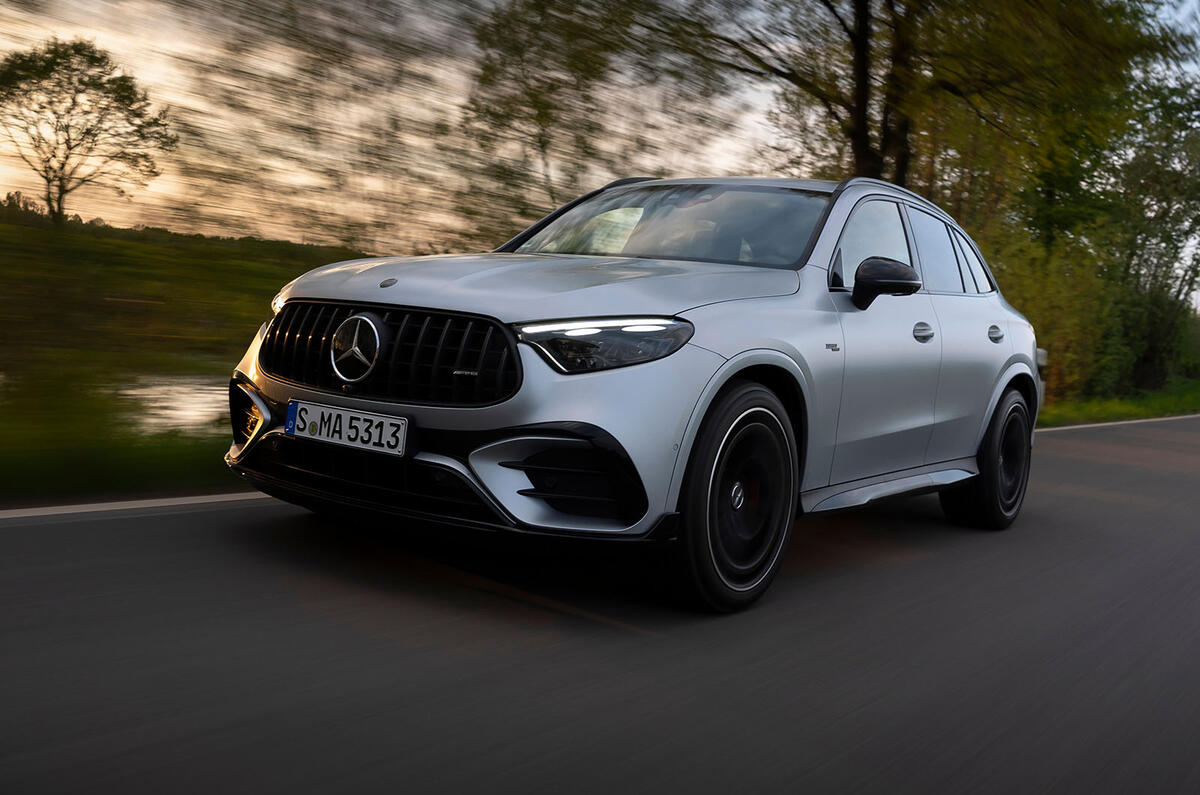
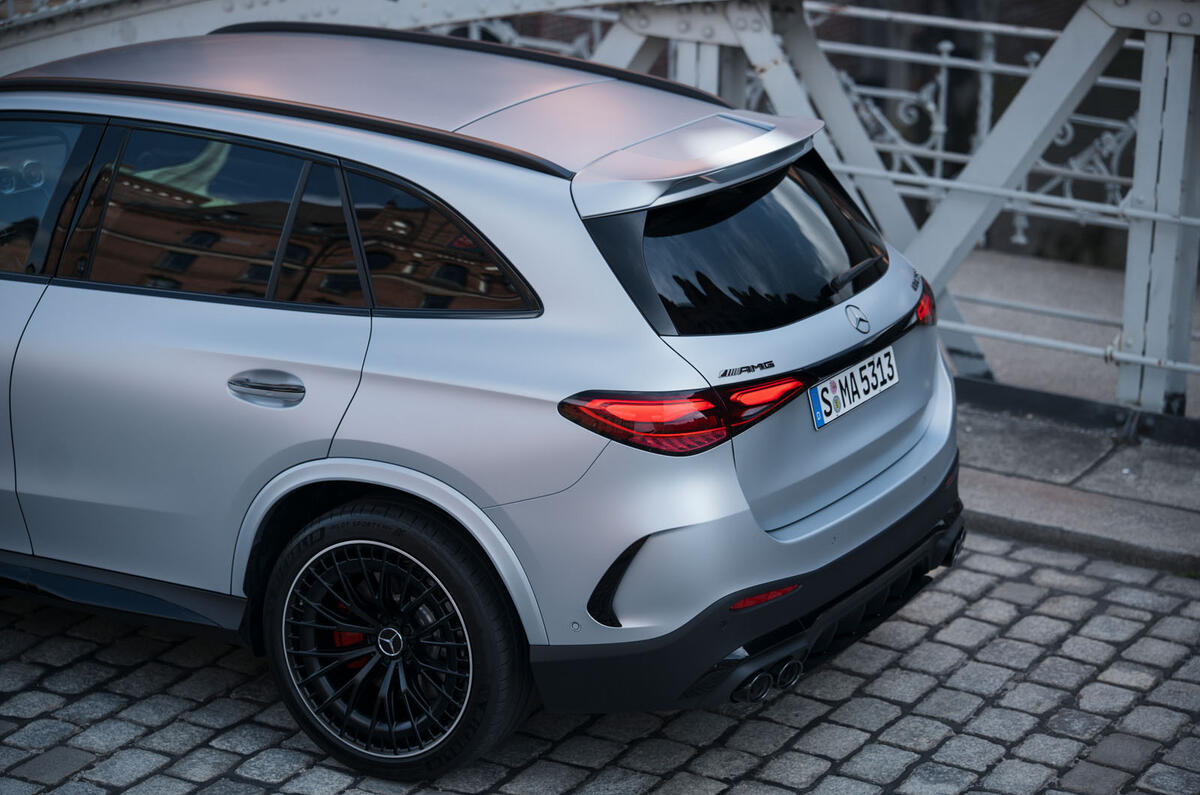
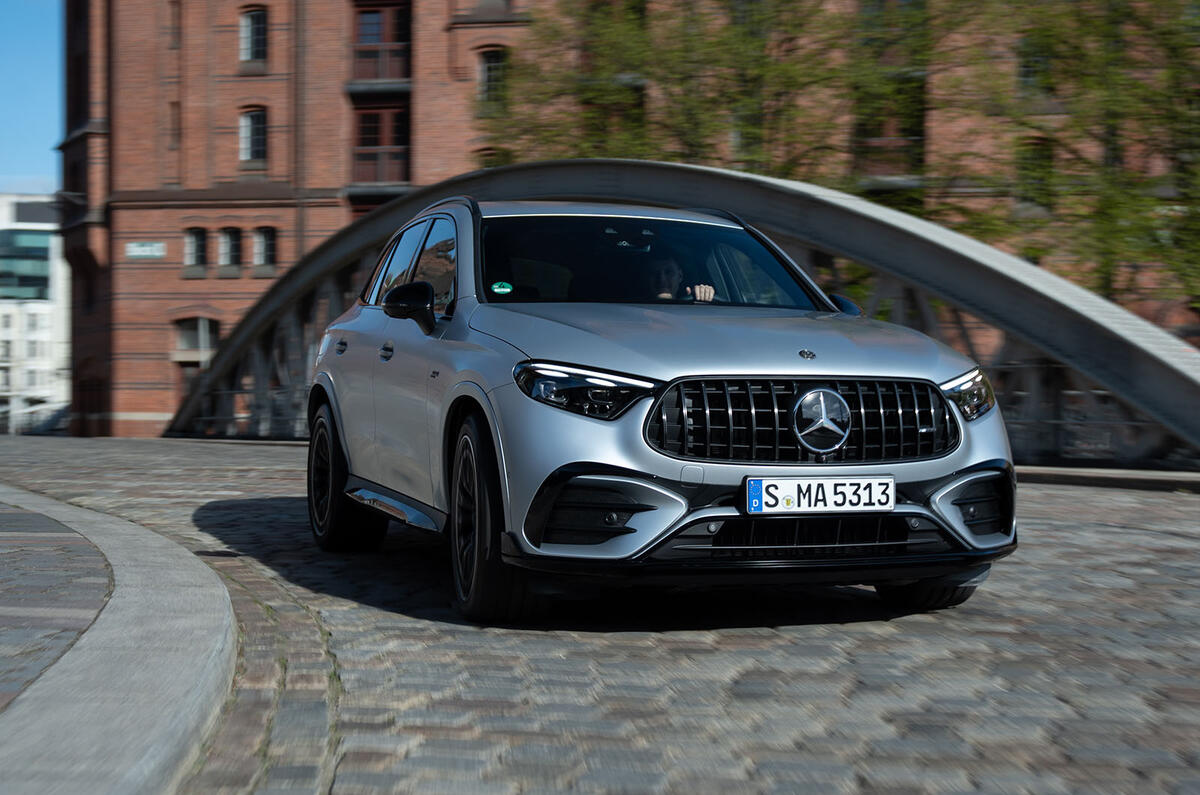
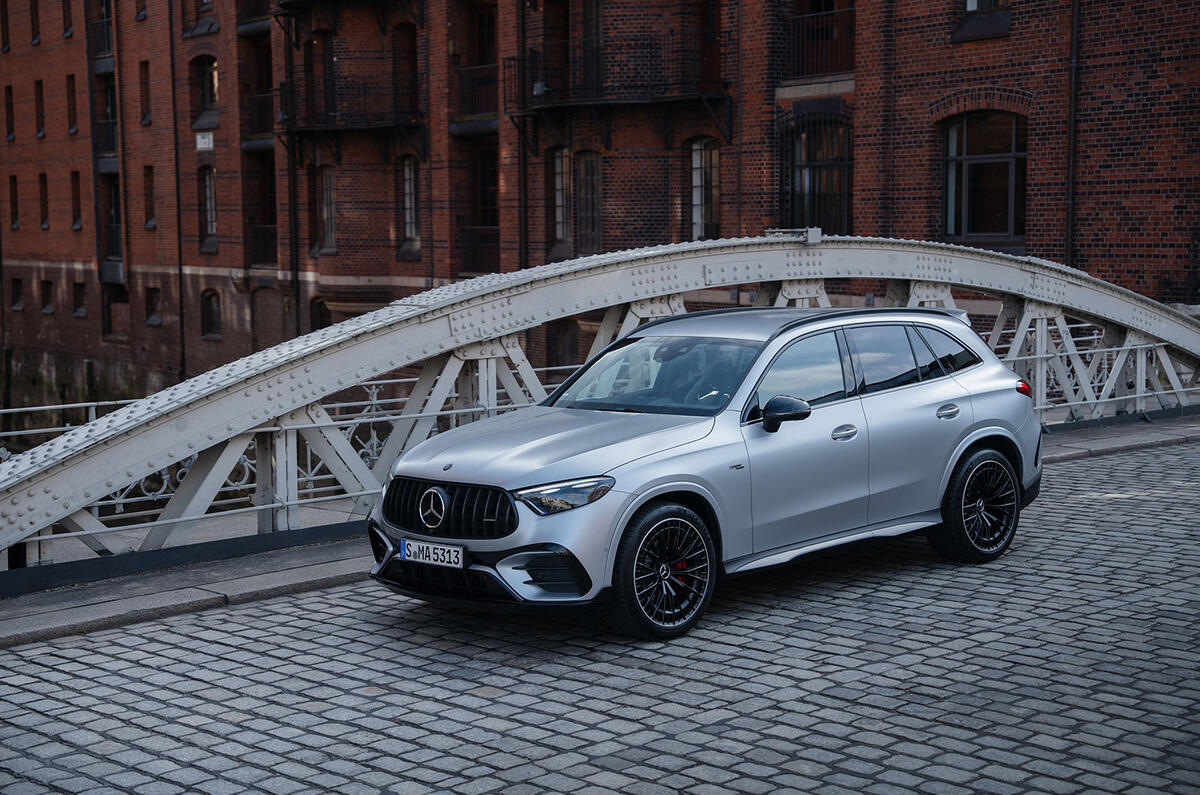
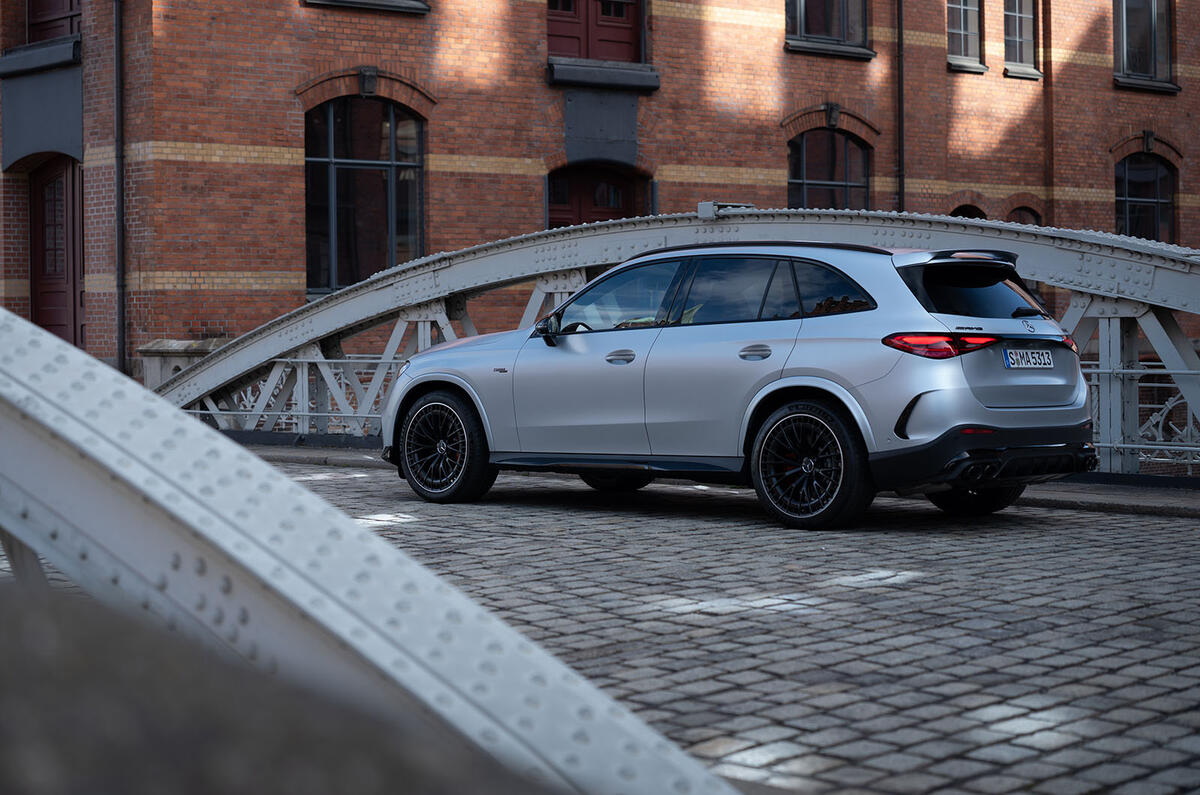
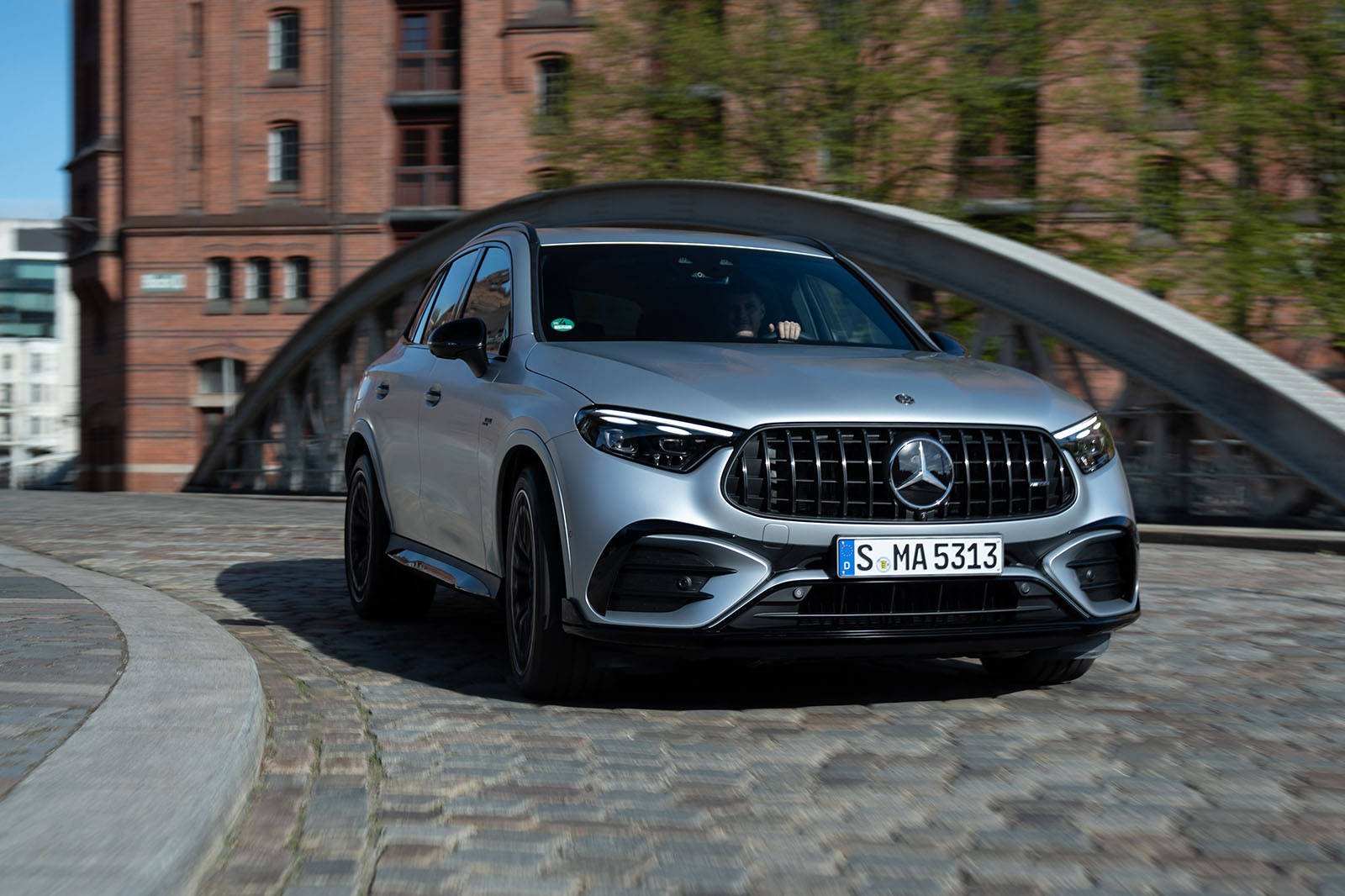
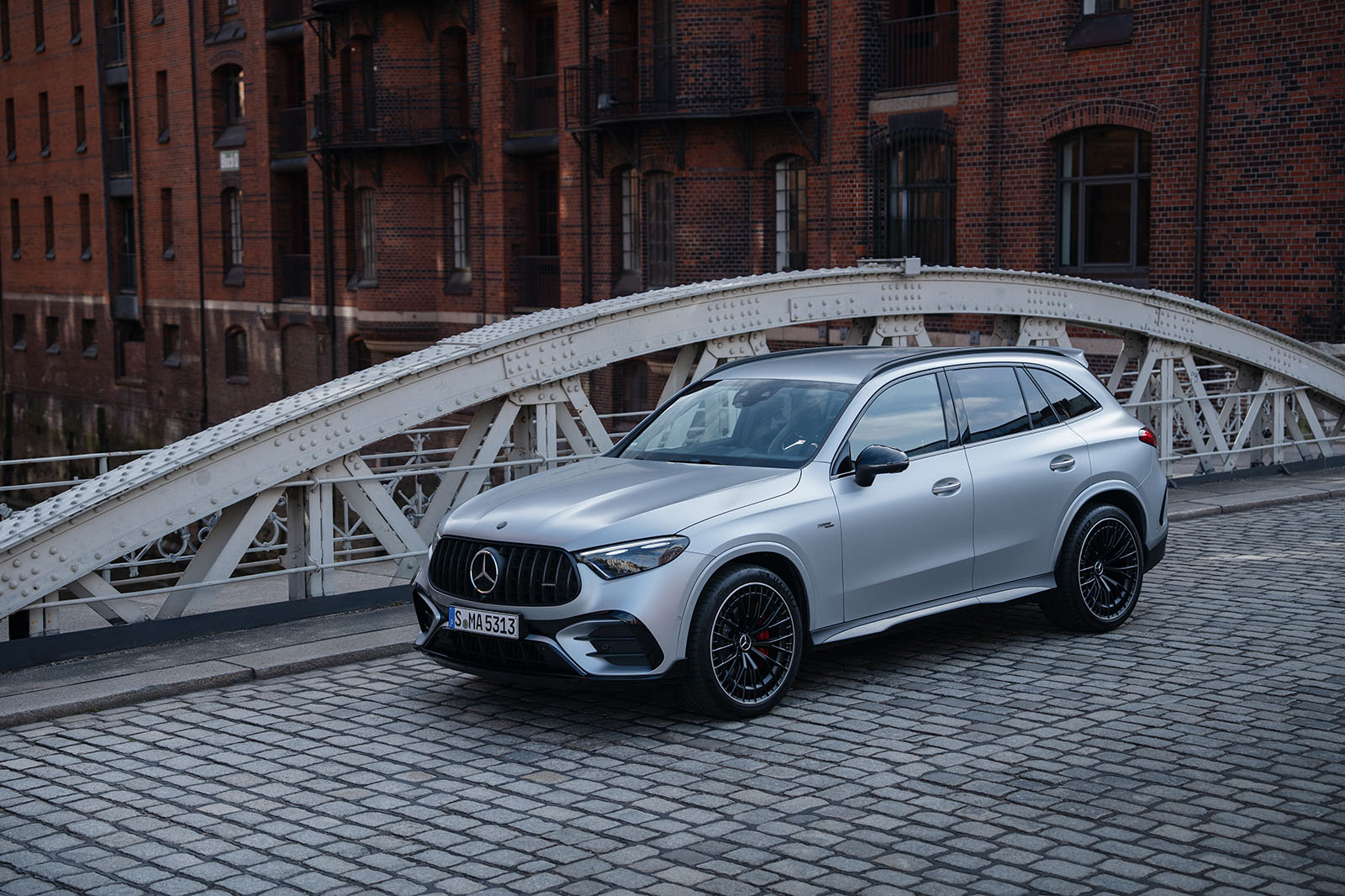
Visually, the changes are restrained by AMG standards but suit the GLC well. The Panamericana grille immediately separates it from lesser models, while the deeper front bumper, larger air intakes and reshaped lower surfaces give it a noticeably more purposeful stance.

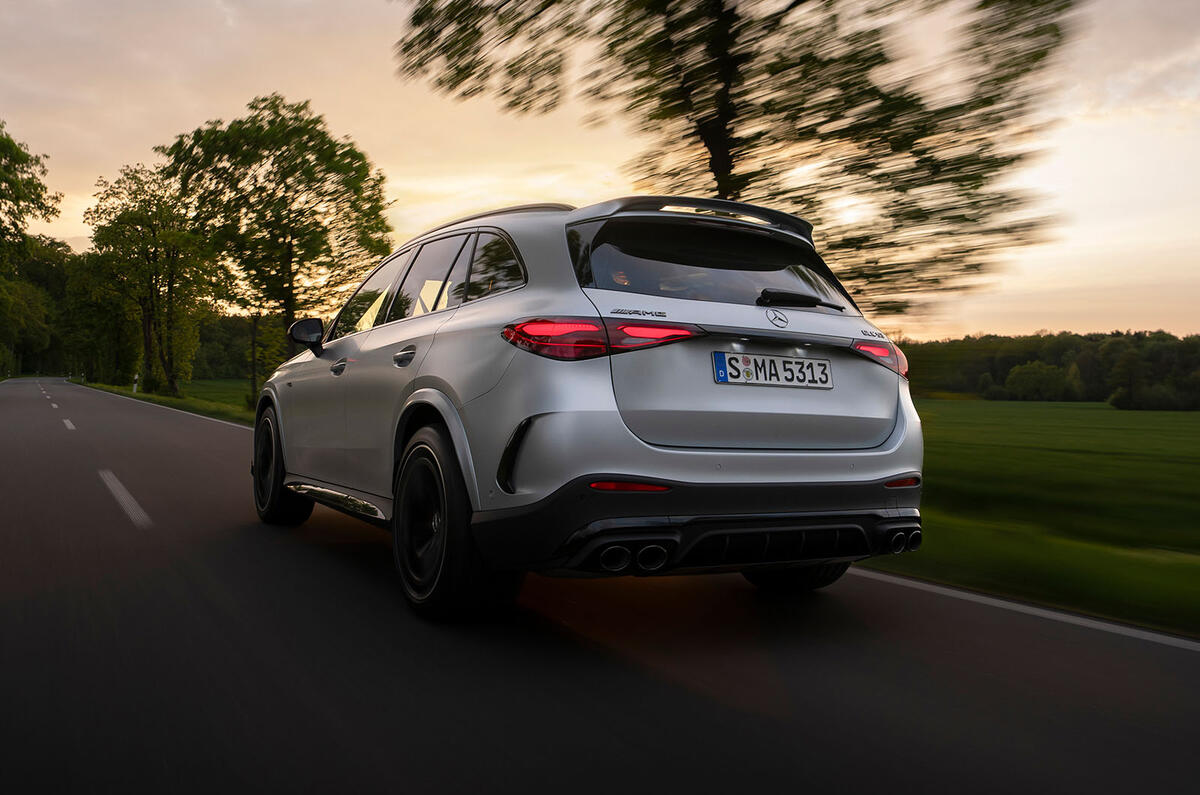
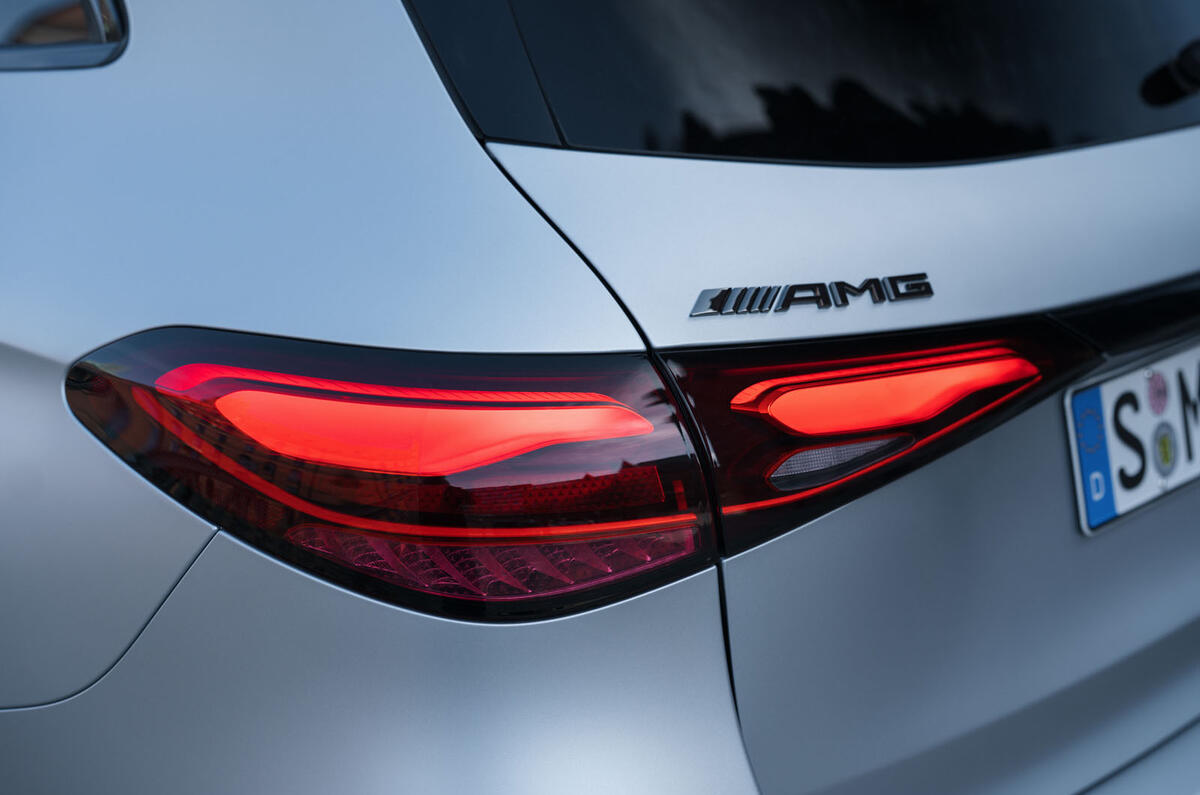
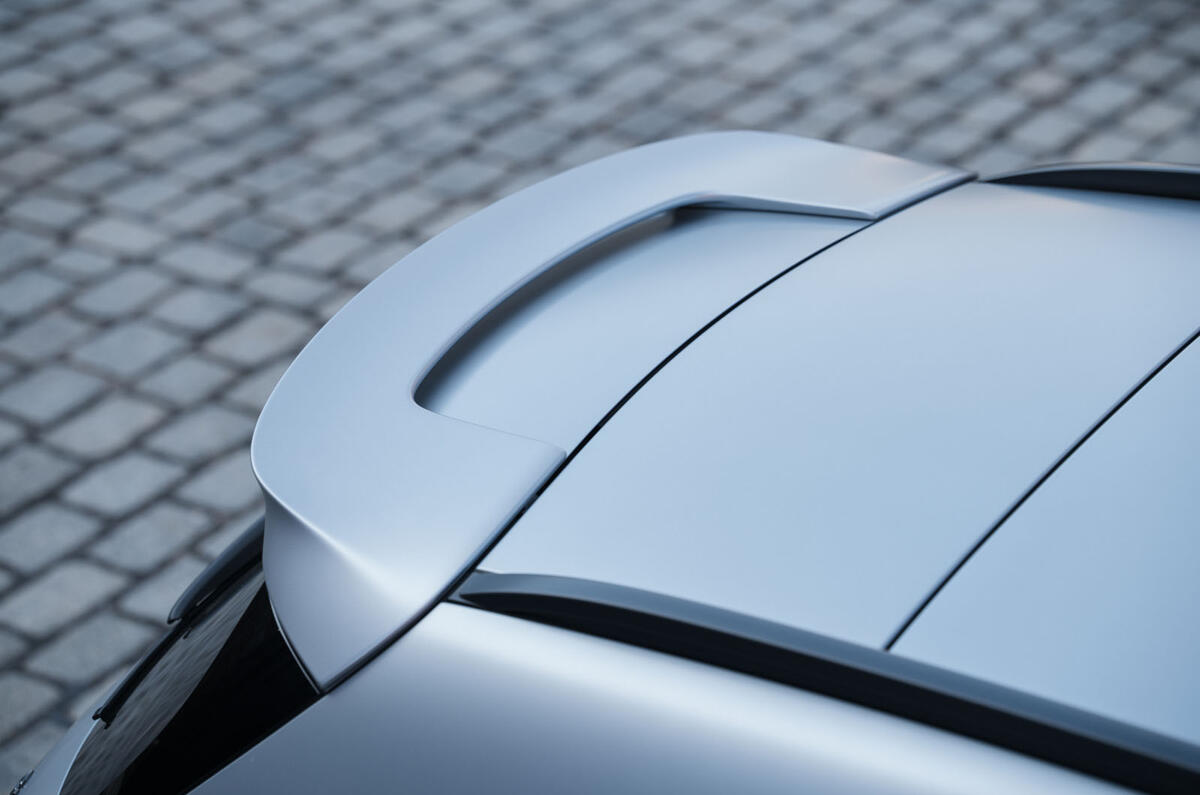
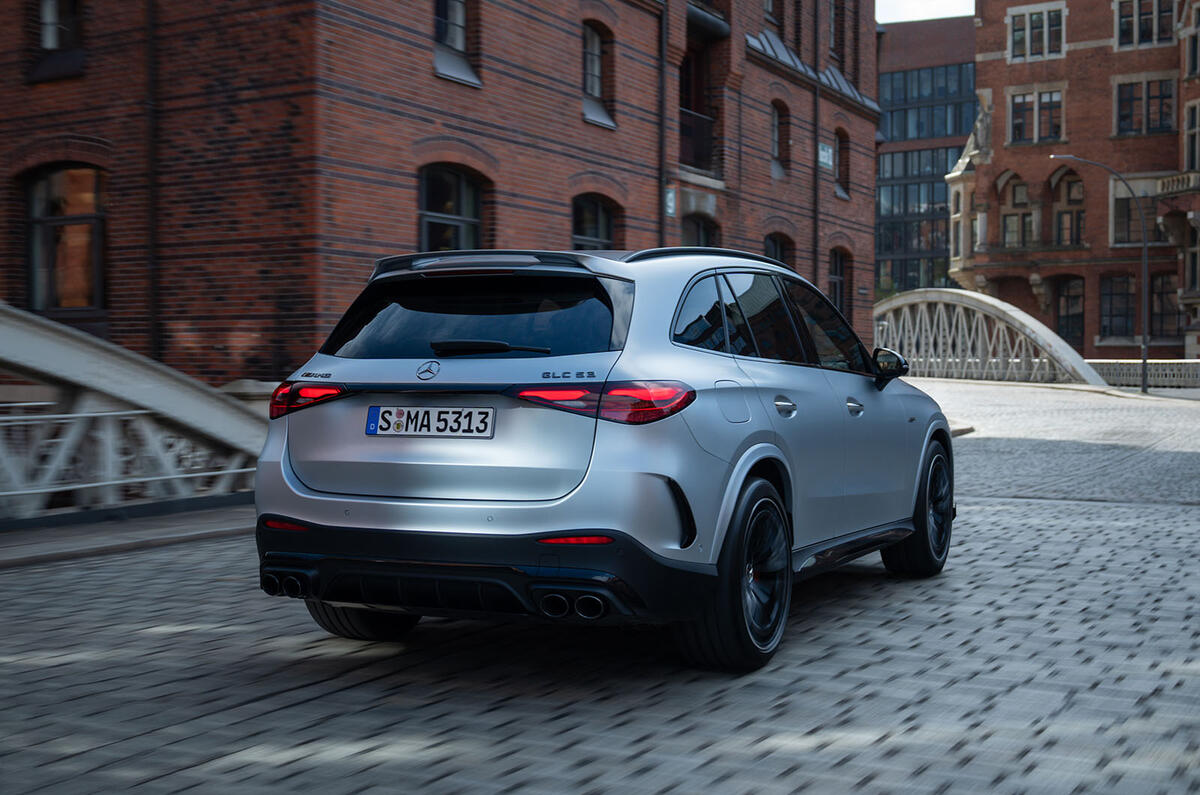
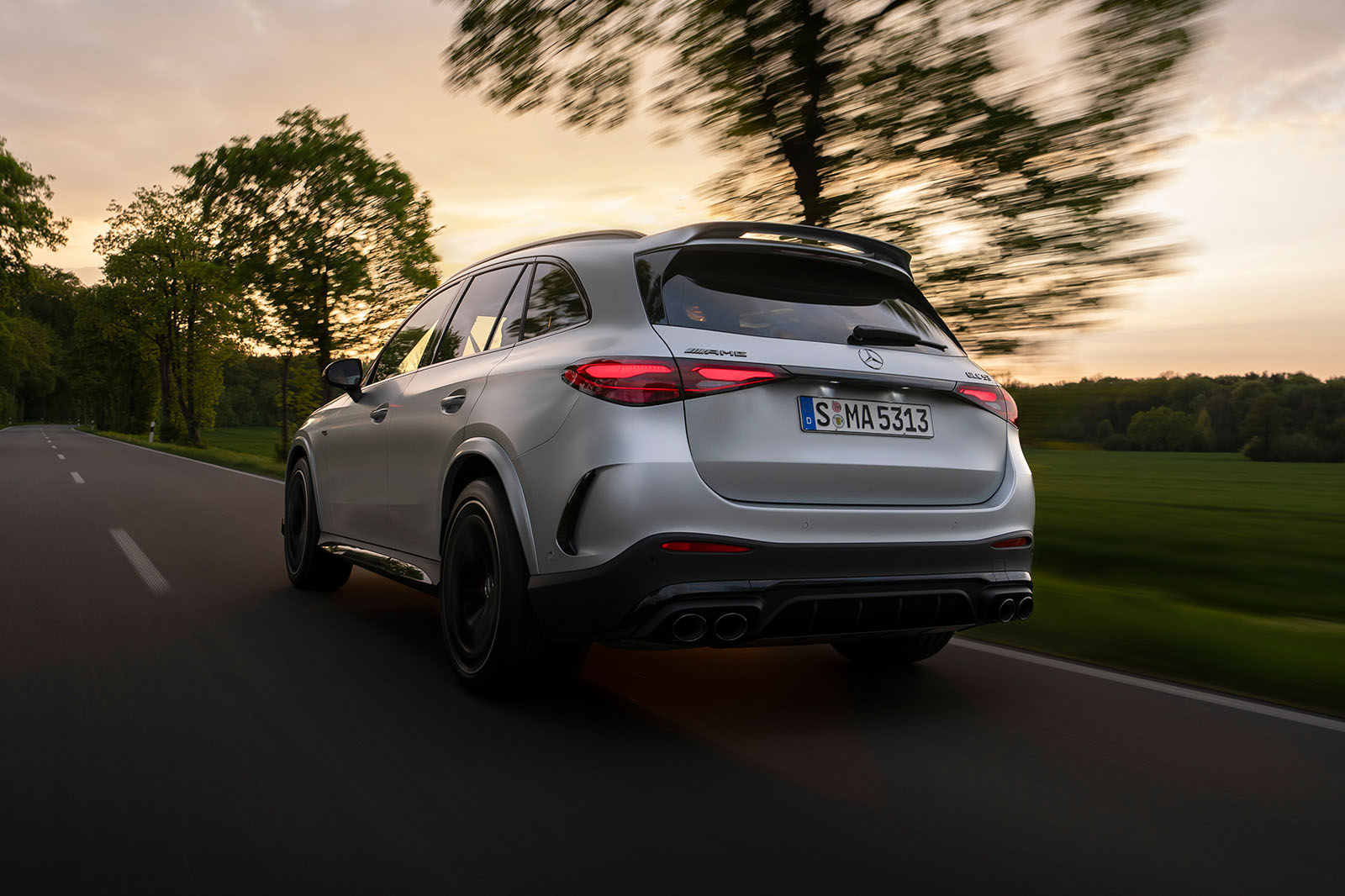
Broader front tracks and subtly reshaped wheel arches add extra visual width, while the rear receives a more prominent diffuser, quad exhaust outlets and a discreet roof-mounted spoiler.

Standard 21in wheels fill the arches convincingly without tipping into the sort of visual excess that AMG has occasionally struggled with in recent years.

INTERIOR

9
Mercedes AMG5 3 reveiw 2026 003

You can have this car either as a conventional SUV or as a high-rise fastback coupé, the latter priced from £2000 more than the former.

The advantage of the SUV is its greater space and versatility. You get a usable three-seater rear bench here, and accommodation levels to equal more practical class rivals (BMW X3, Alfa Stelvio). The GLC’s 620-litre boot doesn’t suffer the capacity compromise of the old hybrid 63 version, either. It would swallow bulky items above the floor, with plenty of space underneath to squirrel things away out of sight.

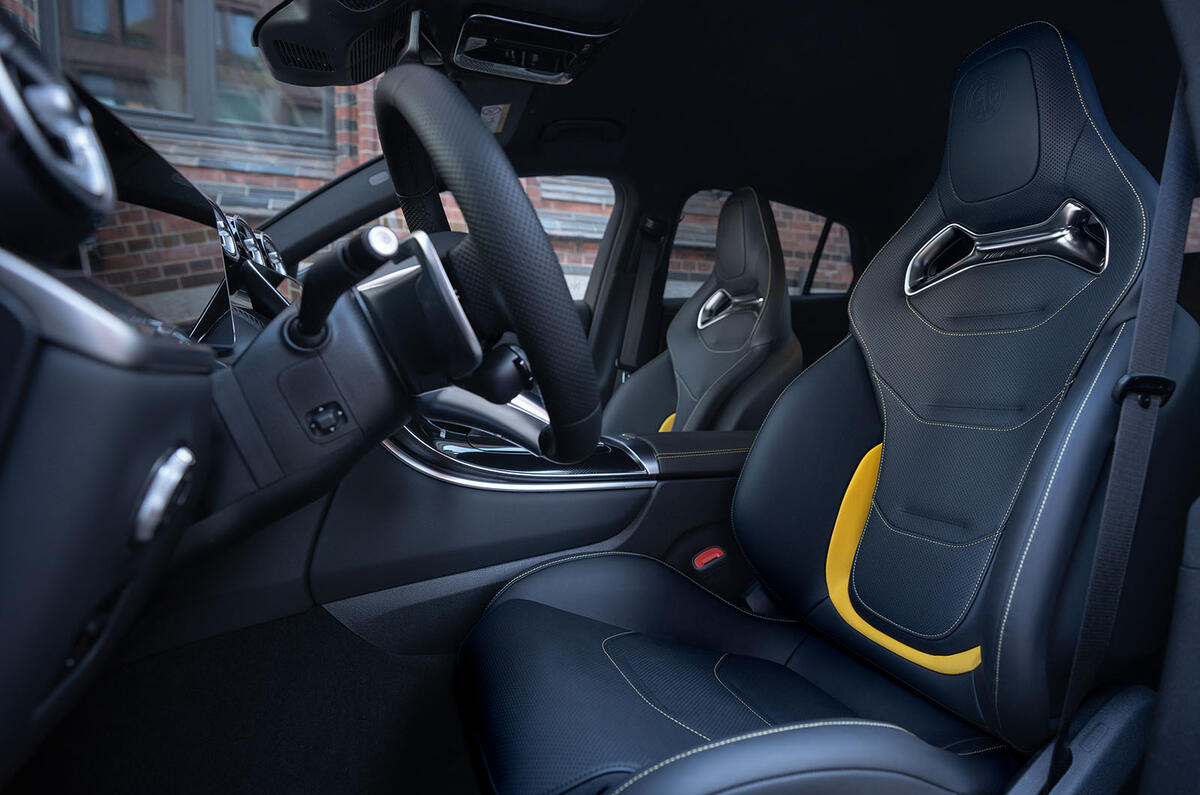
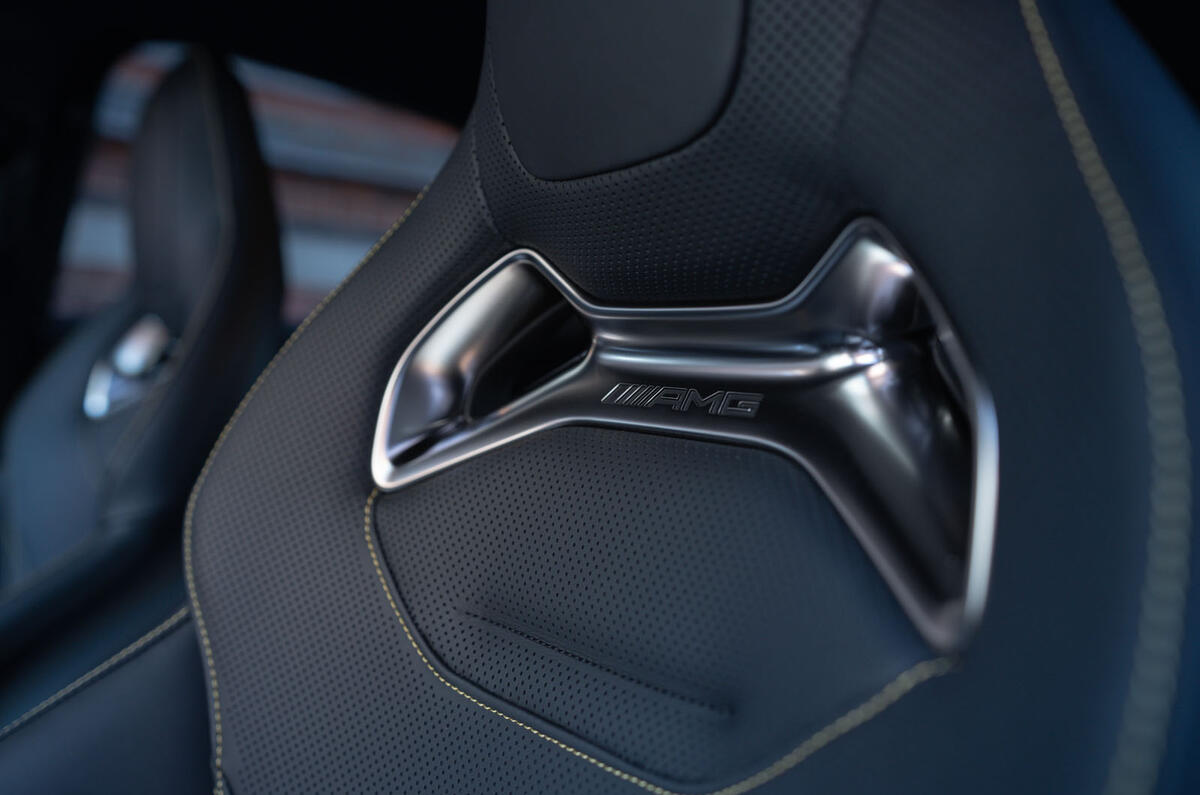
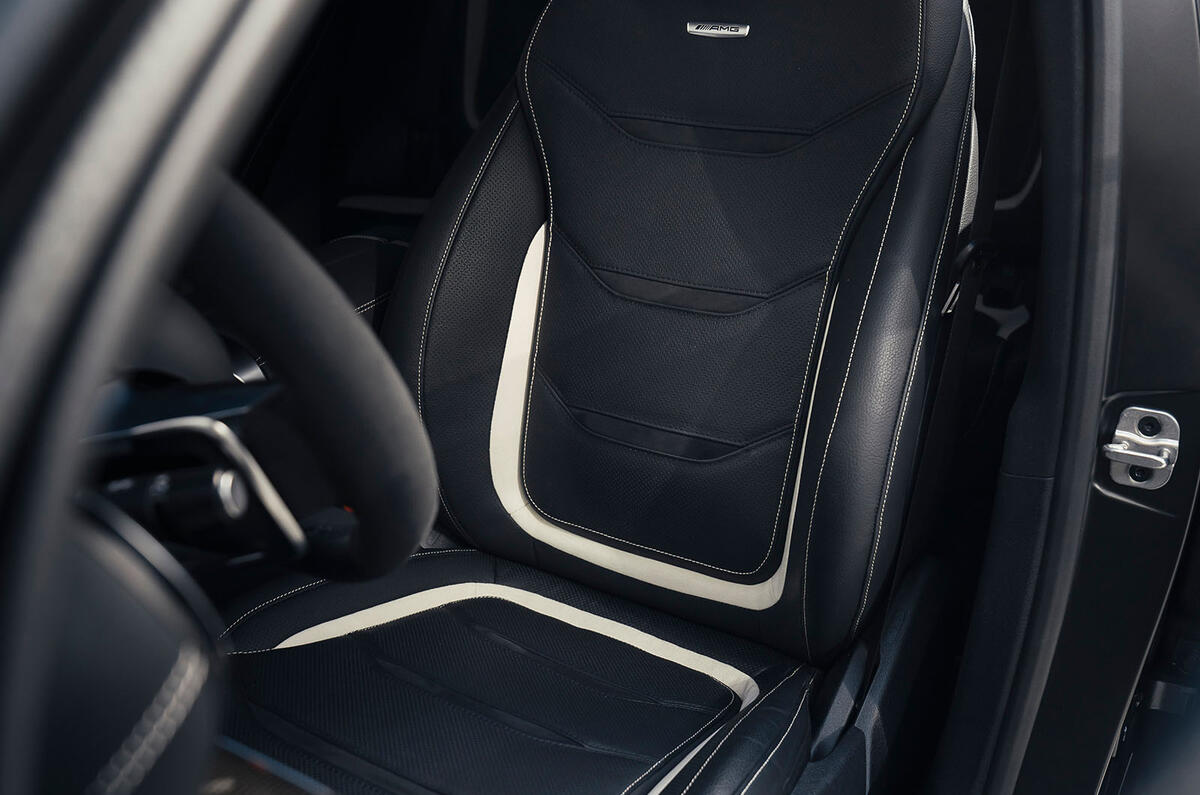
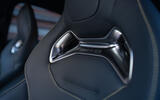
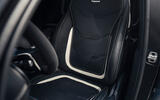
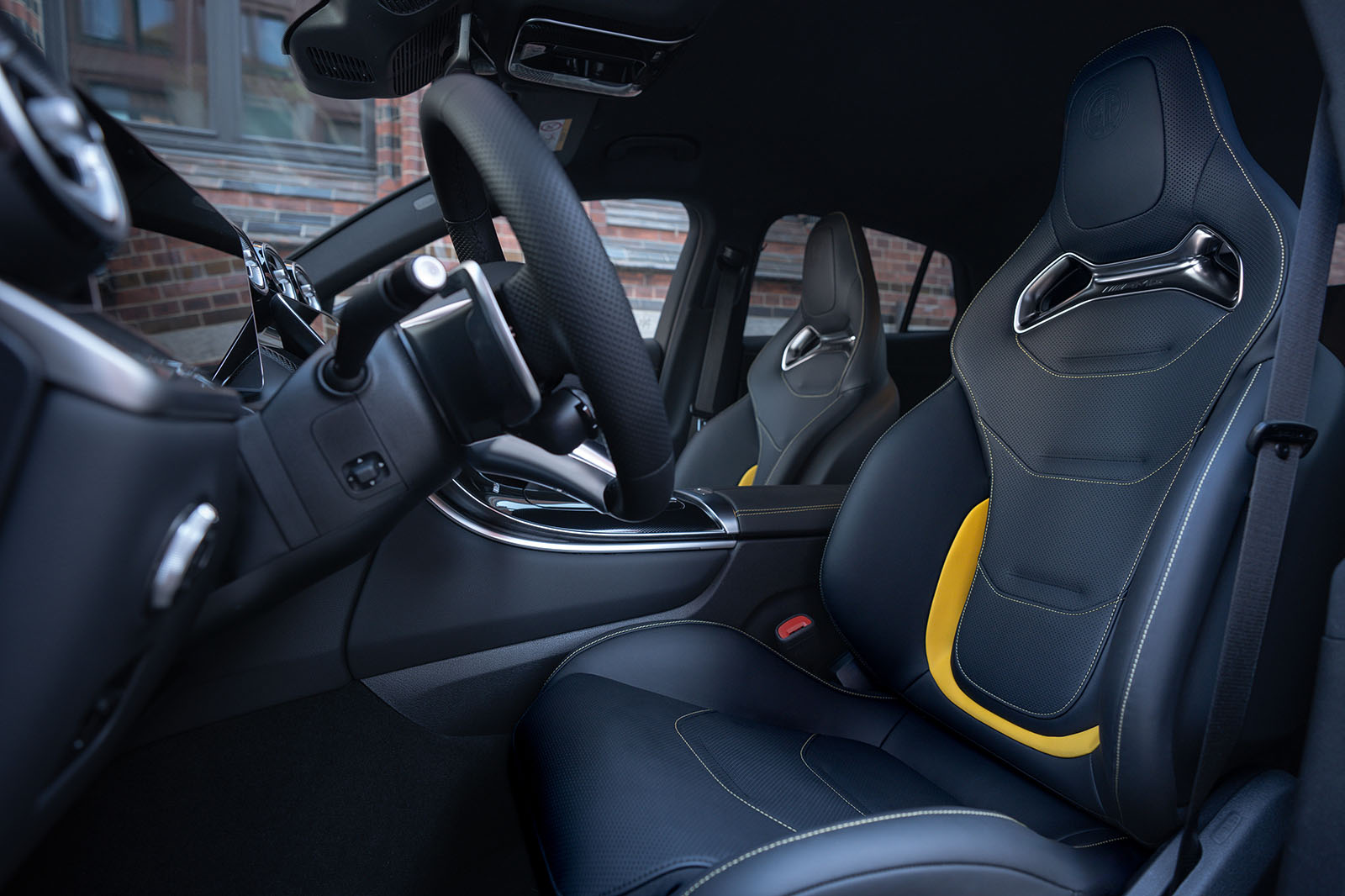
At the wheel you feel a little more perched in your driving position than you do in some fast SUVs, but well located nonetheless, thanks chiefly to the car’s widely adjustable and usefully supportive sports seats.

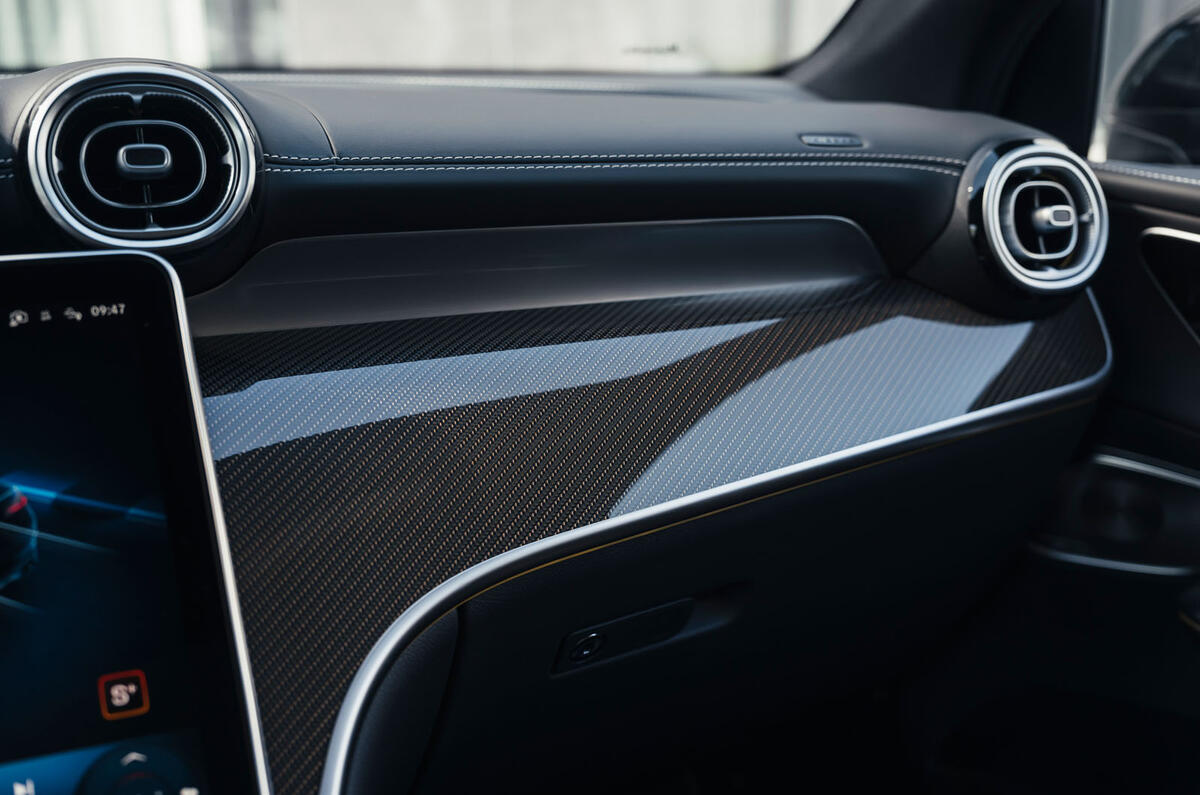
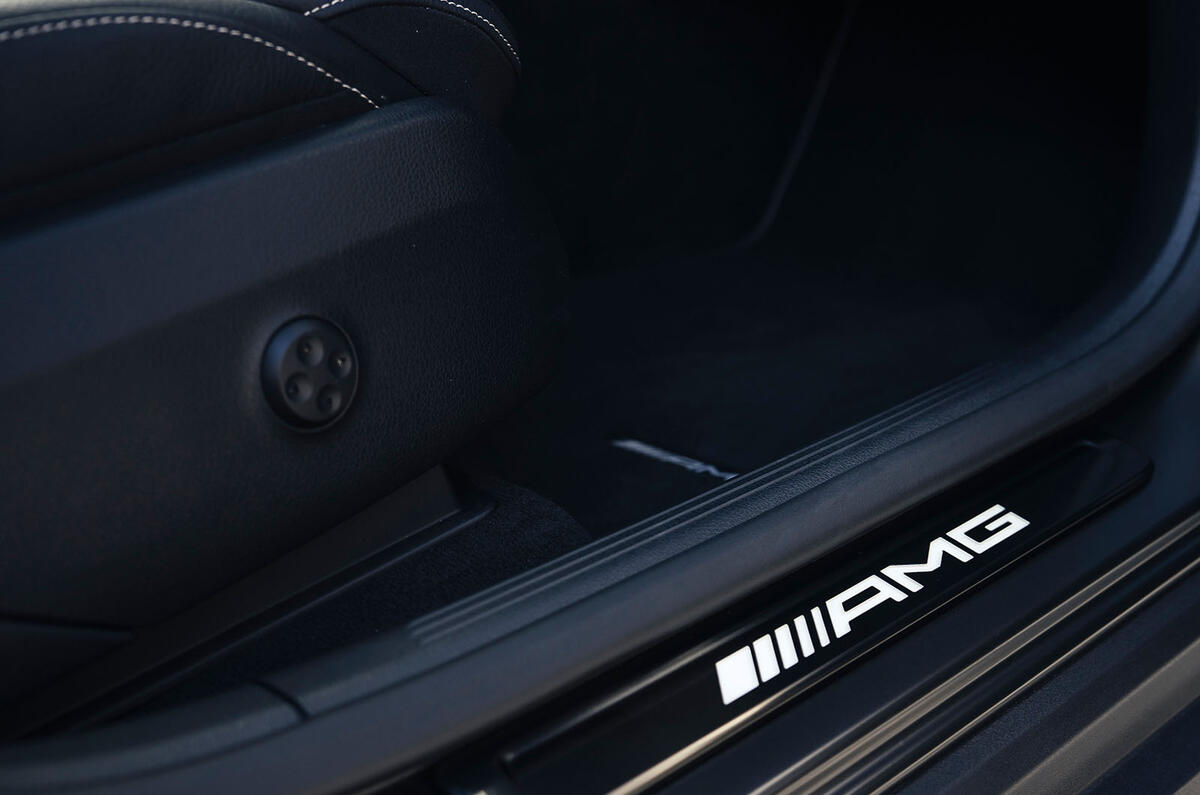
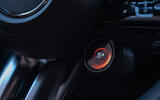
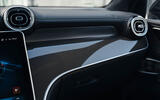
AMG’s familiar mix of glossy black and chrome-alike plastics surround you, but there’s some lacquered carbonfibre and Alcantara to stroke and admire, and a widely solid and expensive haptic feel to the car’s switchgear.

The 11.9in, portrait-oriented central multimedia screen gives quick access to key ADAS and drive mode controls, and also makes it easy to flip in and out of your smartphone’s mirroring mode. Given that there are permanently displayed heater controls, and you can use the D-pad on one of the steering wheel spokes to nudge a cursor around, it’s hard to fault for usability.

ENGINES & PERFORMANCE

7
Mercedes AMG5 3 reveiw 2026 014

AMG claims to have worked to boost the ‘M256’ six-pot’s torque reserves, and to have freed up its top-end power delivery, for this application. There’s certainly more ‘overboosted’ torque here than in some of the firm’s other 53 models – but, in a car this size, I’m not sure there’s enough to make for eye-opening, first-order acceleration. 

The GLC 53 is no sluggard – it just doesn’t quite blow your socks off. The straight six sounds rich and sweet enough, but it’s little more menacing on the ear for AMG’s latest exhaust tuning than it ever has been. It’s fast and flexible in its power delivery but not quite spectacularly so. The trouble is, you can’t help expecting some V8 brimstone. The GLC 53 could have the best-sounding six-pot in the world, and you might still think: “Meh. Where’s my muscle car growl?”

The turbocharged 3.0-litre straight six is paired with a 48V integrated starter-generator providing mild-hybrid assistance, and a nine-speed automatic gearbox driving all four wheels through AMG's fully variable 4Matic+ four-wheel drive system.

The straight six here certainly restores the smoothness, flexibility and progressive power delivery that had been missing from the old four-cylinder PHEV, which often felt oddly artificial. It responds crisply at lower speeds, spins cleanly through the rev range and delivers its performance with plenty of enthusiasm, but perhaps not with show-stopping drama.

RIDE & HANDLING

8
Mercedes AMG5 3 reveiw 2026 015

It might just be awareness of what the GLC 53 lacks under the bonnet that explains why AMG has worked so hard to sharpen up this car’s handling agility. It’s made a real difference in doing so. 

The GLC 53 receives adaptive Ride Control suspension with steel springs, variable damping control and rear-wheel steering as standard. An electronically controlled rear differential is additionally available through the optional AMG Dynamic Plus Package (another constituent of that £7500 bundle in the UK). The front end turns in keenly, and the rear-wheel steering system gives the GLC 53 a noticeably more agile feel than its size (4.7m long by 1.9m wide) initially suggests.

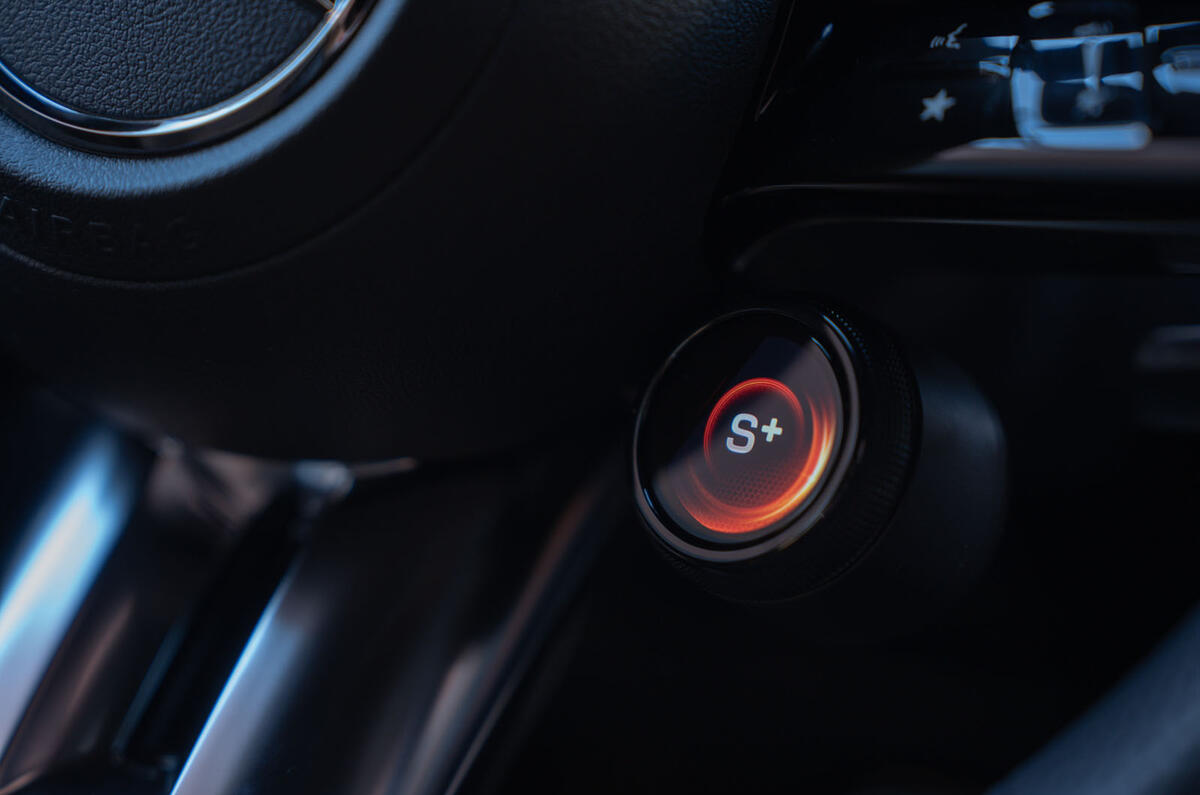
You have to navigate via Race mode to find the GLC 53’s dedicated Drift setting. There’s a slightly involved routine of paddle-shifting needed to engage it, and it’s intended for track use only so we couldn’t test it. But the way the car handles, even in Sport+, suggests it should work pretty well.

The GLC 53 is always a short-, terse- and firm-riding car, and doesn’t cope well on complex back-road surfaces regardless of what driving mode you dial up. But on smoother blacktop, it’s quick to turn in; flat and fast-settling on its loaded side; tenacious and balanced in its grip level; and - thanks to that new clever diff - ready to swivel on its outside rear wheel as you add power.

It doesn’t feel like a natural, intuitive car to drive - but it can be damned effective, and surprisingly good fun, if you pick your route carefully.

Direction changes are clean and predictable, while the 4Matic+ system provides impressive traction when you're accelerating hard out of slower corners. What stands out most, however, is how composed the GLC 53 feels when pushed hard. The body remains tightly controlled and the chassis feels disciplined and secure, although the ride remains firmly on the sporting side of acceptable.

Even in Comfort driving mode there's a constant underlying firmness that never entirely disappears. AMG has clearly prioritised body control, steering precision and high-speed stability over outright suppleness, and on rougher roads the suspension can occasionally feel busy on those big, 21in wheels.

The payoff comes when the pace rises. On smoother roads the GLC 53 delivers excellent damping control and very little unwanted body movement during quick direction changes or heavy braking.



VERDICT

8
Mercedes AMG5 3 reveiw 2026 017

Where the old four-cylinder AMG GLC PHEV sometimes felt engineered around a powertrain concept first and a driving experience second, this new GLC 53 feels more cohesive.

It may lack the wild character of the original V8-powered GLC 63, and some of its muscle car persona. But it makes a fresh and alternative kind of AMG performance car.

Whereas AMG SUVs typically feel like hot-rod utility cars made to be driven with a bit of patience and circumspection around the corners, to then be unleashed on the straights, this one is quite the reverse. It's an AMG whose chassis is more than a match for its engine, despite that engine being the reason you might suddenly be reconsidering it.

It’s not quite as firm and excitable as some of its competitors, but it’s not far off being as entertaining as the best of them. If you can forgive the car its slightly underwhelming powertrain, that makes for plenty to like.

Matt Saunders

Matt Saunders Autocar
Title: Road test editor

As Autocar’s chief car tester and reviewer, it’s Matt’s job to ensure the quality, objectivity, relevance and rigour of the entirety of Autocar’s reviews output, as well contributing a great many detailed road tests, group tests and drive reviews himself.

Matt has been an Autocar staffer since the autumn of 2003, and has been lucky enough to work alongside some of the magazine’s best-known writers and contributors over that time. He served as staff writer, features editor, assistant editor and digital editor, before joining the road test desk in 2011.

Since then he’s driven, measured, lap-timed, figured, and reported on cars as varied as the Bugatti Veyron, Rolls-Royce PhantomTesla RoadsterAriel Hipercar, Tata Nano, McLaren SennaRenault Twizy and Toyota Mirai. Among his wider personal highlights of the job have been covering Sebastien Loeb’s record-breaking run at Pikes Peak in 2013; doing 190mph on derestricted German autobahn in a Brabus Rocket; and driving McLaren’s legendary ‘XP5’ F1 prototype. His own car is a trusty Mazda CX-5.