

Setting consistent standards has been a persistent bugbear in the engineering of cars since the year dot.
Trouble is, everybody has a different idea of how to do things, so the world ends up with umpteen different versions of the same thing with little or no compatibility.
Take the various EV charging connectivity options, such as Type 1, Type 2, Chademo and CCS. Which type dominates can depend on where you live in the world.
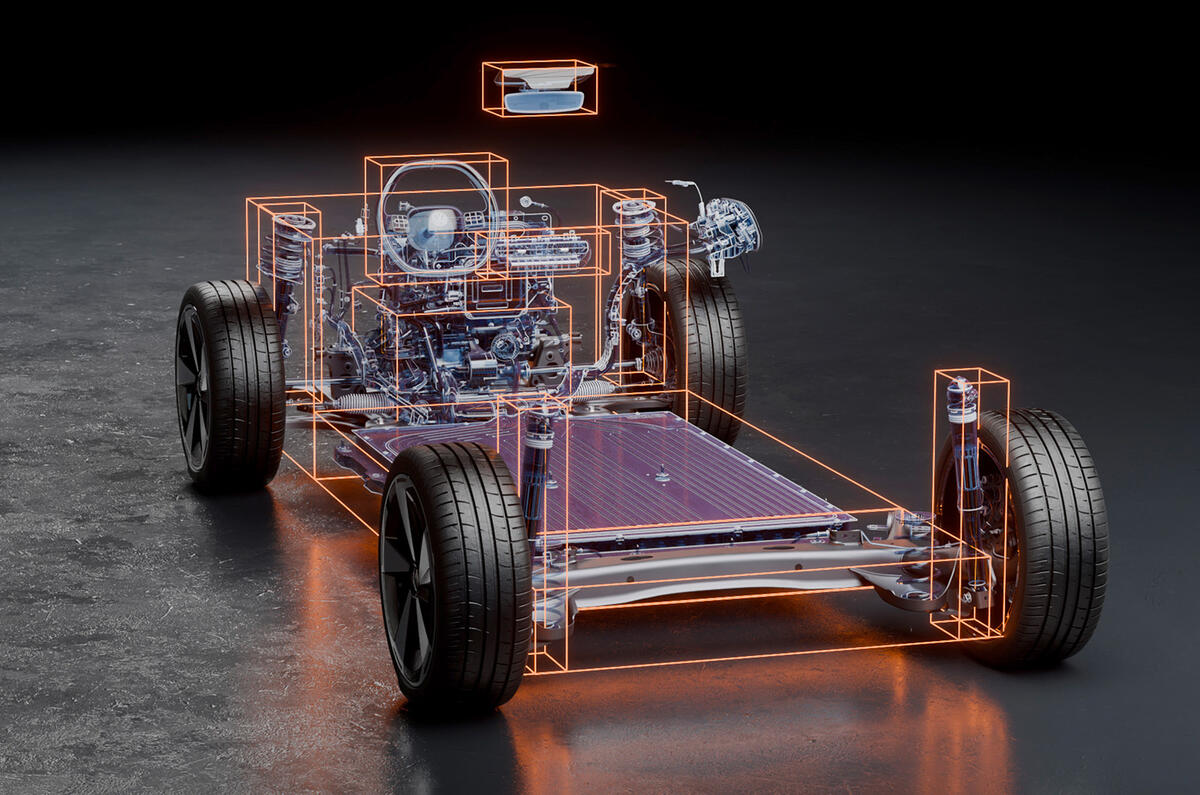
Volkswagen has nipped this phenomenon in the bud where EV battery and battery cell design are concerned. Its Unified Cell, which we have previously reported on, has been developed in conjunction with its subsidiary PowerCo to standardise battery cell design, and last year it revealed its first production-ready examples.
The Unified Cell will make its debut in the company's Electric Urban Car Family, appearing with Volkswagen, Skoda and Cupra badges, and Autocar test drove a prototype of the VW ID Polo in December last year.
The cell, which will eventually be used across 80% of the Volkswagen Group's brands, is claimed to be a big leap forward in cell design, with an energy density of up to 660Wh (0.66kWh) per litre of volume the cells occupy.
That's said to be an improvement of 10% over previous cells' best, helped by installation on a cell-to-pack basis that does away with the intermediate stage of packing cells in modules before installing into a battery pack. The aim is for the Urban Family cars to have a range of 280 miles and a charging time of under 25 minutes, depending on the cell chemistry used.
The Unified Cell can accommodate different chemistries including LFP (lithium iron phosphate, the 'F' being for 'ferrous', as the cathode material) and NMC (nickel manganese cobalt), which typically has a greater energy density than LFP to give more range for the same weight and volume.
The cells can also accommodate sodium ion (Na ion), which first went into mass production last month with Chinese battery maker CATL.
There's more to Unified Cells than just a format to suit the manufacturer. VW says standardisation will lead to huge economies of scale in both cells and whole battery systems.
The cost of the battery accounts for around 40% of an EV's price, so it should mean cheaper cars, which is essential if urban EVs are to succeed commercially.
Sodium ion's drawback has always been a lower energy density than lithium ion, but that is improving with development. Raw materials are cheaper and the environmental credentials are better, so sodium-ion batteries have the potential for a cleaner carbon footprint during their lifetime.