From £333,185

Rolls-Royce fights the habit of 120 years and launches its first electric car

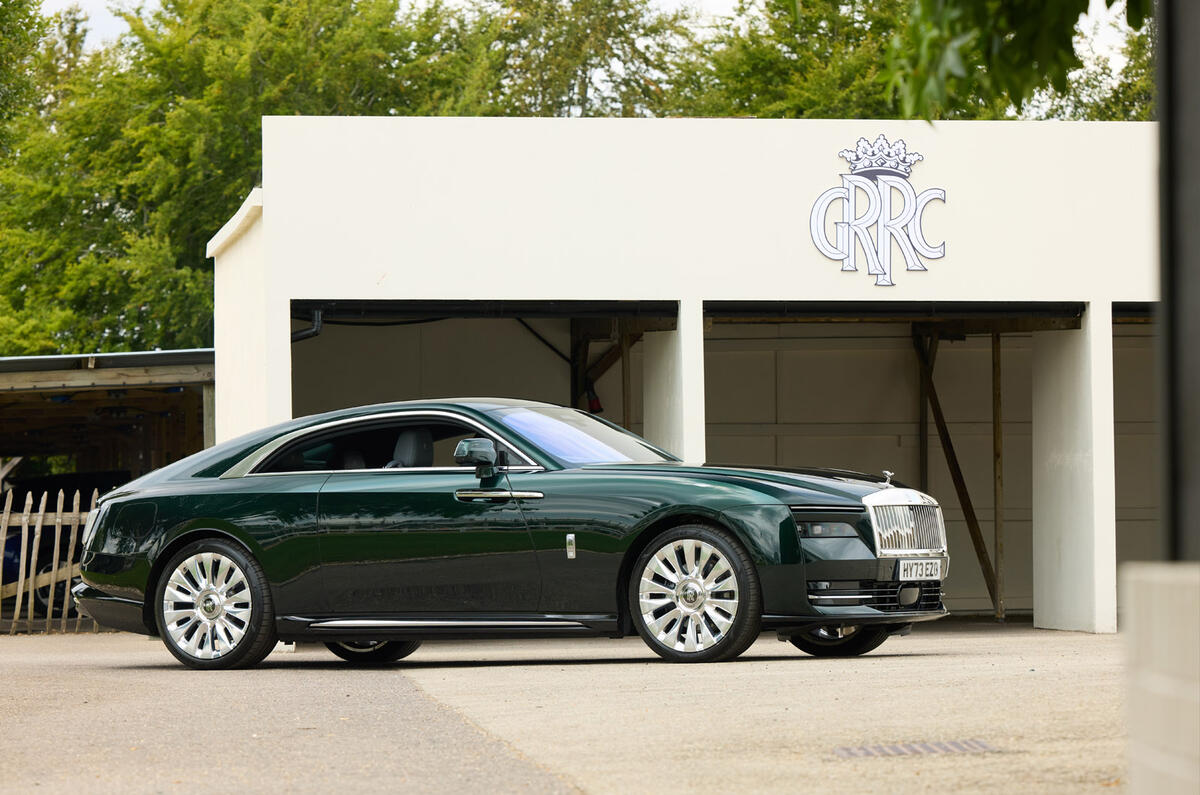
 The Rolls-Royce Spectre is the super-luxury car company’s first electric vehicle. But if you think electric cars are a modern phenomenon, remember that when company founders Charles Rolls and Henry Royce met, electric cars were very much in vogue. In 1899 the world’s fastest car was electric, central London was abuzz with electric carriages and in 1900 a third of all cars in the US were electric.

One of the first briefs for Rolls-Royce cars was, in fact, to produce a combustion-engined vehicle that would be as quiet, smooth and easy to use as an electric one, without the charging and range limitations that kept EVs for ‘town carriage’ use.

Over the following century Rolls-Royce virtually perfected the art, with its very latest V12s from today’s Phantom and Ghost being some of the world’s quietest, smoothest and most compelling luxury powerplants.

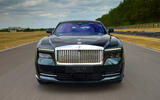
But with the world once more ready for EVs, in 2023 Rolls-Royce launched the Spectre, a super-luxury coupé and its first EV, which it followed in 2025 with the Black Badge edition for more “subversive” customers who want a bit of additional edge. Not only is it electric, but the Black Badge edition is also the most powerful car Rolls-Royce has ever made.

Now in 2026, and riding on something of a wave of success with the car, Goodwood has launched a revised 'Series II' version. The Spectre was Rolls' biggest-selling car in Europe in 2025, and second only to the Cullinan SUV in global terms. The car is also seeing quite a bit more daily use than the typical super-luxury conveyance, Goodwood says. Which might help explain what the firm has done to improve the car for its mid-cycle facelift, more of which in a moment.

Advertisement
Back to top

The range at a glance

Models Power From
Ghost 563bhp £289,745
Cullinan 563bhp £344,865
Spectre 593bhp £333,185
Phantom 563bhp £440,865

Rolls-Royce would tell you that deals with ‘uniquely commissioned’ models rather than having a range, but there are two Spectre models: the regular car (not that it would refer to it in such prosaic terms) and the Black Badge edition.

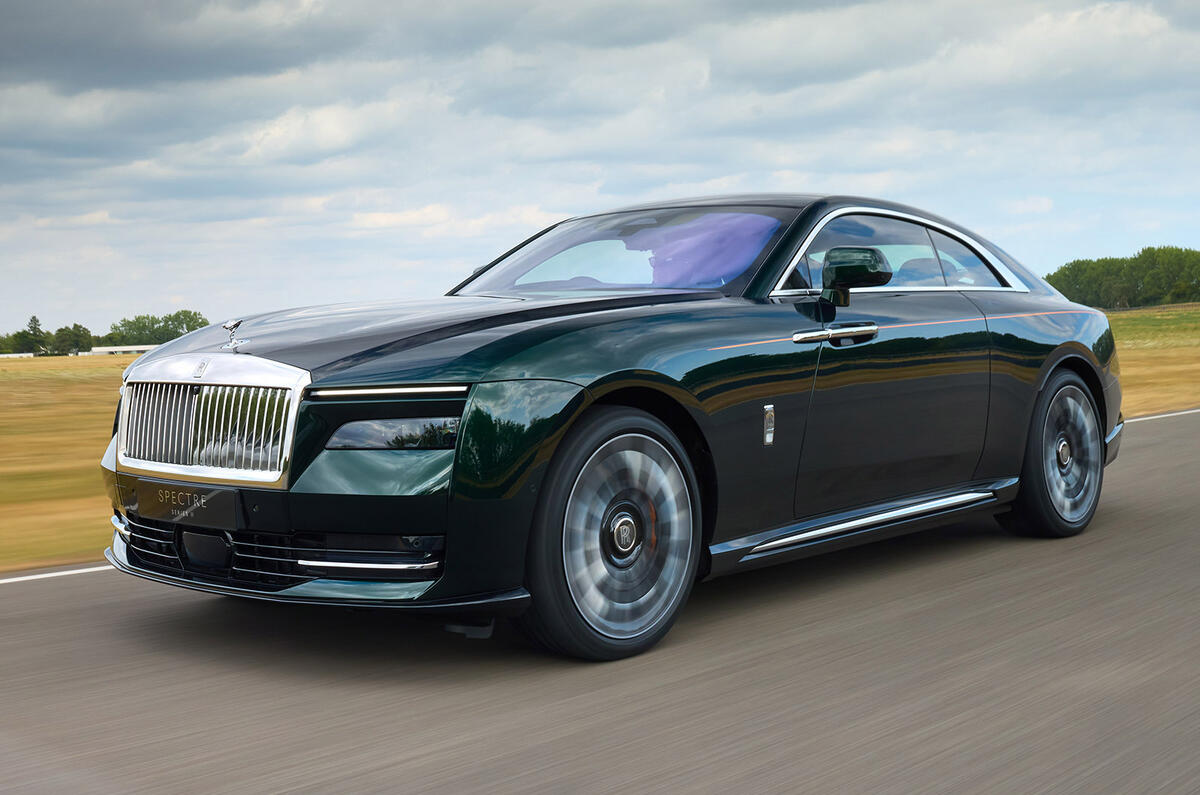
It’s interesting to see where the car slots in to Rolls’ wider line-up. Filling the space left by the Phantom coupé, it is now priced above the Ghost saloon, but below both the Cullinan SUV and the Phantom (although both the Ghost and Phantom are offered as EWB), with power to trump all of its range-mates.

DESIGN & STYLING

Rolls Royce Spectre Series II review 2026 019

Rolls-Royce’s diversion into EVs dates back to the 2011 102 EX: a seventh-gen Phantom limo with battery power, created to gauge public reaction.

Work began on the mechanical basis for its current range of models, the innovative aluminium spaceframe Architecture of Luxury, in 2014, with electric as well as combustion power in mind.

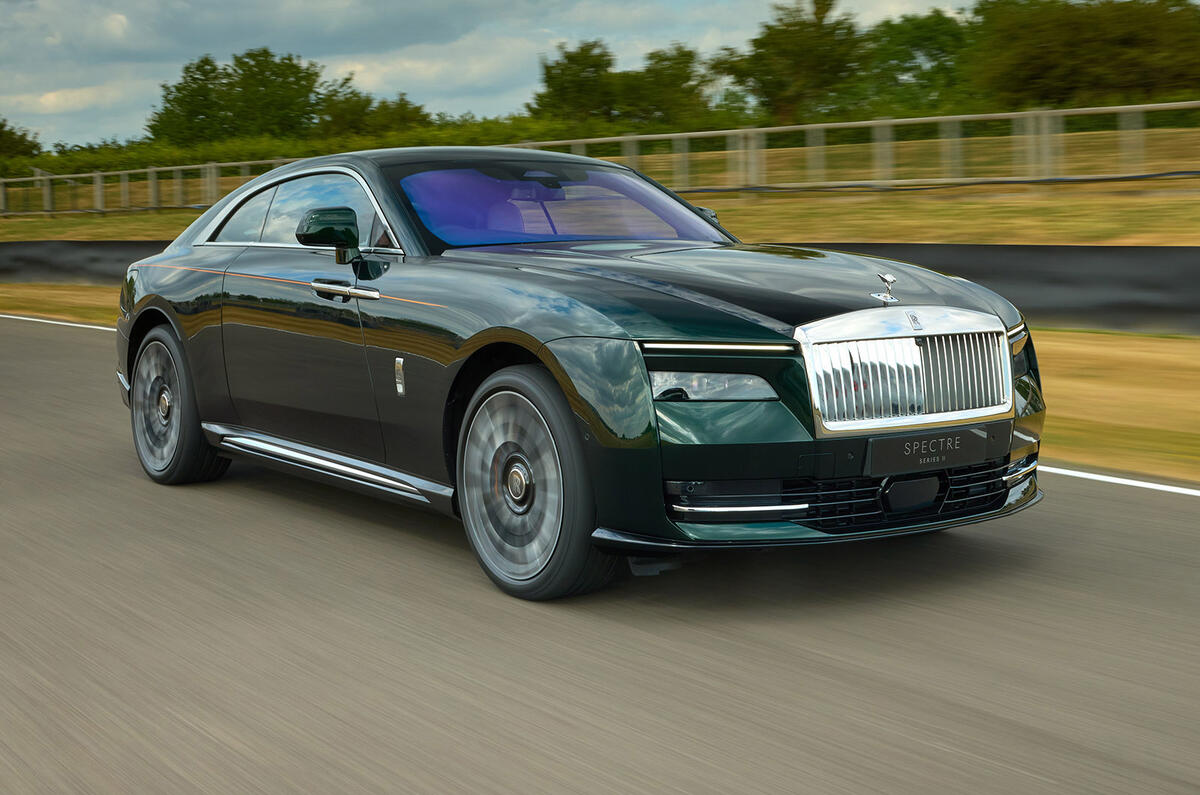
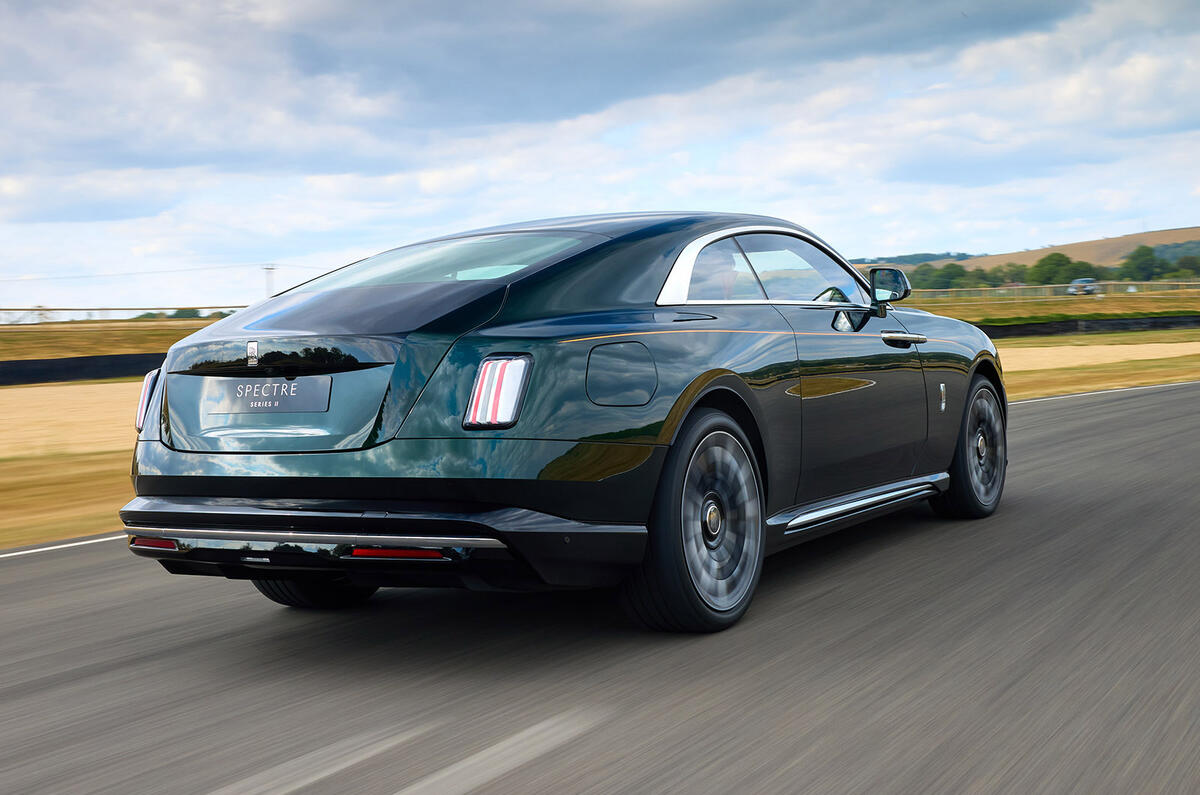
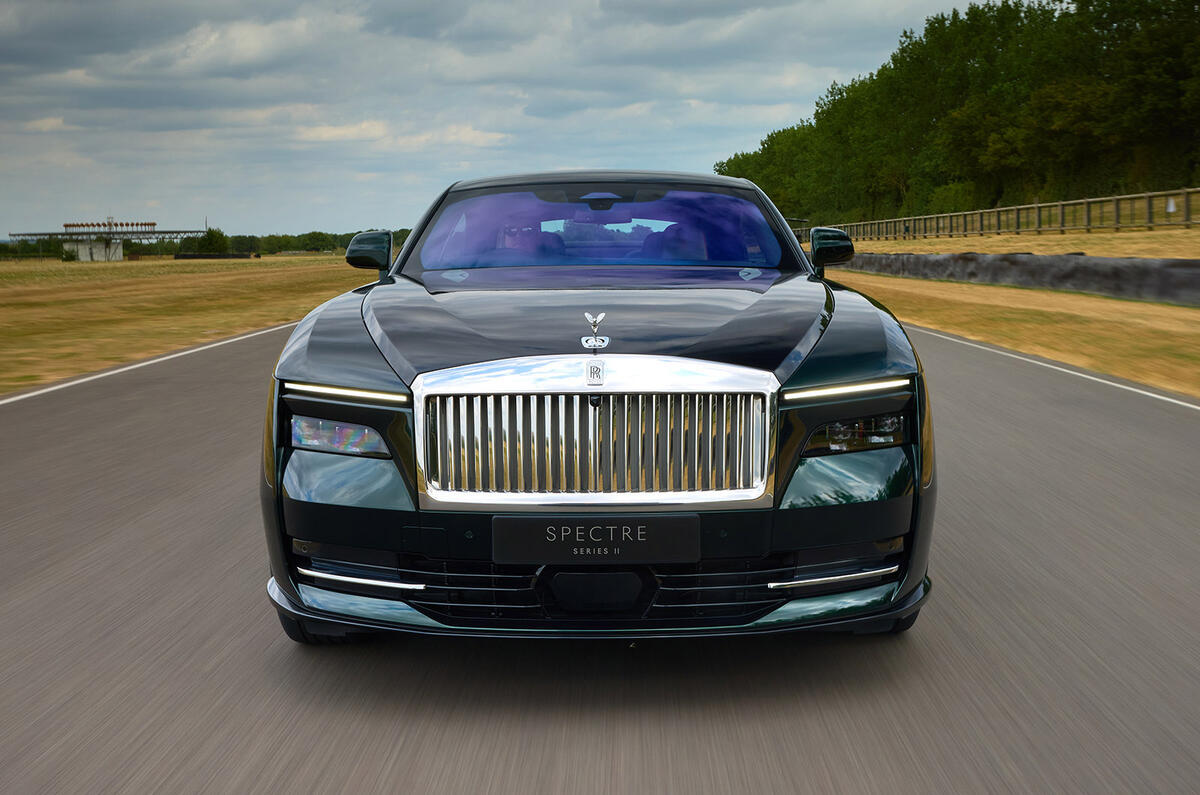
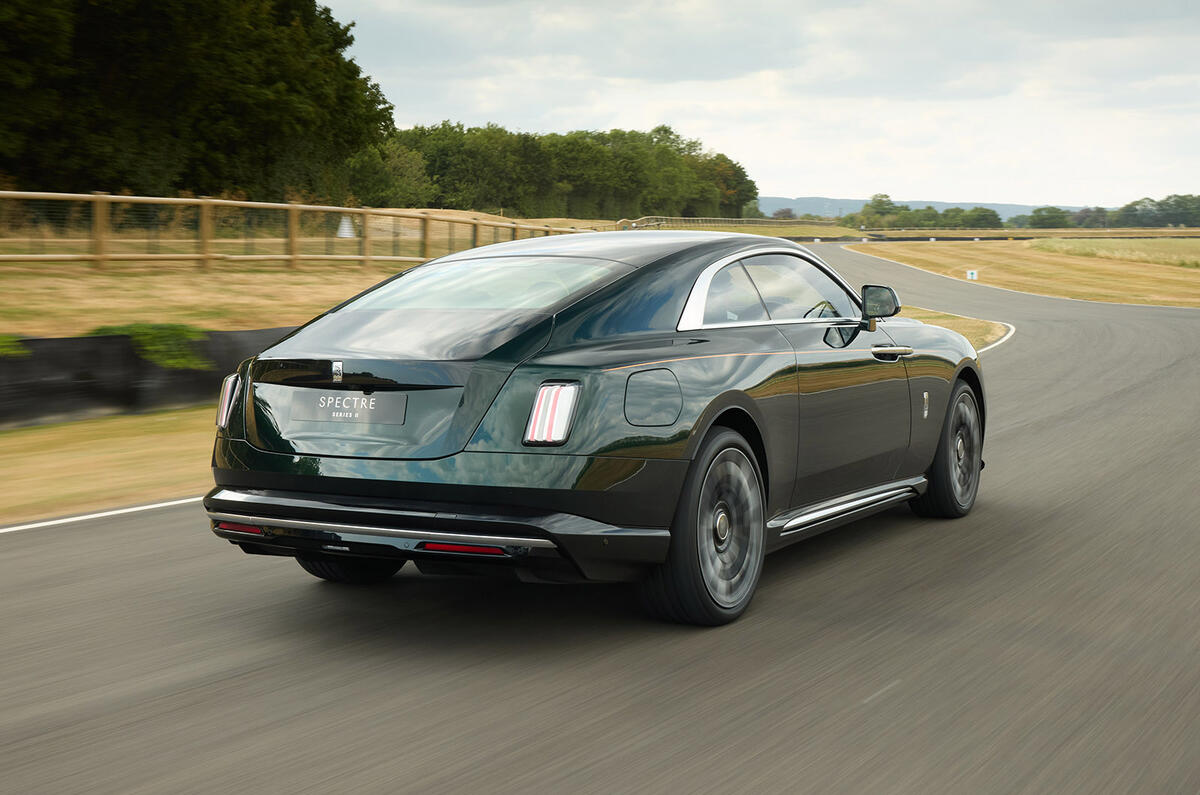
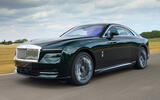
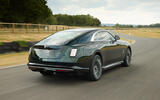
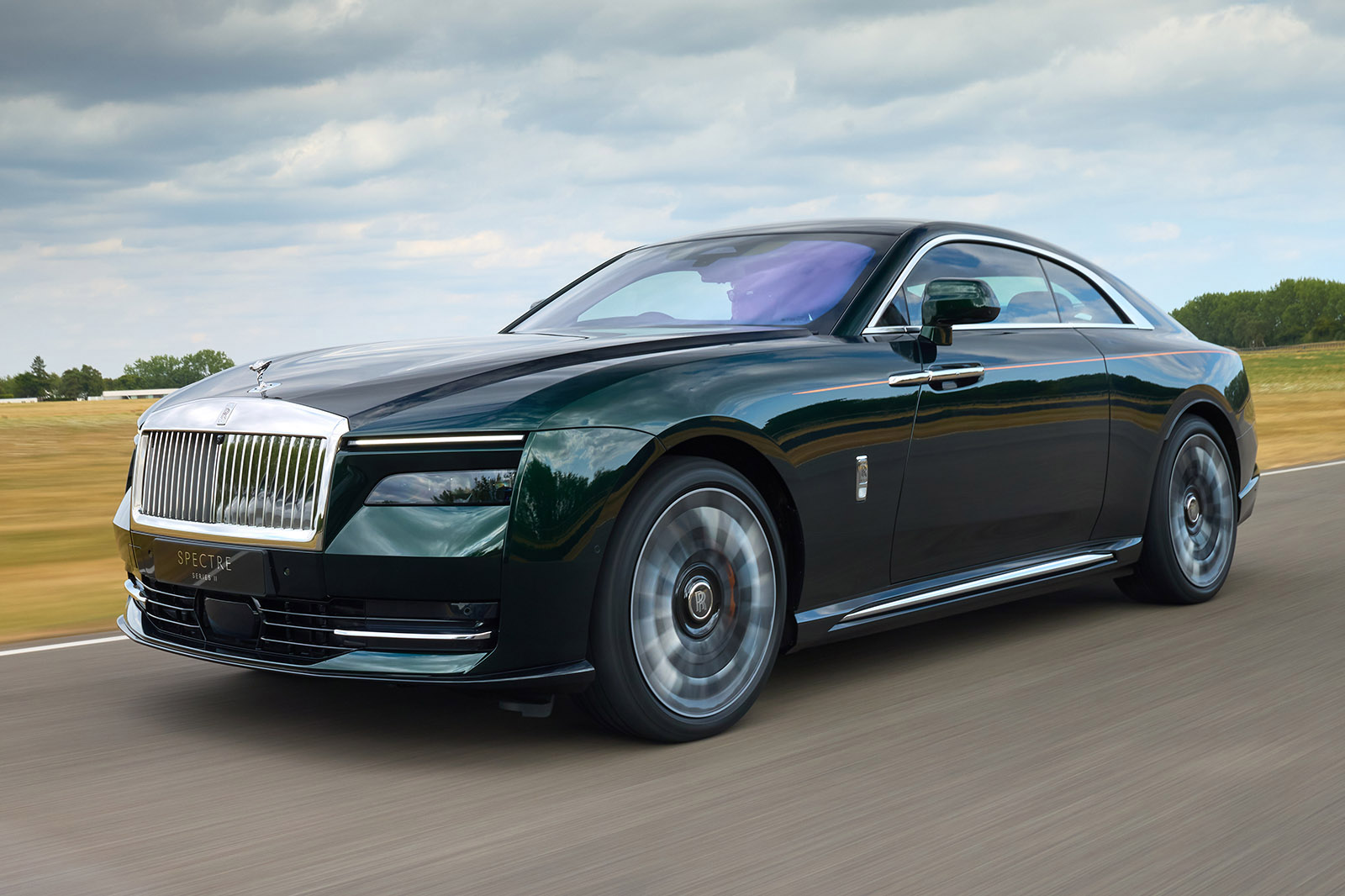
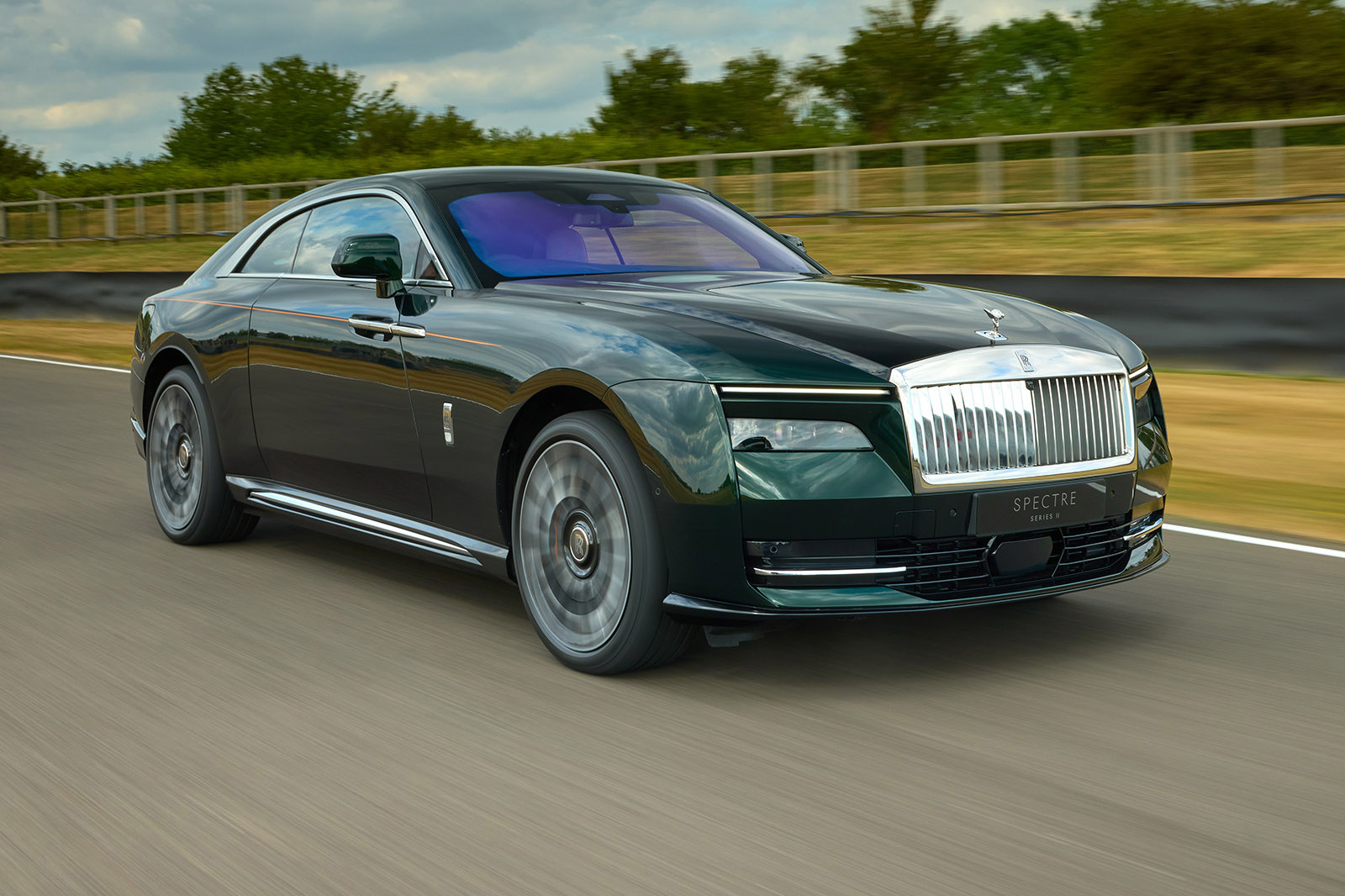
The ‘jewel-like’ detail design in the headlights and tail-lights is very much in fashion, and it’s easy to get carried away with this sort of thing, but the monogrammed, brushed-metal look to the Spectre’s tail-lights is very attractive indeed

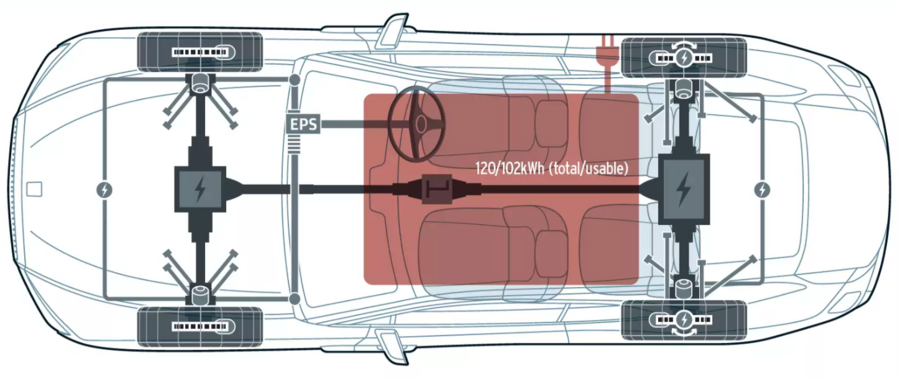
Even so, the Spectre’s chassis is quite different from a Rolls-Royce Phantom’s, Ghost’s or Cullinan’s. In addition to the double-skinned bulkheads those models have, the Spectre gets a double-layer floor to aid refinement and boost rigidity by 30%, and within which the nickel-manganese-cobalt drive battery is carried.

The Spectre launched with the BMW Group's fifth-generation prismatic battery cells; but new drive battery, fitted for 2026, is by far the most significant update for the car's 'Series II' makeover. Made up of the BMW Group’s ‘Gen6’ cylindrical NMC (nickel manganese cobalt) cells, the pack is physically larger than the original Spectre’s, and evidently also a little heavier (the car’s homologated kerbweight has increased by 35kg); but it increases usable capacity from 102- to 112.3kWh.

That’s enough to extend lab-test electric range for the car by almost 20 per cent; up to as much as 390 miles. And extra range is what the car undoubtedly needed, the original Spectre typically missing a real-world 300-mile cruising range when we road tested it in 2023; which, objectively, wasn’t a great look for something you might reasonably expect to be the best electric car in the world.

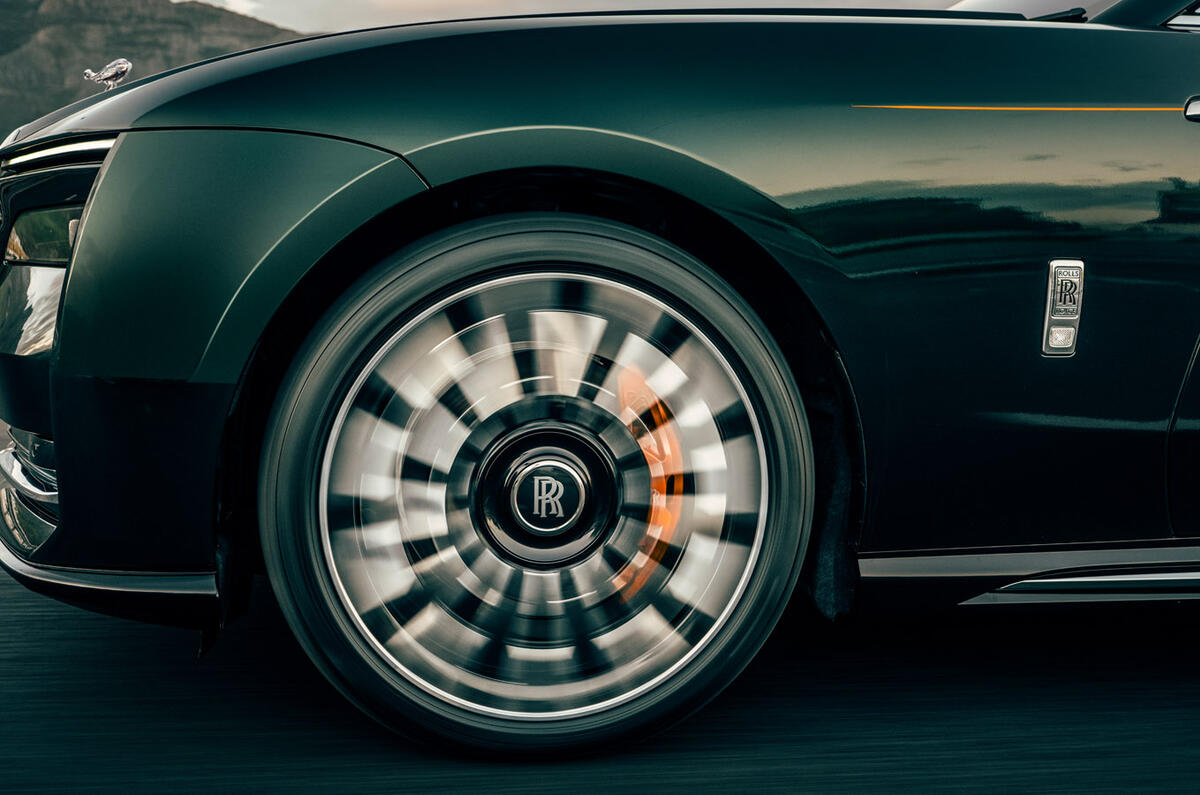
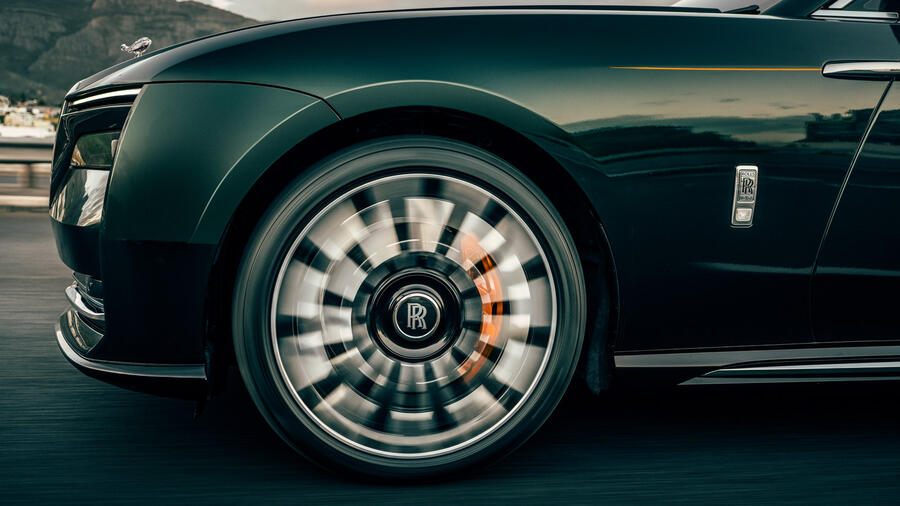
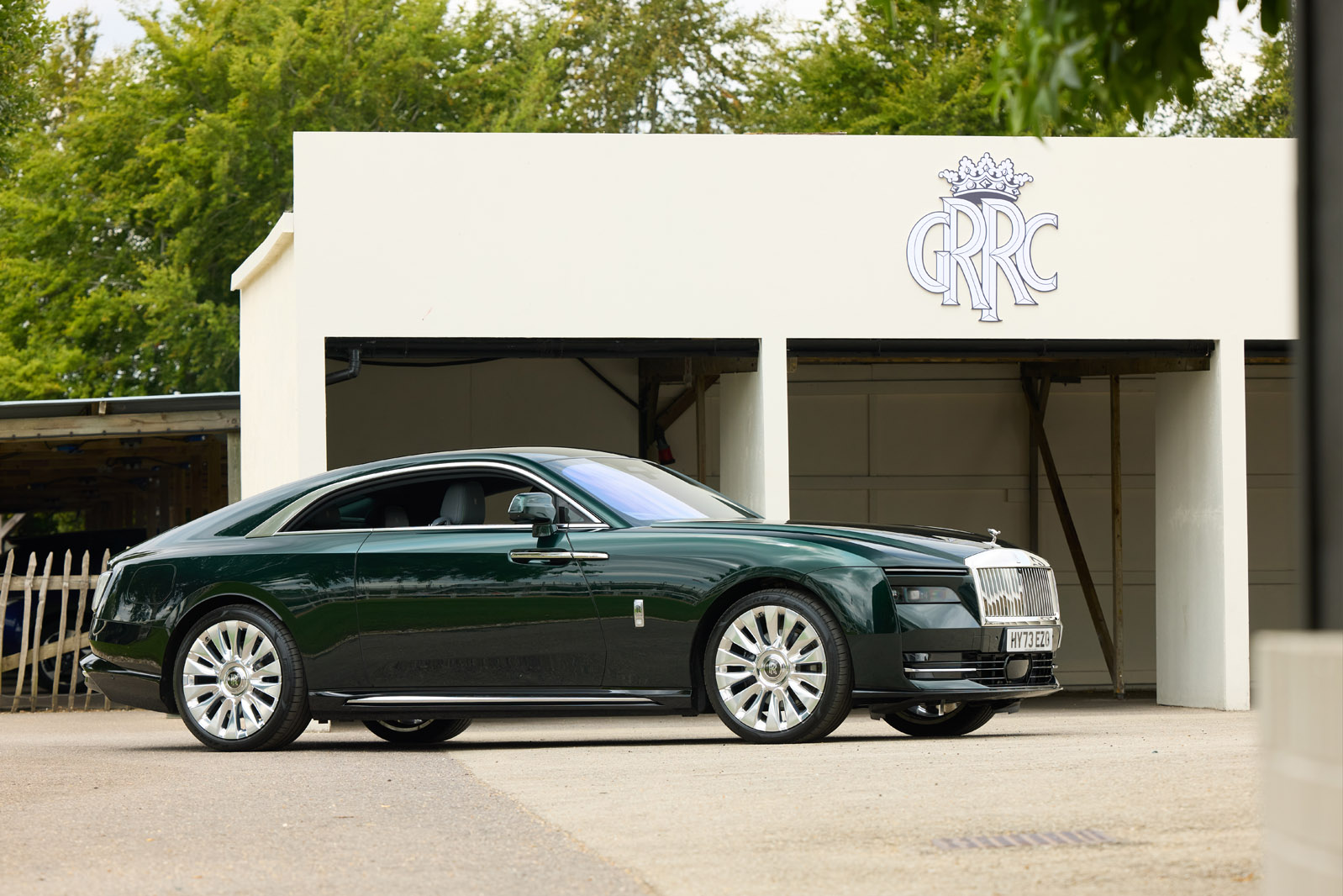
Elsewhere, the Series 2 car gets a little bit more power and torque than the original Spectre had; 85lb ft more torque, in fact, in the case of the base model - or 18lb ft more in the case of the Black Badge version. The Black Badge also has a new off-the-shelf paint colour option and some ‘ice black’ exterior trim, while the regular car gets a new 23in forged rim design.

Goodwood says that it’s recalibrated the car’s active air suspension, adaptive dampers, active anti-roll bars and four-wheel steering to account for the car’s additional torque and mass; but only with the aim of producing a car with the same rolling character and capabilities of its forebear.

The Spectre has hybrid synchronous drive motors front and rear. Peak system output is now 593bhp and 749lb ft on the standard model (up 85 lb ft), with up to 671bhp and 811lb ft for the Black Badge edition. Even so, Rolls customers aren’t likely to be looking for the most powerful car their money can buy.

At each corner, the car uses an adapted version of the Ghost’s planar suspension, with adaptive air springs, adaptive dampers, active anti-roll bars and four-wheel steering all fitted as standard. Alloy wheels are a towering 22in or 23in diameter, wearing Rolls-Royce’s now-customary noise-cancelling run-flat tyres.

Our 2023 road test Spectre weighed 2935kg on the scales: 45kg heavier than claimed (easy to explain with fitted options) – and clearly very heavy – yet only 155kg more than an eighth-generation Phantom we road tested in 2018. With the 'S2' facelift, homologated kerbweight has increased by some 35kg according to Goodwood's own claims.

INTERIOR

Rolls Royce Spectre Series II review 2026 021

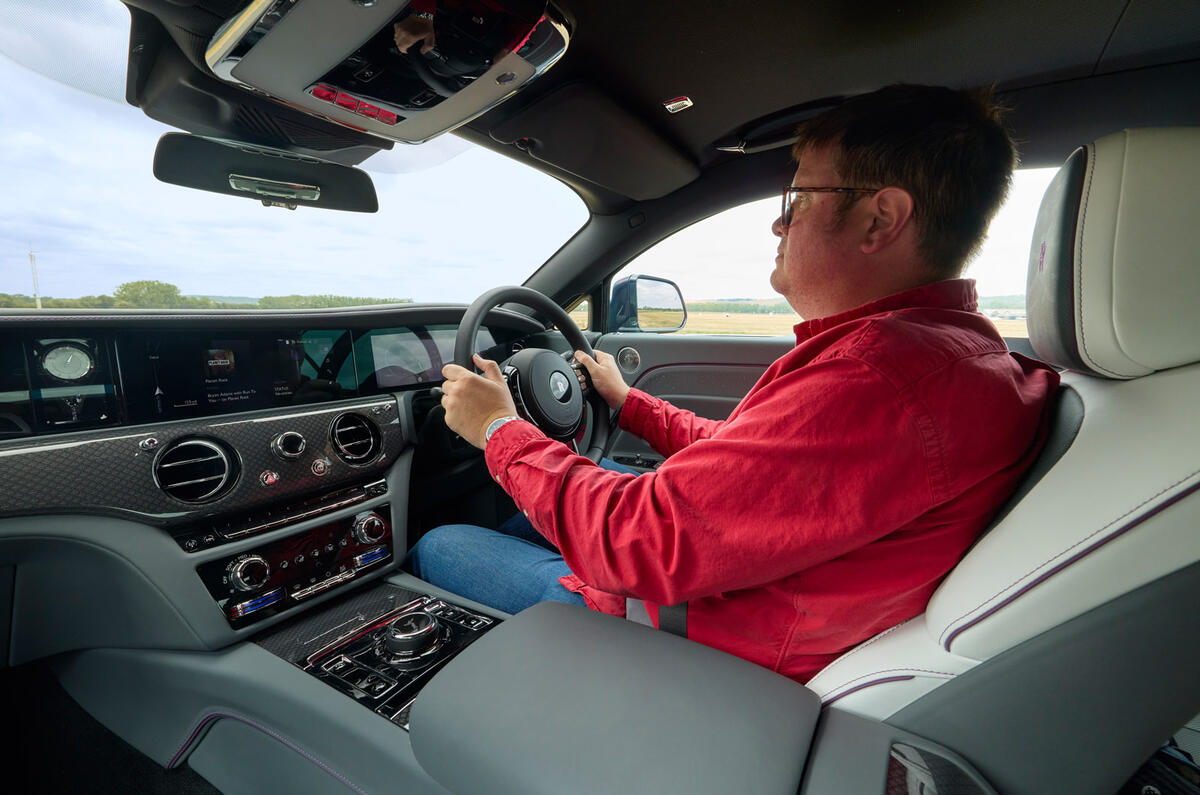
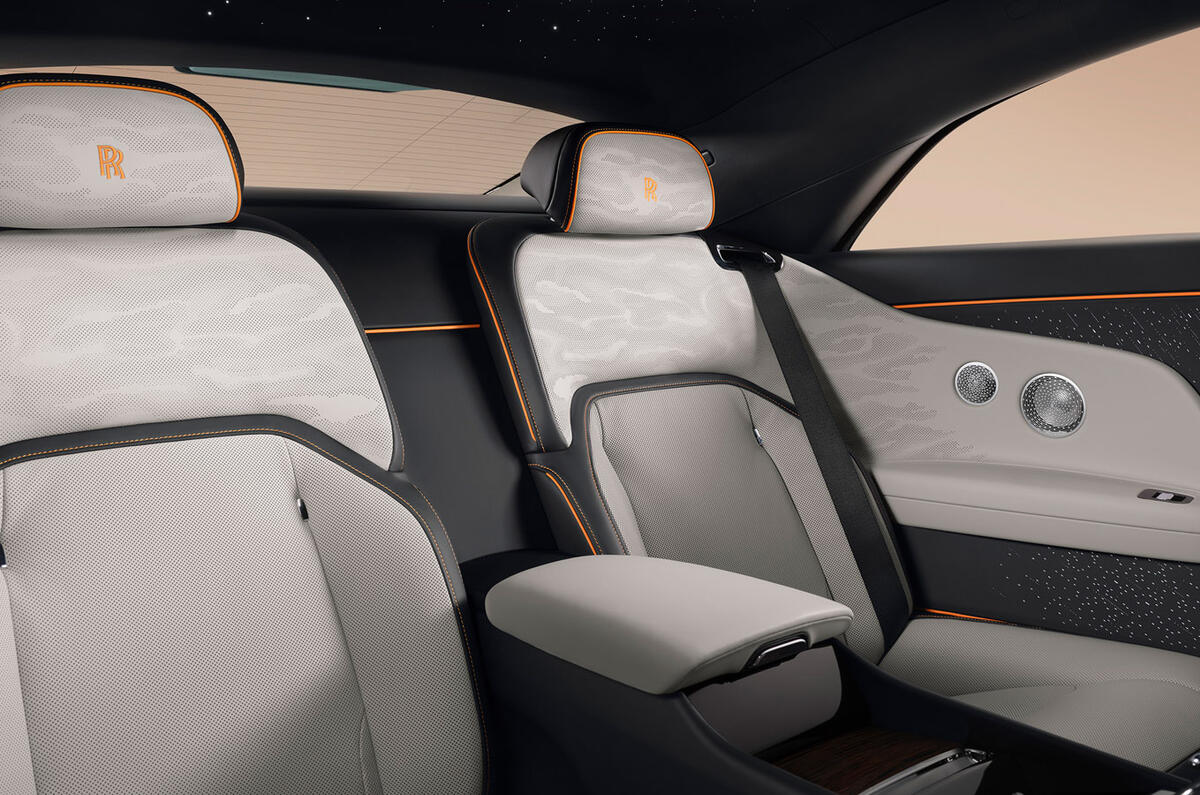
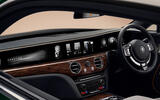
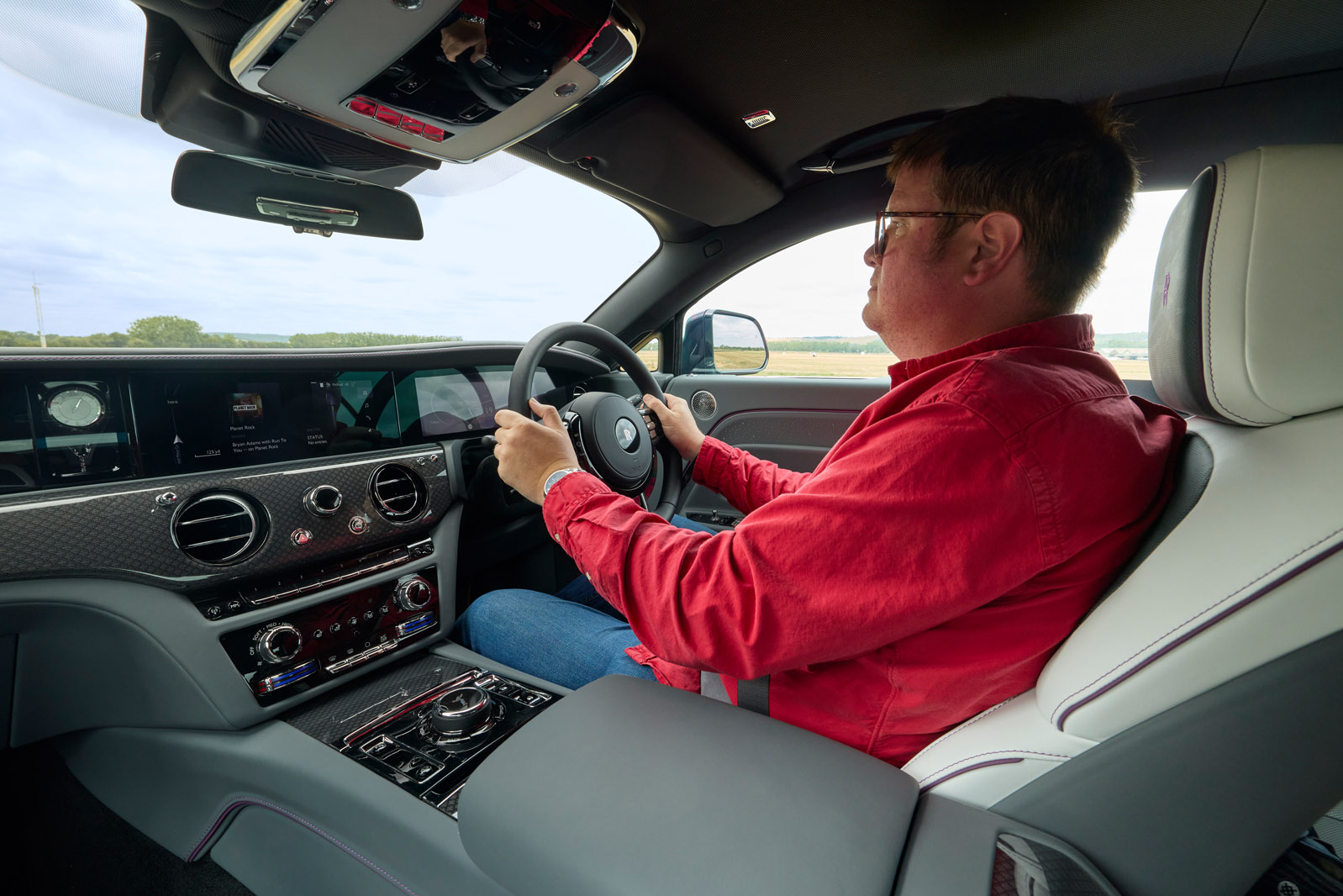
Inside, the Spectre seats you a little higher and less recumbently than in some GT coupés, for the sake of convenience. You feel suitably ensconced in the beautifully soft chairs up front; in the two-seat second row, while occupant space isn’t limousine-like, there is still ample space for all but the tallest adult passengers.

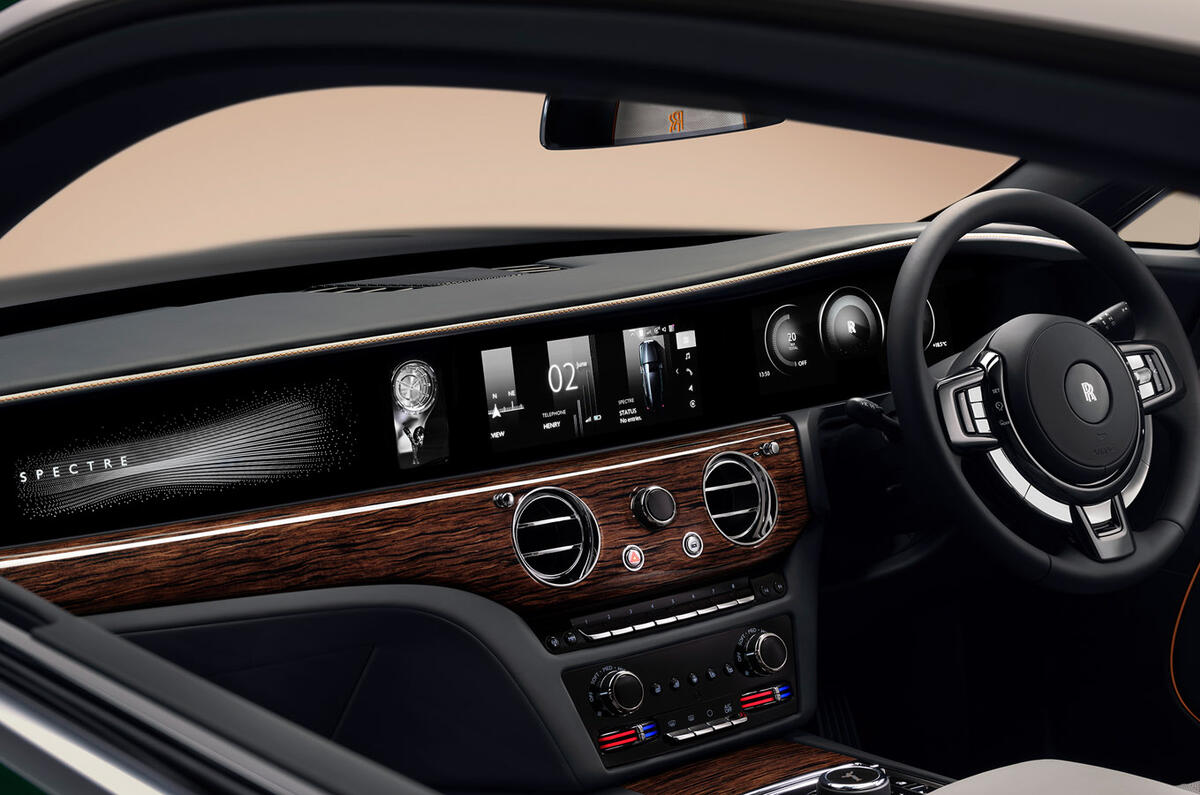
The layout of the controls is appropriately conventional. The dashboard and centre console are common with those of the Ghost saloon rather than the larger Phantom. As such, there’s no disappearing infotainment screen here, but you do get traditional-looking digital instrument dials and lots of physical switchgear, into which Rolls-Royce has poured its usual attention to tactile and material detail.

The Spectre’s ‘duality twill’ woven fabric seat panels actually shrink by a centimetre or two once they’re embroidered (the net effect of all the extra stitching); and, unlike leather, they don’t stretch. So Goodwood’s trim shop makes them slightly oversize so they shrink to fit the seat frame.

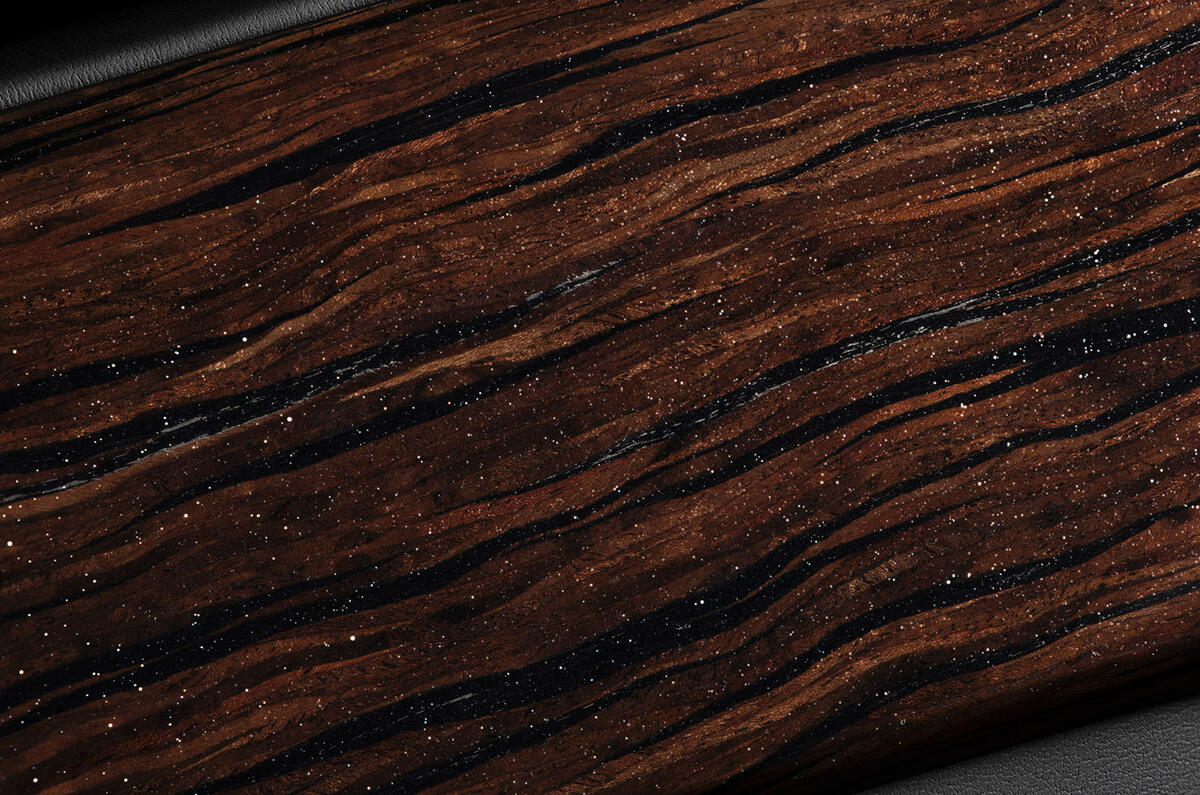
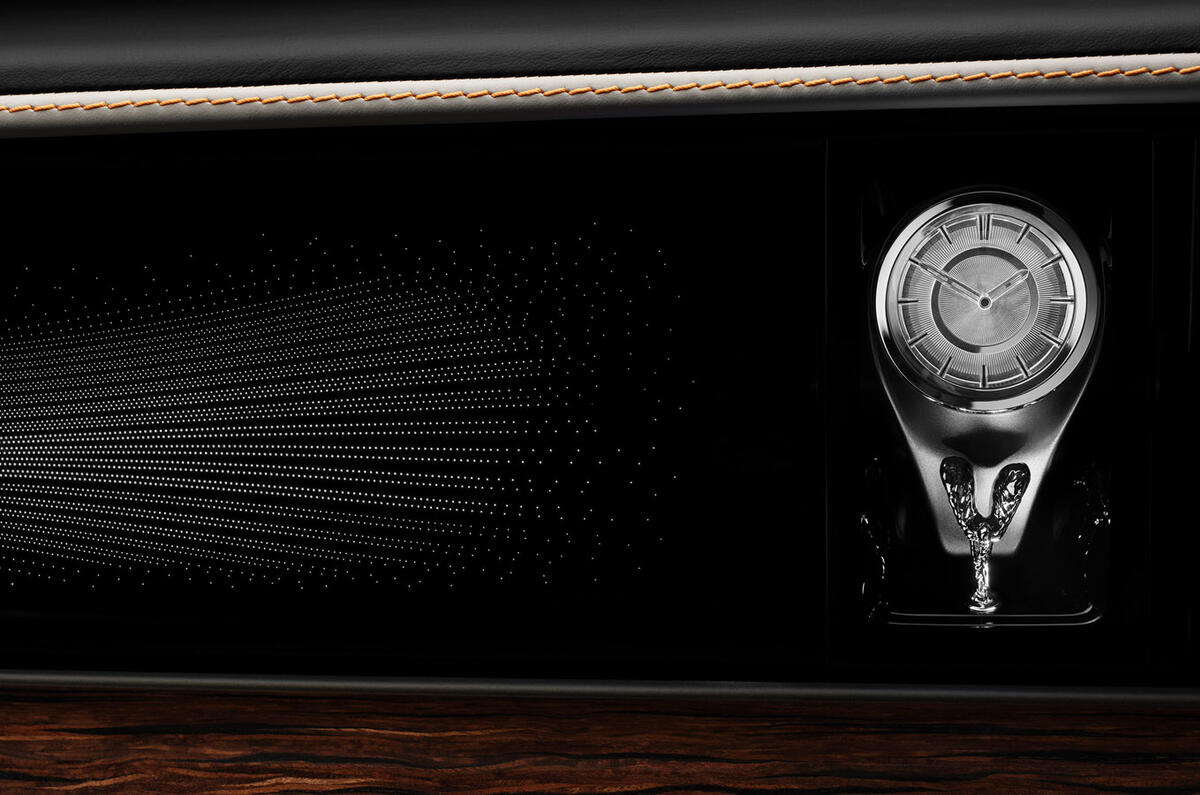
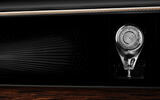
There are a handful of revisions around the cabin for the 'S2' version: a new timepiece on the fascia, some new upholstery options (Goodwood’s ‘duality twill’ bamboo-based, leather-alternative cloth is one of them), and a rather lovely new metallic-flecked wood veneer called Brindled Walnut. Then again, this is a Rolls-Royce; so if you would rather commission your own paintwork, leather colour and wood panelling, you can do that instead (as long as you don’t need to ask about the price).

In the Black Badge edition, there are unique instrument designs and colours, including a separate one should you engage ‘Infinity mode’, which brings an addition level of performance. There is a carbonfibre finish too, although this is made to show exquisite pattern alignment rather than as a weight-saving measure. There is nothing inside that doesn’t feel expensively wrought, from the headlight controls to the old-fashioned-looking ‘blower slider’ temperature controls.

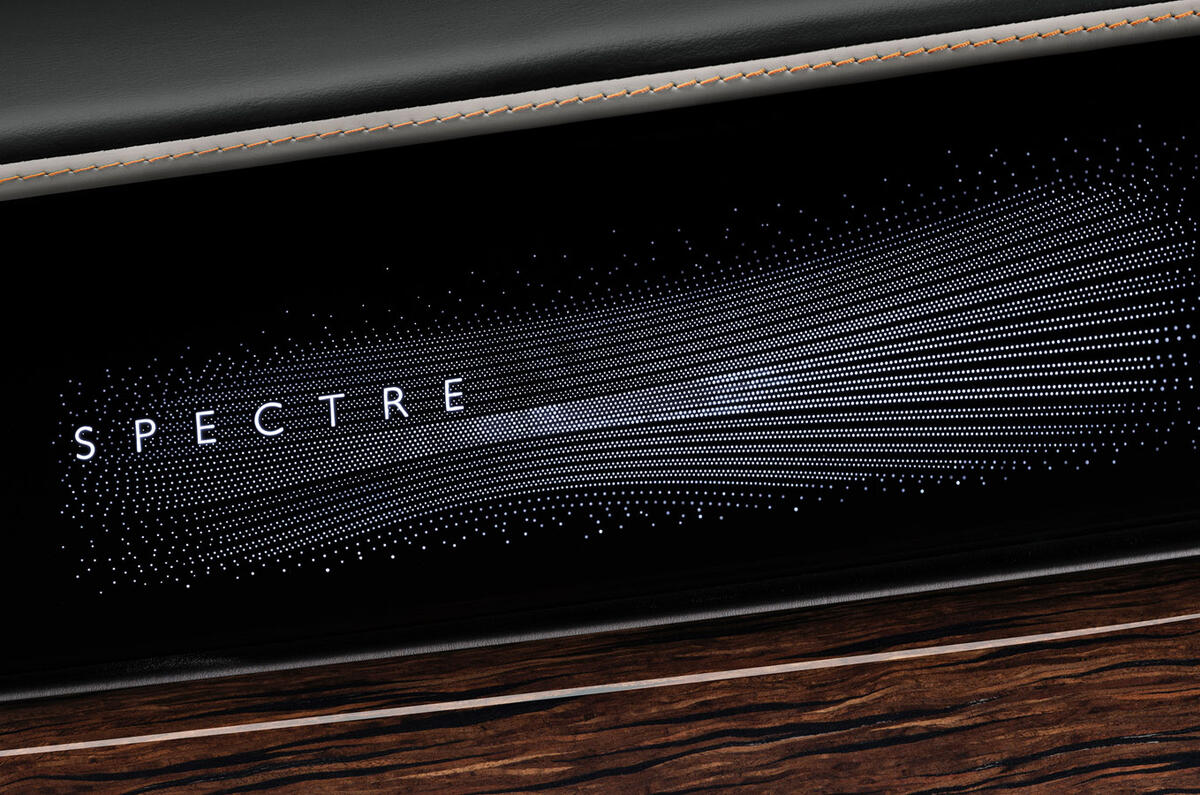
The Spectre may be a new-age Rolls-Royce in terms of how it’s powered, then, but from within it’s reassuringly familiar and as rich and lavish as anything the firm makes. Rolls’ preference for digital technology integrated with restraint will be a greater selling point for some as time goes on, and its gentle touch with the car’s ambient lighting features remains singularly special.

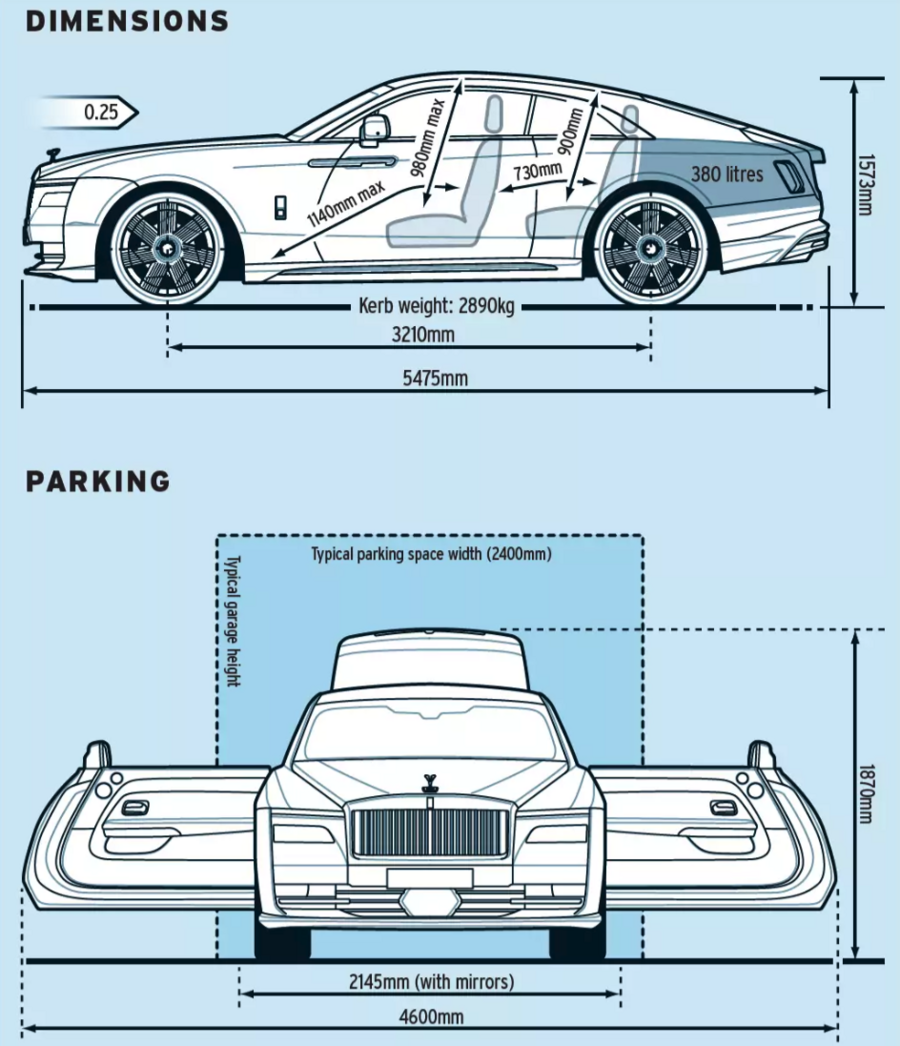
Incidentally, the Autocar road test has been measuring what we call the ‘door span’ – the width that is occupied when the front doors are fully opened – of its subjects for several years. In itself, it may be quite a niche dimension to record, but it’s a useful corollary of not only outright vehicle width but also ease of access within tighter confines.

Four metres is a big door span: a Rolls-Royce Ghost has a 4040mm door span, and when we measured the current Bentley Continental GTC Convertible’s door span (4180mm), we thought we might not record a larger one for some time.

The Spectre, however, turns out to be something of an automotive albatross, with a remarkable 4600mm door span. The model’s rear-hinged ‘coach’ doors – by its maker’s own claim, the largest anywhere in current global production – would make very effective air brakes.

They’re constructed entirely of aluminium but are also ‘effortless’ doors (ie they are power-assisted), so you don’t open them in a conventional way. Instead, you tug discreetly on the huge polished steel door handle and then stand back as the car opens them for you. The driver’s door closes itself too, once you’re seated and you press on the brake pedal.

Multimedia system
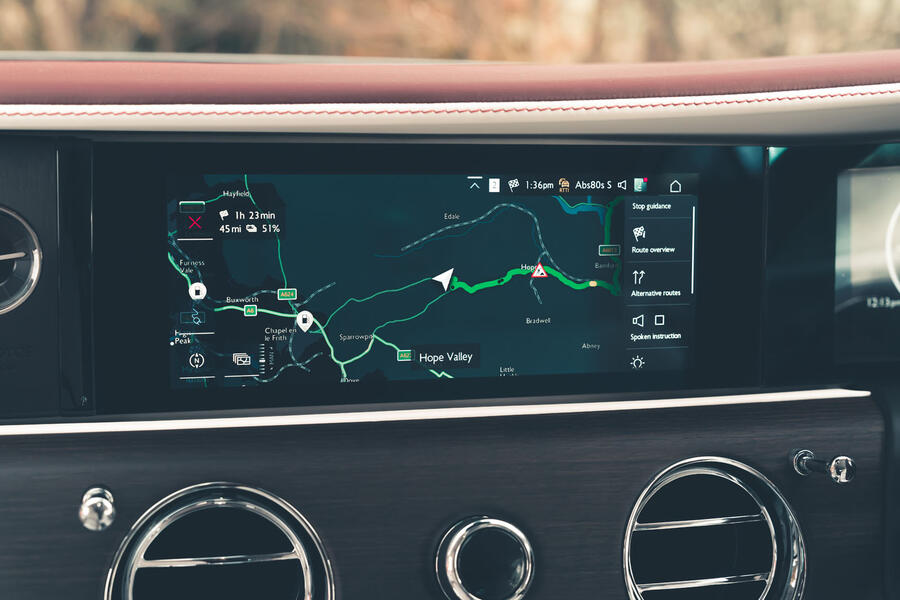
The touchscreen system in the Spectre is different from the one in the Phantom. It’s not hidden behind a separate glass screen, and it doesn’t retract from view when not in use.

It’s clearly a reskinned version of one of BMW’s later Operating System 8.0 set-ups – but it’s superior to BMW’s own in that it doesn’t integrate the ventilation controls, and it retains both an iDrive-style rotary input device and some user-programmable physical shortcut buttons that are an enormous aid to accessibility.

Rolls-Royce has integrated its own branded voice control into the system. Press the voice control button on the steering wheel and a semi-translucent image of the Spirit of Ecstasy appears on the screen, and the system then responds to natural speech recognition. You can ask it to turn up the cabin temperature, but it won’t open and close the passenger doors.

Rolls-Royce also offers owners an app-based remote control of the Spectre’s battery charging and pre-conditioning via software called Whispers, which is also an owners’ community and has editorial features such as a private island buyer’s guide.

ENGINES & PERFORMANCE

Rolls Royce Spectre Series II review 2026 028

Both the Spectre and Black Badge editions have 593bhp on start-up, with the regular Spectre remaining on that, and the Black Badge getting the full 671bhp if you push the steering wheel’s Infinity mode button, which reduces the claimed 0-62mph time from 4.5sec to 4.3sec.

But defining how quickly, in outright terms, the Spectre might accelerate must have been a question of preference and priority rather than one of sheer possibility. The car could have been more powerful, and when you urge it into motion from rest using all of its reserves, even in the Black Badge, which has a ‘Spirited mode’ (launch control to you and me), you feel as much.

You get an umbrella hidden in both front wings, colour-matched to your interior trim, for an extra £1350. And yes, they are Rolls-Royce-branded

There’s no violence at all to the way that any Spectre gets moving, even at full power: little squat, no loss of traction and no sense of a great ‘on’ switch being flicked. It’s not like, say, a Porsche Taycan or a fast Tesla, or even one of BMW’s EVs with which it shares much hardware, in that respect.

Instead, there’s just a gathering sense of quiet urgency flooding onto the road. It feels a cut above the firm’s habitual V12 standard but no less coiffured or contained.

When we road tested the original Spectre in 2023, the standard model went from 0-60mph in whisker over 4.0sec - so Rolls-Royce seems conservative in its performance claims. Like other EVs, it accelerates strongly from low speeds and, with no gears to shift, starts to become less muscular as the needle rises.

But thanks to the BMW Group’s preference for hybrid synchronous motors, it tails off less than some. That means really commanding motorway performance is retained (60-100mph takes 5.0sec to the Ghost’s 5.6sec, and the Mercedes-AMG EQS 53 does the same in 4.8sec).

Smooth drivability is, of course, far more important. The Spectre does without drive modes and variable trailing-throttle battery regeneration settings. It does have a column-shift transmission selector with a B mode, like any other Rolls-Royce, and a beautifully cushioned throttle response that neither feigns latency nor overindulges in zapping thrust. It’s wonderfully, flatteringly controllable under power.

And while it’s only as moderately well endowed under braking as modern Rolls-Royces tend to be (the pedal is progressive and very easy to modulate, so that you can easily execute one of Rolls' trademark, faultlessly smooth 'champagne stops'). You really have to get deep into it to make the car haul up with true urgency, but the stopping distances we recorded in extremis show there is no problem here at all with outright braking power.

RIDE & HANDLING

Rolls Royce Spectre Series II review 2026 030

It’s the ‘waft’ of the Spectre’s primary ride that Rolls-Royce has taken the most pains to construct, since it knows that few brands have such a recognisably distinguishing dynamic selling point - and it has been keen to maintain that not only on the cooking variant, but also the Black Badge alternative; and with the 'S2' version.

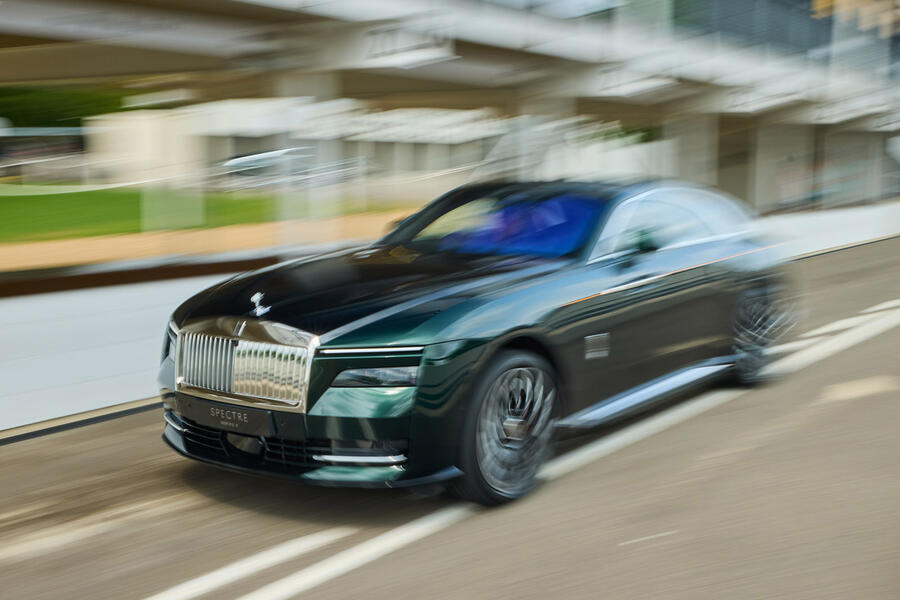
Its effort has not been wasted. Our first test of the 'S2' version consisted only of a few laps of Goodwood circuit, combined with some acceleration, braking and slalom handling tests; but fuller ones will come. Every other Spectre we've tested to date, meanwhile, seemed to hover over motorway surfaces and faster A-roads with an almost uncanny detachment, and were a joy to experience at cruising speed.

Drive selection is simple and genteel: you do it with a column shifter. No regen paddles, Sport programmes or ‘my modes’, just a B mode for a bit more ‘engine braking’.

In the Black Badge model, a slight looseness that afflicts the regular car at middling 40-50mph speeds seems to have been tightened, giving a touch of extra tightness with precious little loss in absorbency – although it will take a test on UK roads to confirm this for sure. But it’s unlikely that anyone would come to any Spectre and say it doesn’t ride well enough.

The striking thing is that, in a Spectre, you can adopt a fast cross-country stride if you choose to – more easily than you could, quite clearly, in a bigger Phantom or Cullinan. Dynamic comparisons with the Ghost are probably much closer. This is quite plainly a Rolls-Royce for interested drivers.

The Spectre handles without any hyperactivity or gesturing towards contrived agility. But while it rolls a fair bit as it corners and begins to communicate its mass as its wafting ride turns into some heave and float over a testing road, it does corner with poise, assurance and precision.
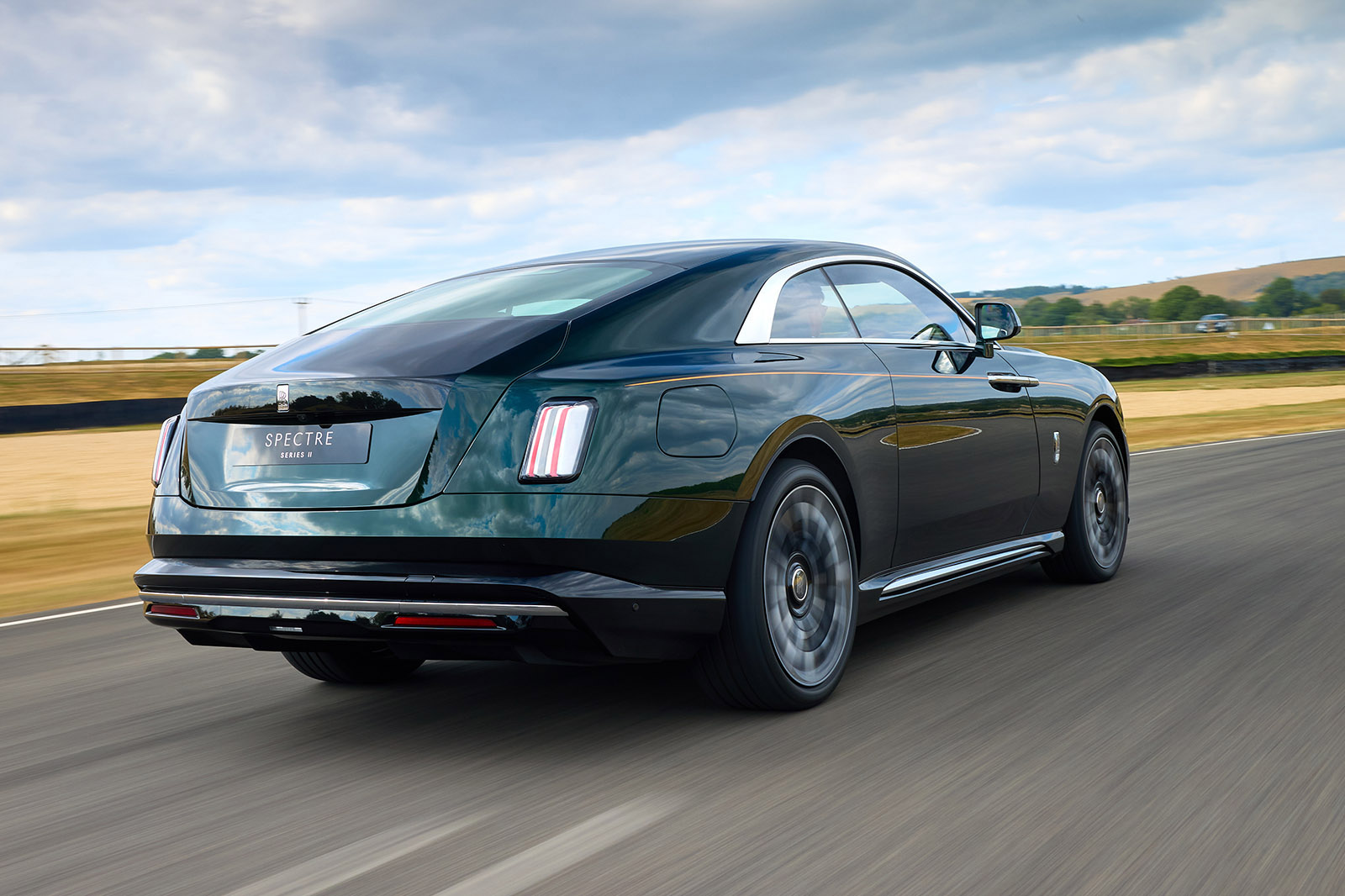
Flicking on the Infinity mode in the Black Badge variant sharpens its responses and weightens the steering slightly. It’s hard to say exactly how much sharper the car feels without a back-to-back test but we are talking tenths of degrees rather than huge differences. It still feels not just like a Spectre, but also like a Rolls-Royce.
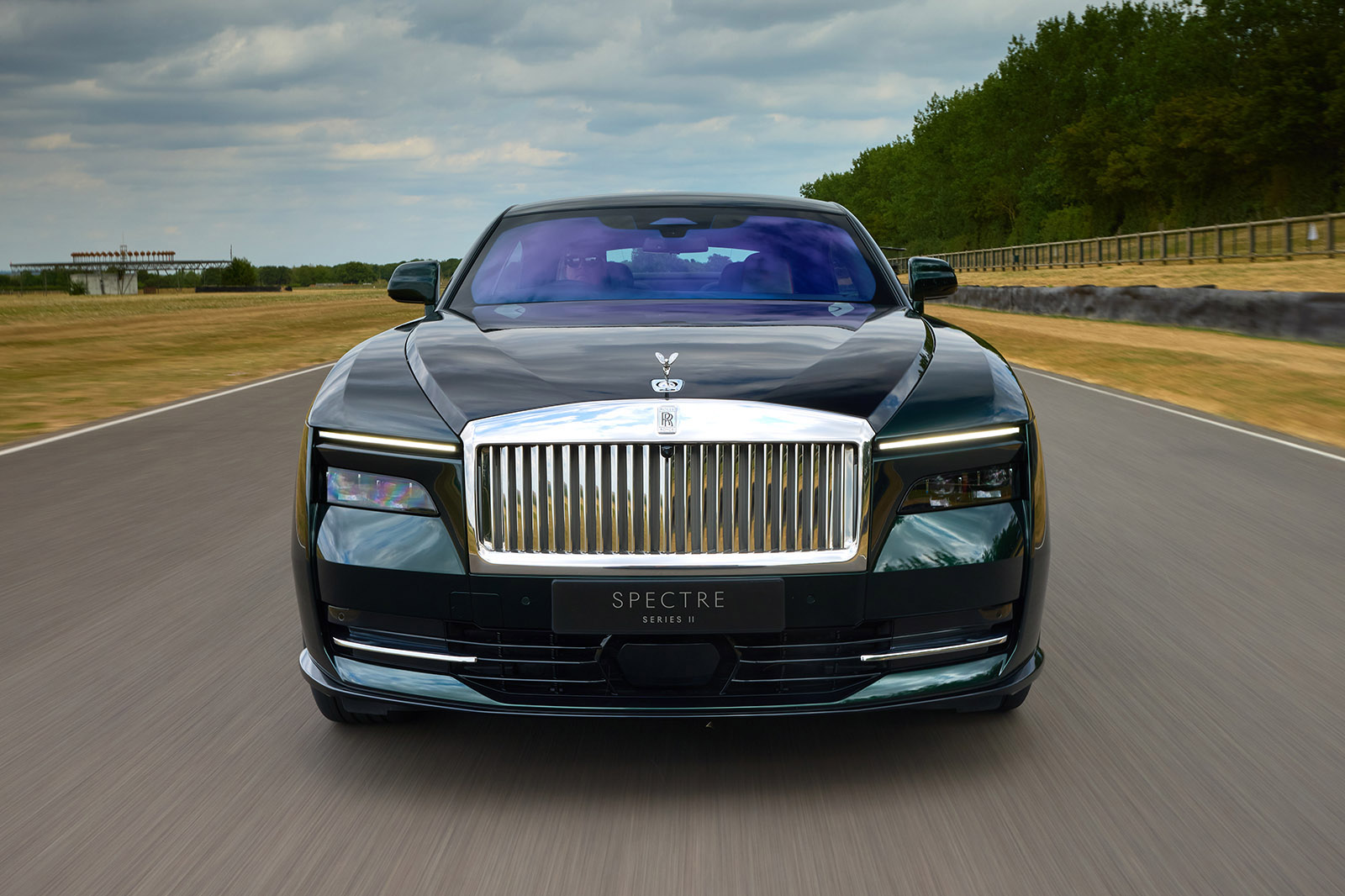
In standard form, the car's steering is quite light, but marginally more direct (at 2.4 turns lock to lock) than Rolls’ typical standard; in Black Badge form, it's a touch heavier and more communicative, but no less easy to manage. Electronic traction and stability controls work imperceptibly even in quicker driving, although when on, they do prevent the car from wrenching its way into power-on understeer, as it will ultimately do in steady-state cornering at the limit of grip with everything turned off.

Whether by the actions of the four-wheel steering or active anti-roll control systems, the car follows tight lines at pace with impressive accuracy. It stays true to a path and a particular cornering posture in a way you wouldn’t expect of a three-tonne luxury idol being driven so hard.

That said, we’ve already touched on the sheer width of this car. With the doors closed, it’s less imposing – but this is a big GT that fills its lane and demands greater precision the harder you want to whisk it along.

Cabin isolation is world-class. That double-skinned chassis floor and 700kg of battery mass held within it do a great deal between them to shut out and dampen road noise from axles. Wind noise is supremely well filtered too.

Our UK road test car generated only 55dBA of cabin noise at a 50mph cruise. On the same surface and in comparable conditions, the Phantom VIII tested in 2018 generated 56dBA, and the Mercedes-AMG EQS 53 some 59dBA (still quiet, even for a modern EV).

Perhaps a little awkwardly for Rolls-Royce, however, the Ghost saloon tested in 2021 matched that 55dBA at 50mph. Rolling on 21in wheels to our test car’s 23s, it also beat the Spectre’s showing at 70mph (58dBA versus 61dBA). So when Rolls-Royce suggests this car represents a new high-water mark for refinement, perhaps it should qualify its enthusiasm just a little.

MPG & RUNNING COSTS

Rolls Royce Spectre Series II review 2026 018

We are told there is no such thing as an average Rolls-Royce buyer. But the manufacturer notes that the average Spectre owner will have seven cars to choose from and cover only about 3500 miles in their EV in a year.

The original Spectre's 329-mile claimed range - which became a test-average 245 miles with our 2023 road test car, and 265 miles at motorway touring speed - might not, you'd imagine, have inspired the ultimate confidence from owners to use their car as indiscriminately as they clearly have. In any case, the 'S2' version's battery endows WLTP lab test range of up to 390 miles. We wait to see exactly how that translates in the real world, but would expect this to have become a real-world, 300-mile motorway-touring proposition.

What a tonic to retain BMW’s old-style row of numbered shortcut keys under the multimedia display. One through eight, you can nominate your own functions for them – from ‘lane keeping off’ to ‘retract Spirit of Ecstasy’. Bliss.

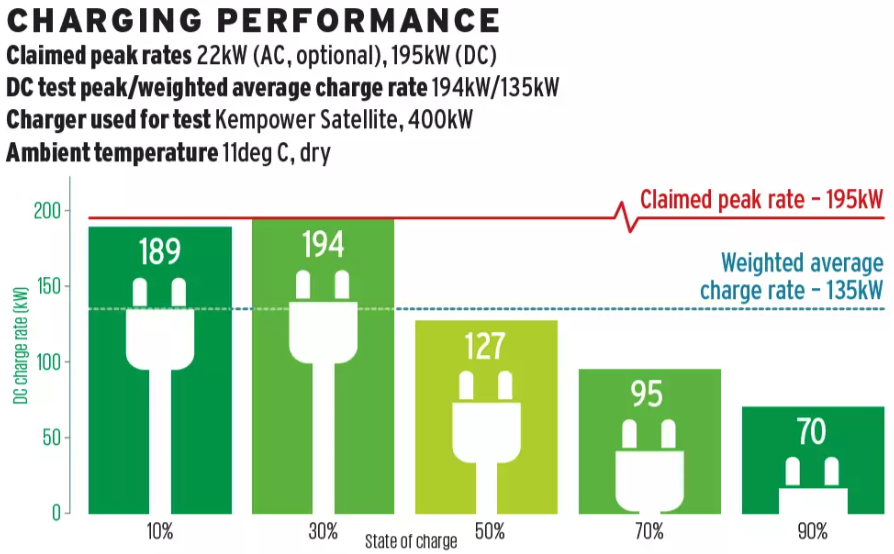
By Rolls-Royce standards, the Spectre’s £333k entry price isn’t particularly high, and its 400V DC charging potential will most likely meet most owners’ needs (the new battery cuts 10-80% DC charging speed, Goodwood claims, by some 14 per cent; while the below charging test was from the Series 1 version).

The Black Badge version is priced from £386,665.

VERDICT

Rolls Royce Spectre Series II review 2026 032

The Spectre, its maker says, ushers in a new era for Rolls-Royce Motor Cars. It’s a weighty billing, but there’s no doubting the car’s sequential significance. There will never be another ‘first electric Rolls-Royce’.

What the Spectre, in either regular or Black Badge flavour, brings to the Rolls-Royce driving and ownership experience shouldn’t be underestimated: zero-emission modernity, kudos and desirability; world-class luxury, cruising comfort and refinement; and an understated but ever-apparent driver appeal.

It’s all packaged with the electric range to make it a usable day-to-day car. And yet it’s always so special as to rise so far above any sense of the ‘everyday’.

The wondrous thing about the Spectre is that, deep down, it still feels like a peerless, serene, old-world Rolls-Royce; albeit one you’ll love to drive. But it could also take you into a new world of electric motoring with an unmatched sense of gentility and reassurance; which may be precisely what Rolls’ customers feel they need.

Matt Saunders

Matt Saunders Autocar
Title: Road test editor

As Autocar’s chief car tester and reviewer, it’s Matt’s job to ensure the quality, objectivity, relevance and rigour of the entirety of Autocar’s reviews output, as well contributing a great many detailed road tests, group tests and drive reviews himself.

Matt has been an Autocar staffer since the autumn of 2003, and has been lucky enough to work alongside some of the magazine’s best-known writers and contributors over that time. He served as staff writer, features editor, assistant editor and digital editor, before joining the road test desk in 2011.

Since then he’s driven, measured, lap-timed, figured, and reported on cars as varied as the Bugatti Veyron, Rolls-Royce PhantomTesla RoadsterAriel Hipercar, Tata Nano, McLaren SennaRenault Twizy and Toyota Mirai. Among his wider personal highlights of the job have been covering Sebastien Loeb’s record-breaking run at Pikes Peak in 2013; doing 190mph on derestricted German autobahn in a Brabus Rocket; and driving McLaren’s legendary ‘XP5’ F1 prototype. His own car is a trusty Mazda CX-5.

Matt Prior

Matt Prior
Title: Editor-at-large

Matt is Autocar’s lead features writer and presenter, is the main face of Autocar’s YouTube channel, presents the My Week In Cars podcast and has written his weekly column, Tester’s Notes, since 2013.

Matt is an automotive engineer who has been writing and talking about cars since 1997. He joined Autocar in 2005 as deputy road test editor, prior to which he was road test editor and world rally editor for Channel 4’s automotive website, 4Car. 

Into all things engineering and automotive from any era, Matt is as comfortable regularly contributing to sibling titles Move Electric and Classic & Sports Car as he is writing for Autocar. He has a racing licence, and some malfunctioning classic cars and motorbikes.