






Currently reading: EXCLUSIVE: We're first to drive VW ID Polo GTI – it deserves the badge

VW finally finds the courage to put the hallowed letters on an EV – we've had a first taste in a prototype

Volkswagen’s GTI performance sub-brand, for so long a tower of strength for the company, has turned into something of a problem for it over the past decade.

With its GTE and GTX models, Wolfsburg has variously tried to complement, augment or otherwise update those three famous letters, or else just gently steer the idea that they represent in the direction of electrification. So far, gentle steering hasn’t done the trick.

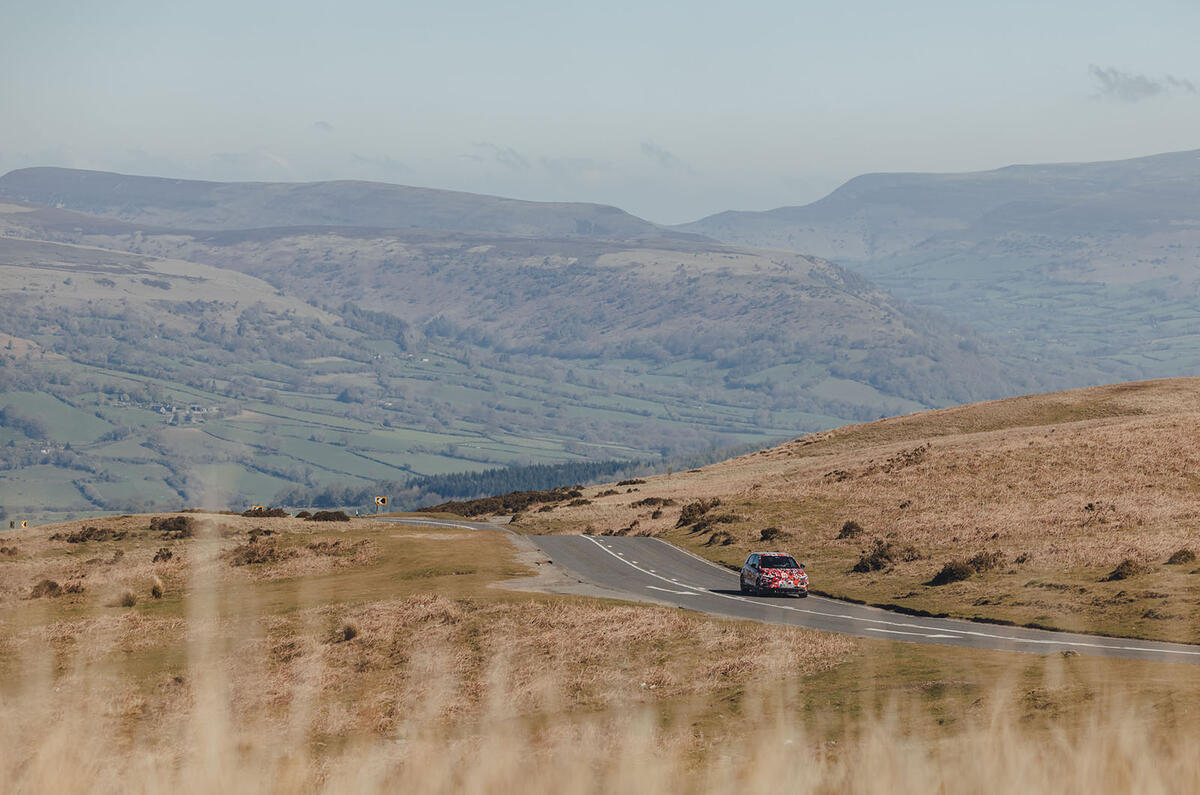
But the tiptoeing and pussyfooting around is finally over. Bolder and more radical decisions have been taken. And, in a gravel car park in the Brecon Beacons, I’m standing next to the proof.

The seventh-generation Polo supermini, due this year, is going electric. Volkswagen is flagging the development loud and clear, by adding an ID prefix to the car’s name (it will do the same with many other familiar models over the next couple of years), but what it’s giving us is pretty plainly a Polo all the same.

It’s part of a more wholesale commitment to making EVs central within the company’s model portfolio, instead of being peripheral or parallel to it. There’s a seriousness about electric mobility here that Volkswagen hasn’t quite shown before.

And the cherry on top of the change in attitude is the first electric GTI model: the ID Polo GTI. Crucially, it’s not a GTX (how the ‘hot’ versions of the ID 3, 4, 5, 7 and Buzz have been badged so far), it’s a GTI – mostly as we have known the idea of one since the Mk1 Golf GTI of 1976.

Range-topping and real-world; desirable but usable; fast and fun but not highly strung or hard to drive. A regular, versatile, everyday car with superpowers, not compromises – and a fully fledged, top-order driver’s car to boot.
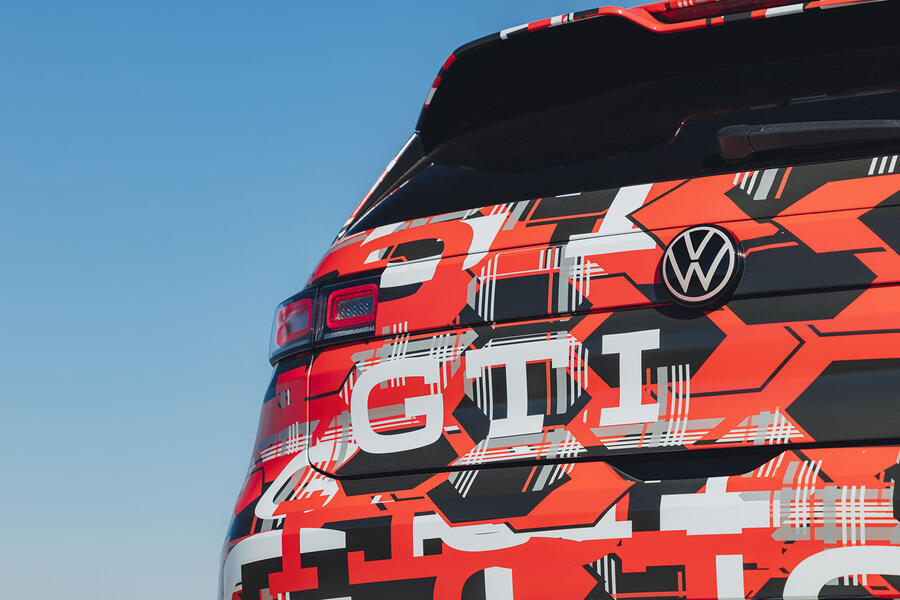
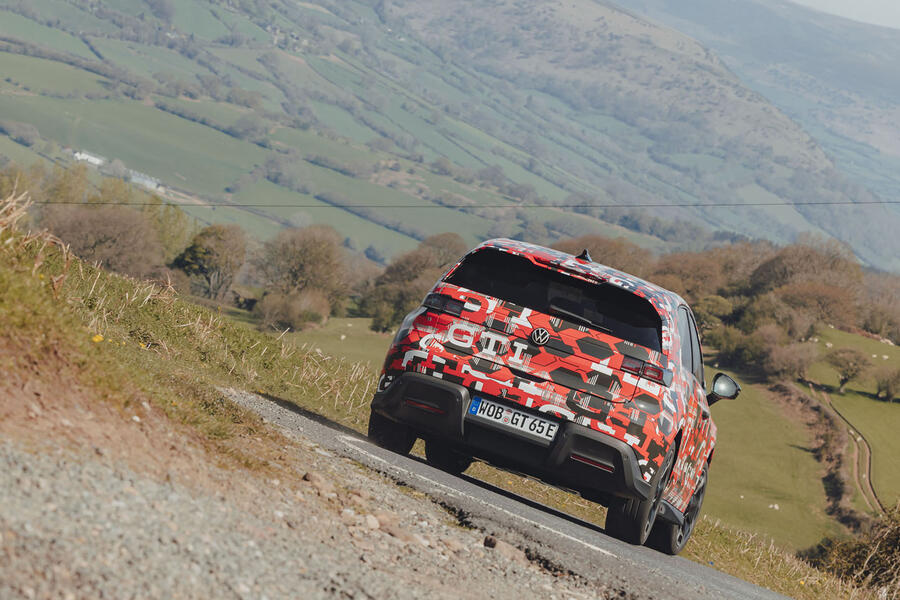
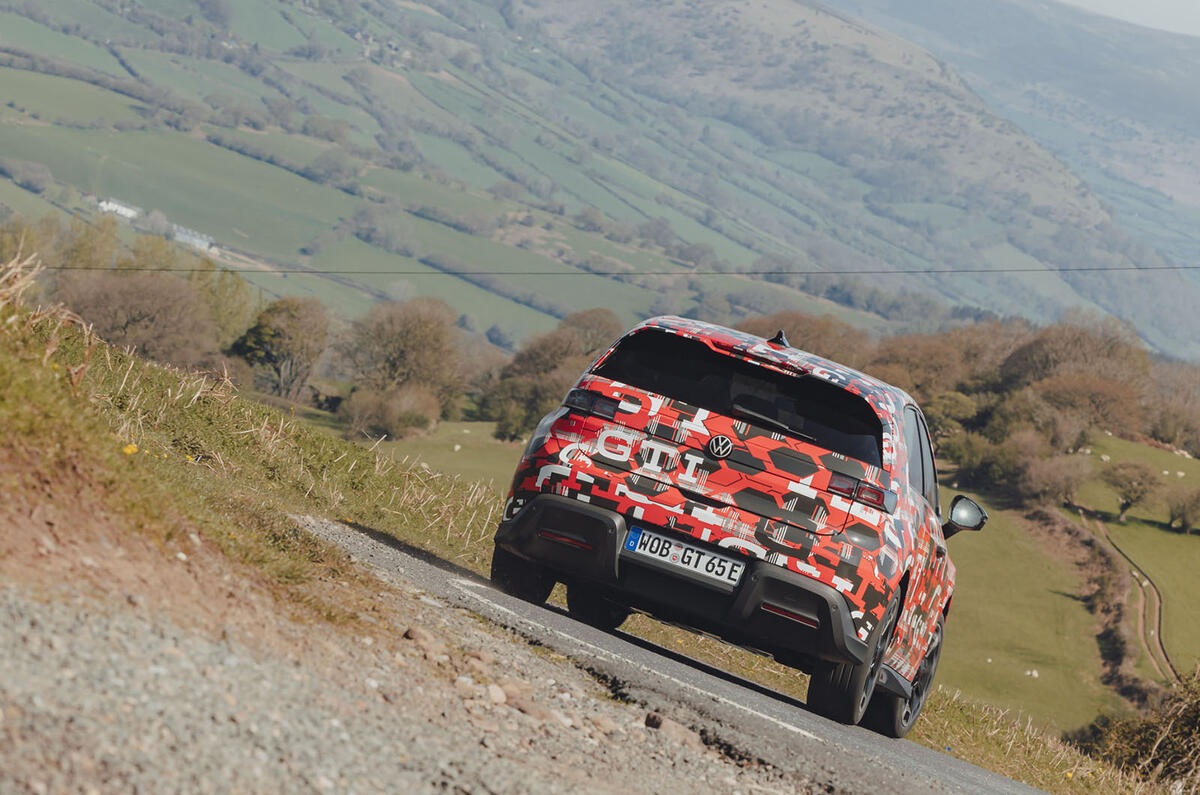
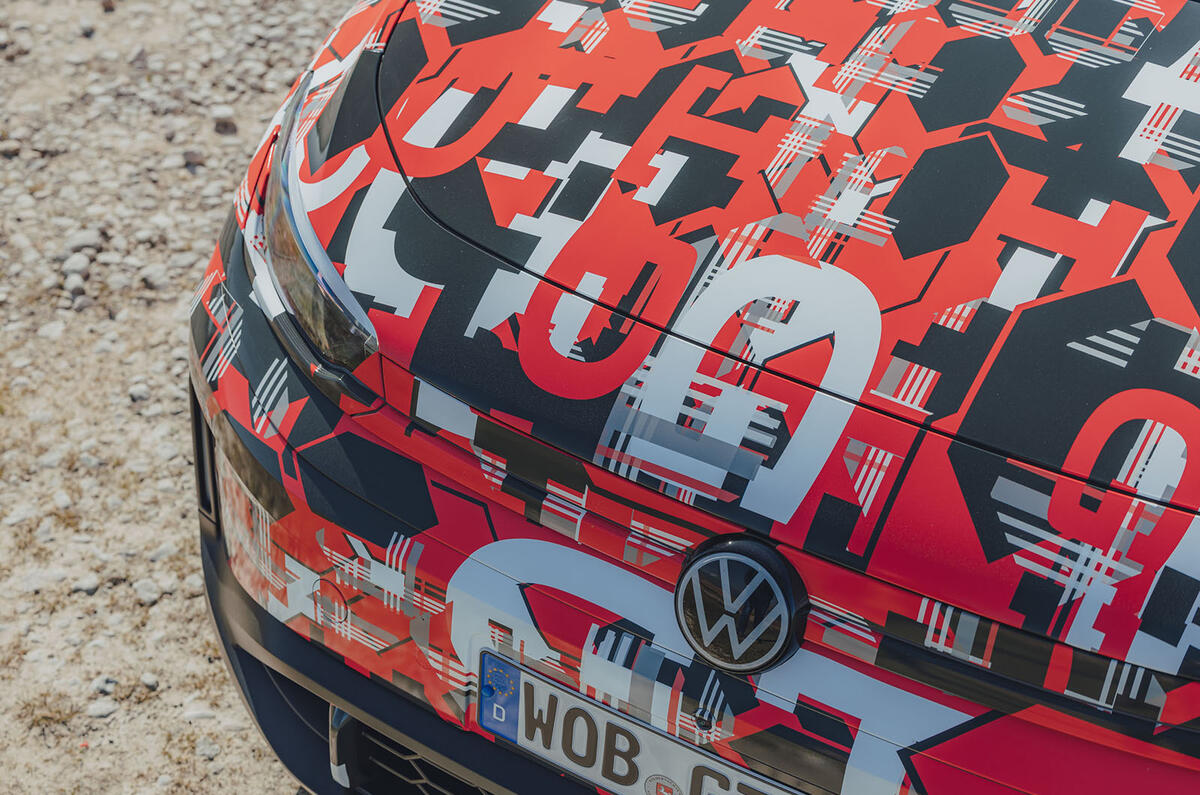
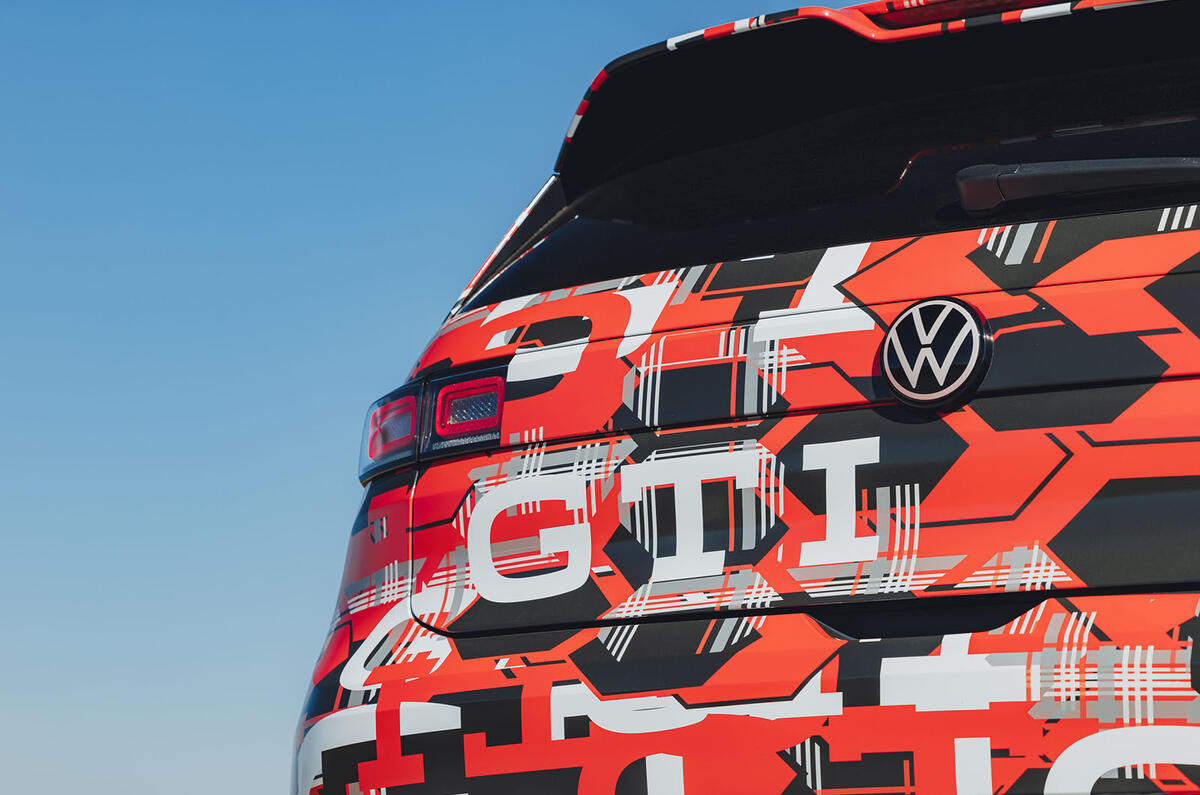
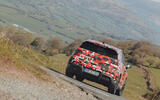
VW ID Polo GTI rear detail

The very first ones won’t be with customers in Germany until the final weeks of 2026, with UK deliveries expected in the spring of 2027. So as we stand here, the April sun bathing our mountain idyll in warmth, the development team for the car – led by Volkswagen’s head of driving dynamics, Florian Umbach – is still in the final stages of software tuning.

That team has come to the UK with real intent, however – and not only to join up with Autocar, to make us the first testers in the world to drive the new GTI.

“We know how important the UK market will be to the success of this car,” explains Umbach, “and also how particular, unique and challenging your roads are. This is hot hatchback central. It has been such a defining market for these kinds of cars. So I always had it in mind to bring prototypes here, to be sure they would work well. That’s what today is about.”

Advertisement

Read our review

Car review

Cupra may have led development of this electric supermini, but Volkswagen insists that it’s a proper Polo

Back to top

Familiar Recipe

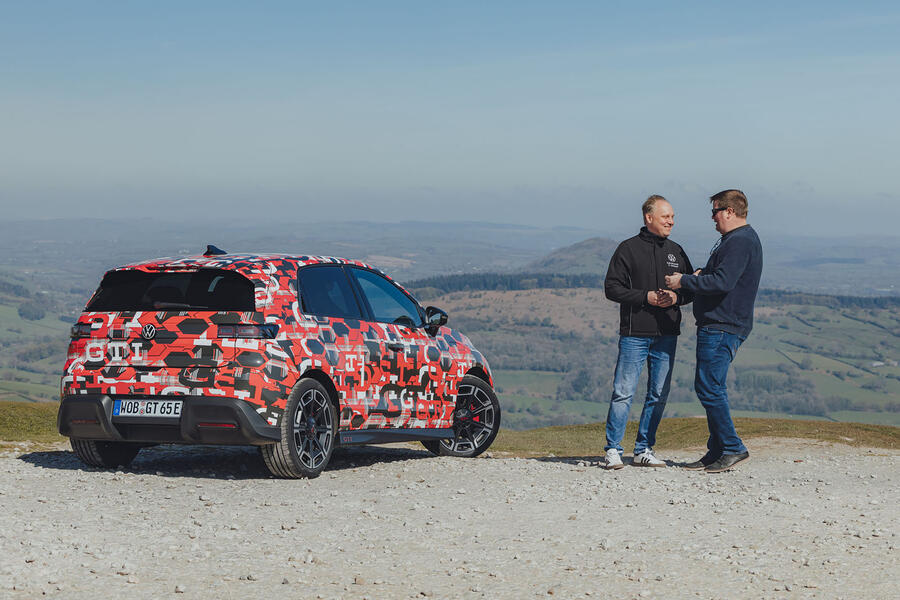
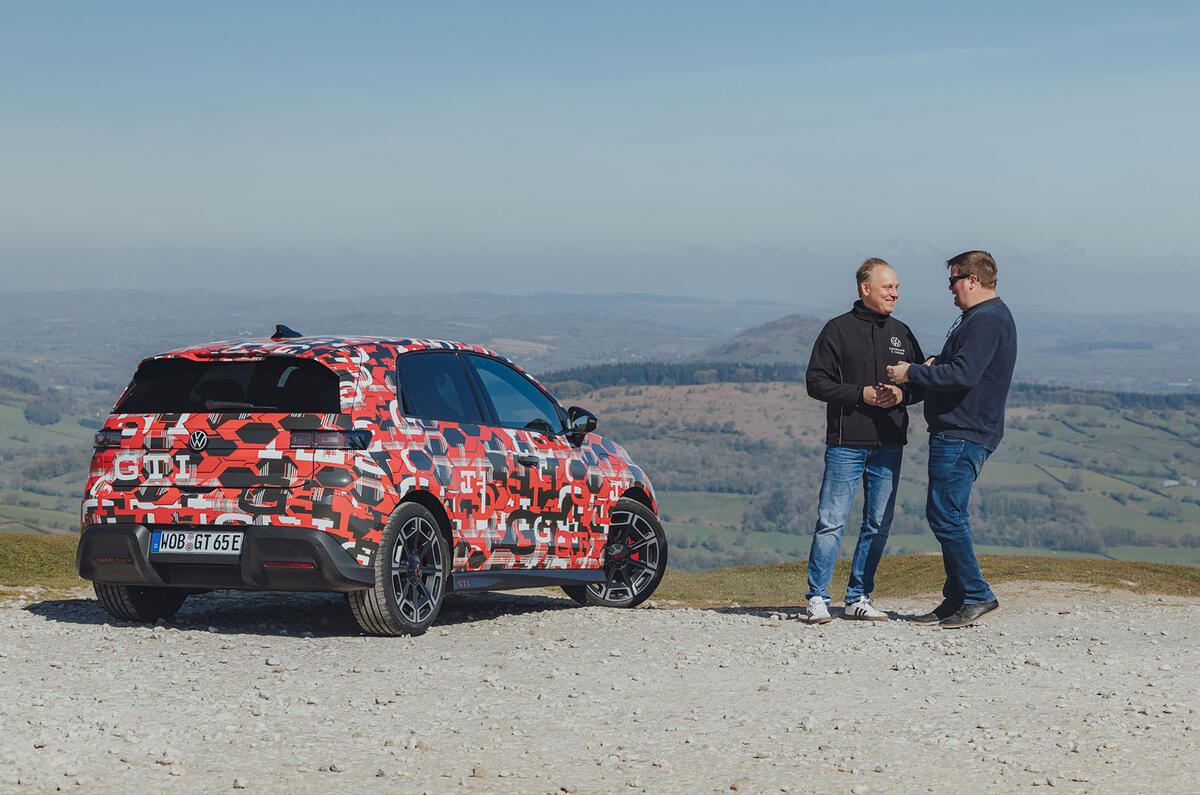
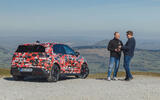
VW ID Polo GTI, Florian Umbach and Matt Saunders

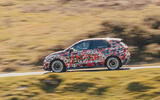
Before the driving, Umbach gives me a guided technical tour of the vinyl-covered EV in front of us. Even so thoroughly disguised, it looks much more like a familiar, conventional hatchback than the ID 3 ever has.

This generation of cars, he says, will be all about Volkswagen getting back to its former self, rediscovering its old priorities. “The ID Polo had to just look normal – like a Volkswagen,” says Umbach with a smile. “And so, technically, it has a familiar layout and lots of technologies that you recognise. But it’s still an advanced small car.”

Volkswagen’s internal codename for the new EV platform on which the ID Polo is based (in development since 2021, as you might guess) is MEB21, says Umbach, but it has been rebranded for public consumption as the more catchy-sounding MEB+ platform.

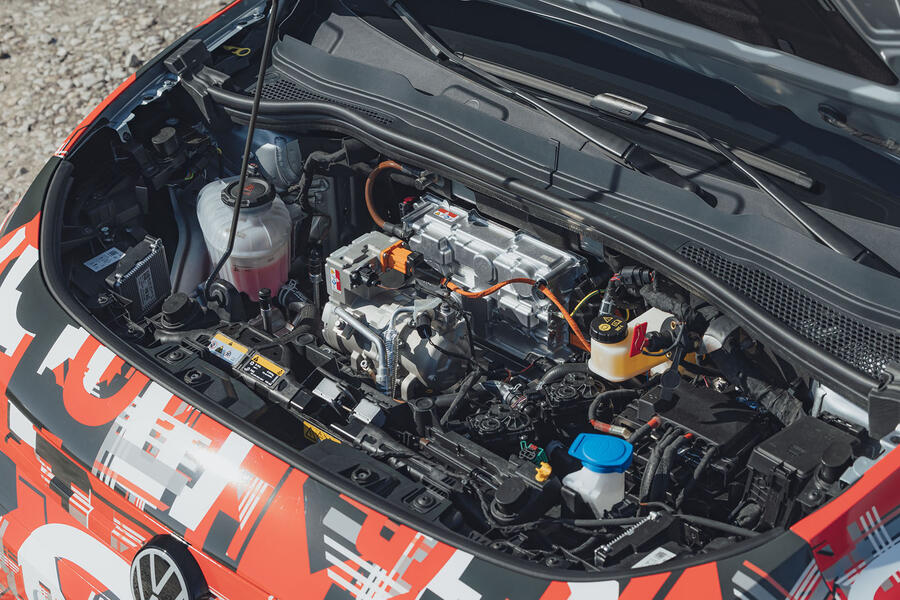
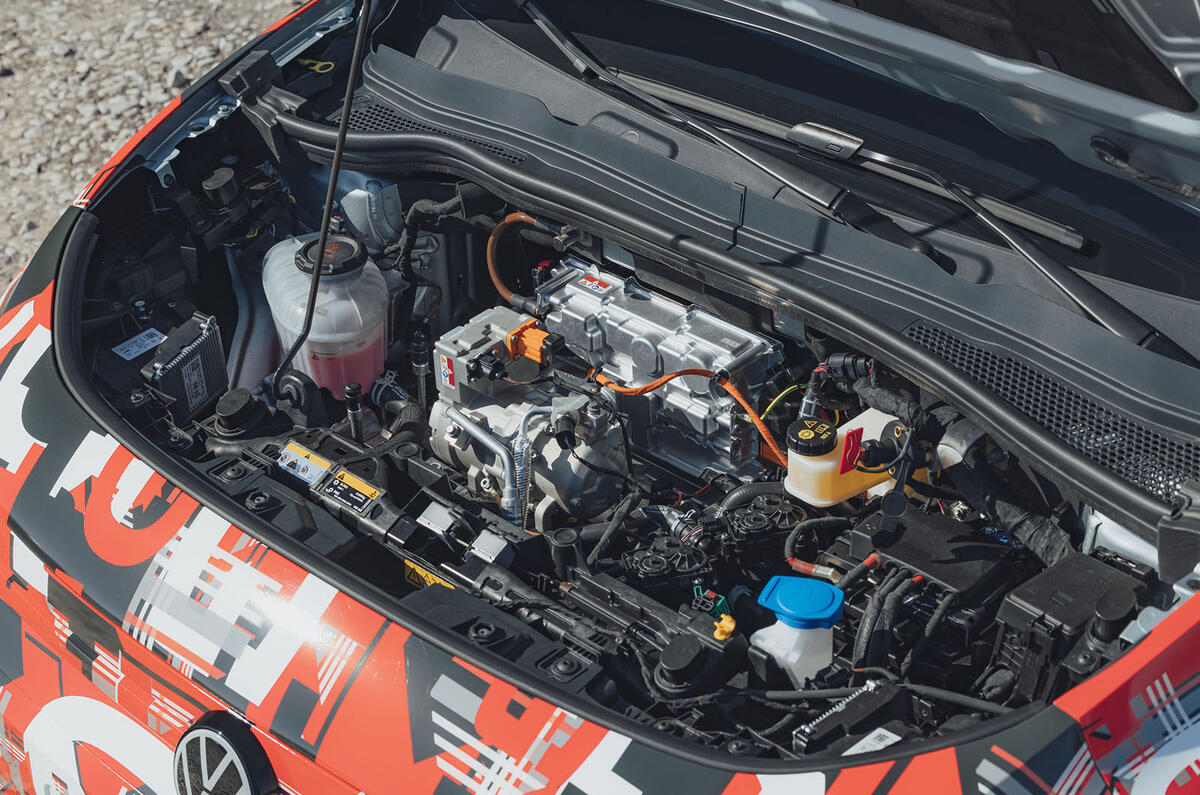
It confers a conventional hot hatchback layout on the GTI: a front-mounted motor driving the front wheels, with strut-type front suspension and a torsion beam at the rear.

“The MEB-generation EVs [the ID 3 etc] taught us that switching to a rear-motor layout means adding weight [in order to engineer in sufficient crash protection] and losing boot space when it comes to compact cars,” explains Umbach.

“By contrast, MEB+ makes the ID Polo lighter, simpler and more efficient. We can carry enough battery capacity here [52kWh usable] to deliver more than 260 miles of WLTP range from the GTI and up to 280 miles from other versions. But having the motor up front allows us to regenerate energy more efficiently and keeps the powertrain packaging tight.”

VW ID Polo GTI motor

Back to top

“I also think front-wheel drive is what hot hatchback drivers expect: it’s the classic template,” adds Umbach.

Although when it came to delivering driving dynamics, his team certainly plundered Volkswagen’s toy cupboard for advanced driveline, steering and suspension systems of the sort that only a big back catalogue of hot hatch wrangling can put at your disposal – and that most of this car’s rivals don’t have.

The ID Polo GTI’s electric power and torque reserves – 223bhp and 214lb ft – find their way to the road via an only slightly modified version of BorgWarner’s VAQ torque-vectoring active front differential, as seen on the Golf GTI Edition 50 (tuned for slightly less overall torque transfer but also to be faster-acting than in the Golf).

It gets 19in wheels as standard, with tyres of up to 235-section, but which sit inside wheel arches that permit an even greater combined wheel and tyre sidewall diameter than the current Golf GTI does (680mm versus 650mm), to the improvement of ride isolation.

Dynamic Chassis Control Plus adaptive dampers are fitted as standard, also to the benefit of ride isolation and comfort. And the GTI gets unique front hubs and steering knuckles compared with the regular ID Polo, which lower the front-axle roll centre, dial in more negative camber at the front wheels and cut the steering ratio from 15:1 down to 14:1.

Progressive (passive variable-rate) steering is standard, the ID Polo’s standard front anti-roll bars have been stiffened and its suspension springs have been shortened (by 15mm in terms of prevailing ride height) and stiffened likewise.

Umbach and his team are particularly proud of the special twist beam rear axle of the ID Polo GTI, with its mountings and bushings cleverly designed to allow some longitudinal ‘ride’ compliance but keep lateral axle location much more closely controlled. “It’s the best twist beam I think we’ve ever made,” he says.

Practical Matters

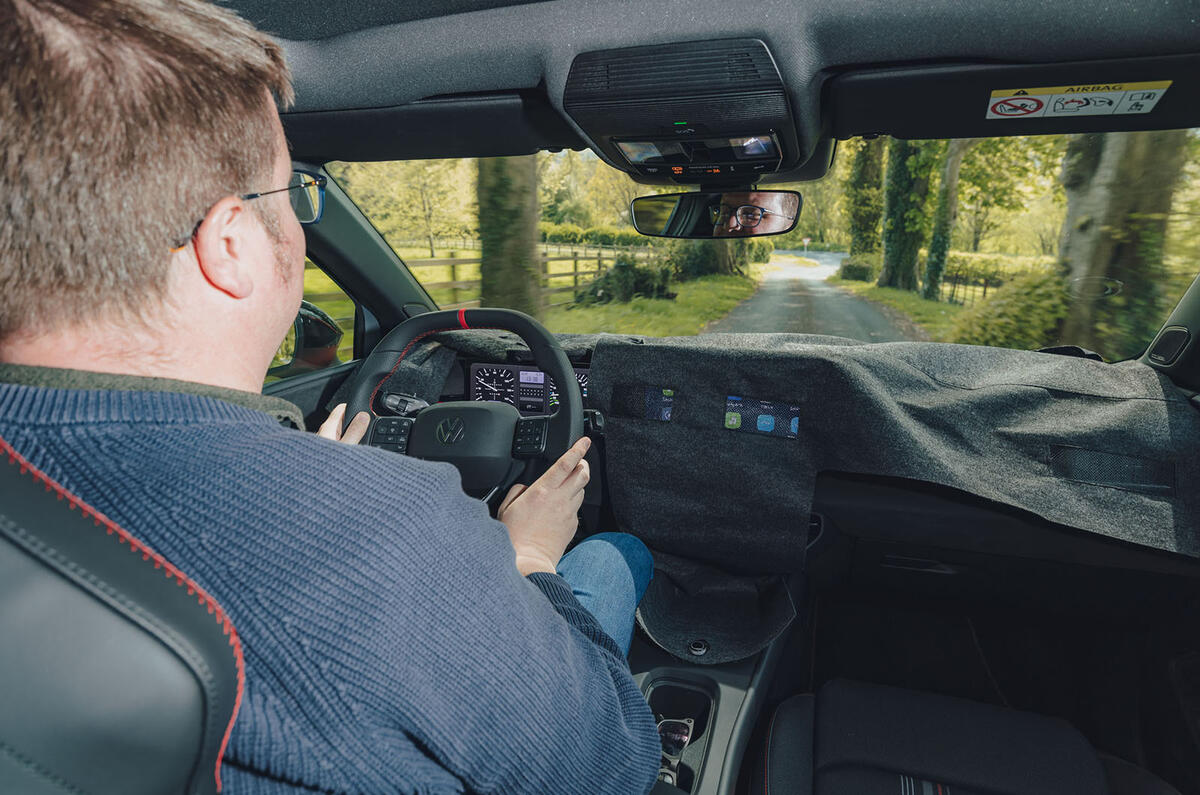
Matt Saunders driving VW ID Polo GTI prototype, with interior covered

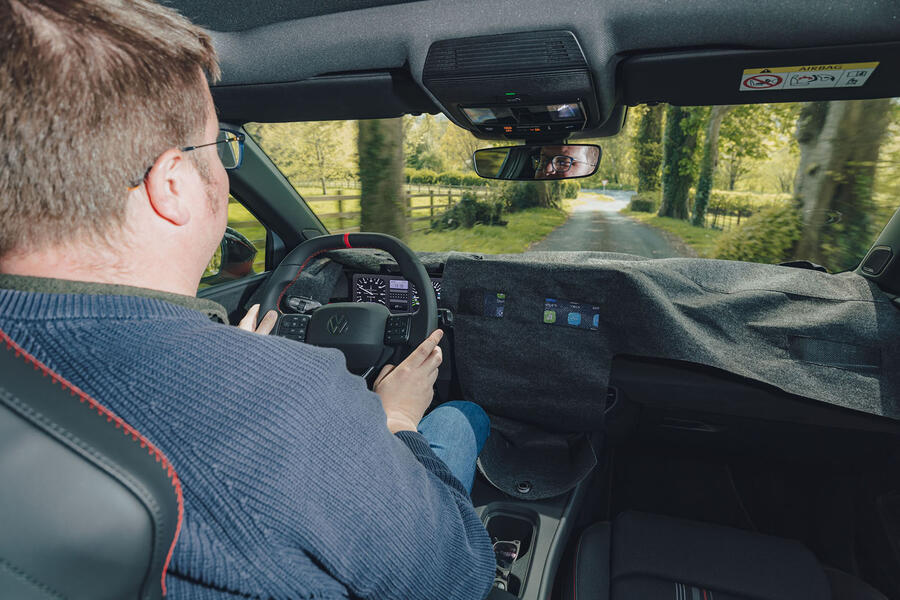
We duck inside what is a fairly snug cabin yet still fit for four adults, to be met by the familiar cloth disguise that gets pinned to the scuttle and then draped over the dashboard in prototypes like these. It’s there so you can still operate the car without really being able to scrutinise its fixtures and fittings.

Back to top

The driver’s seat feels small compared with the hot hatchback class norm and doesn’t offer cushion extension in support of longer thighs, but it’s nonetheless quite grippy and comfy, securing your backside well and feeling like somewhere you would be happy to spend plenty of time.

In the back, there’s probably slightly more outright passenger space than a modern supermini typically provides – which is one in the eye for the Alpine A290, Renault 5 and electric Mini Cooper, which are all quite a bit tighter by comparison (and in one case three-door only). Volkswagen is clearly to be taken at its word about its wish to make this a really usable, versatile daily driver. Of course it is.

The disguise leaves a few things uncovered. The fairly small, two-spoke steering wheel, with its flattened-off top and bottom rim sections, is chief among them, which it’s reassuring to find has spokes stuffed with proper buttons rather than ‘brush-by-mistake’ capacitive ones.

At the bottom, what you first take to be simply a decorative GTI badge is actually a drive mode button, one press of which puts the car into its most sporty and demonstrative driving setting.

More widely, you can see enough Dinamica microfibre on the door panels and dash to give the interior a strikingly plush and expensive, performance-flavoured vibe.

Under the central air vents I can just about see a row of physical ventilation controls, so not everything here will depend on the touchscreen infotainment system (another of Volkswagen’s learnings, clearly).

But my favourite discovery is on the digital instrument screen, where a few flicks of the ‘view’ toggle button unearths some retro-styled mock analogue dials styled up to look just like those of the Mk1 Golf GTI, with a faux digital clock between them.

Apparently the retro theme extends to the infotainment touchscreen too, where it adds audio remote controls styled like a cassette tape and a charge meter mimicking a 1980s fuel gauge.

All a bit twee, perhaps, but all undoubtedly good, evocative fun – if you ask this millennial reviewer, at any rate.

Back to top

Playing Polo

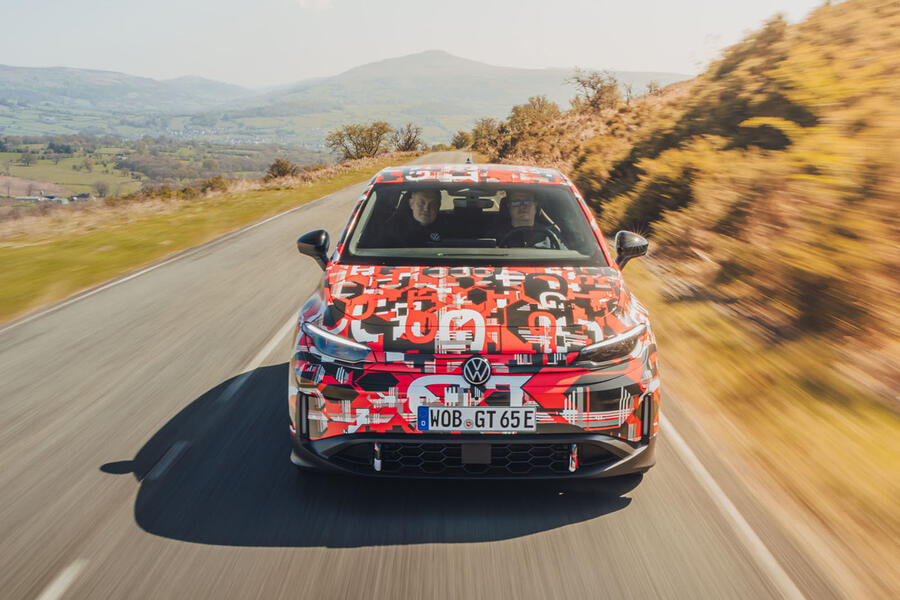
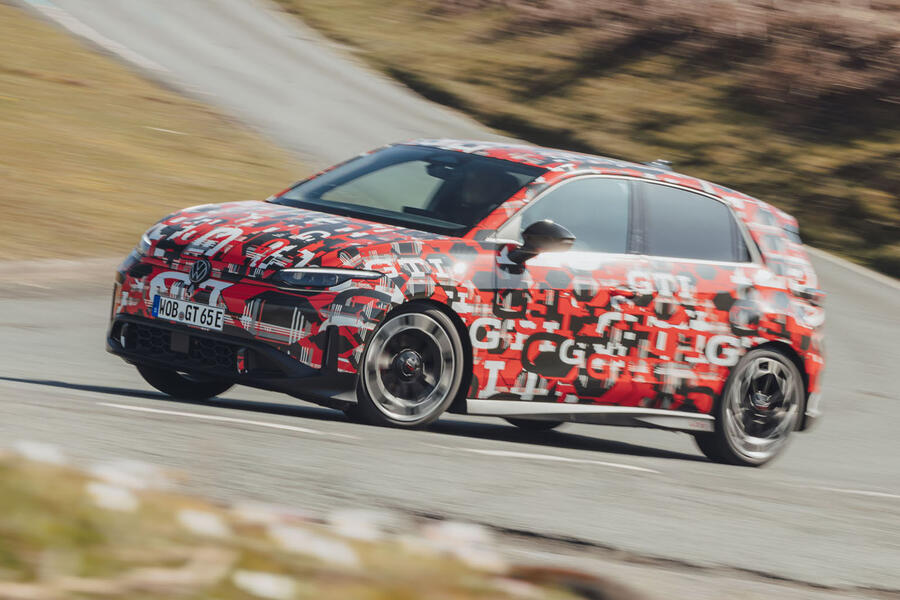
Florian Umbach and Matt Saunders driving VW ID Polo GTI, viewed from the front

Umbach accompanies me in the front passenger seat as I head out on the road – and my first impressions confirm plenty of trademark GTI dynamic characteristics.

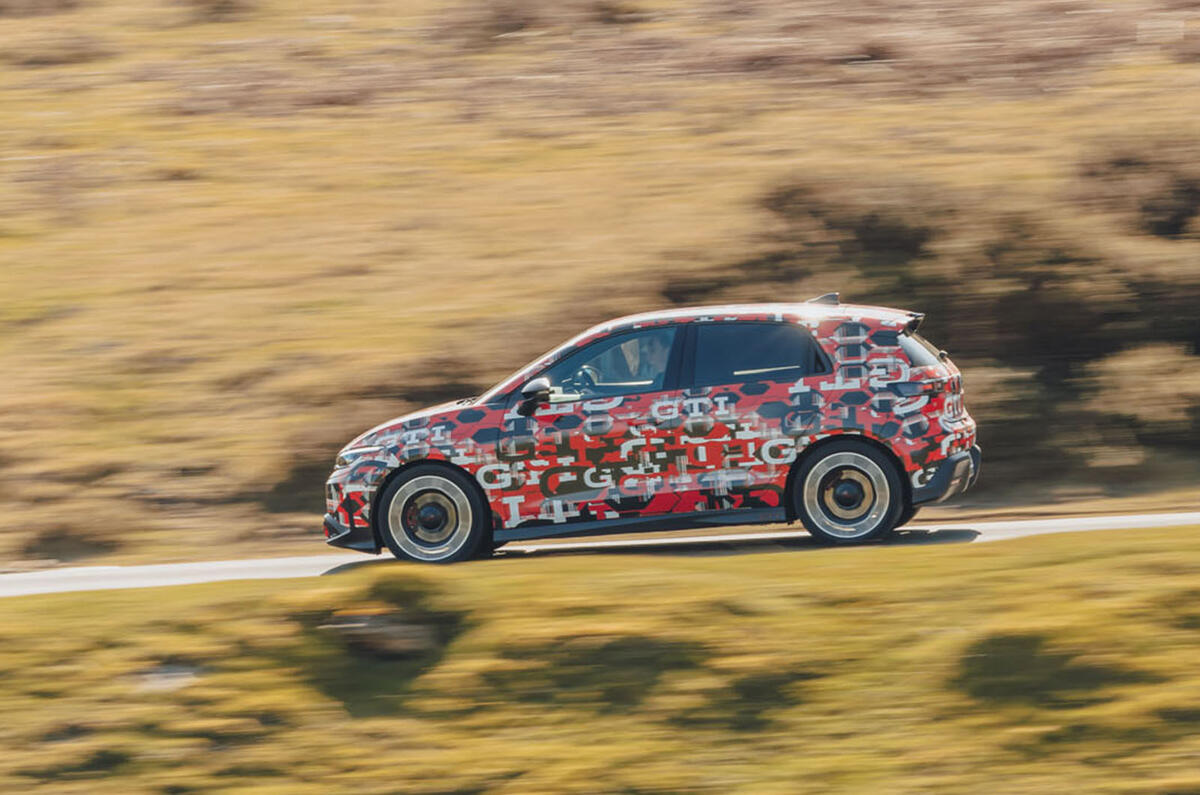
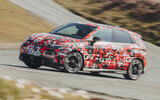
First across the gravel and then onto the Tarmac and up to speed, the ID Polo GTI rides tautly but quietly. It’s firmer-feeling than most compact EVs but not at all jittery or restive, and those adaptive dampers, with their graduated touchscreen adjustability, allow plenty of dynamic versatility.

At its comfiest, the suspension is supple enough to breathe a little with the road surface as it rises and falls, to round the edges off craggy inputs nicely and not to be wearing on the senses.

But at its firmest, it fosters lots of connectedness with what’s underneath you, creates lots of directness and agility and great body control, and provides a strong platform for the driven front wheels to push against.

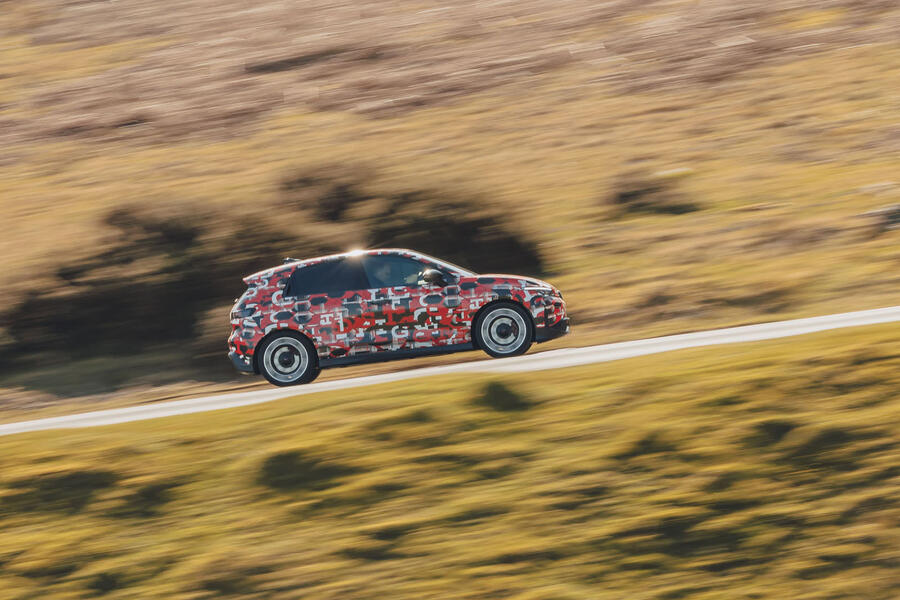
VW ID Polo GTI driving, viewed from the side

Even at full tilt, they don’t feel like they’re pushing with an excessive amount of power – just enough to feel energetic and to keep you occupied and engaged in what you’re doing.

They’re certainly pushing hard enough to feed back plenty of tractive forces through the steering, mind you. Otherwise it’s quite pacey but weighted intuitively, with enough centre feel to avoid any kind of nervous, hyperactive sense.

Back to top

Even the tractive feedback mentioned isn’t traditional torque steer, because nothing in the front axle is being deformed by those drive forces and the car is going precisely where it’s pointed.

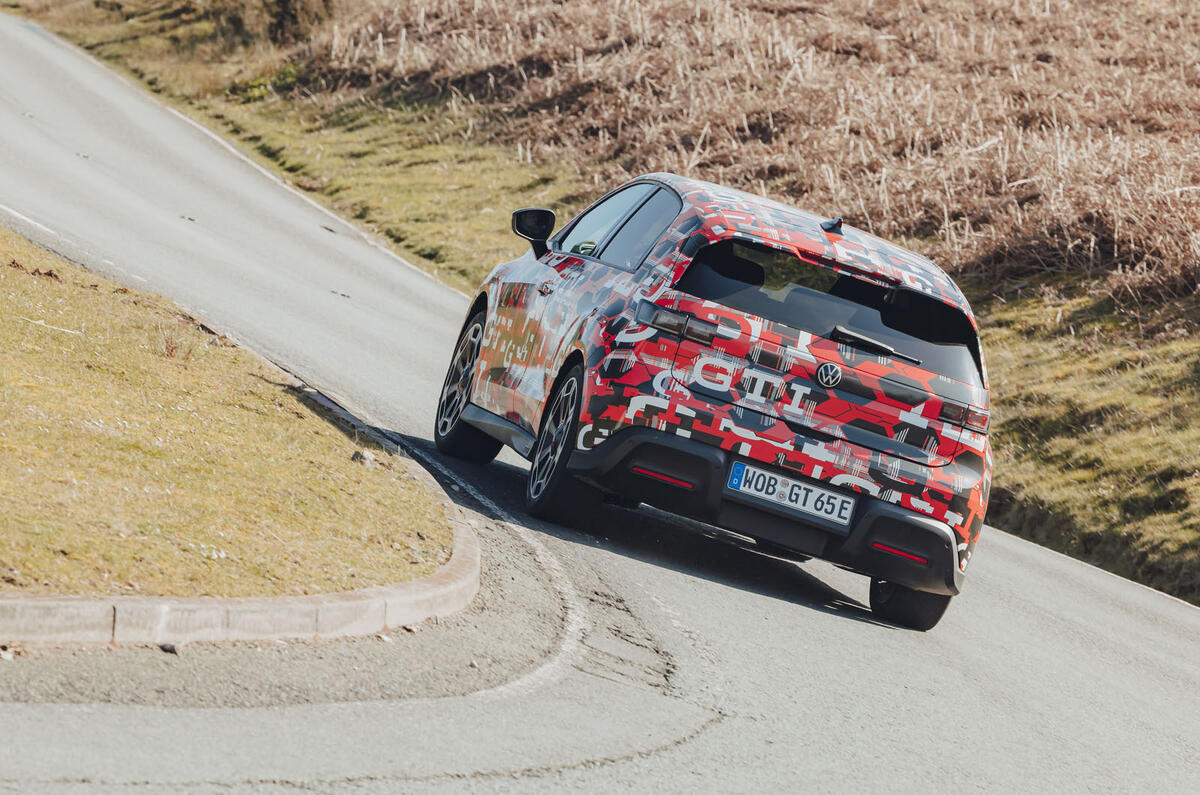
Editor-in-chief Steve Cropley once described it to me as ‘wheel fight’, which is much closer to the mark. The ID Polo GTI doesn’t have loads of it under power, rather just enough to make it feel lively and interactive; to make you tighten your grip on the steering rim just a little as you fire it out of a corner or over an uneven surface; and to make you realise that this is a car you can make rotate with your right foot almost as easily as you can with your wrists, and which can come really fast out of hairpin bends without troubling its traction control at all.

Shift paddles behind the steering wheel spokes give you manual control of the energy regeneration, in the usual way.

There’s also some imitation engine noise played by the car’s stereo speakers once you select GTI mode. This comes across as slightly annoying and overcooked, principally because it adds in arbitrary fake gearshifts, which come without any interruption to the actual power delivery. Mercifully, you can use Individual mode instead, where there’s no such fakery.

What are the most impressive things about the drive? I’d say how well matched the car’s performance level seems to be with the capacity of its front axle to create traction.

Back to top

To put it another way, that this car has no more power than it needs or could use without disengaging its driver and leaning on its electronics to at least some extent. There aren’t many serious performance EVs you can describe like that.

The ID Polo GTI still has more than enough poke to get across the ground quickly, though, and makes you intimately aware of how hard the front contact patches are working – it even feels at times like your fingertips and big toe could almost be wired directly to them, getting the most amount out of them that’s there to be got.

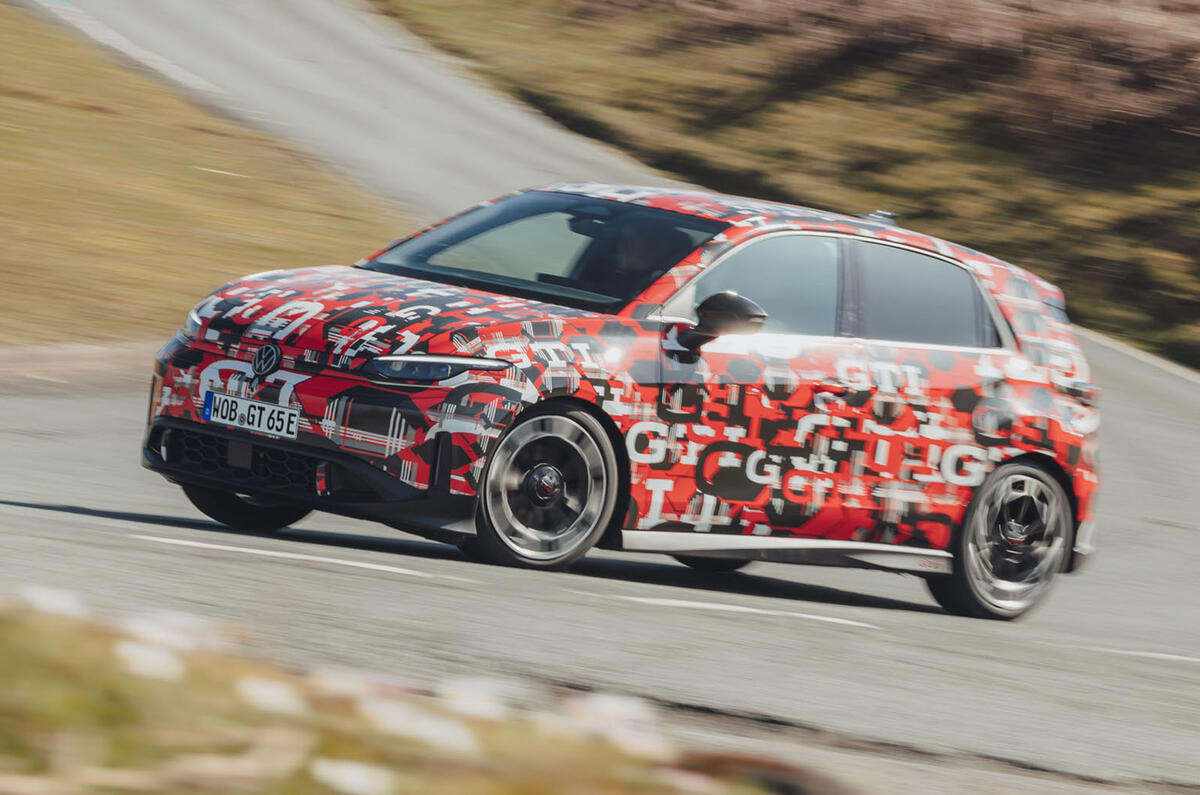
VW ID Polo GTI under hard cornering, viewed from the front-left

I’ve never driven another Volkswagen Group hot hatch that has received as much dynamic benefit from its VAQ active front differential as this one seems to.

The ID Polo GTI is really absorbing and entertaining at its most forthcoming – but clearly still versatile, rounded, usable and well mannered when the occasion calls.

Sound like a proper GTI? Clearly it is. And if the electric haters aren’t sold on that idea, a drive may very well be all it takes to change their minds.

Join our WhatsApp community and be the first to read about the latest news and reviews wowing the car world. Our community is the best, easiest and most direct place to tap into the minds of Autocar, and if you join you’ll also be treated to unique WhatsApp content. You can leave at any time after joining - check our full privacy policy here.

Matt Saunders

Matt Saunders Autocar
Title: Road test editor

As Autocar’s chief car tester and reviewer, it’s Matt’s job to ensure the quality, objectivity, relevance and rigour of the entirety of Autocar’s reviews output, as well contributing a great many detailed road tests, group tests and drive reviews himself.

Matt has been an Autocar staffer since the autumn of 2003, and has been lucky enough to work alongside some of the magazine’s best-known writers and contributors over that time. He served as staff writer, features editor, assistant editor and digital editor, before joining the road test desk in 2011.

Since then he’s driven, measured, lap-timed, figured, and reported on cars as varied as the Bugatti Veyron, Rolls-Royce PhantomTesla RoadsterAriel Hipercar, Tata Nano, McLaren SennaRenault Twizy and Toyota Mirai. Among his wider personal highlights of the job have been covering Sebastien Loeb’s record-breaking run at Pikes Peak in 2013; doing 190mph on derestricted German autobahn in a Brabus Rocket; and driving McLaren’s legendary ‘XP5’ F1 prototype. His own car is a trusty Mazda CX-5.

Add a comment…