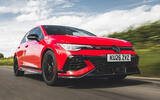
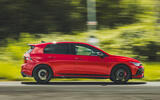

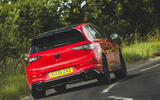
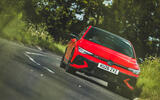


Most powerful series-production GTI in five decades brings special axle hardware and a clearer track focus

Find Volkswagen Golf GTI Edition 50 deals
Other Services
Sell your car
84% get more money with

“It’s definitely a better track car,” says the man opposite me. “Around the Nordschleife, it’s much faster. On the climb up to the Little Carousel, for instance, the Stefan Bellof ess is totally flat in this one. Through the twistier sections, it’s as fast as the Porsche GT cars on an industry pool day.”

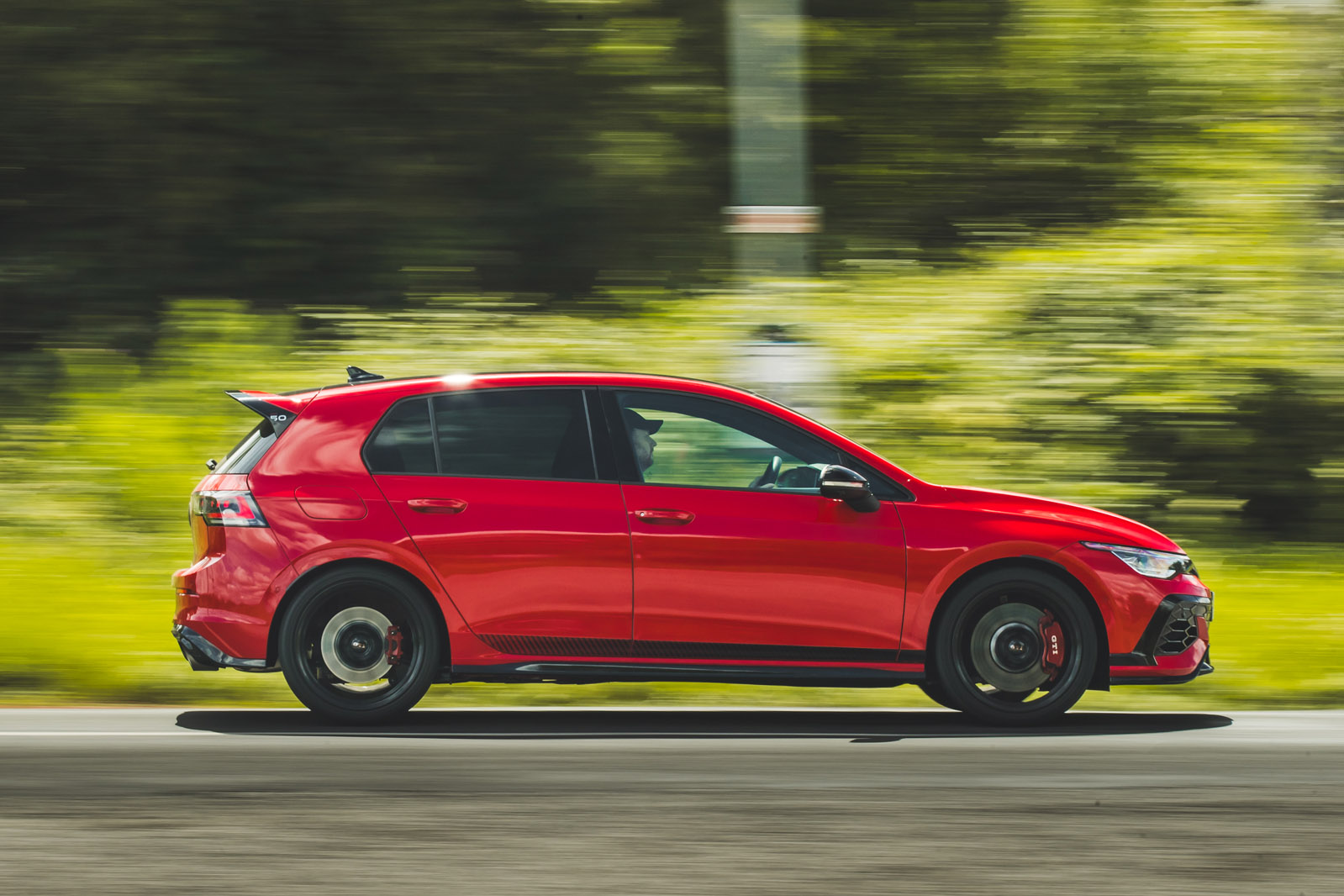
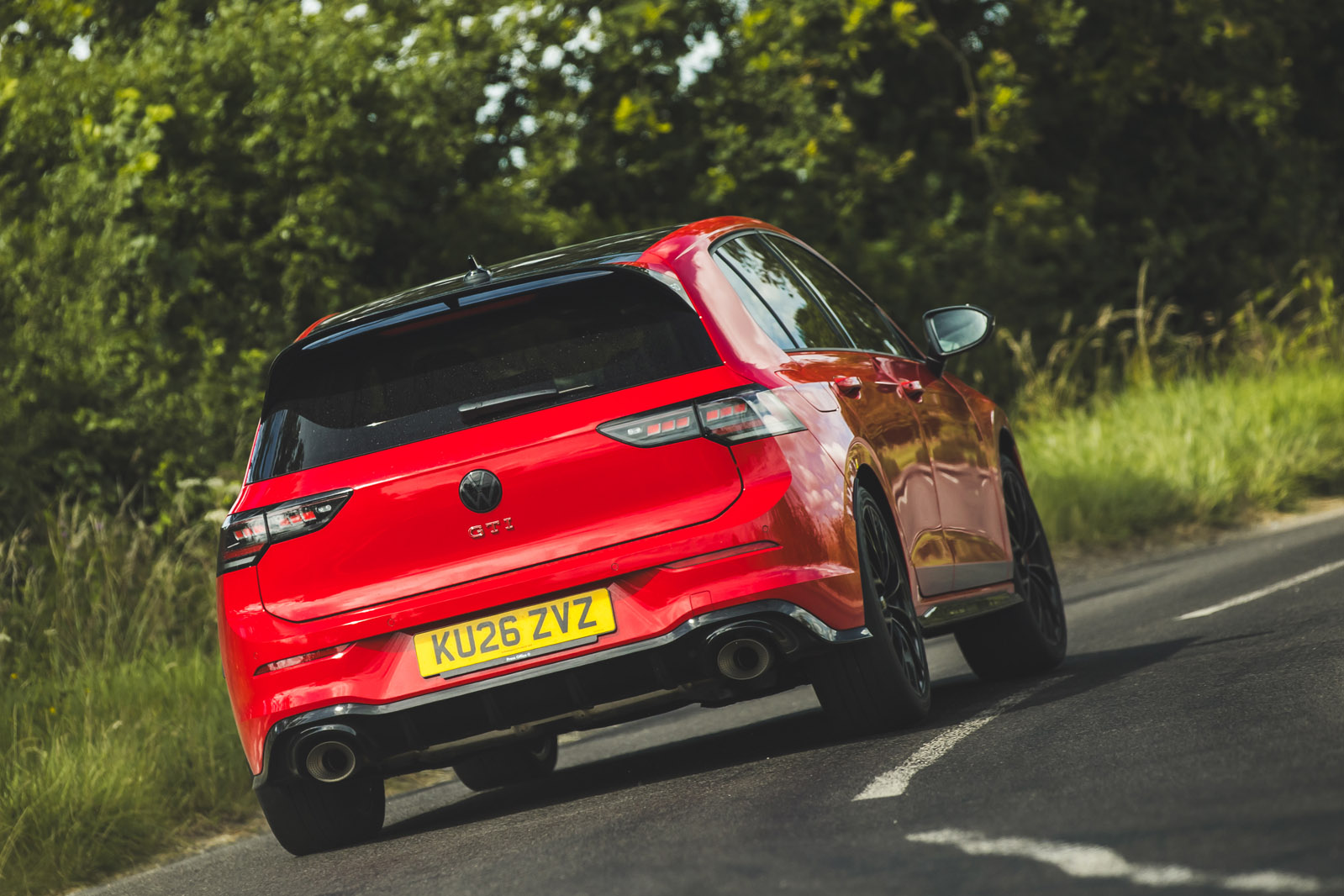
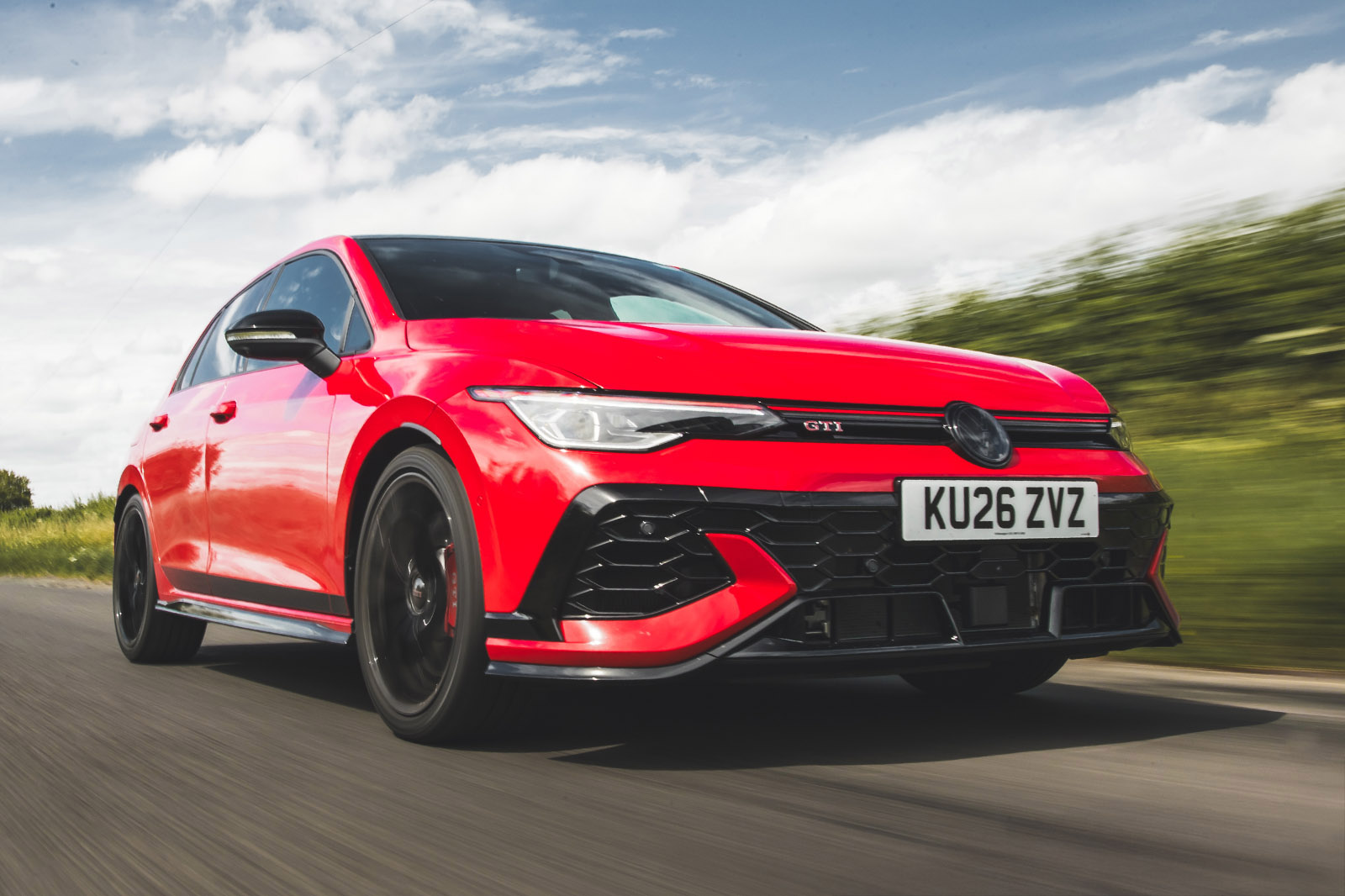
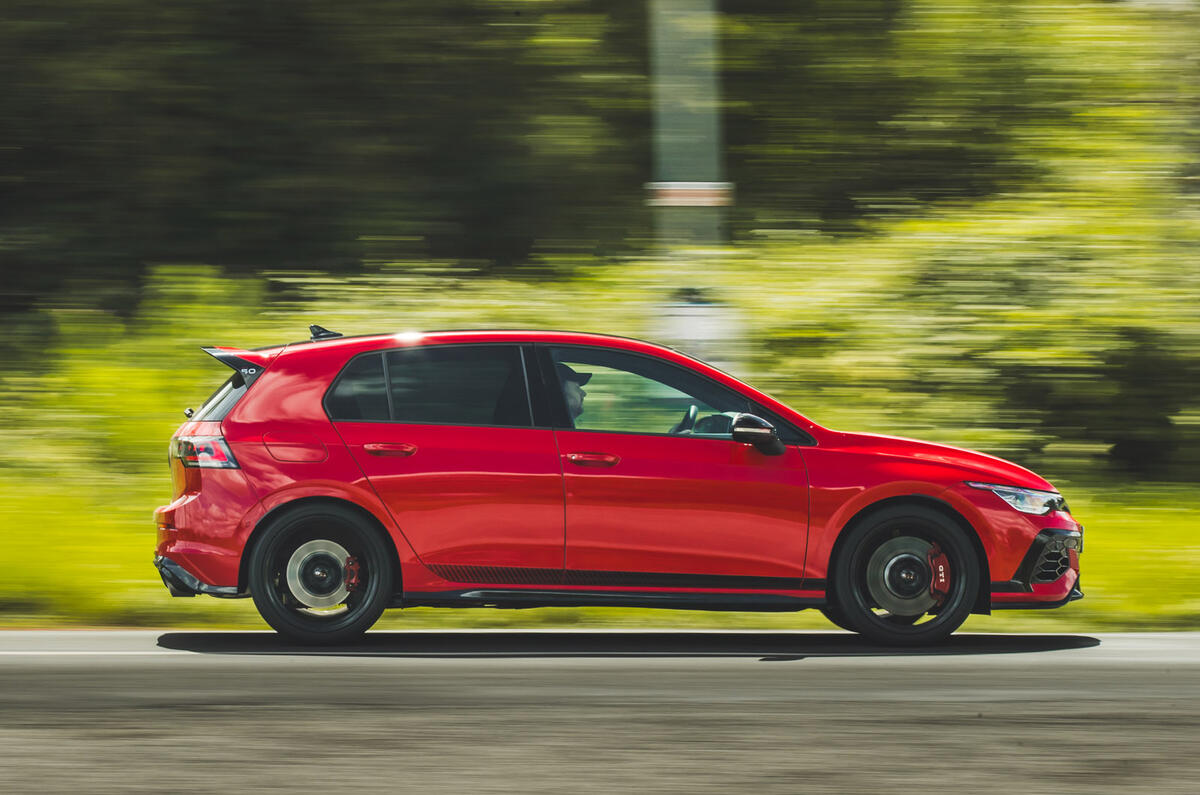
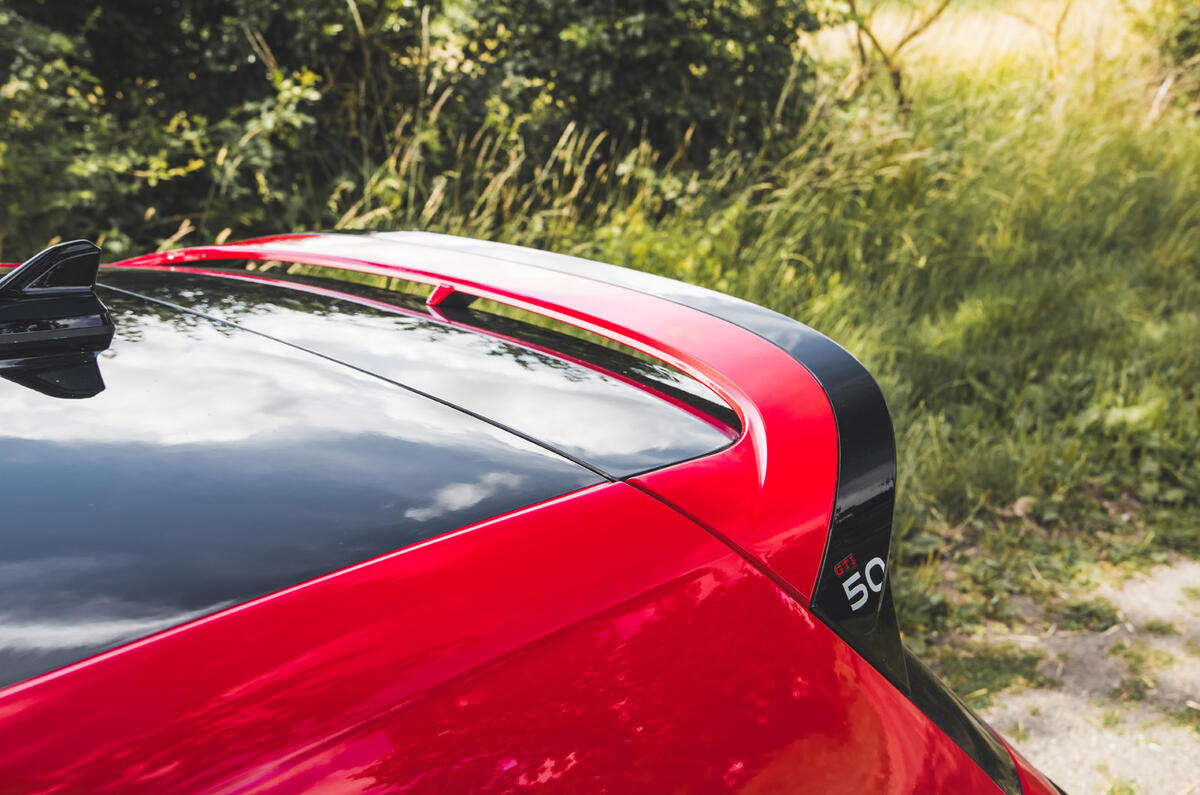
That’s no lukewarm introduction for any performance car – and it’s Volkswagen head of chassis development Sebastian Willmann delivering it. The car he’s talking about - the most powerful series-production GTI there has yet been, no less - is Wolfburg’s 50th-anniversary present to its beloved hot hatchback icon: the Volkswagen Golf GTI Edition 50.

Well, it’s a present of a sort (VW certainly isn’t giving them away). It’s not a limited-numbers special edition: they’ll make as many as there is demand for - but only until the end of 2026.

But back to where we began. The question I asked Willmann was a carefully targeted one. Is this car better than what’s widely regarded as the high-water mark for modern hot Golfs: the Mk7 GTI Clubsport S

He doesn’t hesitate to answer, in a way that suggests he knows what he’s saying as a matter of incontrovertible fact. Time to find out what he’s so confident about.


Advertisement

DESIGN & STYLING

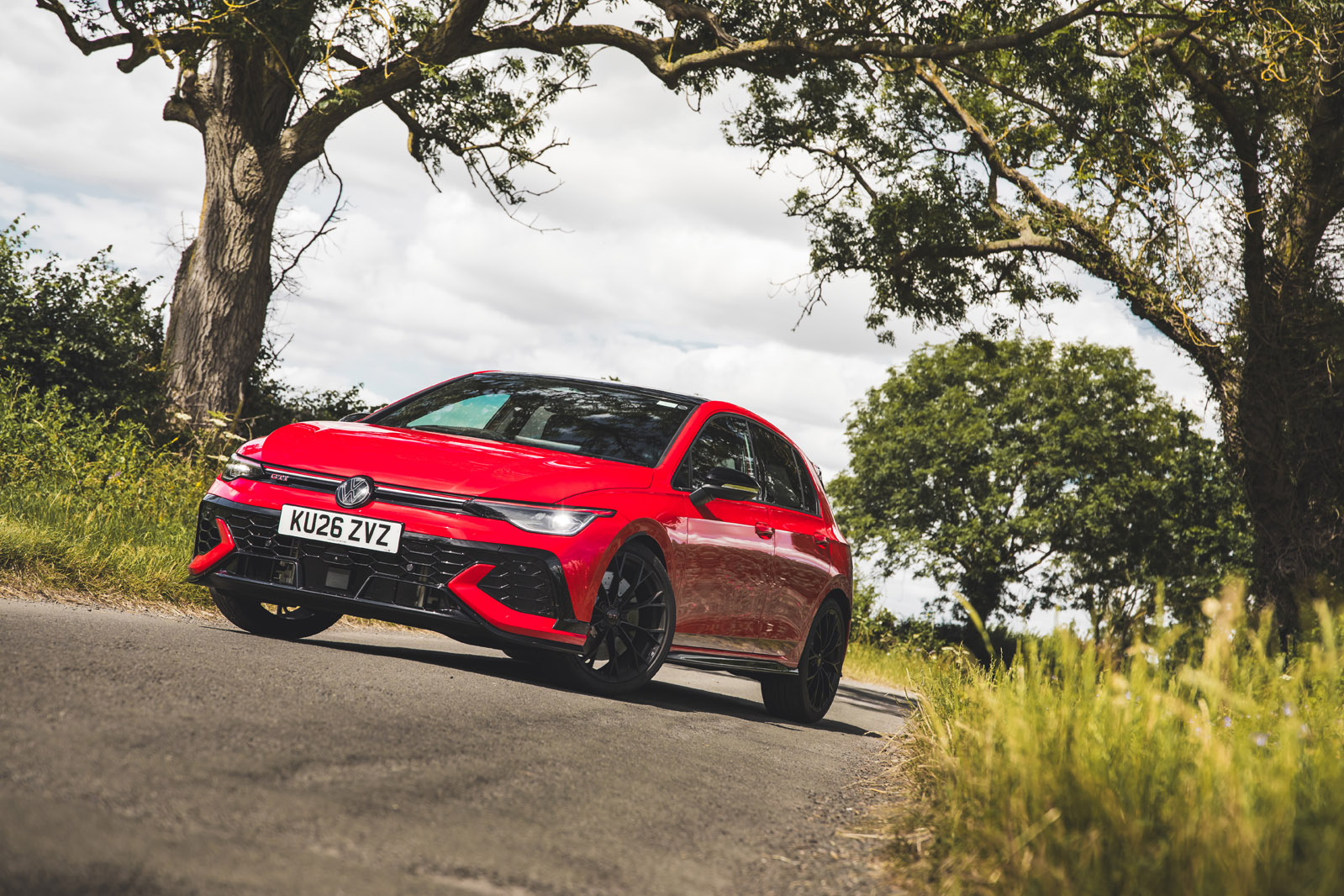
VW Golf GTI Edition 50 review 2026 027

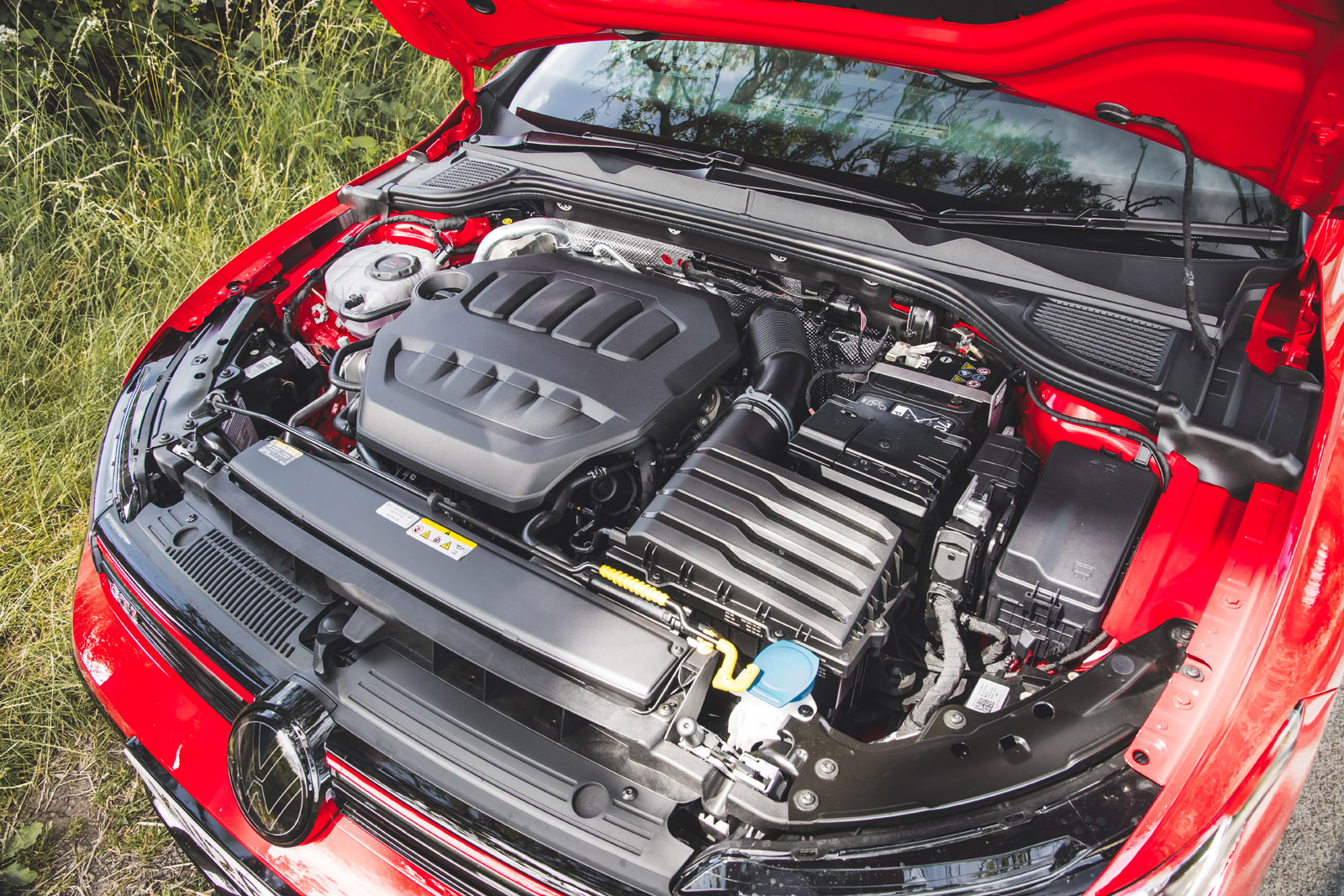
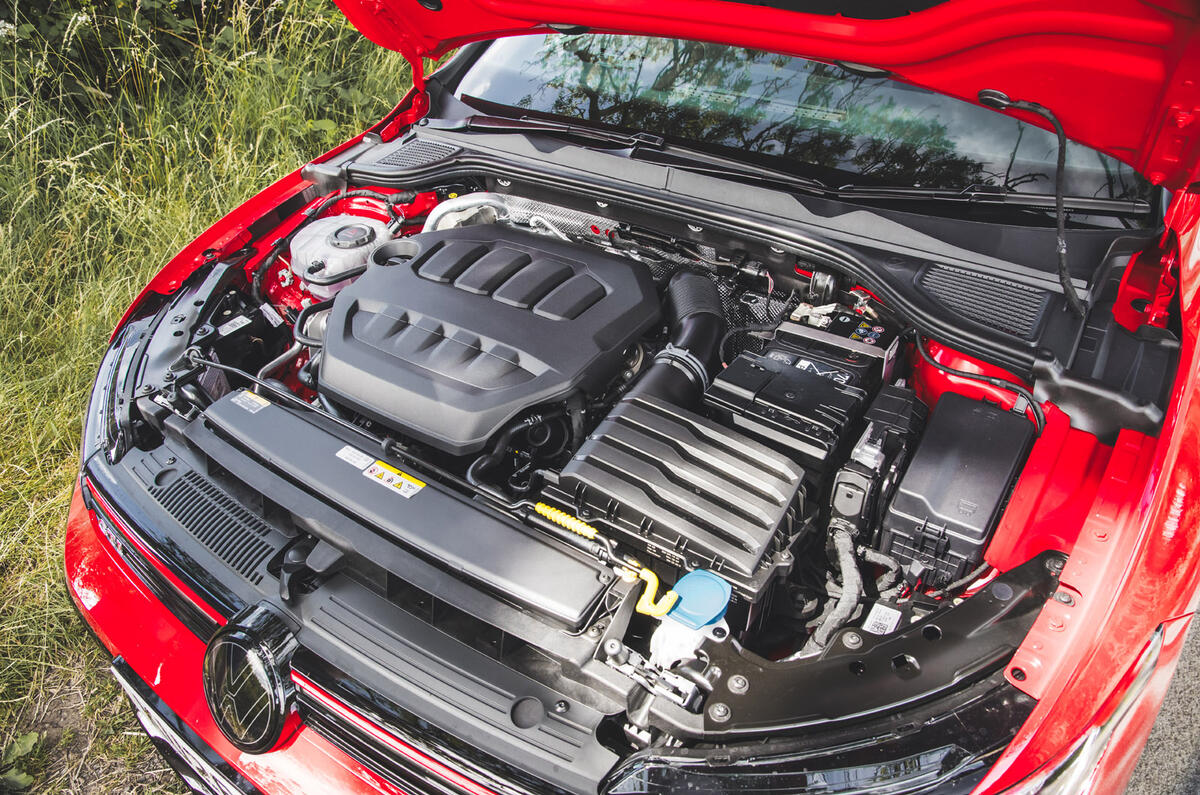
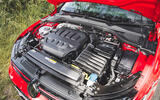
The Edition 50 starts as a Golf GTI Clubsport with an extra hit of grunt. It’s powered by Wolfsburg’s ‘evo4’ version of its 'EA888' 2.0-litre turbo four-pot, now ready for the ‘Lambda = 1’ air-to-fuel requirements of Euro 7 emissions compliance. And that boosts the GTI Clubsport’s reserves by 25bhp and cuts the 0-62mph dash by 0.3sec. As in all GTIs, transmission is dual-clutch DSG only.

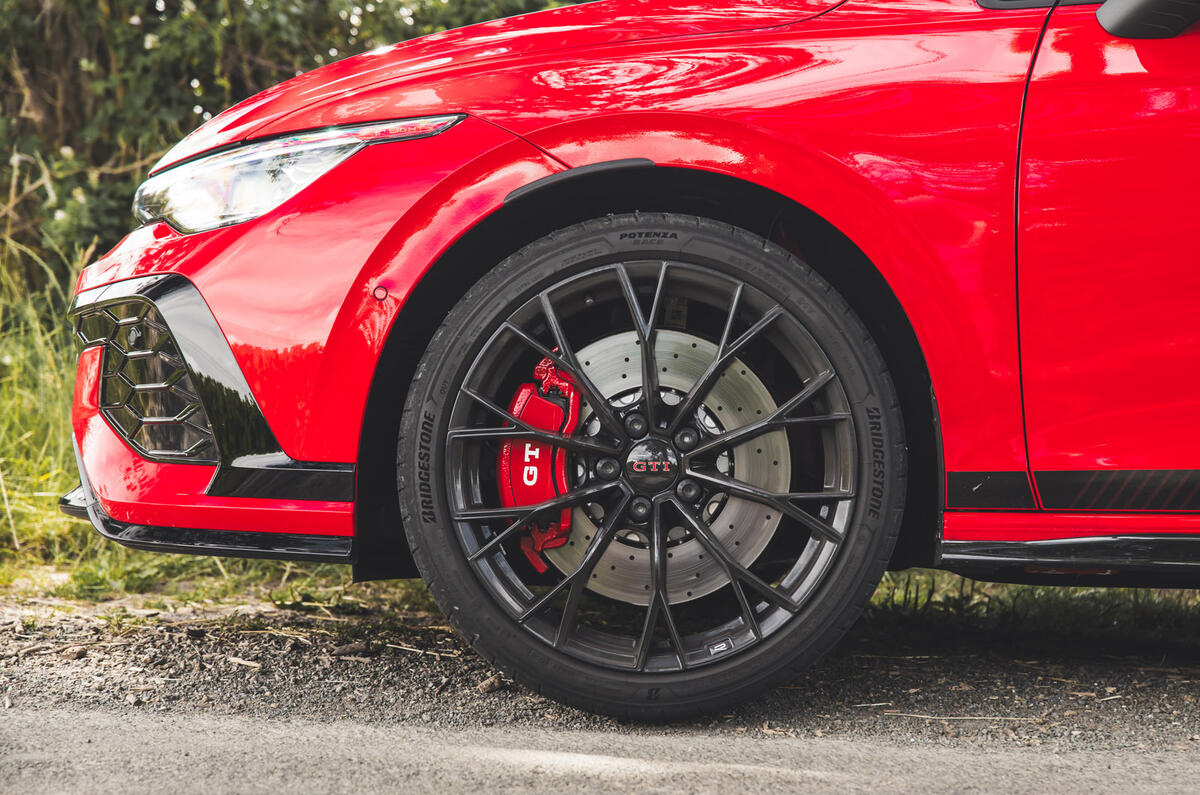
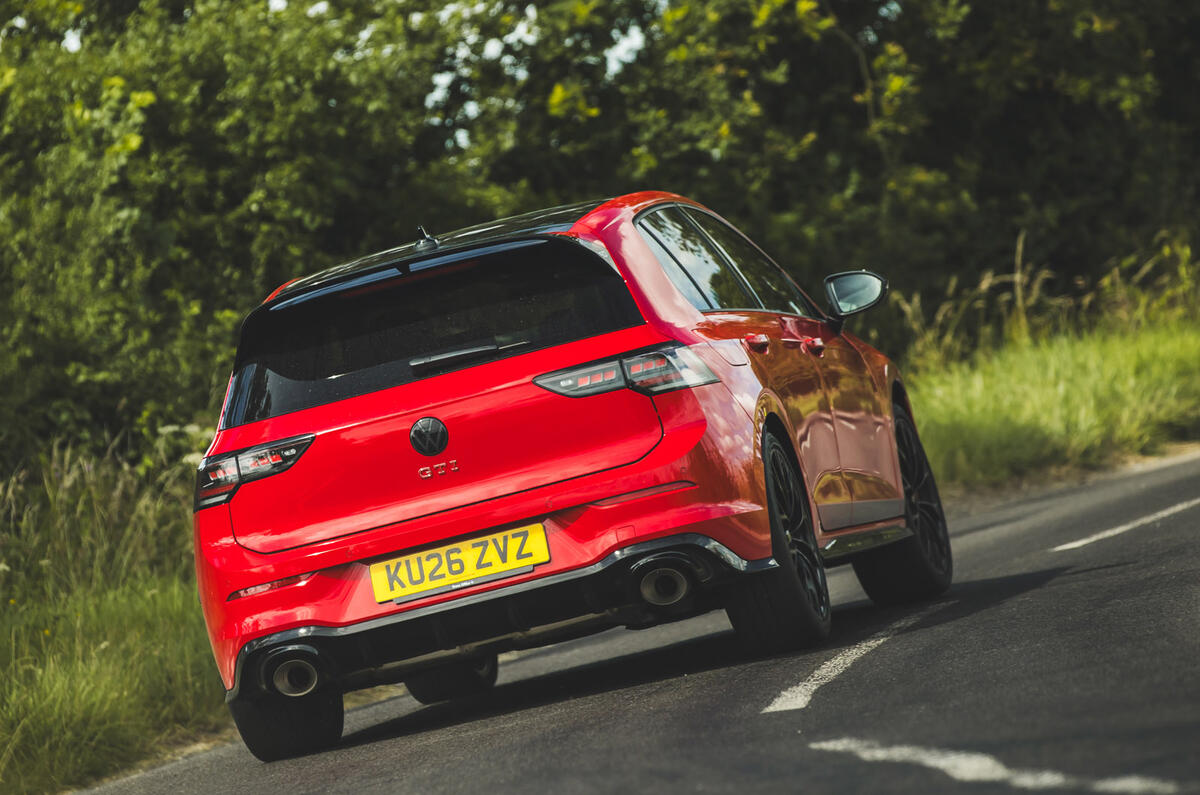
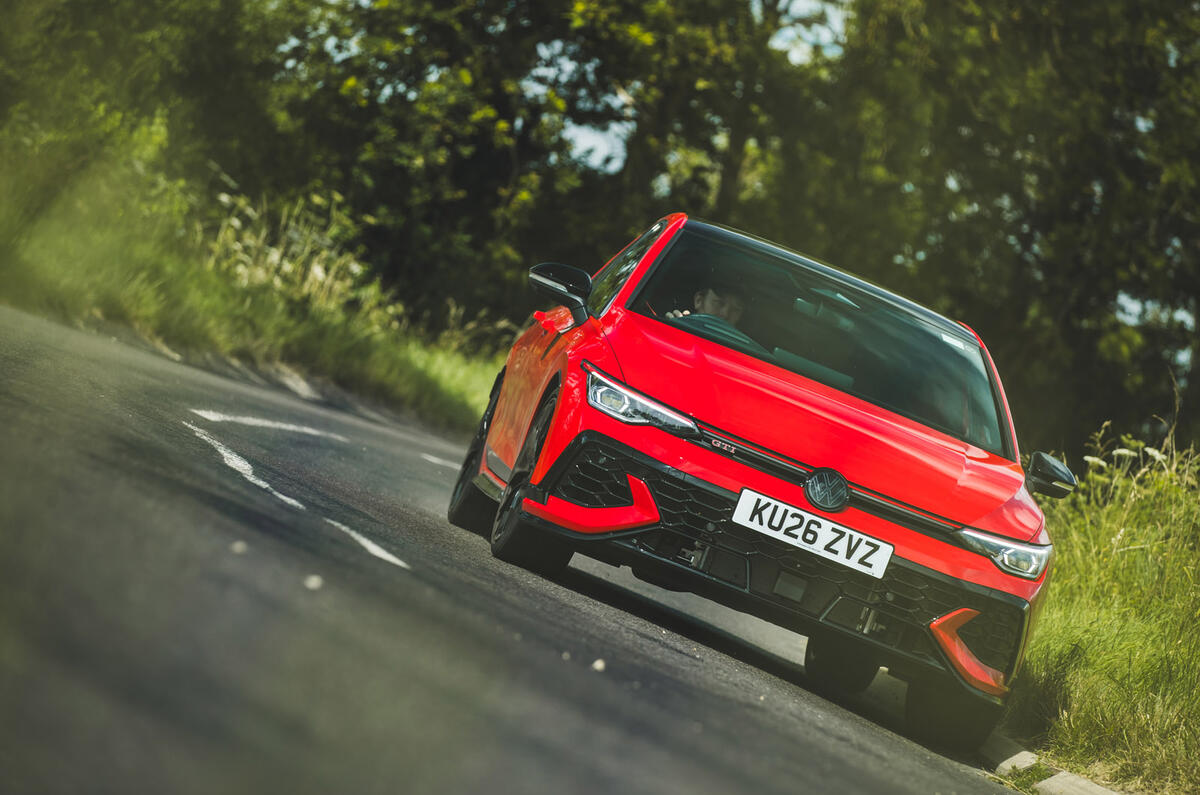
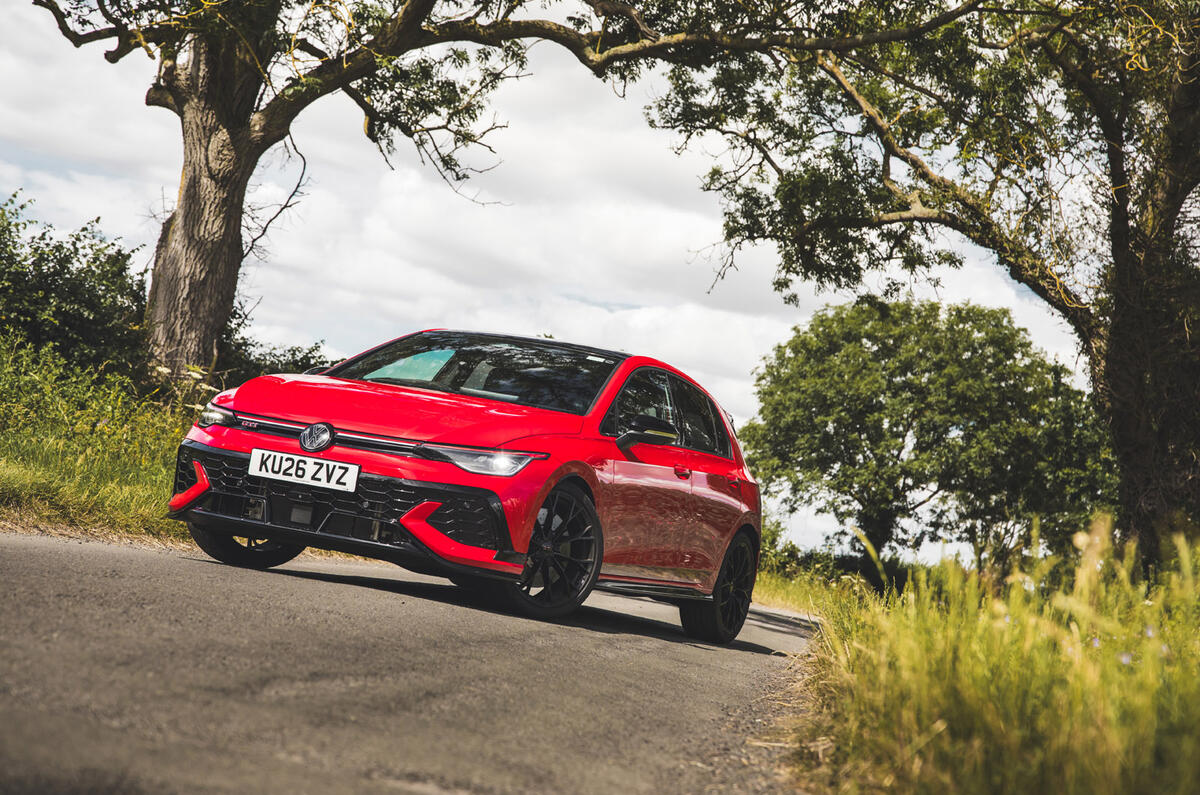
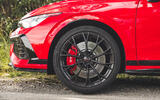
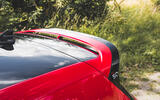
As standard, the Edition 50 also gets new 19in alloy wheels and DCC Pro dampers, and comes with some GTI 50th decals and cabin trimmings. Otherwise it’s left almost entirely in GTI Clubsport mechanical spec. Is that enough for your £48k? It’s questionable, I’d say.

But that’s not where the story ends. Such a product offering clearly wasn’t going to satisfy Willmann and his team to commemorate this fast front-driver’s golden jubilee. So while post-Dieselgate VW is far from the engineering powerhouse that it used to be, the board did grant sign-off for the Edition 50’s ‘Performance Package’: a £3675 option that is actually what sets the car apart.

Performance Package cars get special wheel carriers that allow for 50% more negative camber on the front axle. They also gain a more secure inboard mounting for the multi-link rear axle’s lower transverse link, for better lateral wheel control. Stiffer top mounts for each strut and stiffer front-axle lower wishbone bushings for boosted steering feel are adopted as well. Shorter, stiffer coil springs come in, which lower the car’s ride height by another 5mm (down to 20mm below the Mk8 Golf’s ‘reference’ stance) and increase the effective spring rate by between 20% and 35% beyond GTI Clubsport levels. 

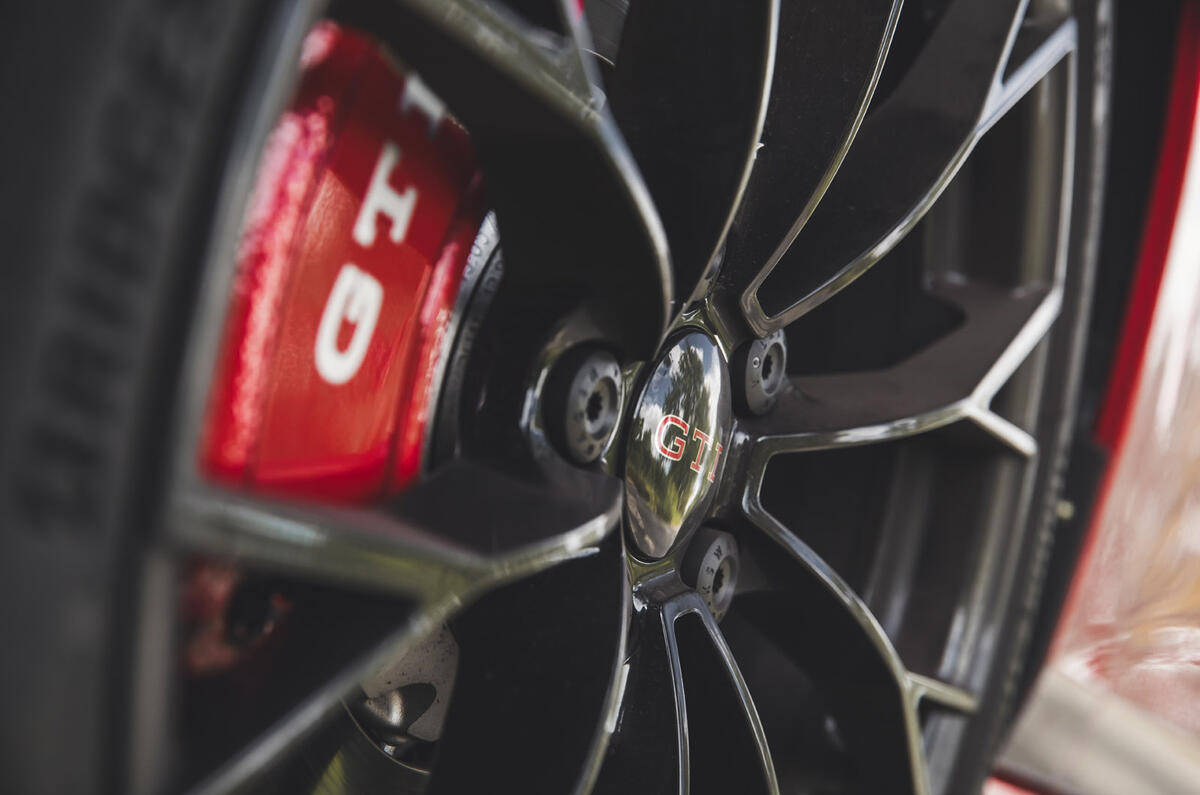
Forged 19in wheels and specially developed Bridgestone Potenza ‘Race’ semi-slick performance tyres are included. And you also get a part-titanium lightweight exhaust system – not to mention new calibrations for the power steering, adaptive damping and stability control systems, extended to include a ‘Special Nürburgring’ drive mode (yup, the Clubsport S had one of those too).

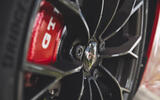
That’s rather a lot for a premium of less than £4000, it seems to me. Granted, the package doesn’t include jettisoned back seats, lightweight glazing, or the kind of manually adjustable, motorsport-grade coilover suspension you sometimes see on cars of this sort. It doesn’t include any kind of brake upgrade, either - to which we’ll come back. Even so, it saves 25kg from the Edition 50’s homologated kerb weight. Having spent nearly £50k on this car already, trust me, you’d be pretty daft not to have it.

INTERIOR

Volkswagen Golf GTI Edition 50

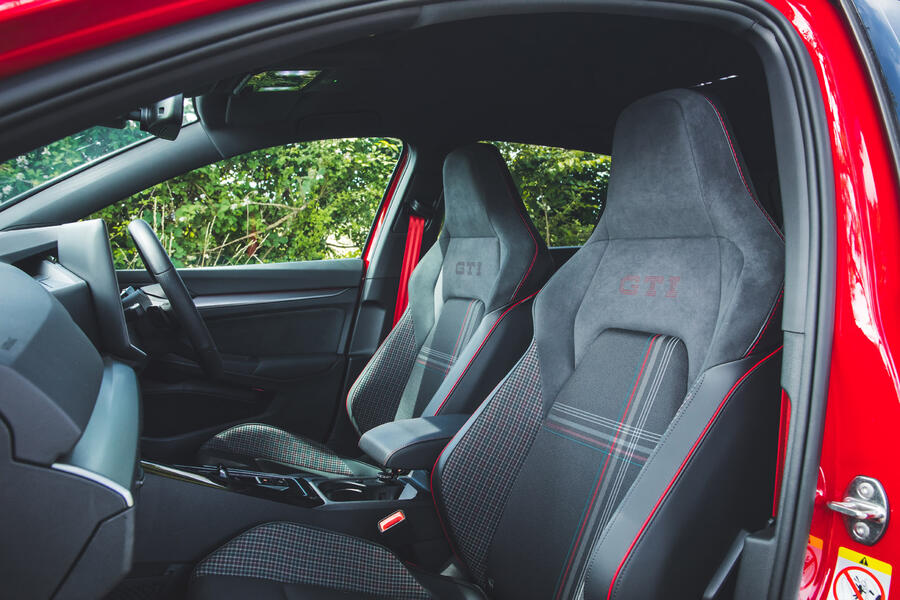
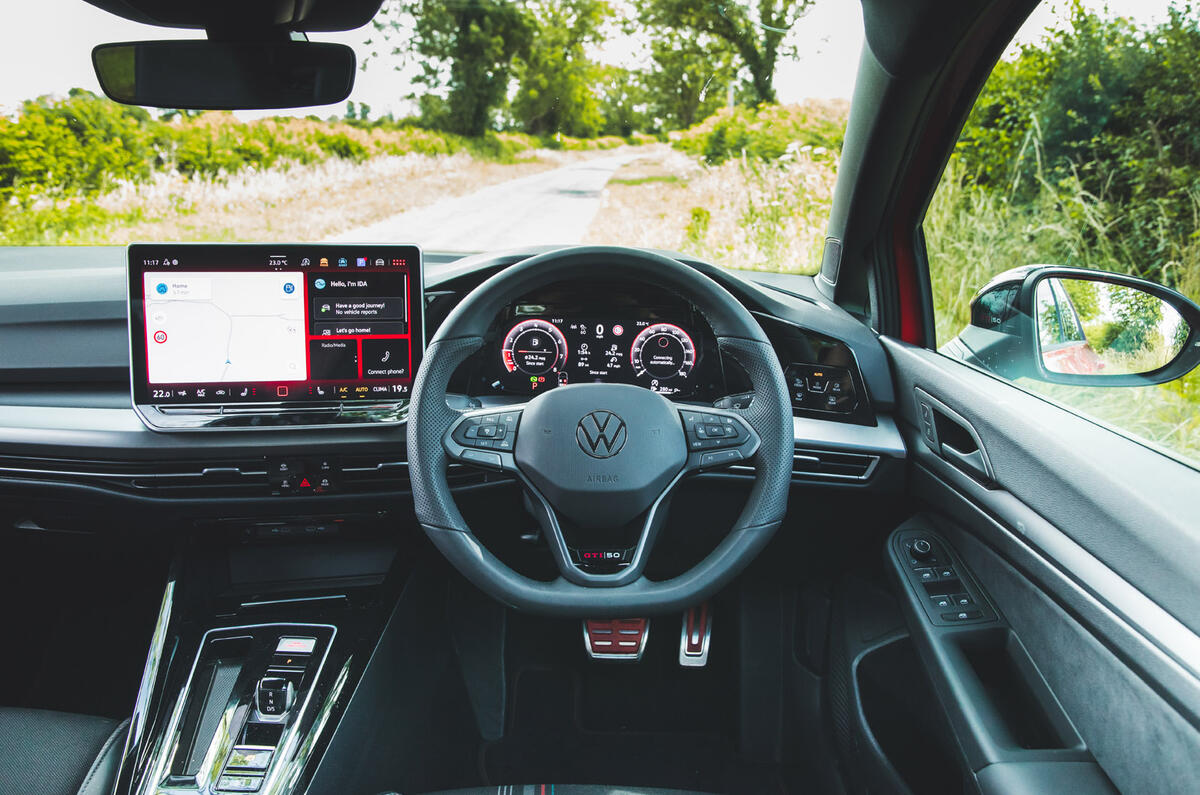
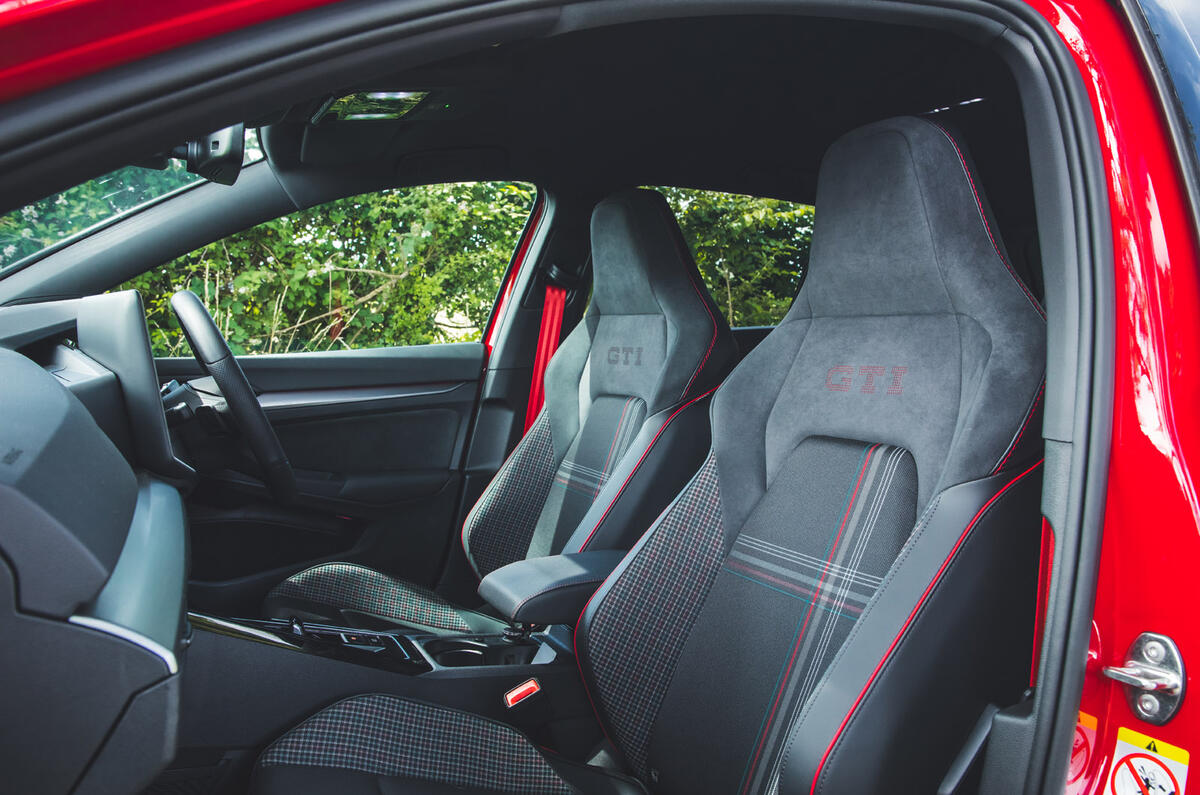
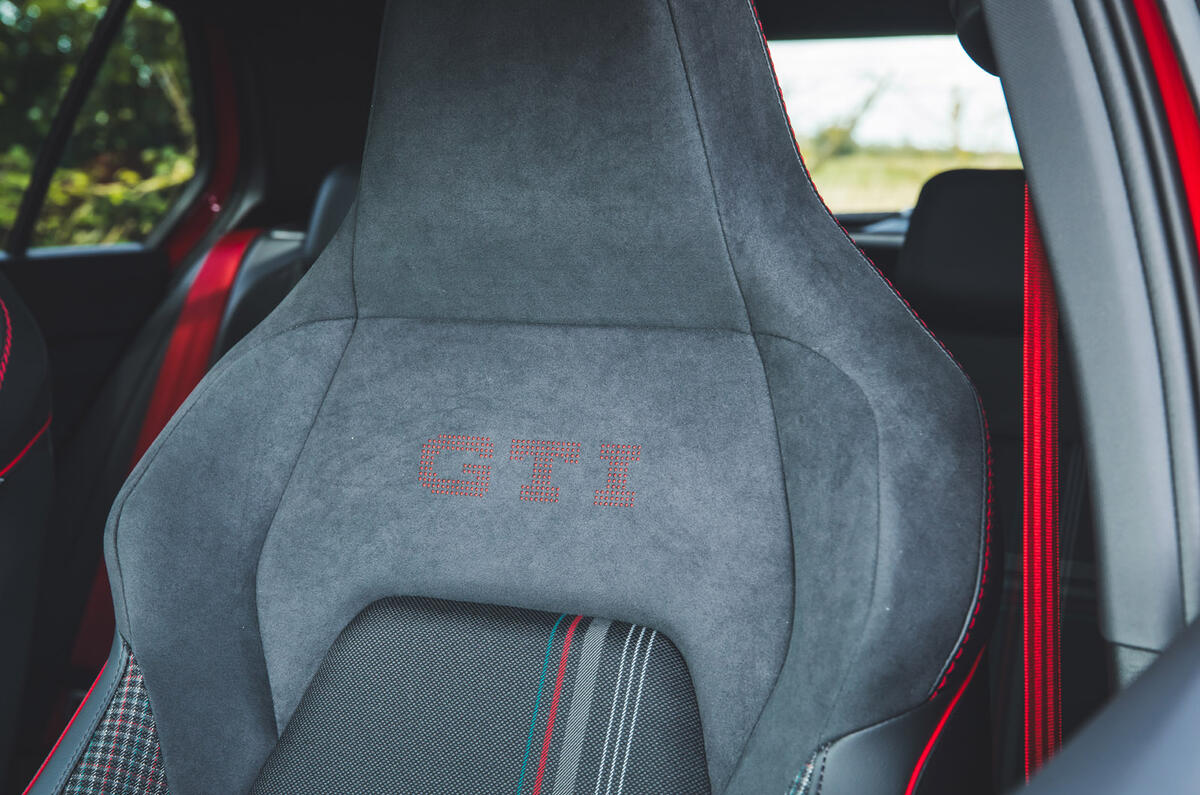
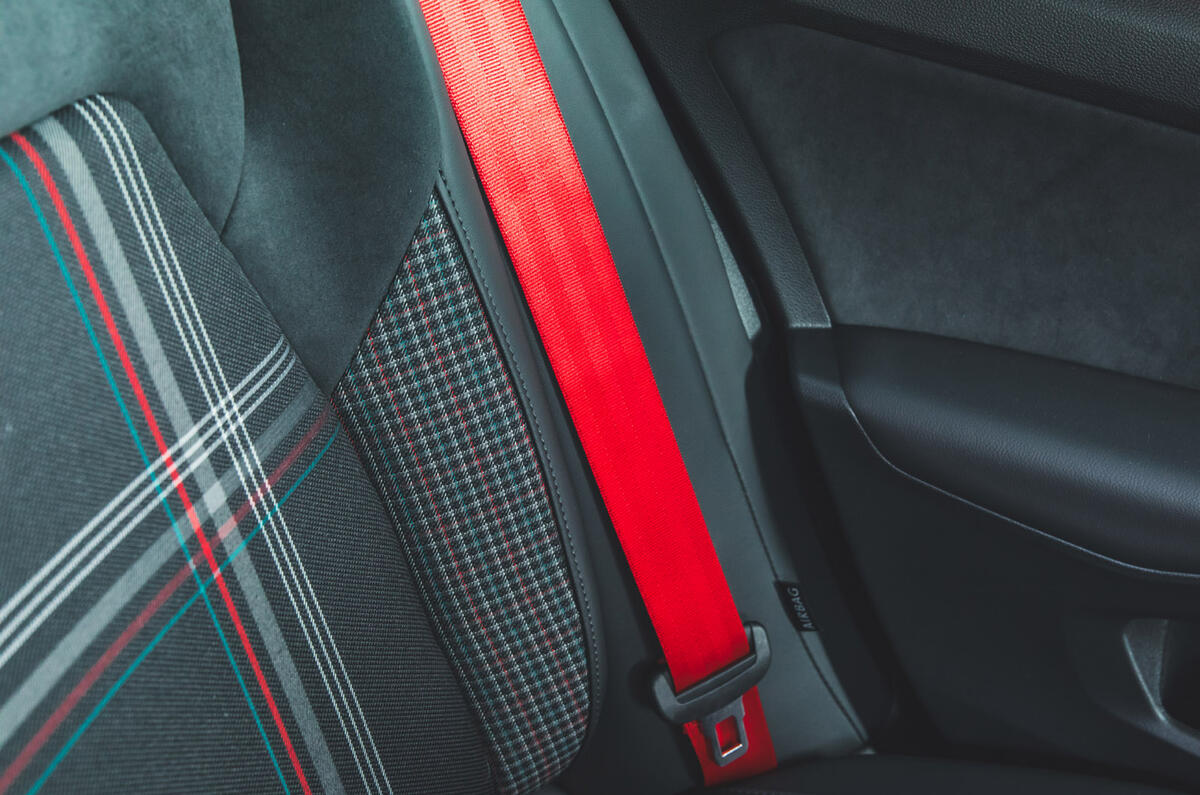
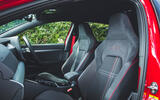
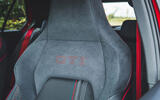
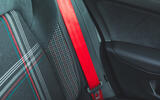
The cabin proudly displays some ‘GTI Edition 50’ embossing and badging, features a few other celebratory trims and touches, and has some specially upholstered sports seats with a new three-colour take on 'Clark plaid' GTI tartan check.

The last of those aren’t particularly bucket-like, and are widely adjustable, so they don’t make you wince as you get in and out. This being a GTI, it’s not a car whose creators are willing to admit compromises on daily usability and that shows in the driving experience as much as anywhere.

I love the special ‘Clark plaid’ seat upholstery on this car. You’d have to know the colours of the Mk1 Golf’s equivalent to spot any difference, but surely that’s the point? The nasty, blocky, red plastic trims on the ‘sports pedals’, however, just don’t belong on the same car.

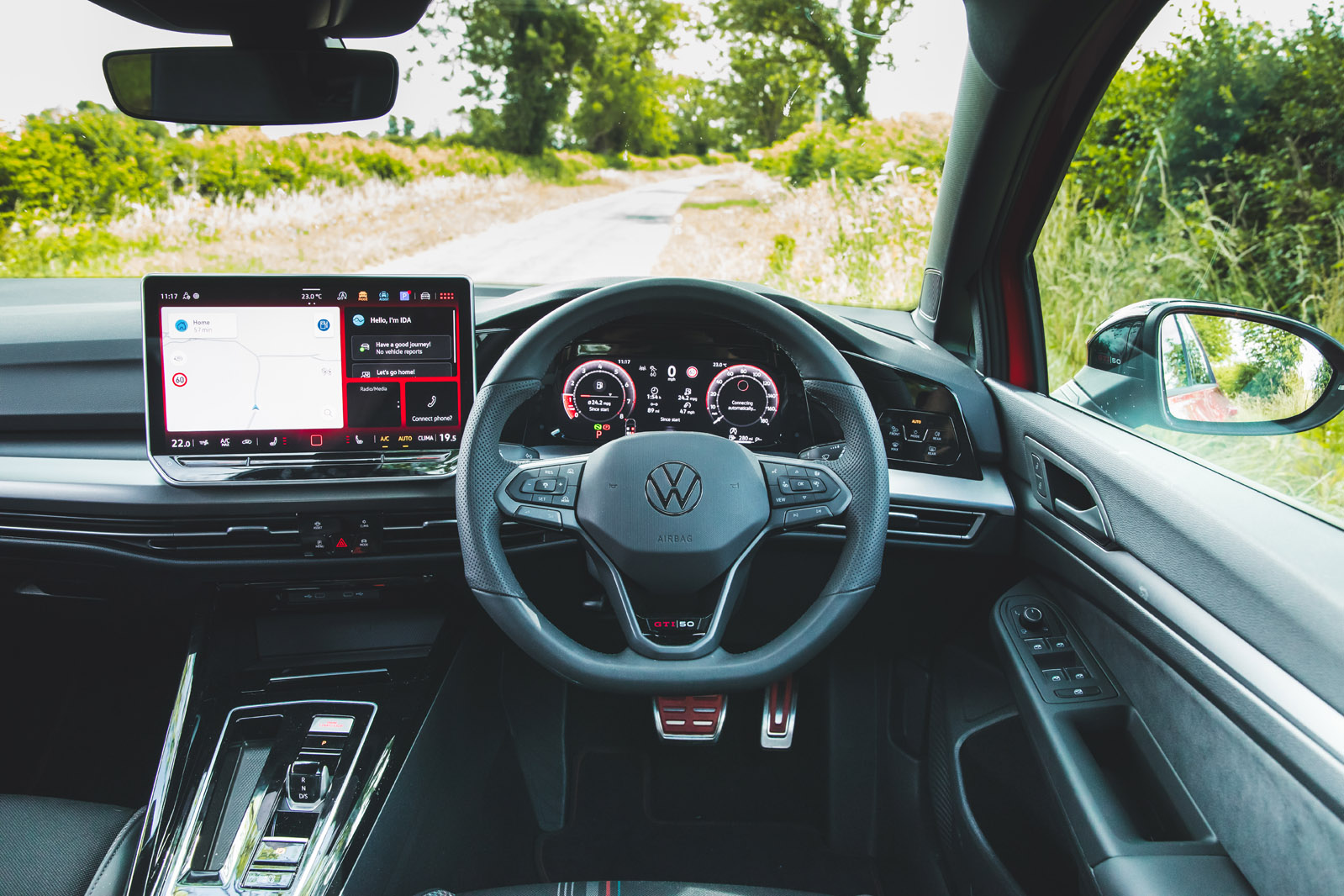
The Alcantara steering wheel rim is almost round, moderately proportioned and intuitively placed, in front of digital instruments whose layout changes according to your preference, but always look pretty conventional and readable, rather than overly video arcade-like. The central infotainment screen still carries the heating and ventilation controls, though there’s a useful quartet of physical menu shortcuts below it to take you directly to things like driver assistance settings.

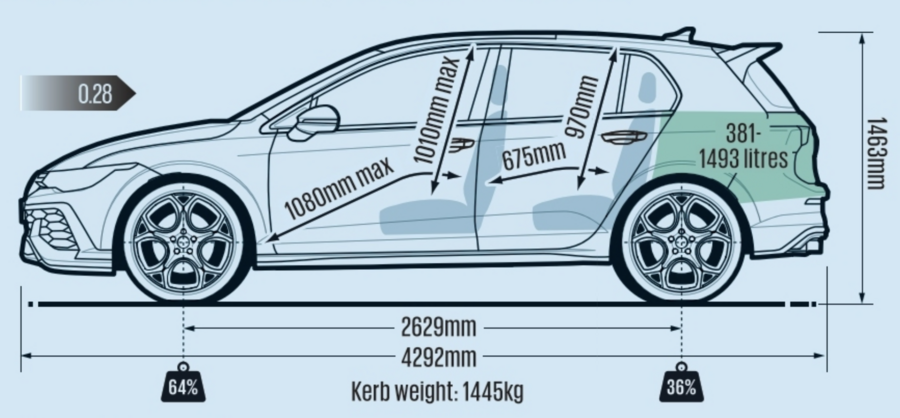
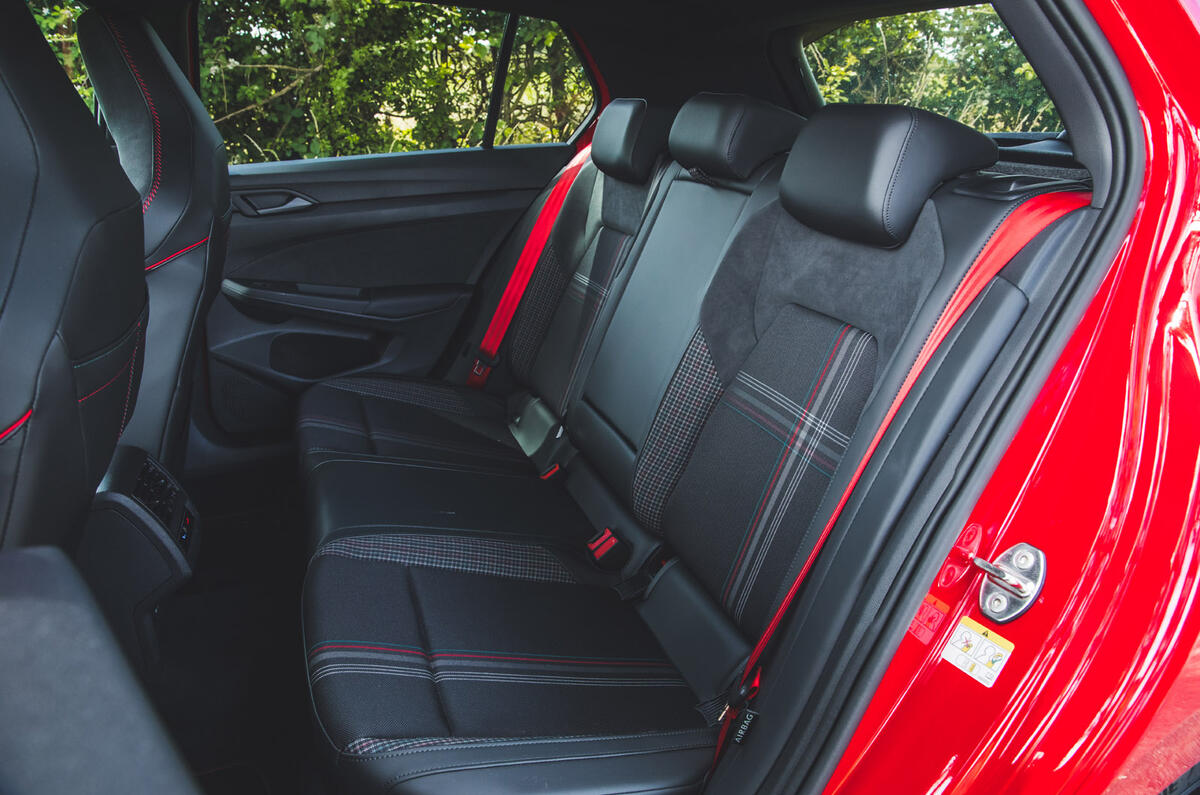
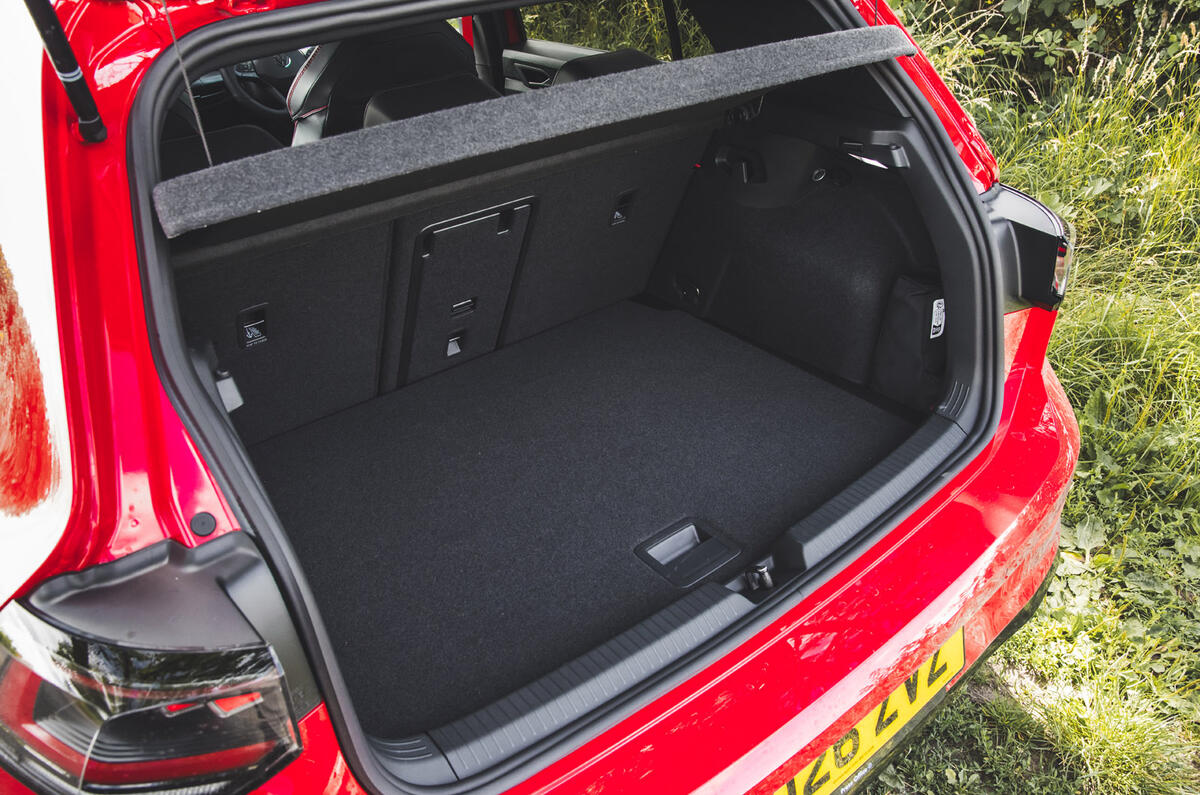
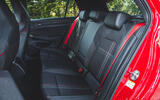
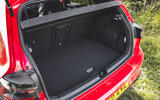
Otherwise, the car does its ambient lighting discreetly and uses its go-faster touches sparingly – because it’s a GTI and, even in the very quickest one there has ever been, understatement still matters. The car retains its back seats, which are usable by both children and adults of average height, and it has the same 371-litre boot as any other Golf hatch.

The new red plastic trims on the sports pedals are probably where the cabin is at its most garish but, since you spend most of the time covering them with your feet, they’re hardly bothersome.

ENGINES & PERFORMANCE

Volkswagen Golf GTI Edition 50

There is quite a bit more rasping audible presence about the Edition 50’s exhaust note than a regular GTI has, once that Akropovic system has its active valves open. That’s especially true if you use the car’s little-known ‘emotion start’ feature, which comes with higher revs and a few pops and crackles for good measure. (Hold the start button down for three seconds, then press the brake and vroom!) 

There’s more weight and tactile feedback in the Edition 50’s steering too - as well as a sharpened sort of keenness on turn-in that you still wouldn’t quite call outright urgent but sets this car’s dynamic intent apart from any of its GTI range-mates just the same. It all adds up to quite a distinctive - and promising - 100-yard ‘handshake’.

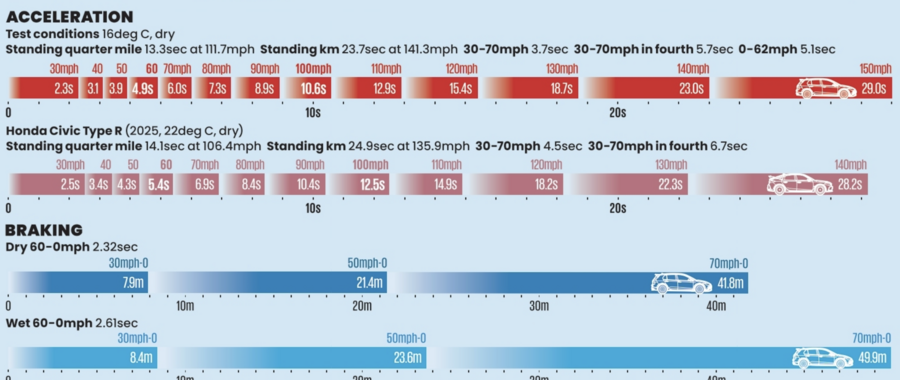
In roll-on, give-and-take driving, once you’re used to the slightly more forthright pipes, the car feels only marginally quicker, more urgent and more dramatic than a GTI Clubsport – because 25 horsepower isn’t a great deal, after all, in a car that has only as much torque as a current VW Golf R

The slightly rortier induction noise - while much of it is clearly synthesised by the audio system - does give the car’s performance character a more purposeful cutting edge when you’re using the sportier driving modes, though. And if there’s anywhere that car does seem to actually hit harder than a regular GTI, it’s right at the top of the rev range, above 5000rpm, which makes for a usefully broad power delivery during circuit driving.

In other moments, however, you can dial the car’s feistiness back down a few pegs, and drive it - on the school run, office commute, or wherever you might not want to feel the full force of its personality - as if it were any other GTI. The DSG gearbox is never as brusque with its shifts as some track-intended transmissions can be, but it’s capable of being gentle and smooth as well as quick and positive with its paddle shifts.

RIDE & HANDLING

Volkswagen Golf GTI Edition 50

The Edition 50’s Performance Package wheels and tyres deliver a per-corner 4.5kg saving of unsprung mass for the car – and all without the aid of carbon-ceramic brakes, remember. So despite being shorter- and firmer-sprung than a standard Clubsport and having considerably stiffer tyre sidewalls, it rides quite sweetly on the road. The DCC dampers provide all the usual configurability, but even if you wind them up to their firmest, the body won’t jiggle and fuss and doesn’t feel punishing or aggressive at low speeds. 

It doesn’t quite have that bowstring-taut feel of a really expensively damped track special either, a little sadly - but, as an any-occasion solution, it’s impressively versatile.

It was deeply regrettable, however, that the rain-sodden conditions of our January test day, at and around Castelloli circuit to the west of Barcelona, made it impossible to gauge what kind of outright track grip and braking power the Edition 50 can conjure. Or how much dry-weather traction and handling adjustability, working through those semi-slick tyres, its active front differential can ultimately muster. Or just how precise, composed and absorbing its limit handling can be at its most compelling.

I’m honestly not sure if, had it been dry, I’d now be raving about a hot hatchback with the capacity to carve deep into braking areas and carry apex speed better, even, than a Honda Civic Type R, or even the memorably mad Renaultsport Megane Trophy-R – or, perhaps, bemoaning a noble effort that falls painfully short. To pretend any different would be pure guesswork.

In the wet, I’d say the Edition 50 went very well considering; communicating grip levels particularly clearly, and remaining race-car stable in faster bends even beyond the limit of grip. It found decent traction where there were rivulets running down Castelloli’s steeper gradients and it developed grip and cornering stability, on a carefully balanced throttle, that I would have put way beyond anything running on other-brand ‘Cup’-style tyres I could mention.

I will risk a few remarks. Like a regular Mk8 GTI, the Edition 50 didn’t seem quite as well balanced or open to off-throttle handling posture adjustments as some of the great hot hatchbacks of the past 25 years. It felt… serious. Prepared and tuned for a racing driver’s commitment levels, rather than sensitive to a road tester’s demands for liveliness. And, even in the wet, it did suffer with the telltale lengthening pedal of brake fade at occasional moments, which I’m surprised VW’s hotshoe drivers weren’t inclined to do something about. 

Also, despite what VW claims is even more aggressive tuning for the car’s clutch-based locking front e-diff, it didn’t seem one to drive the nose towards the apex of bends via the loaded outside front wheel, as cars with helical locking diffs can, but (in very slippery conditions, admittedly) tended instead to push the car into drive-related understeer when powering on - if only with its traction control systems deactivated. I suspect it works best when you leave the car in ESC Sport mode, which itself tells you much about the tuning of this car.

But whether those impressions had more to do with the inherent handling characteristics of the Edition 50 and less the conditions with which it was coping (which you probably wouldn’t have bothered contending with on a track day in your own car) simply can’t be known.

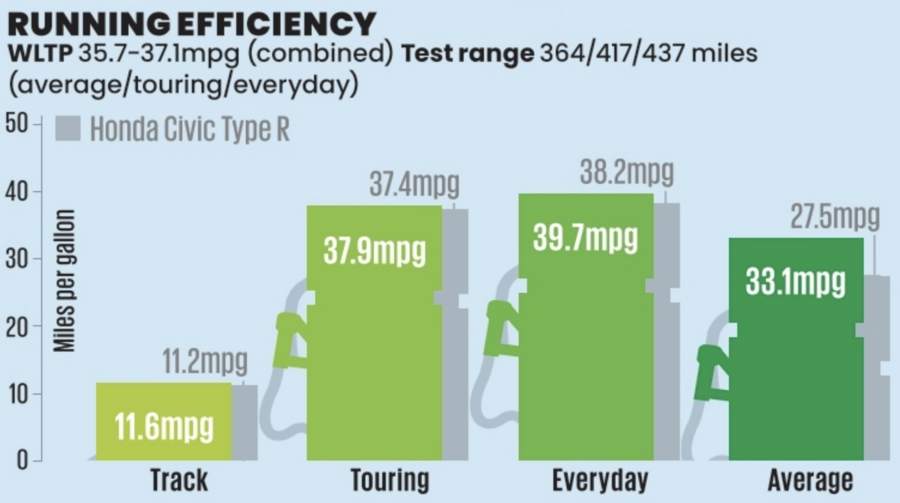
MPG & RUNNING COSTS

VW Golf GTI Edition 50 review 2026 029

The Edition 50’s base price makes it a little under £4000 more expensive than a GTI Clubsport, and £8000 more than a regular GTI. But a Toyota GR Yaris - one of the hot hatchback niche’s few remaining madcap, motorsport-bred prospects - is now only a couple thousand pounds cheaper. So, while it’s tempting to reel a little at the idea of the £50k hot hatchback, this is territory we’ve been in for some time.  

Do we think it’s by accident that this car - fitted with that all-important Performance Package - ends up within a few hundred quid of the asking price of the just-departed Honda Civic Type R? Of course not. But take that as proof that Volkswagen thought long and hard when deciding the content of that Performance Package, and working out just how much it could justify charging for this car. 

It’s expensive but not unprecedented. And, as a tribute to the GTI’s five decades of success - and to a breed of car whose like probably won’t last much longer - it can probably justify being so.

VERDICT

Volkswagen Golf GTI Edition 50

The Volkswagen Golf GTI Edition 50 strikes you as a car intended more for GTI stalwarts who want the extra edge of excitement that their regular charges have perhaps been lacking, generation by generation, than it is a GTI for the kind of diehard hot hatchback enthusiasts who, over the years, have salivated over madcap rarities like the Renaultsport Megane R26R, Ford Focus RS 500 and Honda Civic Type R Mugen.

On this evidence, it extends the performance capabilities of the regular GTI Clubsport but doesn’t radically transform them. It adds notable extra doses of vigour, drama, urgency, track composure and control feedback – but marginal ones. And it stops short of doing anything that might make you stop and wonder: “Crikey, what the hell was that?” Or, perhaps more tellingly: “I never thought a Golf GTI - or any hot hatchback - could do that!”

Then again, this wasn't very good evidence on which to judge a car clearly developed to show off speed, grip and handling precision at lateral loads way beyond those available on a soaking winter’s day in Spain. It’s Autocar’s approach to hold off on fully pronouncing on any new car until it’s had a couple chances - on different days, in different test conditions, and typically in different countries - to impress our testers anyway. And at times like these, I’m glad it’s so.

In short, it’s clearly still well within the bounds of the possible that the GTI Edition 50 could be the greatest driver’s car ever to wear that iconic model initialism. But now, right or wrong, it also seems just a little bit further from the very core of the probable.

Matt Saunders

Matt Saunders Autocar
Title: Road test editor

As Autocar’s chief car tester and reviewer, it’s Matt’s job to ensure the quality, objectivity, relevance and rigour of the entirety of Autocar’s reviews output, as well contributing a great many detailed road tests, group tests and drive reviews himself.

Matt has been an Autocar staffer since the autumn of 2003, and has been lucky enough to work alongside some of the magazine’s best-known writers and contributors over that time. He served as staff writer, features editor, assistant editor and digital editor, before joining the road test desk in 2011.

Since then he’s driven, measured, lap-timed, figured, and reported on cars as varied as the Bugatti Veyron, Rolls-Royce PhantomTesla RoadsterAriel Hipercar, Tata Nano, McLaren SennaRenault Twizy and Toyota Mirai. Among his wider personal highlights of the job have been covering Sebastien Loeb’s record-breaking run at Pikes Peak in 2013; doing 190mph on derestricted German autobahn in a Brabus Rocket; and driving McLaren’s legendary ‘XP5’ F1 prototype. His own car is a trusty Mazda CX-5.