
I had been thinking that it was just a trend. A protracted, rather strong trend, but a trend nonetheless. But now I’m not so sure. Like them or not – and I like some – SUVs, CUVs, crossovers, 4x4s, whatever, might just be here to stay. Certainly, there’s no sign of the increase in SUV sales letting up at the moment. Perhaps the ‘after-SUV’ won’t come after all.
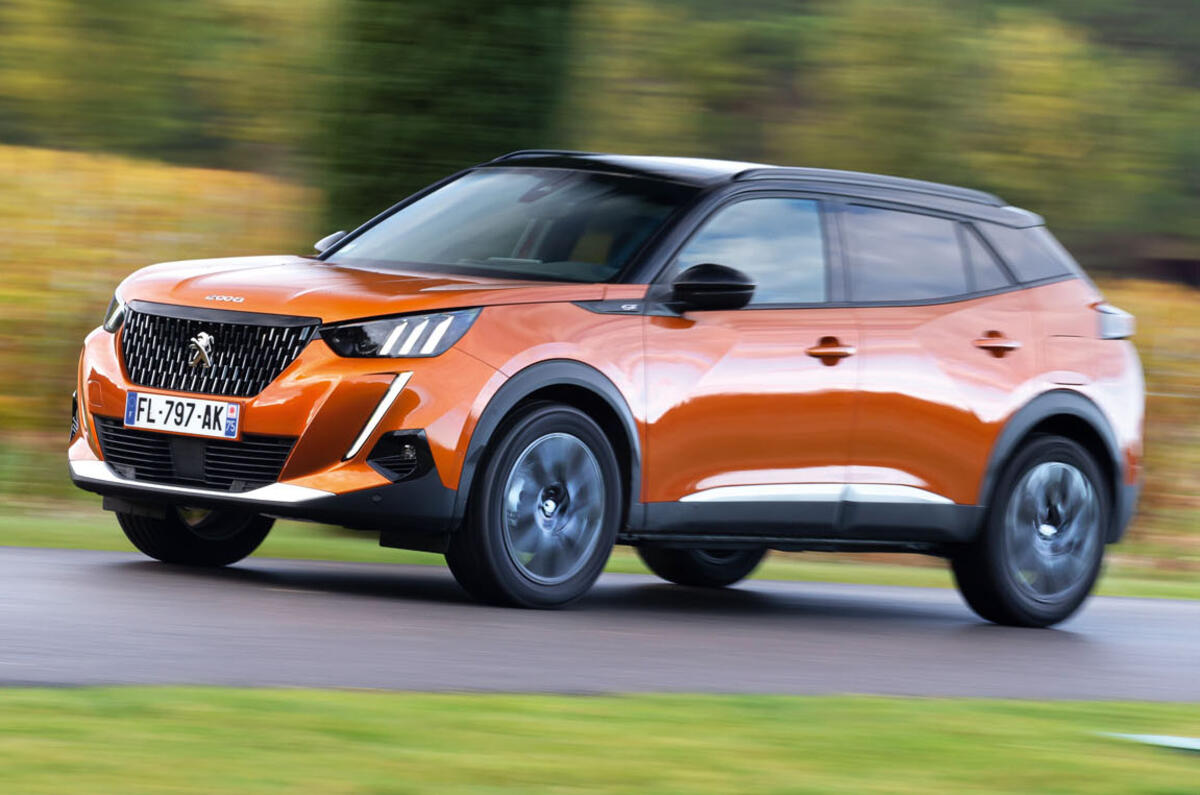
Only recently we've had a first drive of the Peugeot 2008, including the e-2008, and a full road test of the MG ZS EV. Next week… well, next week’s road test is the Christmas special, so a very different kind of sport utility vehicle. In the weeks after that, though, there will be yet more. But peak high-peaked cars? We’re certainly not over it.
And yet, just 18 months ago, Peugeot CEO Jean-Philippe Imparato told us Peugeot was “trying to invent the after-SUV”. Now, at the launch of the 2008 SUV, he said he thought otherwise. Now that might be because last time around he was talking during the launch of the Peugeot 508 – as pragmatic a family saloon and estate as you’ll never see – and this week it was at the launch of a compact crossover, but I don’t think so.
“I think [demand] will remain at this level,” Imparato says. But what of crossovers being heavier and having larger frontal areas, meaning they’re less efficient than lower cars and there being ever-stricter CO2 limits? That doesn’t matter so much, “because at the same time [as building more SUVs] we are electrifying the segment. So you don’t have to face the SUV-bashing”.
It could be that customer acceptance of electrification has shifted more quickly than Peugeot anticipated. Yes, the physics still count, and for the same battery size, an electric 208 supermini will travel 15 miles further than a 2008 crossover, but when both have zero tailpipe emissions, what does that matter?
“If you are doing your job properly, the EV version of your car will give the SUV segment the weapons to be, in the future, one of the most important segments in Europe. Outside, I don’t know. But in Europe it will be important,” Imparato says.