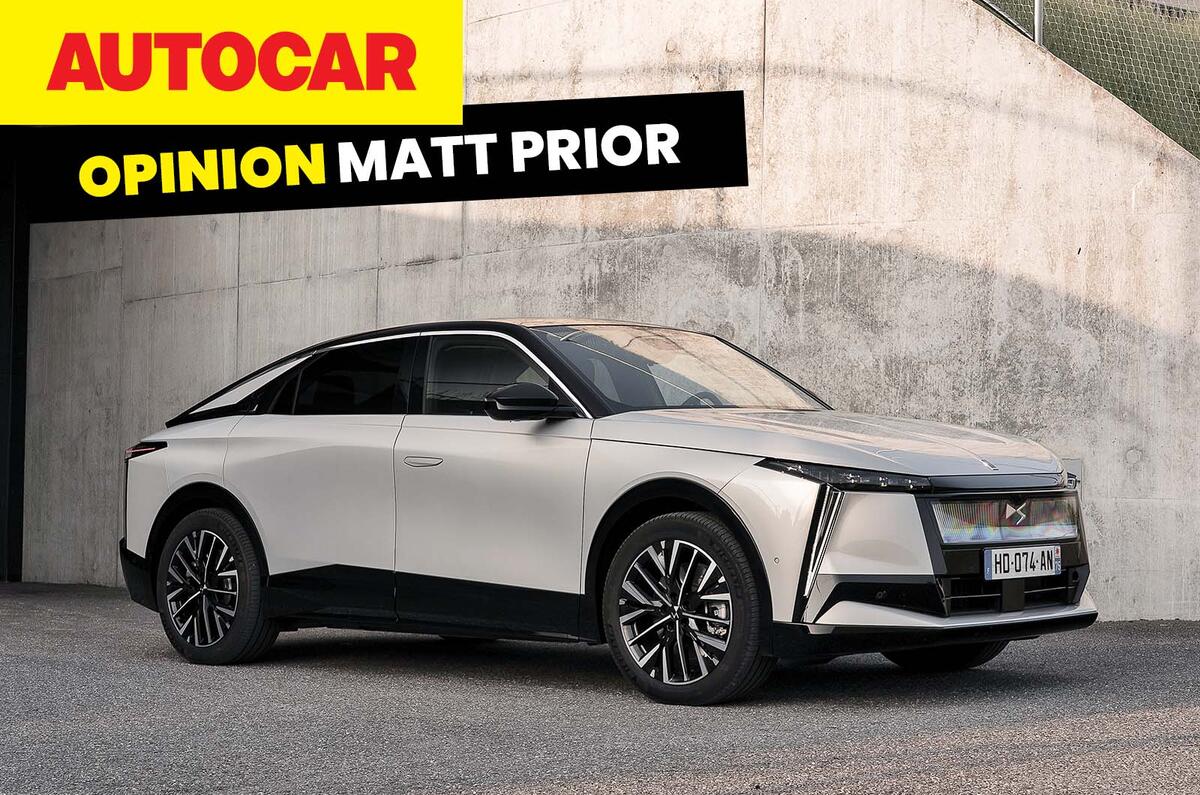
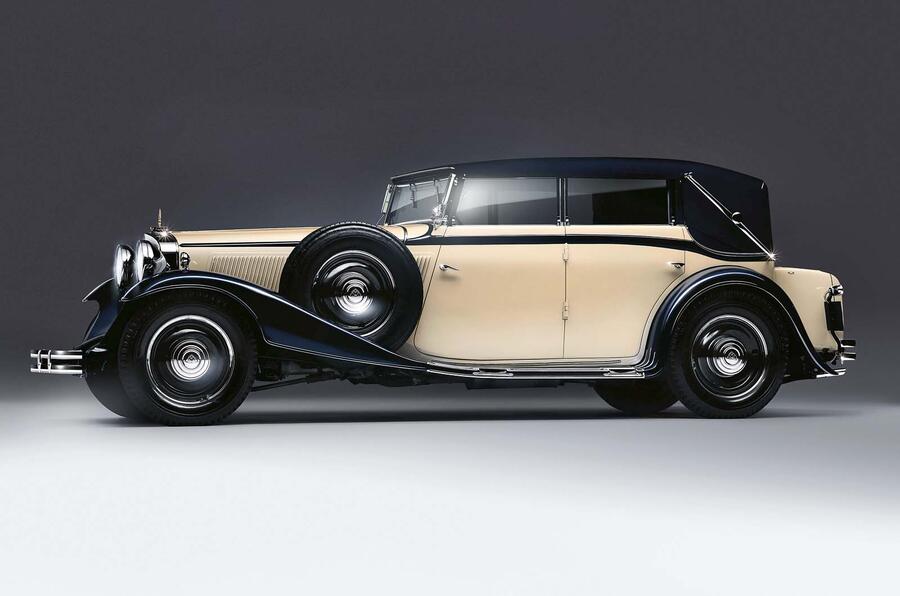
Searching Autocar’s online archive for ‘DS8’ just now didn’t bring up the latest posh Stellantis model as I’d hoped. (That would have taken the more accurate ‘N°8’). Instead it pulled up a story about the Maybach DS8 Zeppelin, a German-made, V12-engined luxury car from the 1930s.
Obviously, because I’m on a deadline and I’d already spent some time on the Morgan configurator this morning, I read the story, plus the one after it about racing driver Rod Millen’s four-wheel-drive Mazda RX-7 (perhaps more on that another time).
Vying with the ‘Grosser’ Mercedes-Benz 770K to be Germany’s most prestigious car of the time, the DS8 was vast, opulent, extraordinarily expensive and so heavy that in Germany its drivers needed a bus licence (although because most DS8s were chauffeur-driven, this was less onerous than one might think).
Aside from numerous business tycoons, owners included royalty, emperors and presidents, admirals and ambassadors. Neville Chamberlain was driven in one when he visited Germany in 1938 to meet Adolf Hitler.
In all, 340 examples were made. In the 1983 story I stumbled across, we reported that only 25 still survived. The last time I can find one being auctioned was in 2015, an elegant convertible formerly owned by a maharaja.
But back to the brand I was searching for, and I wonder how many more examples of the DS 9 (the big, plug-in hybrid executive saloon) found their way from the Chinese factory to customers in Europe than Zeppelins were ever sold here.
Recently, my friend Andrew English wrote in his Telegraph review of the new N°8 that just nine 9s found UK buyers last year. He concluded, not unreasonably, that he would seriously question the sanity of anyone who bought the new N°8.
To that, I might add questioning the wisdom of making it: a car for French politicians, yes, but who else?
We’ve repeatedly seen a phrase associated with big Citroën and DS models. In our early reviews of the 9, the company’s people said that success would be measured by selling the car “in hundreds”, rather than thousands, which is almost to the word what they said about the C6 back in 2006.
It is too early to gauge the sales success of the N°8 (European-built this time), but if DS does end up selling it by the several hundred per year here, my flabber will be fairly well gasted.
What do you do, then, if you’re a mainstream car maker who would like to sell premium cars? And it’s understandable that you really would like to, because while the volumes are lower, the profits are much higher.
I recently asked a car designer (who would prefer not to be quoted directly, so I will paraphrase) about what one should do with DS. The first thing to decide, he thought, is what DS should be. Should it be, as it was in the 1950s, a technology leader?
Or ought it do something more prosaic and rerelease some of the old tunes, a new DS in the fashion of a new Mini or a new Fiat 500 (as I think it should)? He said he thought it probably ought to be true to its roots, acting as a tech leader, receiving or introducing the latest stuff that might (or perhaps might not) filter through to other Stellantis models later.
There’s a nobility to that, but I’m not sure that the N°8 does it. The first thing DS’s website calls it is an “electric SUV”, which I suppose may be so it pops up as high as possible in the search engine rankings. (If so, that hasn’t worked: I’m on page seven of my search results for ‘new electric SUV’ and I’ve been past Rivian and Mahindra with still no sign of DS.)
Click the right link and you’re told that you can “experience the pleasure of driving electric, with the simplicity of petrol”, I think because the N°8 has a long range. But it’s a sentence that could have been written for any of a dozen manufacturers.
People don’t care about brands, but they will remember certain traits. Mercedes eventually took control of Maybach, and while nobody alive will remember Maybach’s roots, Mercedes first reintroduced the badge for a super-opulent stand-alone model and uses it today on its range-toppers.
If you’ve heard of it at all, you will know that it stands for something. So could DS. But we need to be reminded of it soon, before we all forget.

Join the debate
Add your comment
"... just nine 9s found UK buyers last year"
Eight 8s are expected to find UK buyers next year. Pure mathematics.
DS wants to be a premium car, but, alas, it is a Citroen.
Whatever DS decides it's going to be it's still a mishmash of parts from the Stellantis bin.
We all know that and so do potential buyers.
Stellantis has too many overlapping brands as it is.
If Steallantis really want to sell a premium brand they should get behind Alfa Romeo and drop DS.
Yes totally agree. The DS. brand was created before Stellantiis acquired Alfa Romeo and Maserati so arguably no need for three premium brands all of which seem to be struggling. And surely after 10 years of unsuccessfully trying to establish DS, now might be a good time to give up, or revert to going back to the DS sub brand under the Citroen marque. But therein lies another problem in that Citroen itself, after years of pile-the high-sell them-cheap marketing, has rather lost its identity. Sorting out Citroen, exploiting its wonderful hieritage of luxury and innovation, would seem to be more worthwhile pursuit.