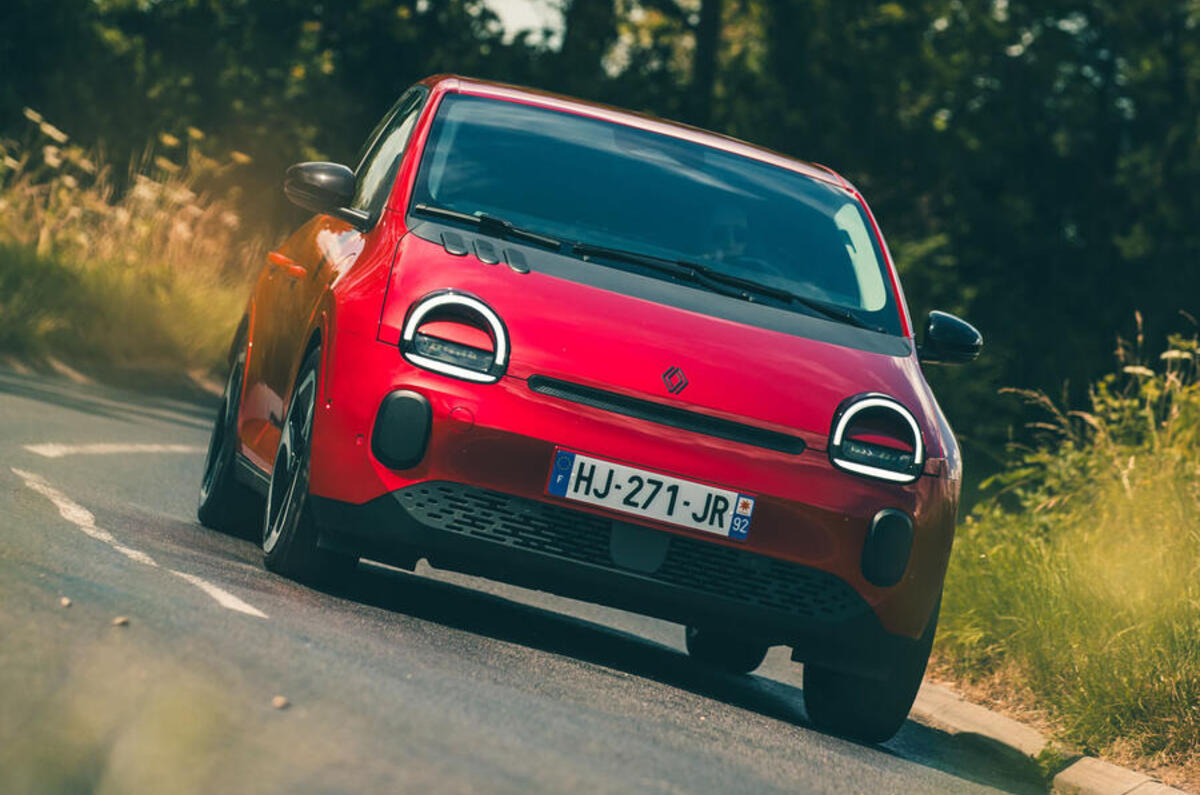

The new Renault Twingo will start from less than £15,000 in the UK, making it not just one of the market's cheapest EVs but also one of the most affordable cars overall.
Ahead of order books opening early next year, the UK government has confirmed that the Slovenia-built city car is eligible for the top-band Electric Car Grant discount of £3750. That takes its £18,495 list price down to an actual customer price of £14,745 – the same as the petrol-powered Dacia Sandero.
Renault had always promised the Twingo would start at less than £20,000 but had not suggested it would end up costing just three quarters of that figure, as it was waiting for confirmation of the grant eligibility.
That price – which undercuts the BYD Dolphin Surf and Hyundai Inster – buys the entry-level Evolution trim. Mid-rung Techno adds £1500 and the top-spec Launch edition adds another £1200 on top of that to take it to £17,645.
Equipment varies across the range, but all versions come with a 10in touchscreen and digital driver display, smartphone mirroring, Google mapping, bi-directional charging and parking sensors.
The Twingo is sold exclusively with an 80bhp motor on the front axle, powered by a 27.5kWh battery that gives up to 163 miles of range and charges at up to 50kW.
The Twingo was launched in other European markets earlier this year and has quickly proven popular. It outsold the larger Renault 5 to become France's most popular EV last month and has notched up more than 9000 orders in Germany.
It is expected to have a quick and significant impact on Renault's EV sales in the UK when deliveries start in March and managing director Adam Wood is pitching the small supermini as "a glass-ceiling breaker in terms of EV accessibility".
Renault has an enviable EV sales mix in the UK already, with 38% of all cars it sells now battery-powered – climbing as high as 54% last month as a result of dramatically inflated fossil fuel prices. With EV sales rising 46% year on year, it is now the market's fifth-biggest seller of EVs and Wood attributes that growth to a "combination of accessible pricing and desirable product support by the government grant".
All of the brand's electric cars qualify for the larger of the two available ECG discounts, but the Twingo promises to be "an absolute game-changer in the UK", said Wood.
"Quite simply, it's in a price territory bar none and really does change the game in terms of accessibility of electric cars in this country," he said.
Only the Chinese-made Leapmotor T03 and outgoing Mk1 Dacia Spring undercut the Twingo – but the new Spring, which is closely related to the Renault and built alongside it, is expected to come in at around £13,000 post-grant. However, Wood is not concerned about the cheaper Romanian-badged car stealing the Twingo's thunder.
"They're two different cars with very different appeal to two different customers," he told Autocar. "Twingo has a unique emotional design – many people can remember the original; it's fun and practical – and Spring is clearly a different proposition to that in terms of its styling and customer appeal. So we're confident there are two very different types of customer."