















Currently reading: Lotus Esprit Series 1 reimagined with 400bhp V8

New £430k "remastering" from Chelmsford-based Encor improves on 1970s original "in almost every way"

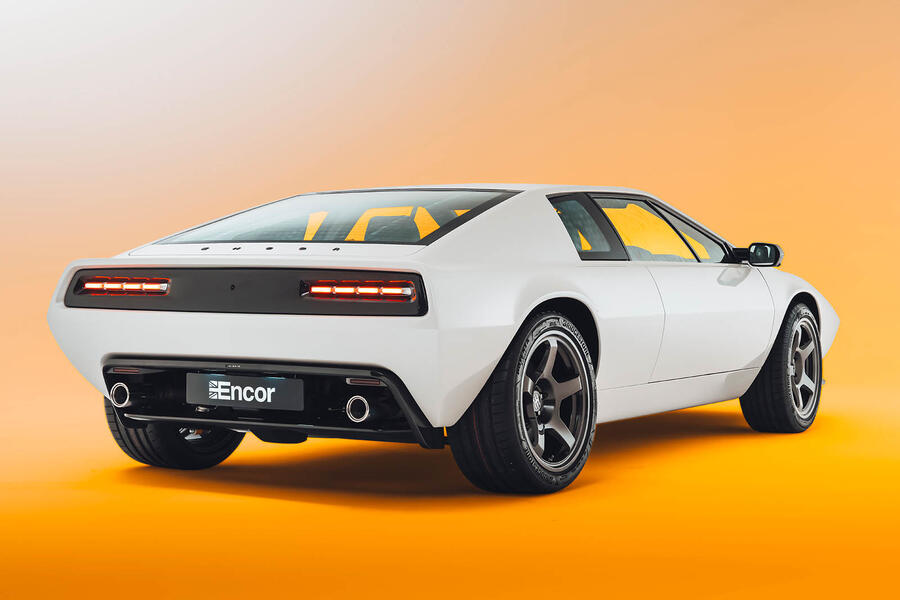
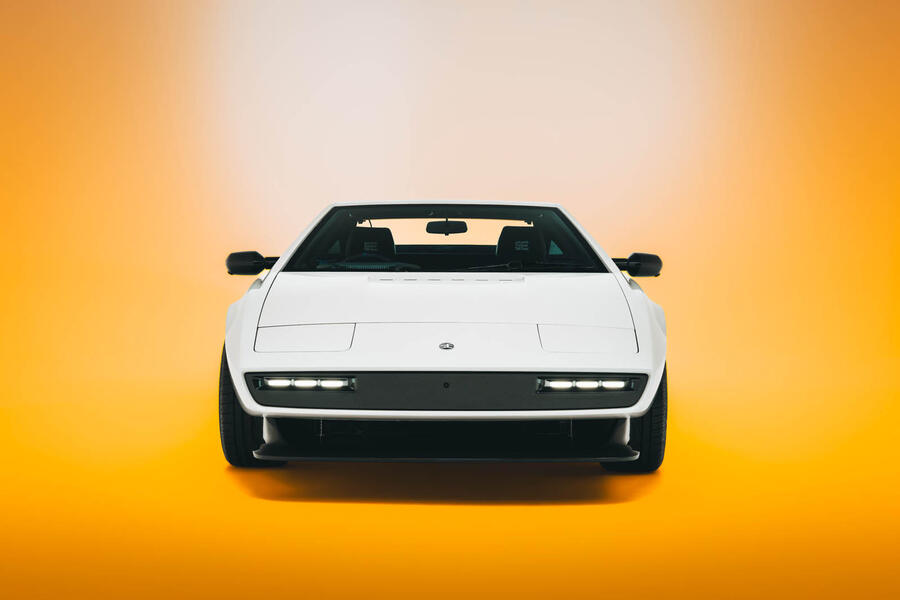
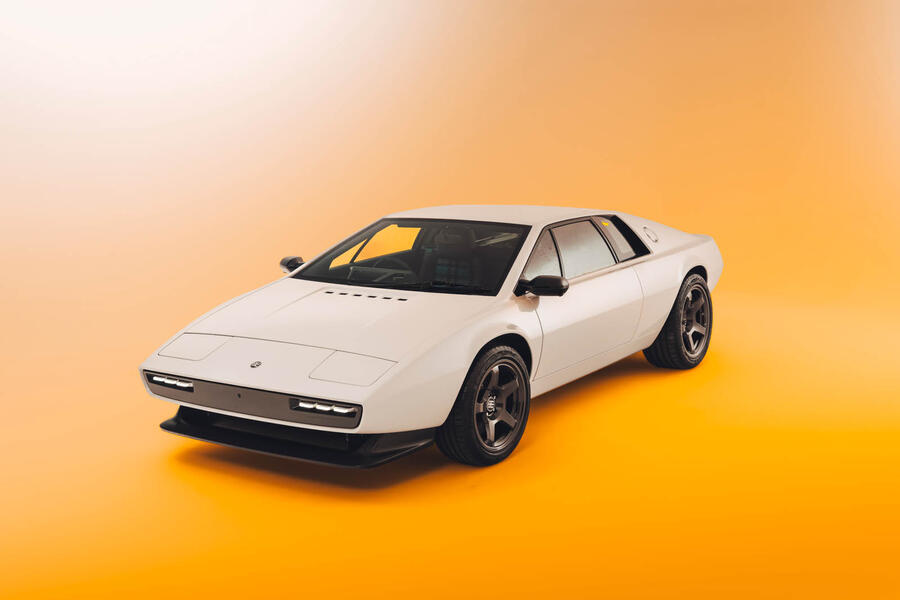
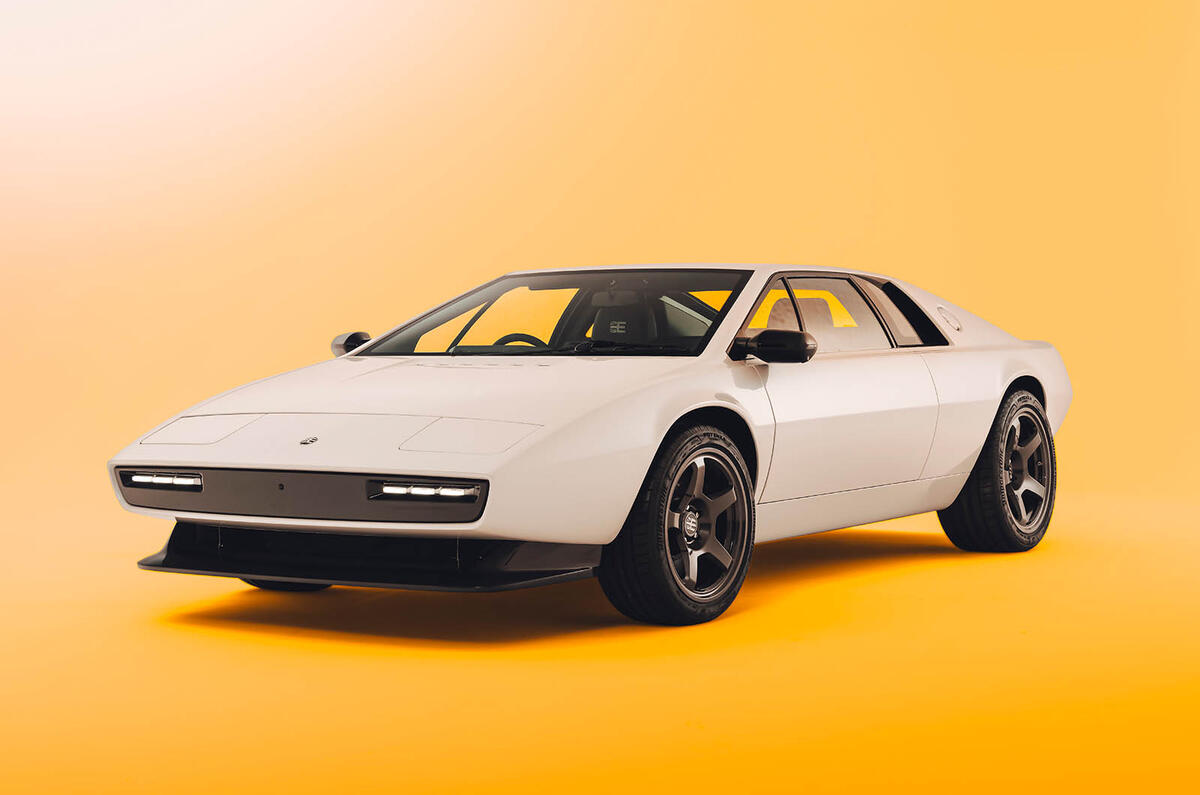
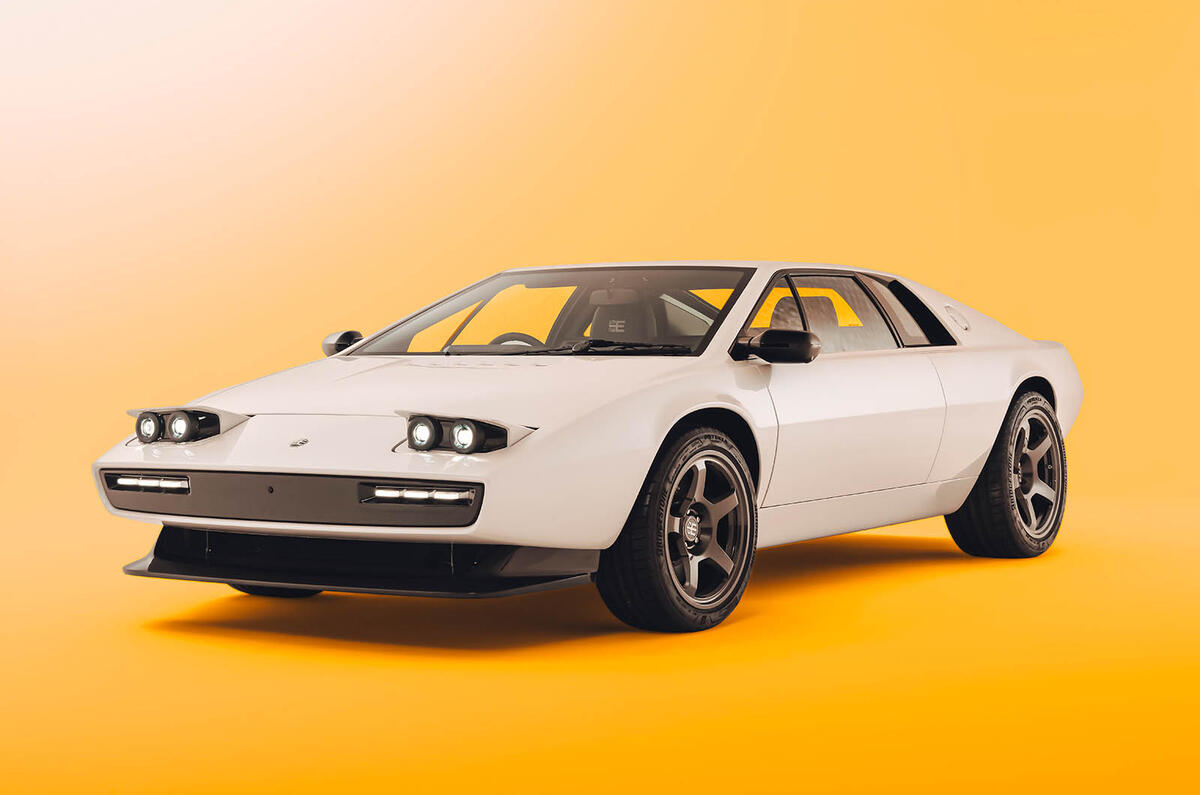
The Lotus Esprit Series 1 has been reimagined with a redesigned carbonfibre body and a new V8 powertrain by a start-up consisting of former Hethel staff, almost 40 years after the sports car went off sale.

The new Series 1 has been created by Chelmsford-based Encor, which plans to make 50 examples priced from around £430,000.

Chief engineer Will Ives said the brief was to “refine” the classic analogue driving experience that made the Series 1 Esprit so popular in the 1970s and then pair it with modern technology to make it more usable today. He added that the car had been “improved in almost every way”.

According to Ives, the team “wanted to respect the original but not be handcuffed by it”, admitting that “while we love the car, there was just so much opportunity to improve it”.

Although the new Encor Series 1 is a reimagining of the first Esprit, its base is actually the Series 4 V8 – the final version of the model, from 1994. This was chosen because it used a more advanced version of the chassis with a stronger structure.

Despite that, chief designer Dan Durrant – who was responsible for the exterior design of the Lotus Emira – said the team still had a “responsibility” to be as faithful to the original as they could.

And while Encor hasn’t worked with Lotus on its Series 1, co-founder and commercial director Simon Lane hoped “they see it as kind of complementing what they’re doing”.

Powertrain
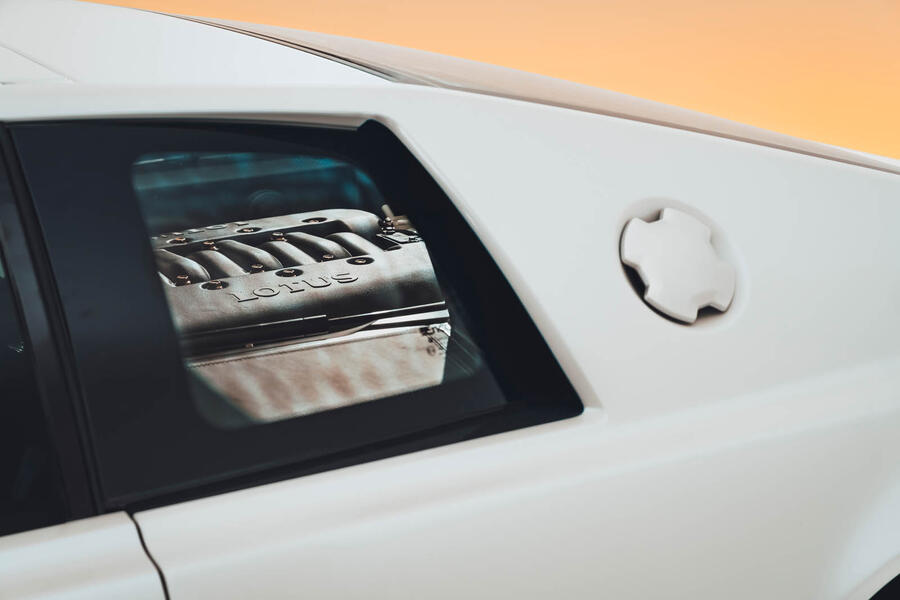
Encor Series 1 engine bay

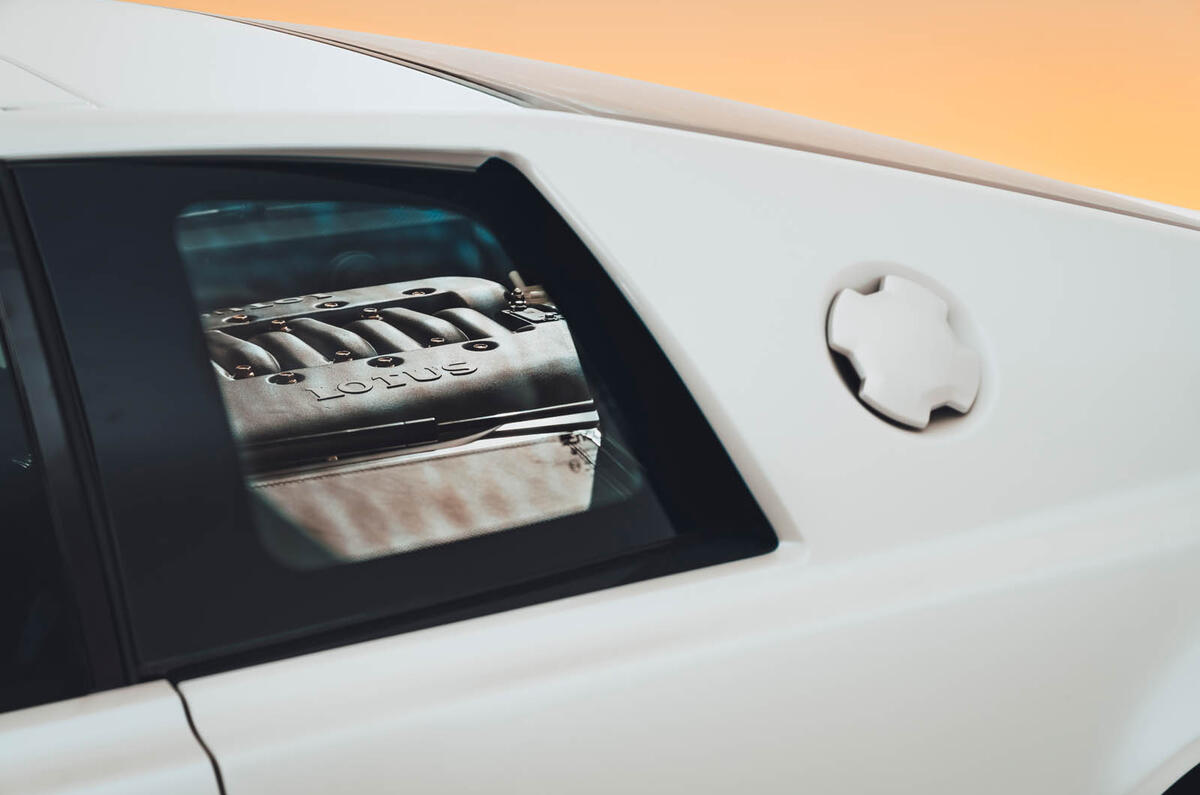
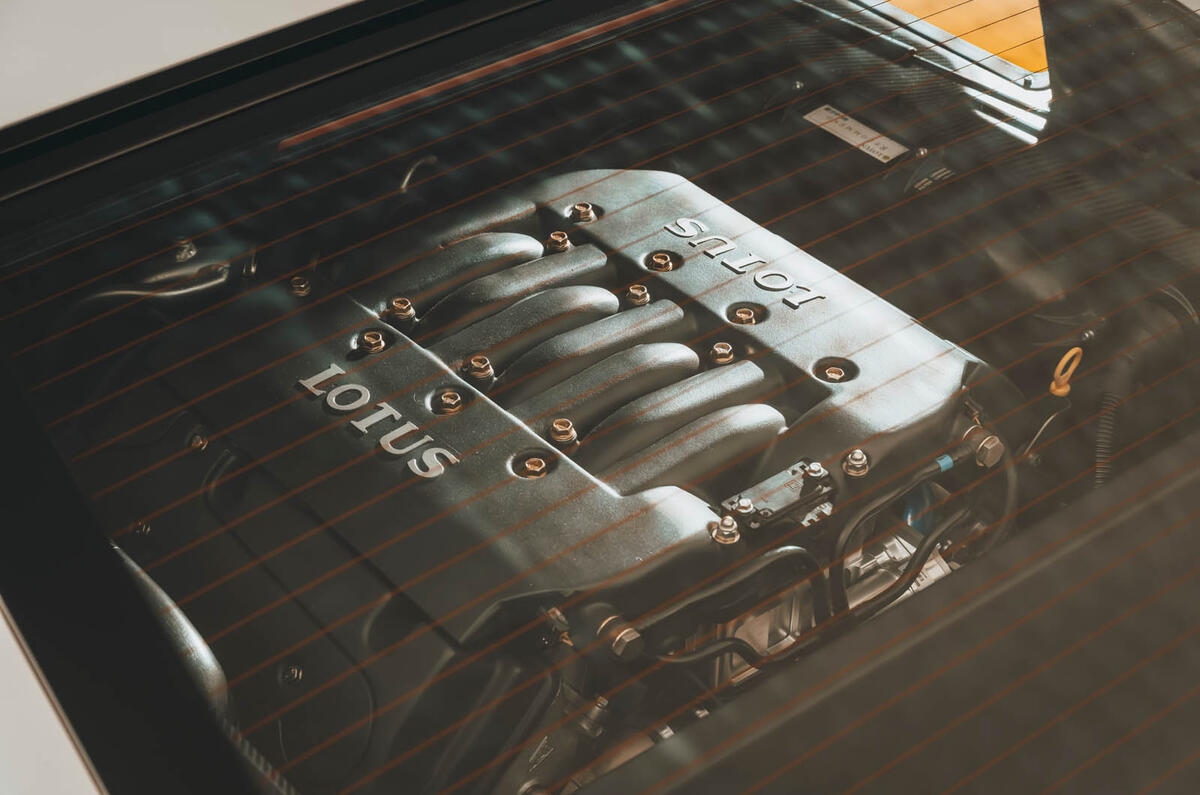
The biggest change from the Esprit Series 1 is the powertrain. Encor said the original Type 907 2.0-litre four-cylinder petrol engine lacked the characteristics and emotion needed for such a car in the modern era.

Instead, the company opted to give it the power “it should have had” by opting for the Type 918 3.5-litre, twin-turbocharged, flatplane V8 from the Esprit Series 4. 

The engine has been rebuilt using new pistons, turbochargers and injectors. Power is boosted by 50bhp to 400bhp at 6200rpm and torque by 60lb ft to 350lb ft at 5000rpm, which means Encor’s Series 1 puts out 340bhp and 210lb ft more than the original Esprit.

Weighing just 1200kg wet, this gives Encor’s model a power-to-weight ratio of 333bhp per tonne – the same as the 2018 Aston Martin Vantage

Back to top

Encor has also paired the V8 with a modern electronic throttle body control and a new ECU, which, Ives said “gives us much more precise control and, most importantly, drivability”.

The five-speed manual gearbox has been reworked too. Ives said “it was always considered a limitation of the [original] car, but it’s pretty much impossible to package anything else within the space”, so the team had to find a way to “effectively recreate a new transmission out of the casings of the old”. 

Keeping “just a few” pieces of the gearbox’s internals, the team created effectively a new unit. They also added a limited-slip differential to improve the drivetrain’s strength.

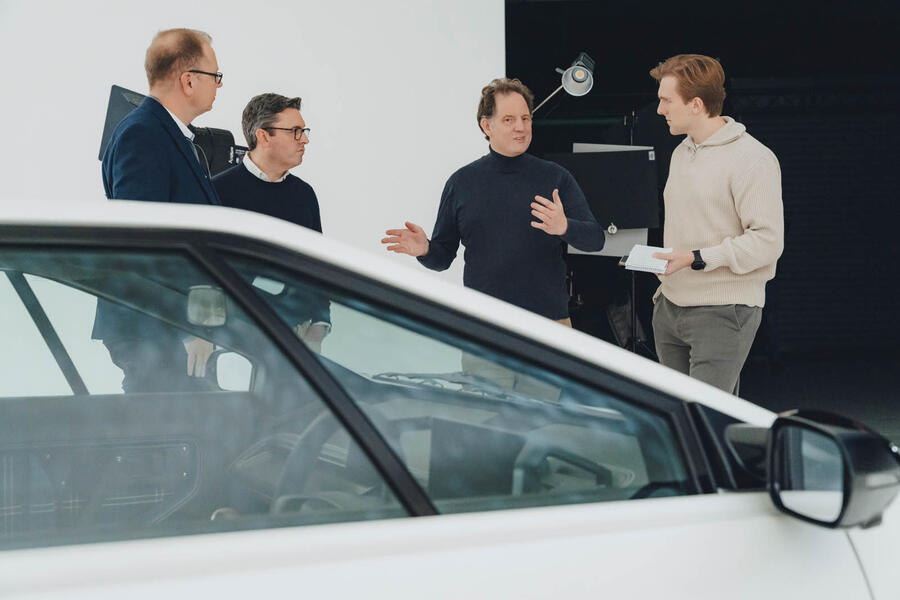
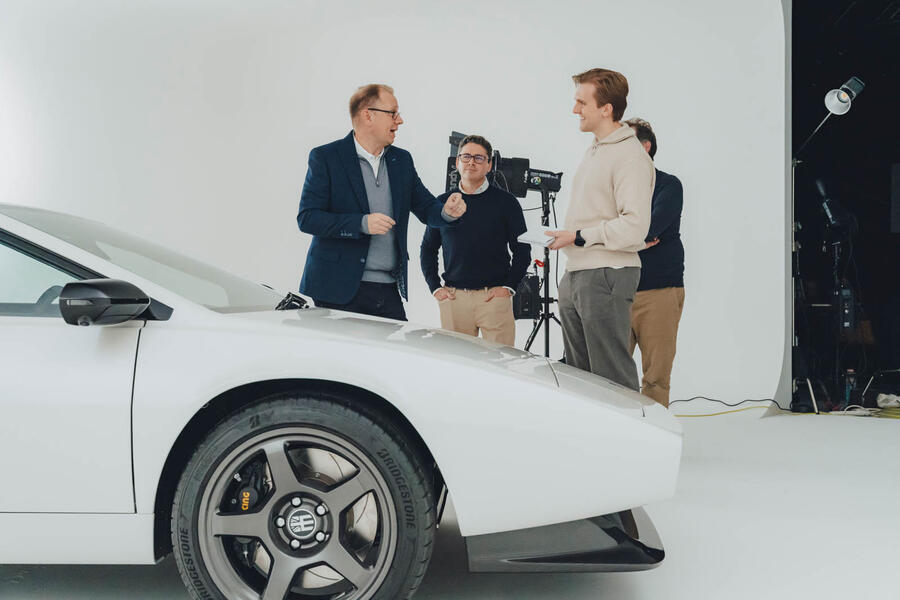
“We’re addressing that weakness and that enables us to then take the engine up to a slightly higher output, because we’re no longer limited by the original gearbox,” said Ives (pictured belowm, centre right).

The work means the Encor Series 1 can sprint from 0-62mph in 4.0sec – almost half the time taken by the Lotus original – and tops out at 175mph.

Asked if there were ever plans to fit an electric powertrain instead of the V8, Ives said that, while they "did an engineering study", it "wouldn't have offered the same analogue experience we wanted to create" as "this car is about purity".

Back to top

Suspension

Alongside the rebuilt V8, the suspension system, anti-roll bars and electronics are completely new, essentially making the Series 1 a modern car underneath.

One of the most significant technical changes is the switch from a fly-off handbrake to an electronic one. This enabled Encor to improve the car’s packaging, which includes a more reinforced bulkhead, a lower weight, thanks to the loss of mechanical parts, and larger rear brakes.

“We keep everything that’s good,” said Ives. “[The originals] are frankly fantastic cars. They were always seen as possessing one of the best power steering [systems] of any car ever, even today. So we keep all of that and then can kind of build on that.

“Now, we’re slightly lighter and slightly more powerful. That’s the benefit of another 20 years of engineering and development [since the Series 4 was retired].”

On the set-up, he added: “There's no point turning it into a sort of stiffly sprung modern car that drives like a McLaren or something. It just wouldn't make sense. We want to preserve that compliance, but, you know, it's that analogue driving experience.”

Design

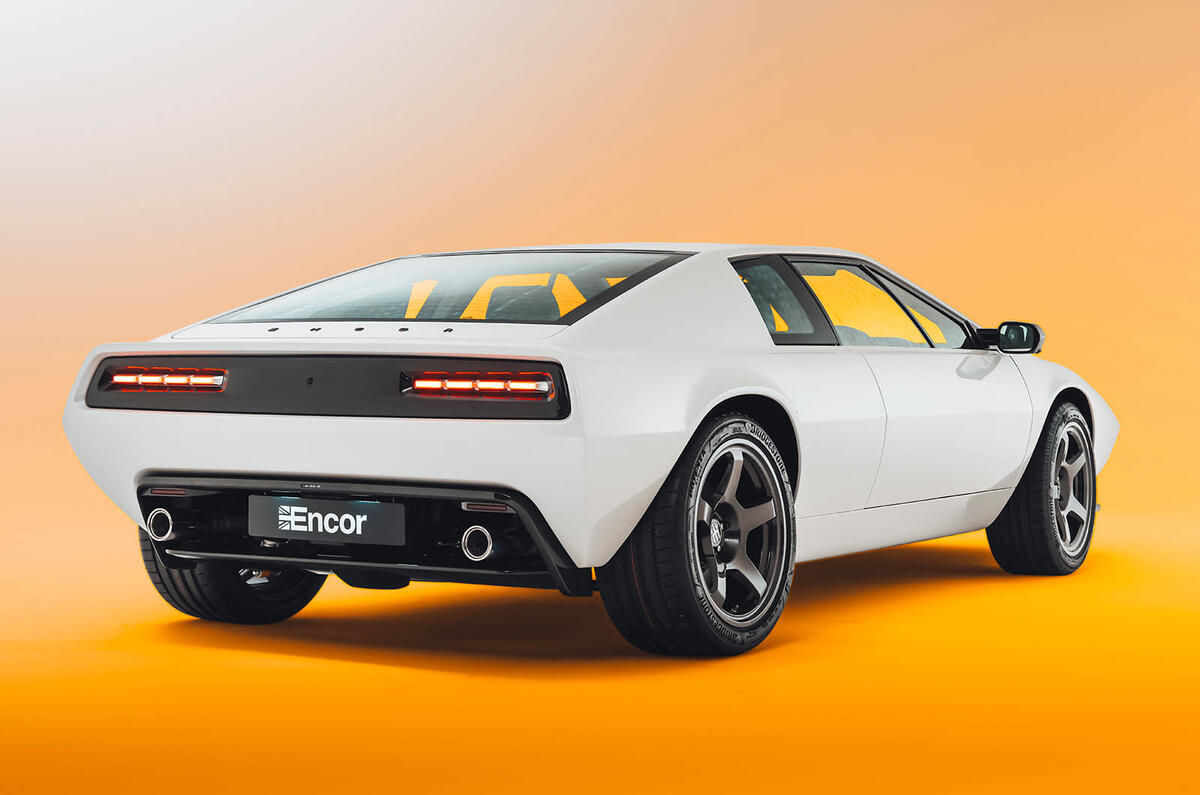
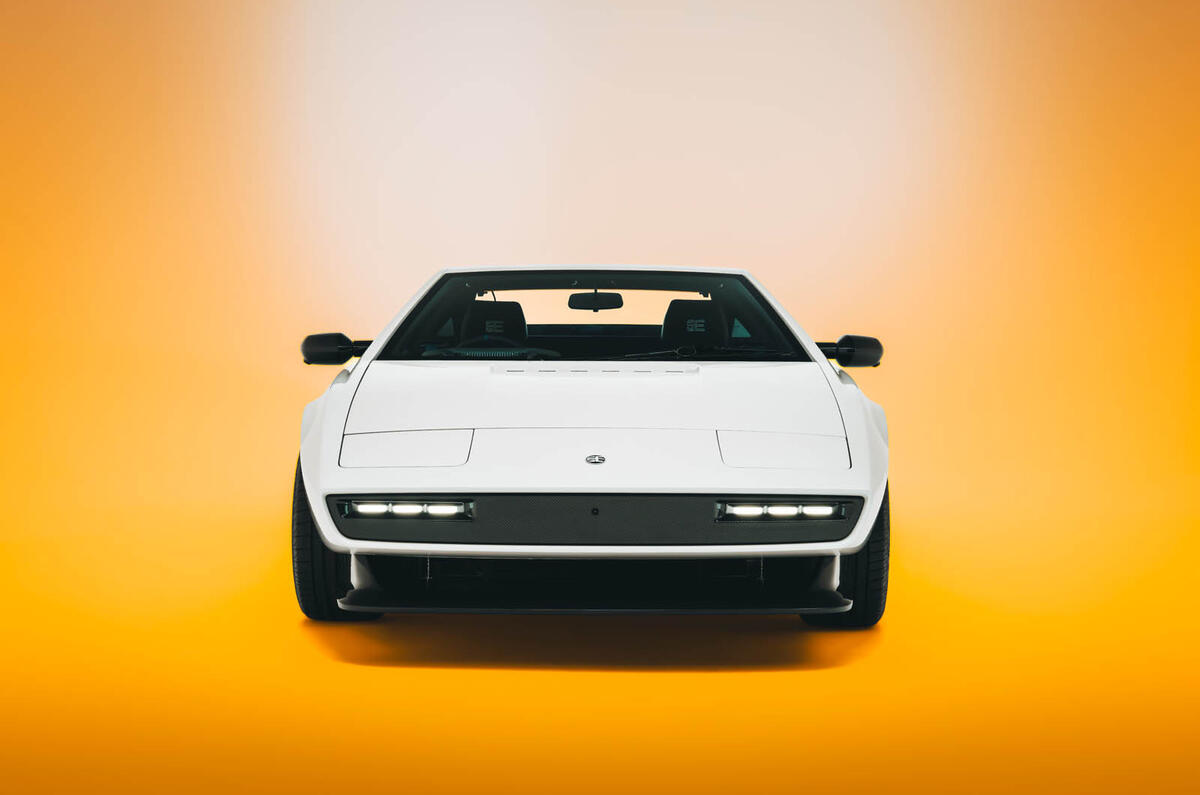
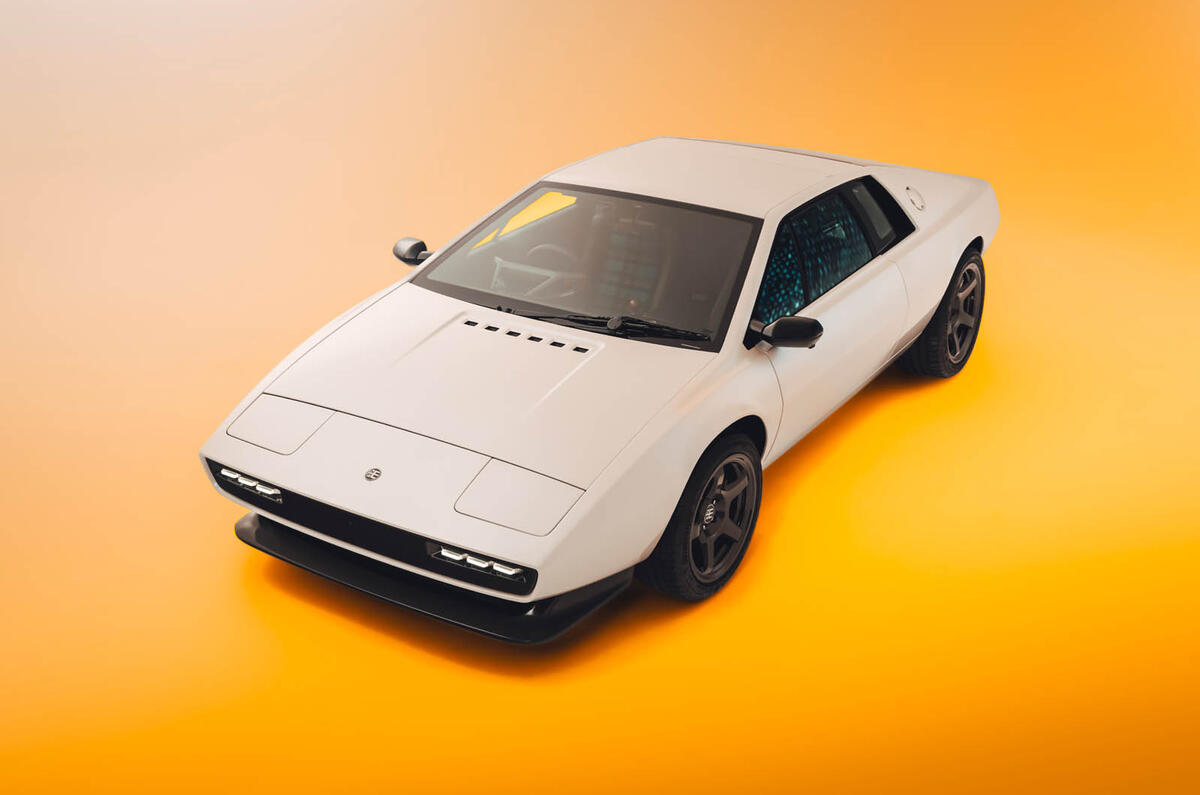
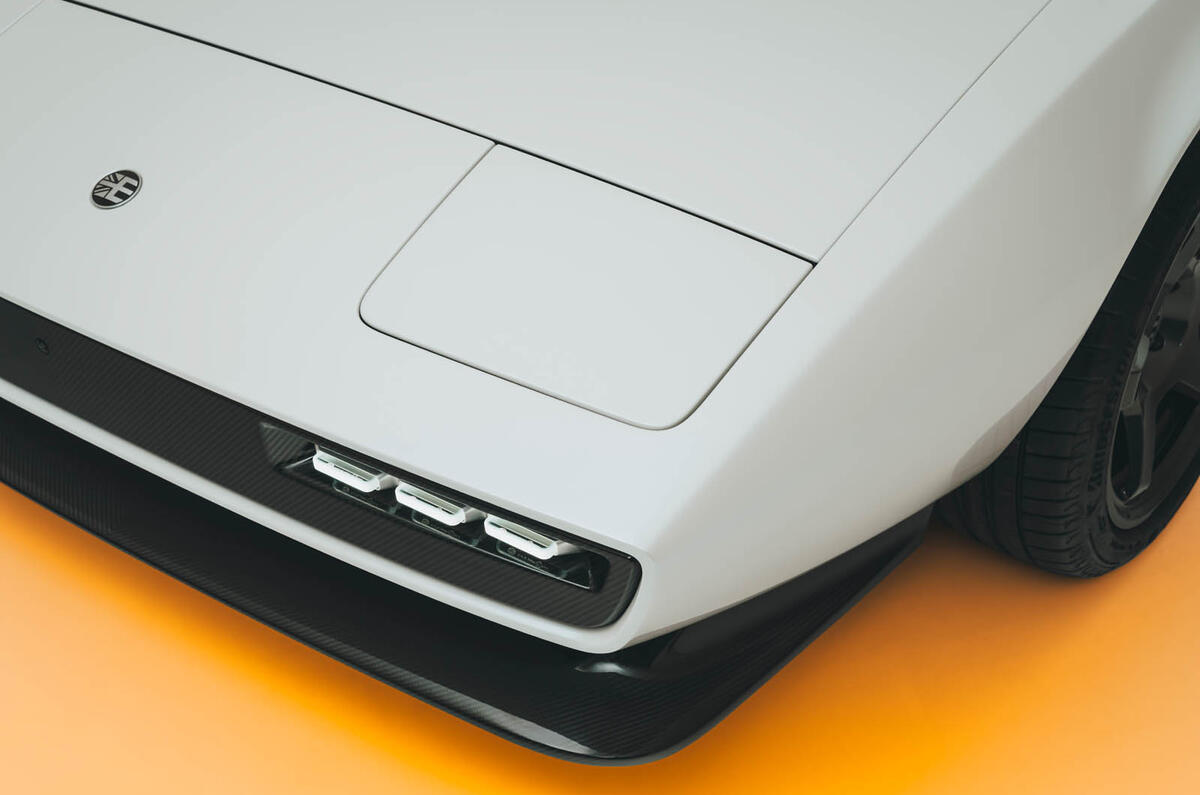
While Encor’s sports car looks almost identical to the original Series 1 (indeed, it shares the same dimensions), it has an entirely new body. The Series 4 donor car’s glassfibre tub is removed and in its place a bespoke carbonfibre body is fitted that has been created to the exact specification of the Series 1.

Ives said the reason for the complete new bodyshell is to ensure the strongest chassis possible while also saving weight. “We decided to tackle the entire structure,” he said. "So we take the entire body shell off the car and put it aside, find homes for those later, and we've created a complete new body shell that's then bolted to that backbone chassis.

“Our shell is about half the weight of the original and of course incredibly stiff.” The look is also a “refined” version of the original but houses some modern touches and bespoke elements.

Back to top

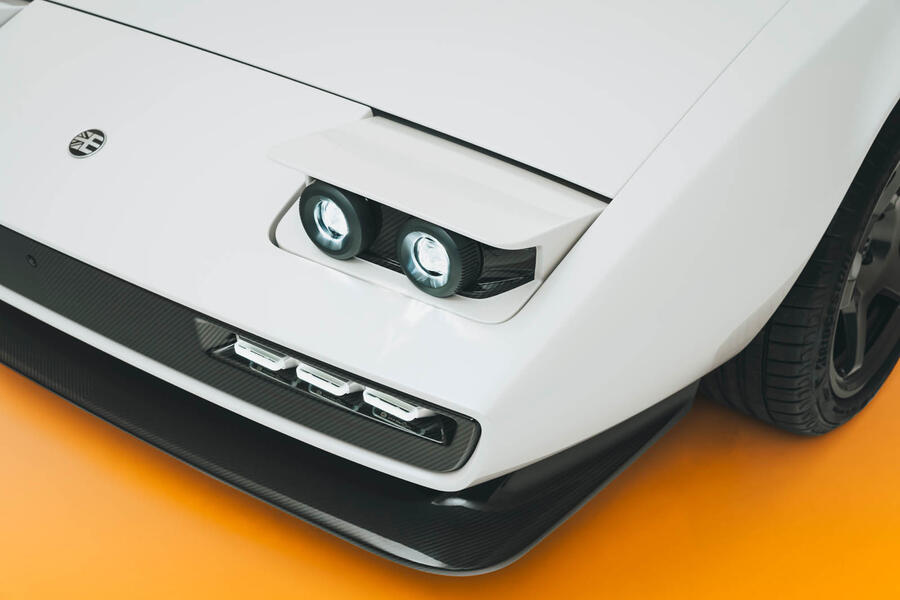
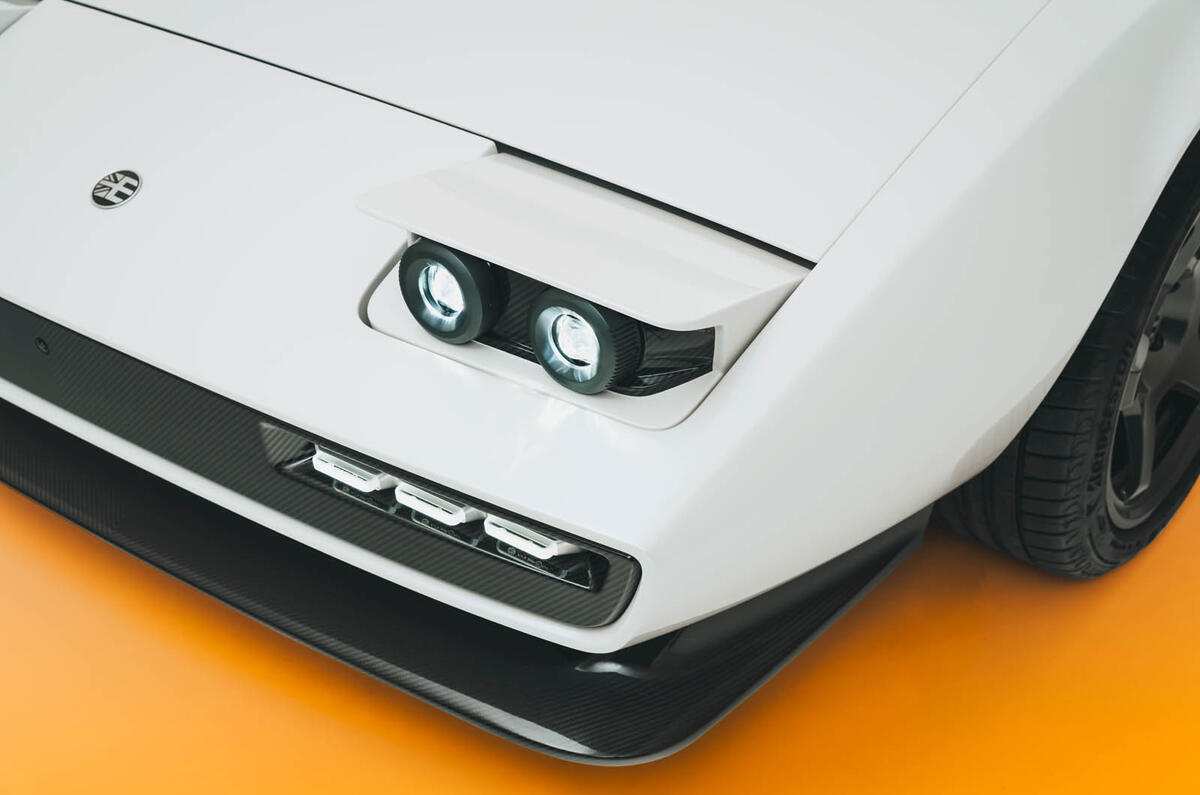
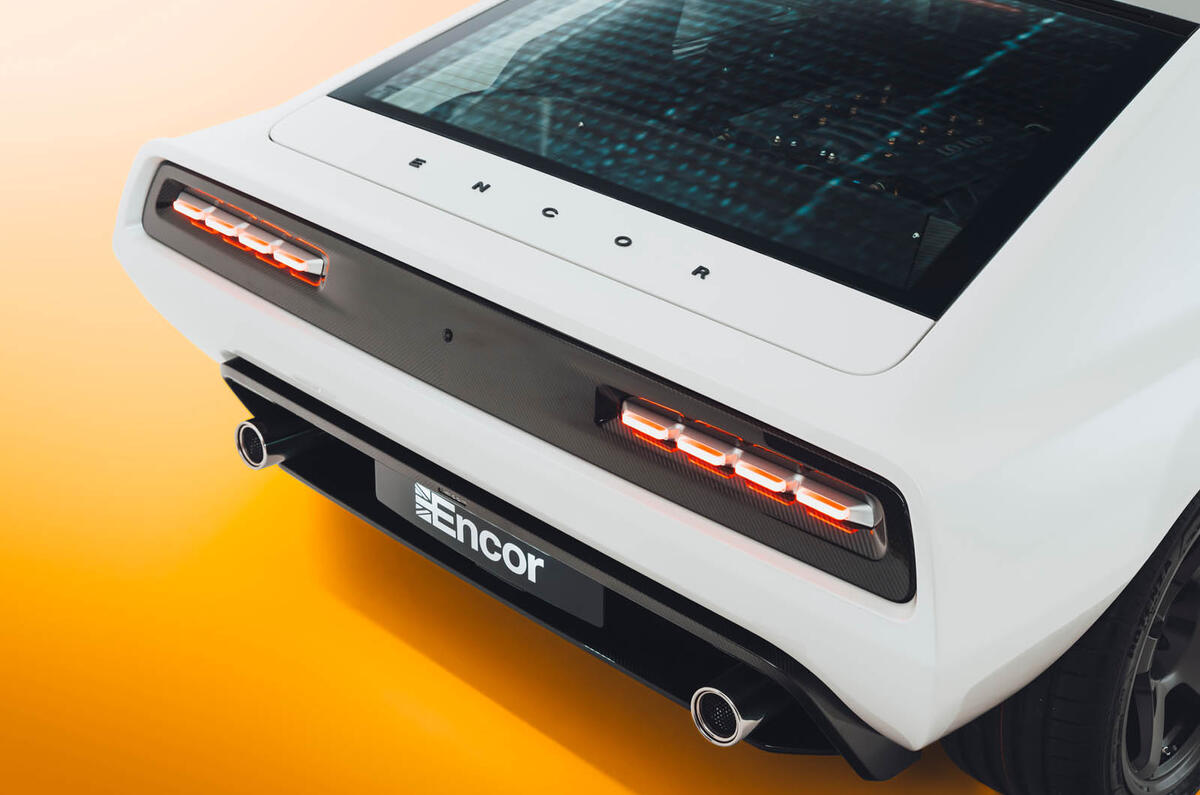
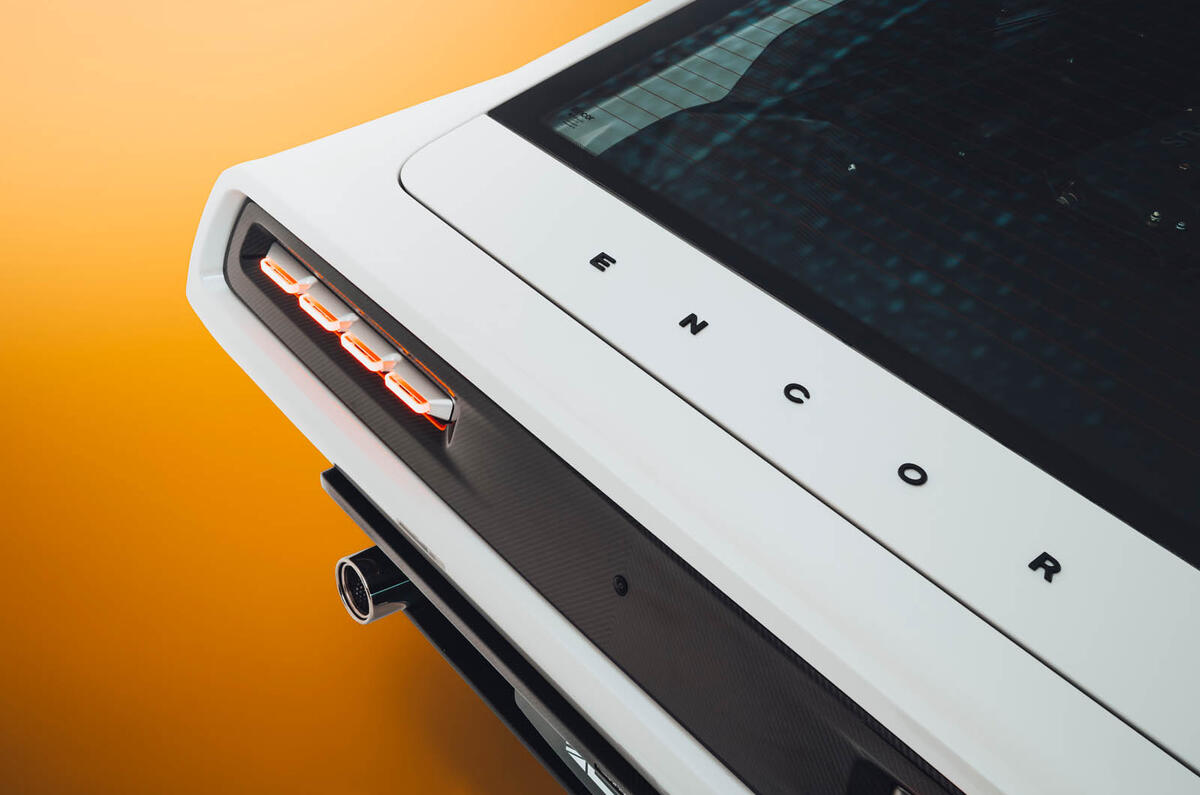
For example, the retrofuturistic daytime-running lights at the front and rear (the eight at the back a nod to the engines eight cylinders) are the biggest indication of that, along with the LED headlights that replace the original bulbs in the pop-up units. For the latter, the use of smaller, modern lights also means a lower pop-up angle is needed, which in turn aids aerodynamics.

The changes are more extensive than they might initially appear, said Durrant, pointing to the absence of the black line that ran along the length of the original Esprit’s body.

“That was actually a really smart engineering feature at the time,” he said, “because they made a giant [tub] for the top, a giant [tub] for the bottom and glued it in the middle. They had a flange where they glued it. They had to get rid of it, so they styled it in and they painted it black.”

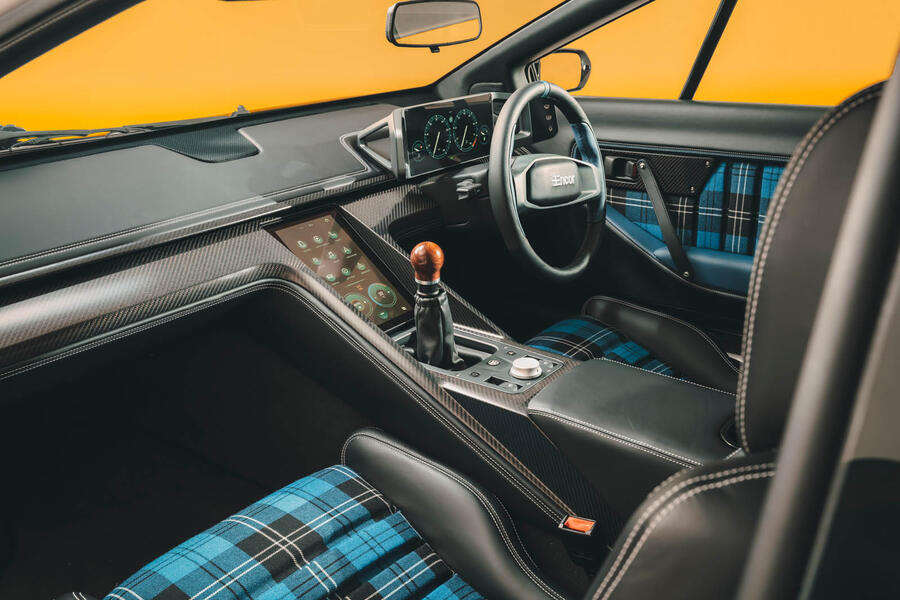
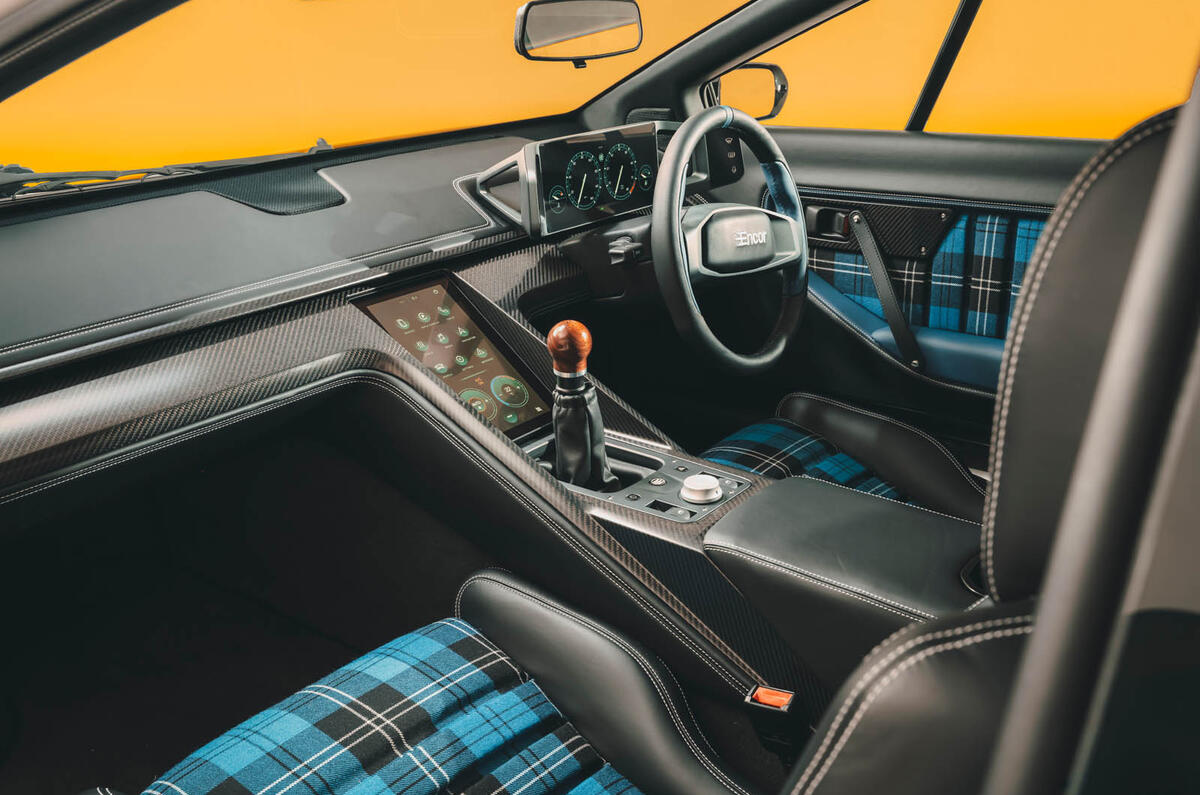
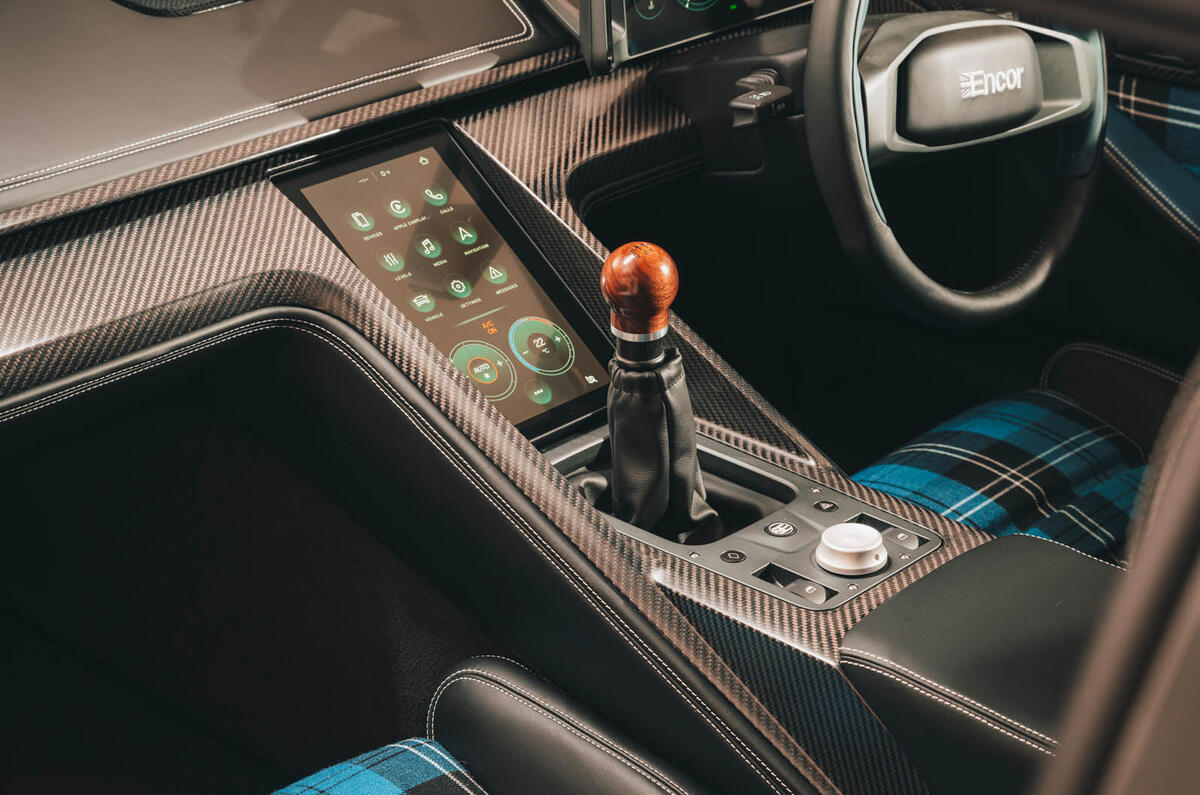
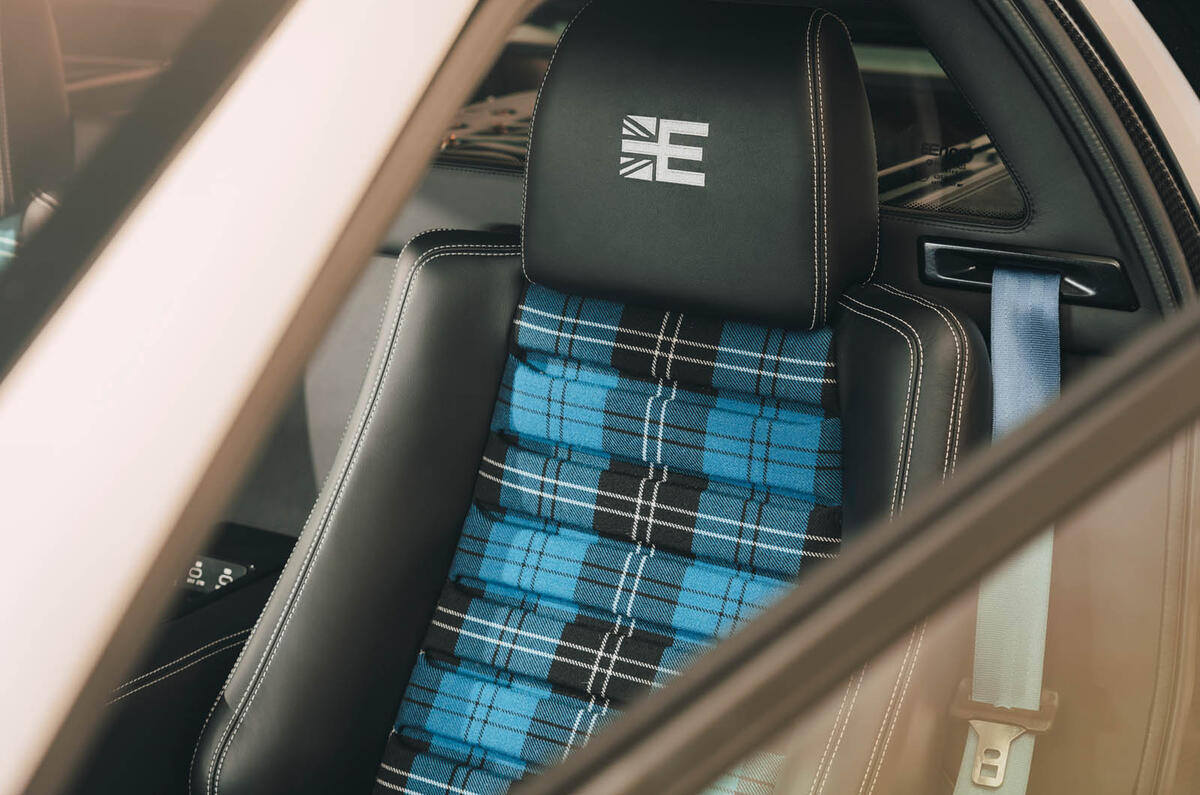
Encor’s interior is a mix of old and new, with a 10.1in horizontal infotainment screen and a single-piece cluster with an integrated 10.25in driver’s display flanked by a wooden gear selector, 1970s-style rear-view mirror and the original indicator stalks.

The team also tackled the car’s crash-worthiness by fitting an integrated carbonfibre cage, because, said Lane, “the original Esprit didn’t actually have any rollover protection, so you really didn’t want to roll it”.

Back to top

“We’ve been able to take a complete, holistic look at it and improve it,” added Ives.

Indeed, Durrant said that the team “talked about what the product could be, we were really sure that we should start with something that was as kind of as pure as possible, and then we would go ahead and see how far we could refine it”. 

He added: “Because time's moved on a lot, and technology's moved on a lot, so the options available to us are entirely different to the options available to the teams that would have worked on similar cars.”

Durrant (pictured below, left) admitted that the team felt “a really, very strong sense of responsibility on a car that’s so well loved, so iconic” during the project, compelling them “to treat it with absolute respect”.

Asked about refining something that was originally penned in the 1970s, instead of creating a modern machine that would be tied down by legislation, Durrant said it was “wonderful”.

Back to top

“Legislation definitely pushes it in a certain direction. So you end up with something that the purity of an original gets diluted over to,” he added. Such elements which today would be banned, he said, would be “proportions that we all love and want” from a sports car, such as the tucked underbody and the nose height.

“It's so difficult to achieve when you've got these giant boxes of tech which are sort of preventing you putting all the lines where you want them so to almost take a big step back and be able to develop something which is kind of as low and extreme as this. It's quite a treat”

Encor plans to create just 50 conversions, priced at £430,000, not including the Series 4 V8 donor car. Lotus made around 800 original Esprit Series 1s.

Join our WhatsApp community and be the first to read about the latest news and reviews wowing the car world. Our community is the best, easiest and most direct place to tap into the minds of Autocar, and if you join you’ll also be treated to unique WhatsApp content. You can leave at any time after joining - check our full privacy policy here.

Will Rimell

Will Rimell Autocar
Title: News editor

Will is Autocar's news editor.​ His focus is on setting Autocar's news agenda, interviewing top executives, reporting from car launches, and unearthing exclusives.

As part of his role, he also manages Autocar Business – the brand's B2B platform – and Haymarket's aftermarket publication CAT.

Join the debate

Comments
1
Add a comment…
johnfaganwilliams 5 December 2025

Copy says that, at 400 bhp, this new version has 340 bhp more than the original which by my, frankly awful, maths means the original had 60. Hmm my 1965 Austin A40 had 48 so not sure it all adds up.