Currently reading: "Huge victory": Car industry welcomes reports of dramatic cut to EV sales targets

UK prime minister is poised to announce big cuts to sales targets following intense industry lobbying

Car industry bosses have welcomed reports that the UK government is set to dramatically scale back its zero-emission vehicle (ZEV) mandate and allow more combustion-engined models to be sold up to the end of the decade.

Prime minister Sir Keir Starmer is poised to outline a new timeframe for the ZEV mandate that will reduce the targeted EV sales mix for each manufacturer in the UK from 80% to 50% by 2030.

The move comes in response to intense lobbying from car companies and workers unions in the UK, who argue that the imposed timeline – which calls for a 33% EV sales mix in 2026 and 38% next year, rising in increments to 80% in 2030 – is out of step with consumer demand and unattainable.

Recent data from the Society of Motor Manufacturers and Traders (SMMT) shows that EVs have accounted for just 23.9% of all car registrations so far this year.

Already, car manufacturers have been forced to spend billions in discounts in a bid to avoid costly government fines for missing the targets – at great cost to their bottom lines – and the government itself has introduced the Electric Car Grant in an attempt to fuel demand to the levels it had anticipated.

But now, with the 2030 end date in sight and the market lagging well behind earlier forecasts, the government is poised to ease the burden by bringing the targets down to reflect the pace of adoption.

Ministers are preparing to consult with the industry on the less ambitious targets, which would allow for 50% of car sales to still have a combustion powertrain of some sort in 2030.
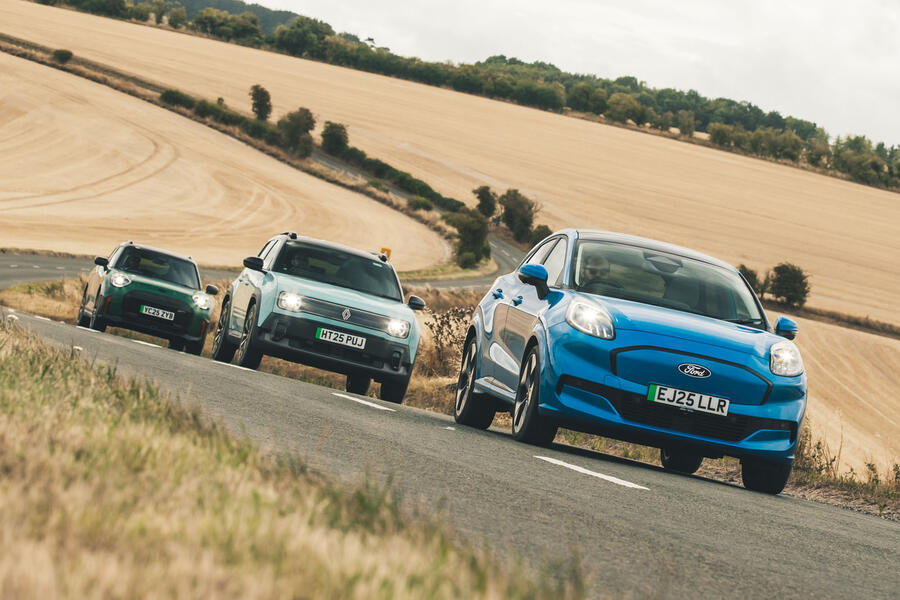
Mini Aceman, Renault 4 and Ford Puma Gen-E

However, it is understood that the 2030 ban on new pure-combustion cars will still be imposed, so any models sold from then on will need to be hybrid or electric – and all cars sold after 2035 must still be electric under the current timetable.

There is no word yet on annual EV sales mix targets for between 2030 and 2035.

This is the second time that Starmer's Labour government has backed down on EV transition policies introduced under the previous Conservative regime. Last year, it was confirmed that hybrids could remain on sale until 2035, rather than 2030 as had earlier been decreed.

Individual car companies have yet to respond publicly to the news, which currently awaits official government confirmation pending the consultation, but industry bosses have hailed the changes as a significant win for the sector.

Back to top

Speaking prior to the reports of an impending announcement, SMMT boss Mike Hawes had said a review of the targets was urgently needed, because despite huge investment in EV infrastructure, government incentives and the inflated cost of petrol and diesel, "uptake is still not keeping pace with ambition".

"Targets alone do not cut emissions. New vehicle uptake does. Consumers and businesses will only switch when conditions – and costs – are right. Automotive has invested heavily and continues to do so to create those conditions," he added, citing lingering concerns around range anxiety and the recently imposed pay-per-mile charge on EVs as ongoing disincentives to make the switch.

"It’s clear that the assumptions underpinning the mandate no longer hold. It was designed for a market with stronger demand, greater stability and cheaper energy – not the market we have today. An urgent review of the ZEV mandate is therefore essential. This is not about weakening ambition, but restoring credibility. Regulation must reflect real-world conditions," said Hawes.

His views were echoed by Sue Robinson, chief executive of the National Franchised Dealers Association, who agreed "it is important that policy reflects market conditions and consumer demand".

She added: "Franchised retailers have invested significantly in preparing for electrification and any review of the ZEV mandate should help maintain momentum towards net zero while ensuring the transition remains realistic and achievable for consumers, manufacturers and retailers."

Meanwhile, Sharon Graham, boss of the Unite workers union, said it was a "huge victory" for automotive workers whose jobs had been under threat from the unpredictable journey to an all-EV car parc.

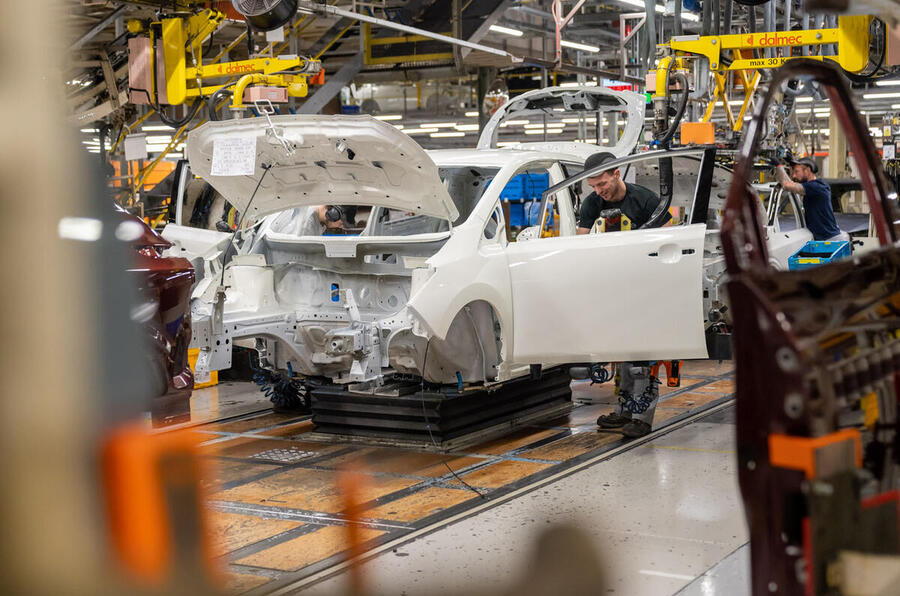
Nissan Sunderland plant

Back to top

Graham said: “The failure to act would have been an act of self-harm to a sector which is a jewel in the crown of UK manufacturing. The consultation must be swiftly concluded and its findings quickly implemented to provide the sector and workers with much-needed certainty.”

However, any move to slow the UK's transition away from fossil-fuelled cars would be divisive, with environmental groups, charging companies and EV component suppliers among those campaigning for support to accelerate the switch to EVs.

Vicky Read, who runs the ChargeUK industry body for EV charging providers, said it was "astonishing" the government was preparing to slacken the targets.

"Weakening the ZEV mandate for a third time would not only slam the brakes on infrastructure rollout and send the entire transition into a tailspin. It would bring Britain’s reputation as a market worth investing in into disrepute," she argued, highlighting the billions of pounds in investments that charging operators have made on the assumption the mandate would hold.

Her views were supported by Octopus Electric Vehicles CEO Gurjeet Grewal, who said a relaxing of the policies would be "short-termist and likely to materially hurt us all in the long term".

Meanwhile, ex-Nissan executive Andy Palmer – a vocal proponent of EV adoption and a leading figure in bringing the Leaf to fruition – said the move was "another sign of a government drifting from conviction to populism".

He added: "The UK was once genuinely admired for policy consistency. Investors could make long-term capital decisions with reasonable confidence that the regulatory framework would hold. Today, we appear to be executing more U-turns than a London taxi."

Join our WhatsApp community and be the first to read about the latest news and reviews wowing the car world. Our community is the best, easiest and most direct place to tap into the minds of Autocar, and if you join you’ll also be treated to unique WhatsApp content. You can leave at any time after joining - check our full privacy policy here.

Felix Page

Felix Page
Title: Deputy editor

Felix is Autocar's deputy editor, responsible for leading the brand's agenda-shaping coverage across all facets of the global automotive industry - both in print and online.

He has interviewed the most powerful and widely respected people in motoring, covered the reveals and launches of today's most important cars, and broken some of the biggest automotive stories of the last few years.