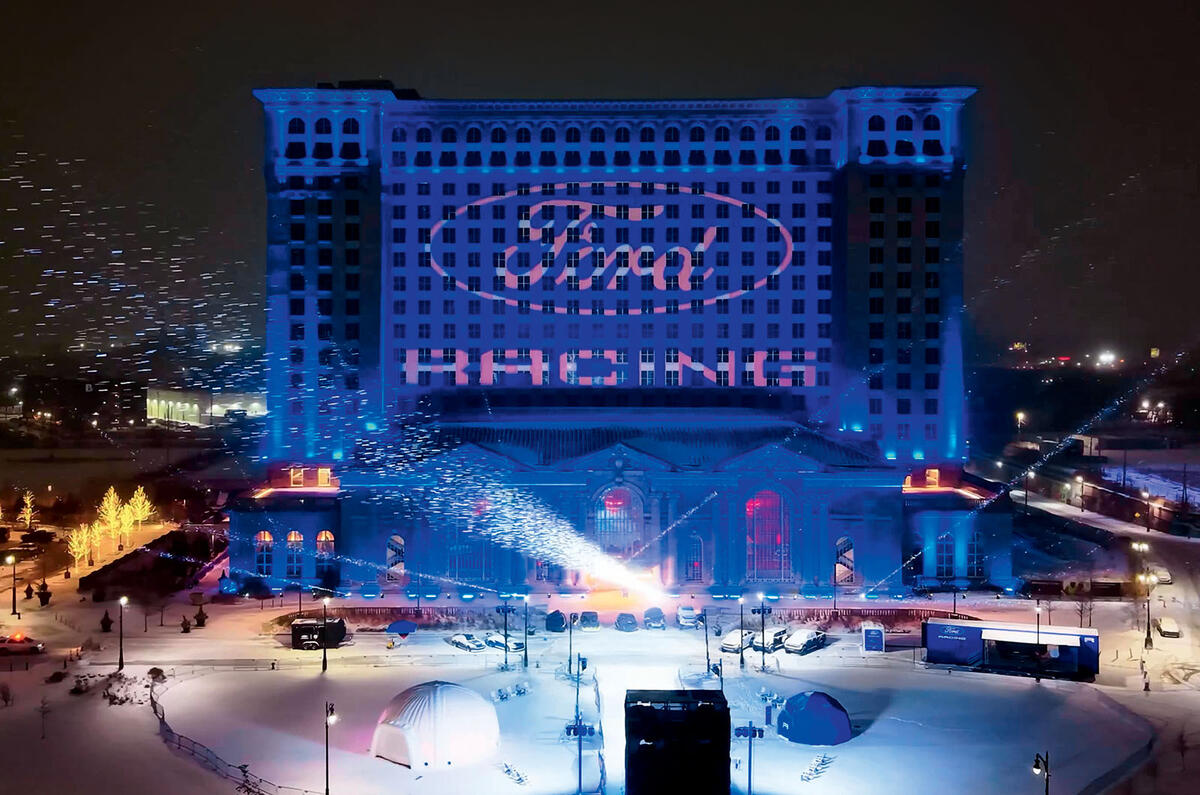
Ford Motor Company exists because of motorsport. In 1901, Henry Ford took part in his only race, a 10-mile contest against Alexander Winton in Grosse Pointe, Michigan, in a self-built 26hp car called Sweepstakes.
He won and the reputation earned from that helped to secure backing to launch his eponymous company a few years later.
One hundred and twenty five years on, Ford is still hugely committed to motorsport.
In 2026, it will support machines racing in 34 different categories around the globe, ranging from rally raids to stock cars, GT racers to Baja buggies. And, most notably, it will return to Formula 1 this weekend.

Amazingly, despite being absent from the grid for 22 years, Ford is still the third-most-successful engine manufacturer in the history of the sport, its 176 race wins ranking behind only Ferrari and Mercedes.
All those Ford victories were achieved with engines built by Cosworth, including the legendary DFV.
But the Blue Oval's 2026 return is very different, coming in a new partnership with Red Bull; the 1.6-litre V6 hybrid powertrain in the RB22 that Max Verstappen and Isack Hadjar will drive this year will be built by the new Red Bull Ford Powertrains outfit in Milton Keynes.
How much of that powertrain is Ford responsible for? We'll get to that, but let's start with the reasons for Ford's return to the grand prix grid.
Why Ford is back in F1

As far as chairman Bill Ford - Henry's great-grandson - is concerned, the reason behind Ford's F1 return is the same as for all its motorsport efforts.
"To win is the short answer," he says. "We have a long history in F1 that we're proud of, and although we've raced all over the world in different series, the one area we weren't in was F1. We've remedied that."
But while the Ford family are clearly passionate racers, there's a business aspect to this too.
Yet in an age when Ford's global model range is disparate and in many aspects not especially sporty, you have to ask: will being in F1 really help it sell cars, especially given that its UK line-up largely consists of SUVs?
"We don't really think of Formula 1 as a sales and marketing thing, like it used to be with the DFV," Ford CEO Jim Farley tells Autocar.


Add your comment
As for the Transit. I have had several Transit vans over the decades. I got rid of my ( otherwise superb) 2019 Transit when the wet belt failed leaving me with a huge bill.
A Mercedes Vito replaced it.