


As the boss says, there’s “nothing that Skoda has not done yet”. This 130-year-old company founded by Václav Laurin and Václav Klement in Mladá Boleslav, then in the Kingdom of Bohemia, started out making and repairing bicycles but soon after added huge diesel static engines to its remit, their castings poured near the entrance of what is still today the wonderfully atmospheric Skoda museum.
The city is still Skoda’s headquarters. The base then remains the base now. In 1905 came the first car; it’s believed two working examples are still in existence and one is today phutting around the castle yard where I’m standing next to some other classic Skodas.
Soon L&K was the biggest car manufacturer in Austria-Hungary. But when we talk broad remits, it’s worth remembering that motorcycles came too, as did aero engines. The Skoda name was adopted when Laurin and Klement’s company was bought by Skoda Works in 1925, but the diversity didn’t stop then.
And yet, what defines Skoda today – its practical, sensible, good-value family cars – has long been a standpoint in the Skoda range, even when it was making the original V8-engined Superb, a car fit for royals and ambassadors.
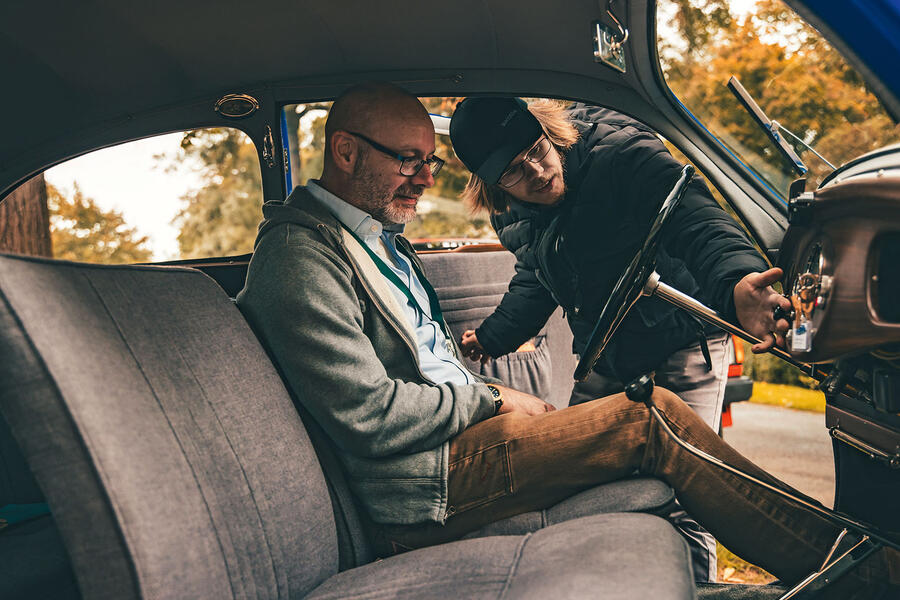
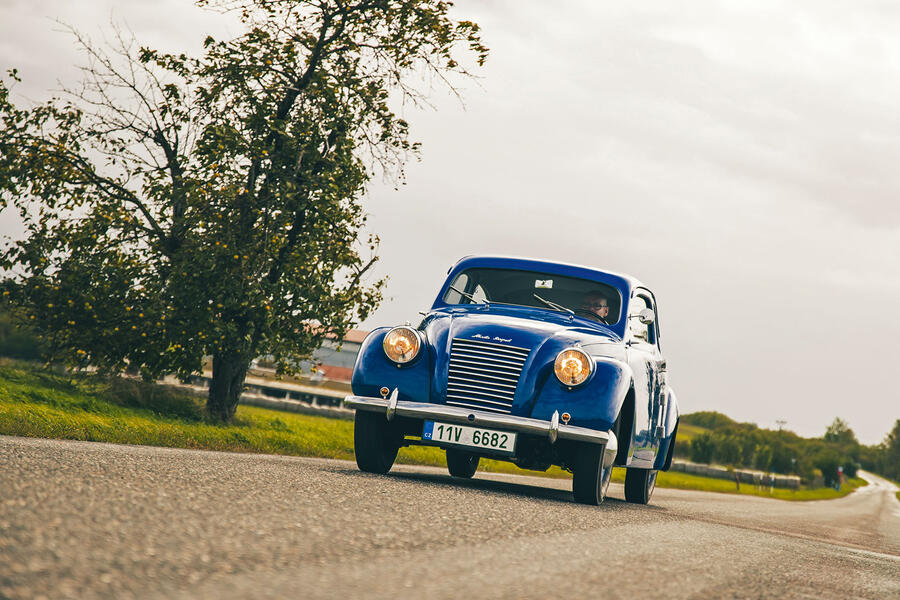
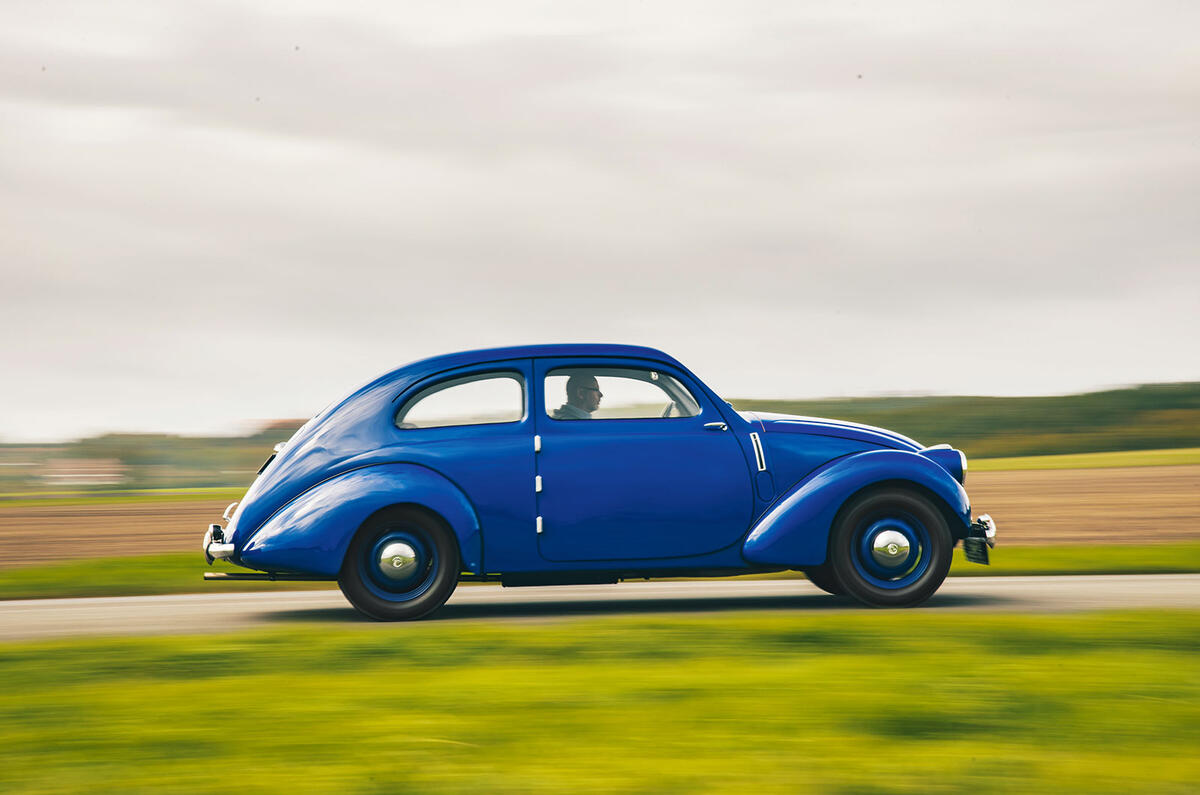
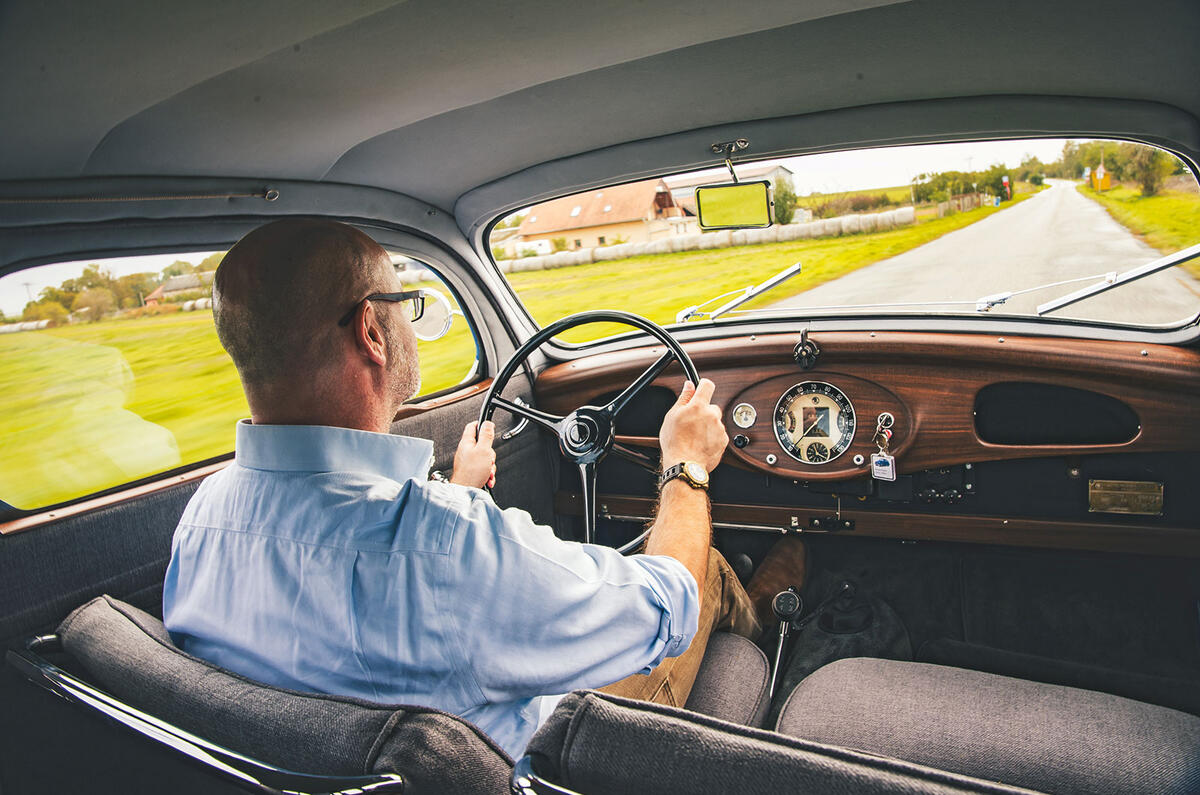
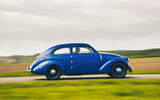
Take this Rapid, from 1940. It’s one of only five such cars remaining, but its streamlined shape – it was the first Skoda to be modelled in a wind tunnel – I find impossibly adorable. It’s a two-seat saloon car, called the Rapid OHV when it was launched in 1938 as a more aerodynamic follow-up to the 1935 Rapid on account of its overhead-valve 1558cc four-cylinder engine. Only 101 with this body type were made.
What the Rapid and the aforementioned Superb have in common is that they were among the first Skodas to use a backbone chassis, designed to be more rigid than early ladder-framed cars. But while the Superb dwarfs onlookers and other cars in the Skoda museum, in the grounds of Castle Loucen the Rapid lurks diminutively on a pedestrian pathway.
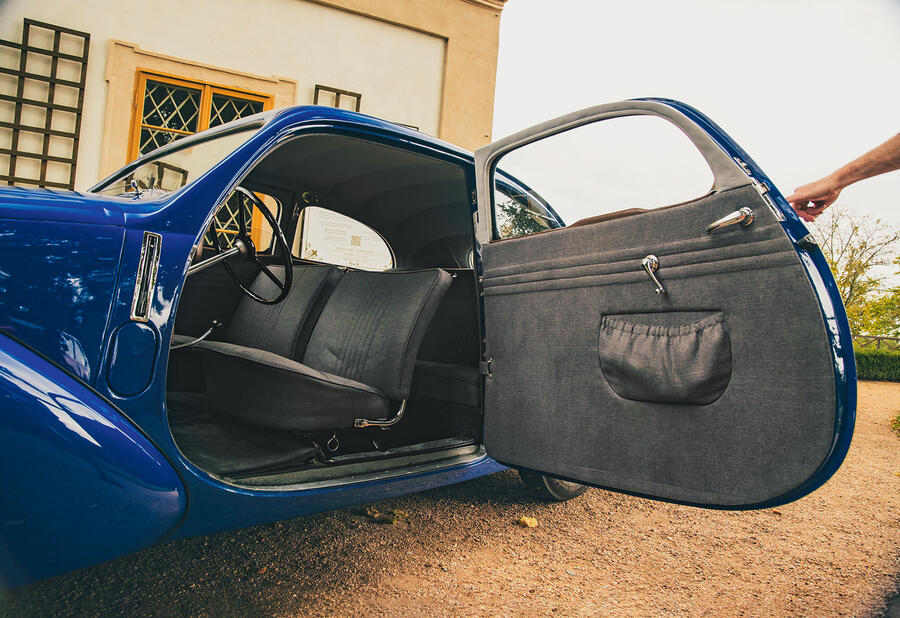
Its rear-hinged doors are opened wide and I’m ushered inside, onto squashy foam, low-backed seats. This car must have been restored at some point – it’s just too perfect, with tidy carpets and fabrics and a genuinely luxurious-looking wooden dashboard.
There is a smattering of switchgear on and around the dash, metal and Bakelite (or some equivalent) buttons and some straightforward engineering – long before they called it Simply Clever – left on display.