Access control:
Open
Include in Apple News:
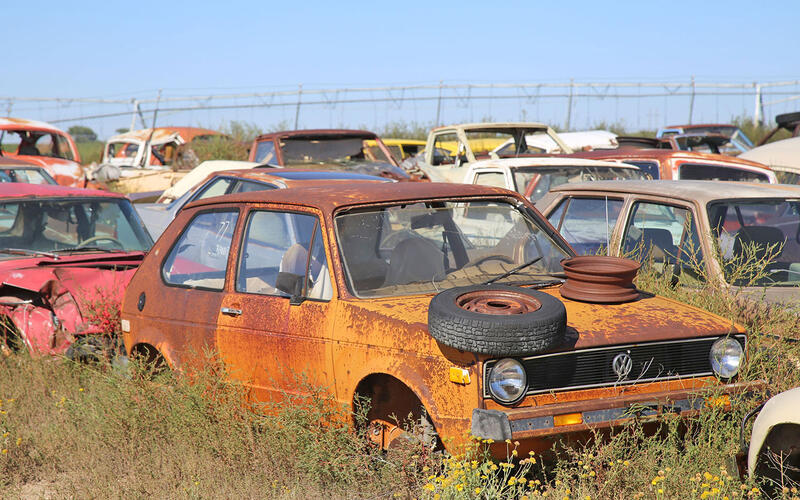

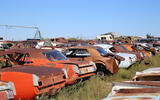
Founded in the late 1960s and still run by lifelong gearhead Don Woller, the yard has grown to cover more than 80 acres of sunbaked prairie. With thousands of vehicles, it’s a classic-auto enthusiast’s dream: sun-faded fins, square-jawed pickups and long-forgotten sedans lined up beneath an endless sky. Thanks to the dry climate (300-plus days of sunshine) many survive in astonishingly solid condition.
Just don’t make the mistake we did and arrive unannounced. Opening hours can be erratic, so it pays to call ahead. We found the gates shut, only for a friendly mail carrier to alert the owner, who generously granted us free rein. Several hours slipped by, disturbed only by the yard’s watchful guard llamas.
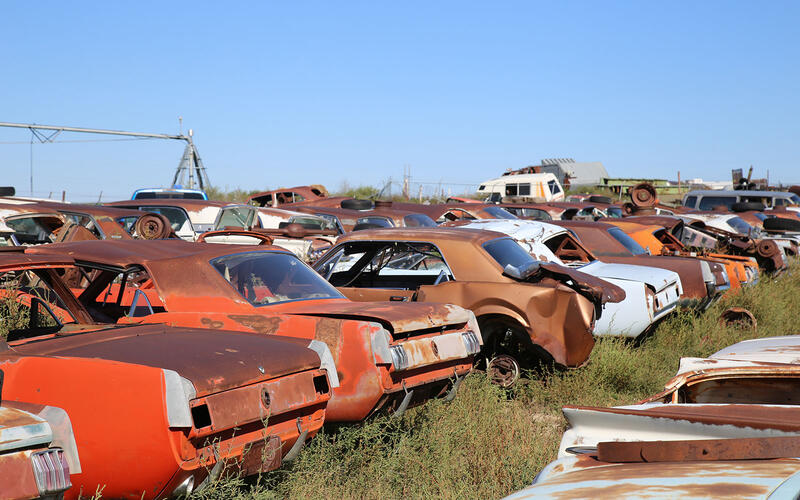
The llamas aren’t the only herd in this yard. A lineup of 1960s Ford Mustangs sits side by side under the high-plains sun, their days of small-block rumble and straight-six thrift long gone. Once the face of affordable American performance, they now serve a quieter role, keeping other Mustangs on the road one part at a time.
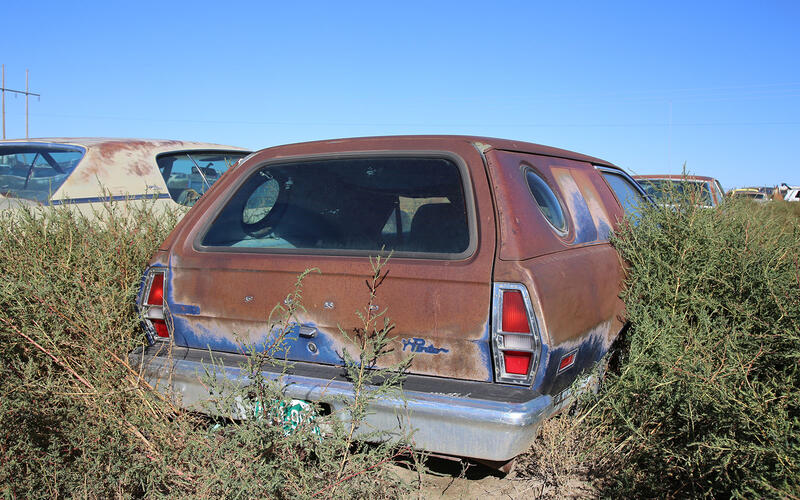
The animal theme continues. This Ford Pinto, named after a small western horse, is a rare Cruising Wagon that left the factory with those round porthole windows and now-faded graphics. It was Ford’s late-1970s attempt to give the subcompact wagon some custom-van flair. Parked in the yard’s project section, it’s waiting to see whether someone comes along to saddle up for a rescue.
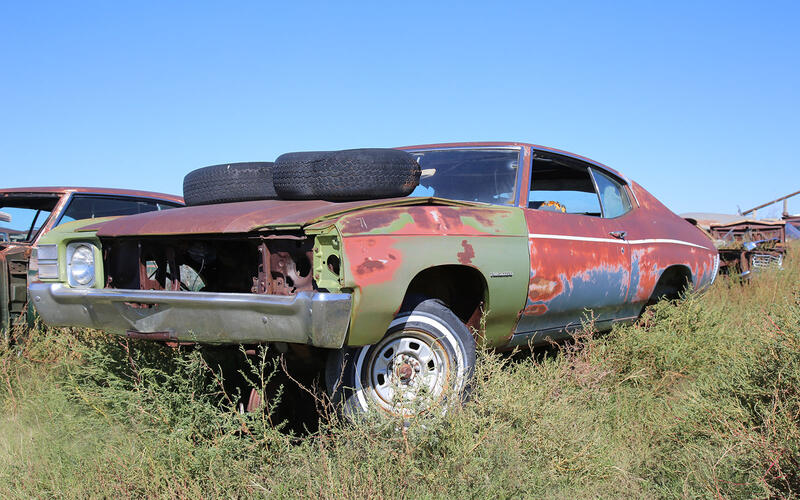
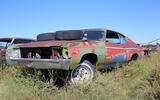
This 1971 Chevrolet Malibu started life as the upscale version of Chevy’s Chevelle, its name borrowed from the beaches of Malibu, California, to add a little West Coast glamor to middle-America driveways. Buyers could order them mild or muscular, from sensible six-cylinders to serious V8 power. This one has long since lost its grille and engine and now waits out its days in the weeds, spared the crusher only by the value of the parts still clinging to it.
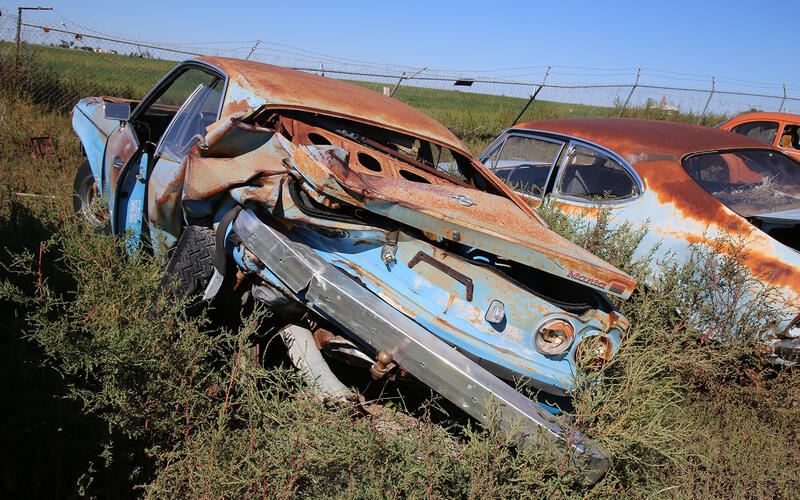
Sold in the US from 1971 to 1974, the Opel Manta Rallye was primarily a sport package. Despite the more aggressive appearance, it retained the standard 1.9-liter engine, though it did gain stiffer suspension and sharper handling. That clearly wasn’t enough to save this one from a brutal rear-end collision. The back is crushed, the front is damaged as well, and with so few straight body panels left, it’s remarkable that it has survived this long.
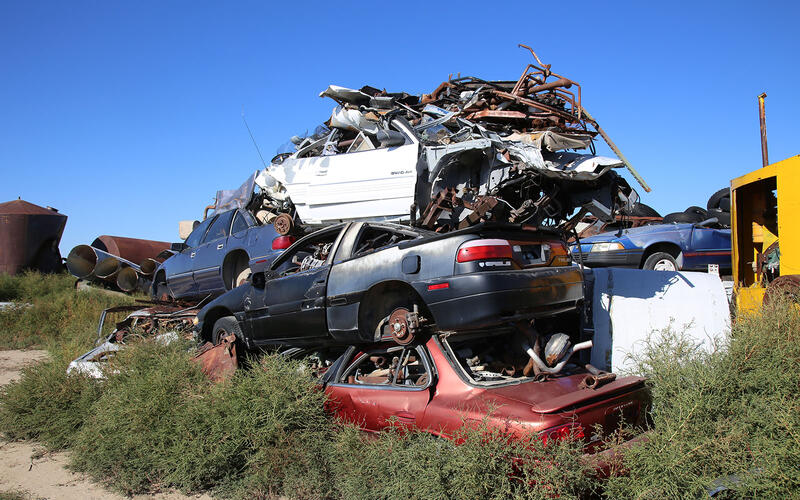
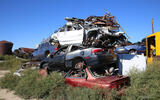
Woller Auto Parts does send cars to the crusher from time to time, and this pile appears to be awaiting that fate. Among them is a black Eagle Talon. Eagle was created by Chrysler in 1988 after its purchase of AMC, giving former AMC dealers a new lineup to sell. The Talon was essentially a rebadged Mitsubishi Eclipse, and fewer than 145,000 were sold between 1990 and 1994. Survival rates haven’t been kind, making this black example the most noteworthy car in an otherwise unremarkable heap.
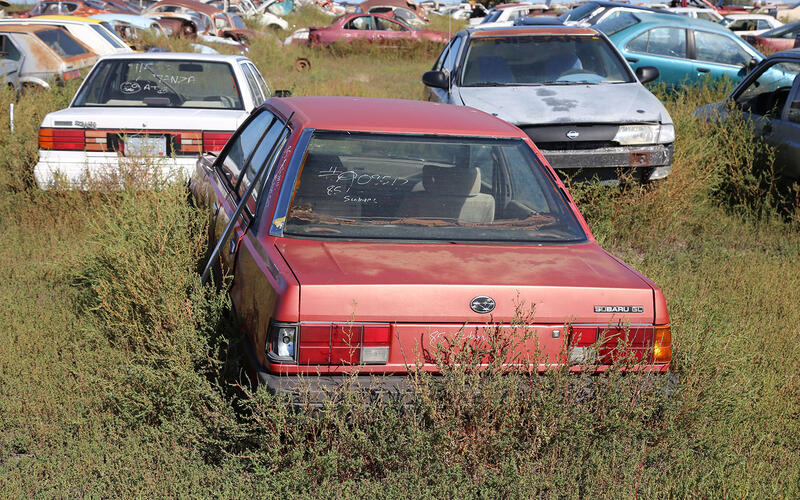
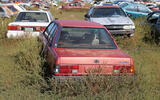
Woller’s has a plethora of rust-free Japanese cars from the 1980s. Many were parked here when they were completely undesirable, but as their numbers have dwindled, curiosity, and even values, have begun to creep up. One example is this 1985 Subaru GL 4-door sedan. It would have cost $7646 when new, with the 4x4 version adding another $1500. Subaru sold about 178,000 vehicles in the US in 1985, a reminder of just how common cars like this once were.
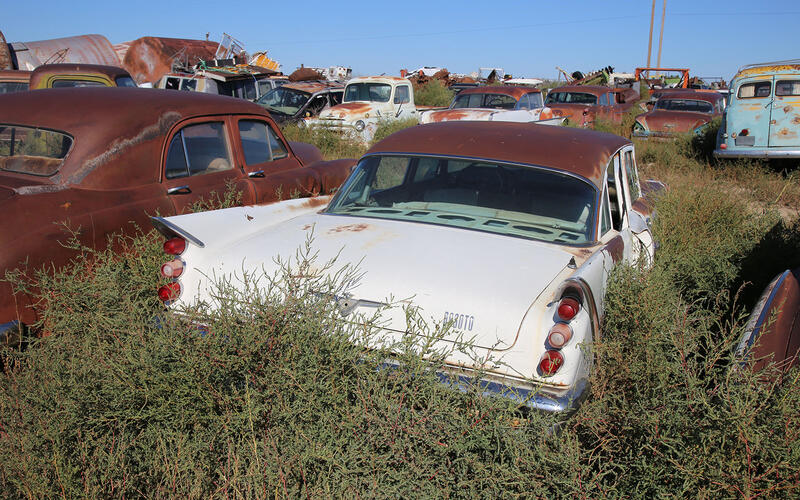
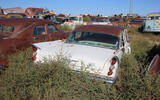
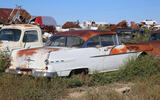
Woller’s inventory isn’t limited to late-model castoffs. This 1959 DeSoto Firedome four-door sedan, parked next to an equally solid Kaiser, appears straight and largely complete. For a car that represents the final years of the DeSoto brand, it’s a surprisingly viable restoration candidate.
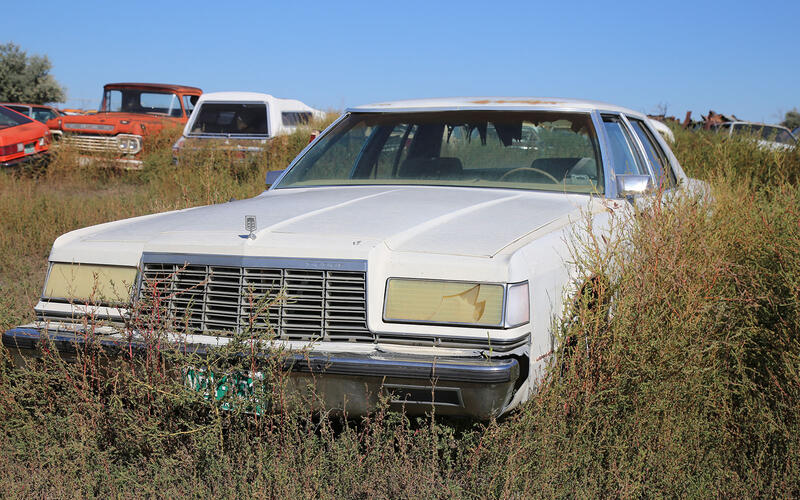
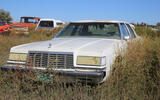
The St Regis name suggested hotel-lobby luxury, but this 1979–81 Dodge was really a stopgap full-size sedan built during Chrysler’s lean years. Intended to rival the Chevrolet Caprice and Ford LTD, it never matched their success. Dodge built roughly 52,000 in 1979, about 21,000 in 1980, and fewer than 4000 in its final 1981 model year before pulling the plug. Survivors are uncommon, which makes this sun-faded example a rare sight.
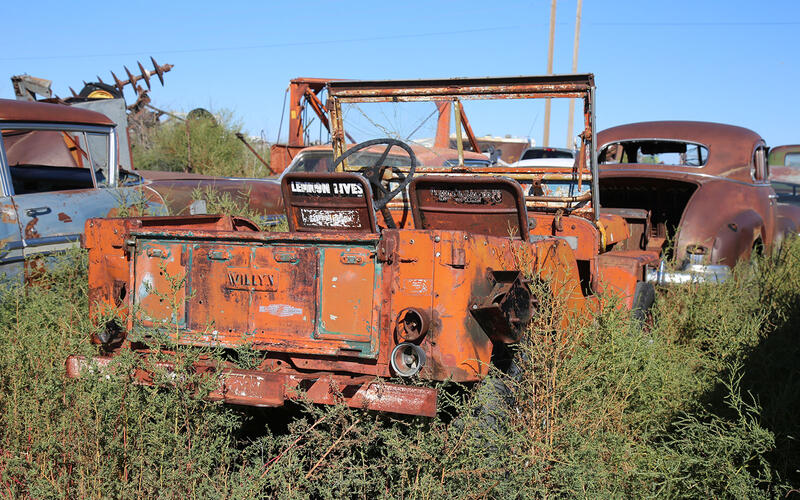
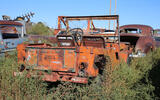
This Toledo, Ohio-built Willys Jeep is likely a 1944-1948 CJ2A, one of the first civilian models built after the second world war. A sticker behind the passenger seat declares, “Welcome to Colorado. Now go home!”, a sentiment not shared by the welcoming staff at Woller’s.
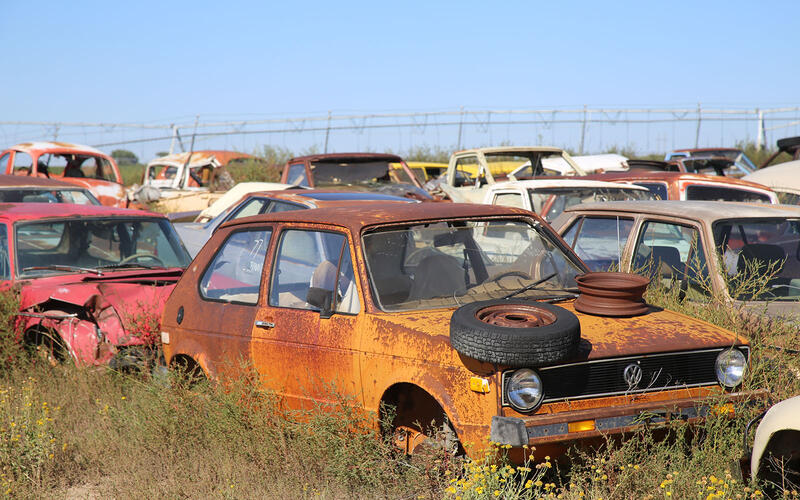
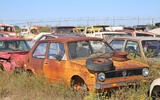
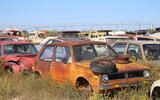
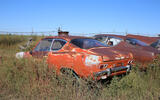
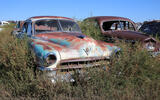
This 1977 Volkswagen Rabbit is an early German-built example, sold before US production began in Pennsylvania in 1978, when rectangular-headlight cars appeared. The Mk1 Rabbit arrived in 1975, bringing front-wheel-drive efficiency to a market still dominated by big rear-drive sedans. The sunburned orange paint now merges with the rust in a way that looks almost intentional.
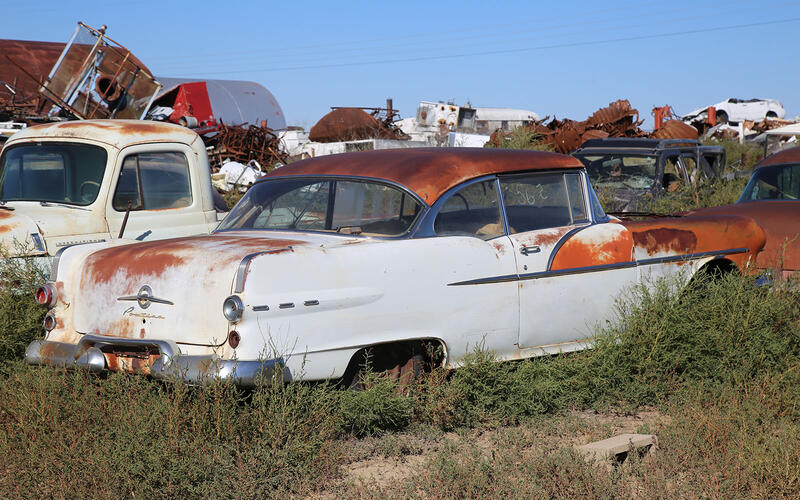
This 1956 Pontiac Star Chief two-door hardtop once sat near the top of Pontiac’s lineup, riding on a longer wheelbase and wearing more elaborate trim than the entry-level Chieftain. Originally a V8 with automatic transmission and power brakes, it was bought by Don in 1975 and has been a yard resident ever since.
The hood and engine are now missing, and it will need a comprehensive restoration, but the body is said to be solid aside from the floor pans.
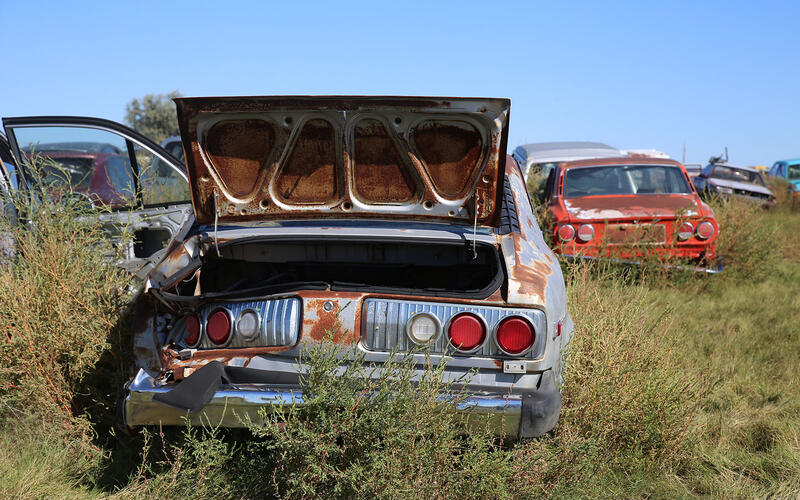
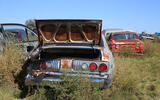
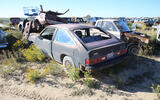
Mazda’s RX-3, sold in the US from 1972 to 1978, helped cement the company’s rotary-engine reputation. Known as the Savanna in Japan, it used the high-revving 12A rotary engine and earned real motorsport credibility in the 1970s. The federally mandated 5mph safety bumpers date this example to 1974 or later. Coupes are especially sought after today, which makes the heavy rear-end damage here all the more unfortunate. It's clearly destined to serve as a donor rather than a restoration candidate.
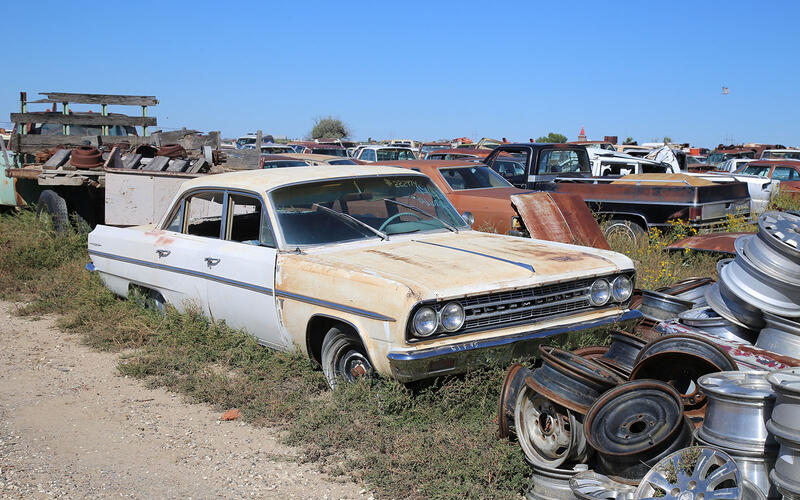
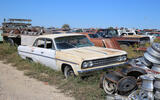
This 1963 Oldsmobile F-85 has “Alum V8” scrawled across its windshield, referring to the 215ci (3.5-litre) all-aluminium V8, an advanced lightweight design that GM dropped after only a few years. However, this engine has a far longer history. Rover bought the rights, and it went on to power a host of British cars for decades, including Range Rovers, Land Rovers, Rover sedans, TVRs and Morgans.
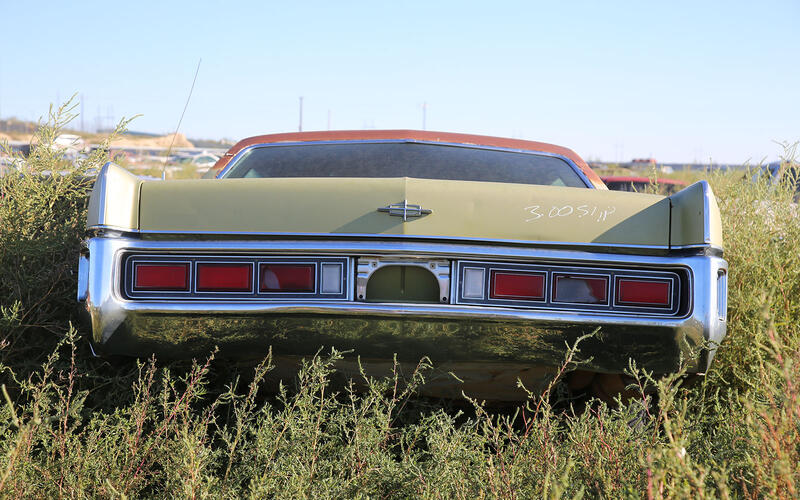
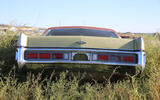
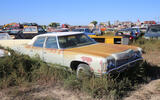
Lincoln found 45,288 buyers for the four-door Continental in 1973, each paying about $7230. For the same money you could have bought three-and-a-half Volkswagen Beetles. But the Lincoln came with standard air conditioning, power windows and power seats, plus nearly 19 feet of American sheet metal.
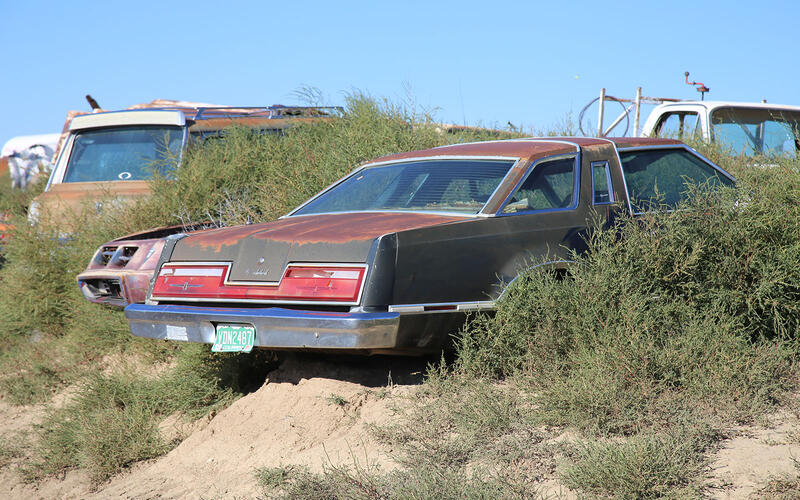
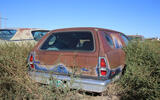
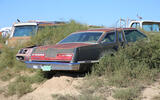
This 1977 Ford Thunderbird has had its wings clipped. With the front end obscured, it’s hard to know how complete it is. By this stage the T-Bird was a full-fledged personal luxury coupe, and from the rear three-quarter view it still carries that weight well.
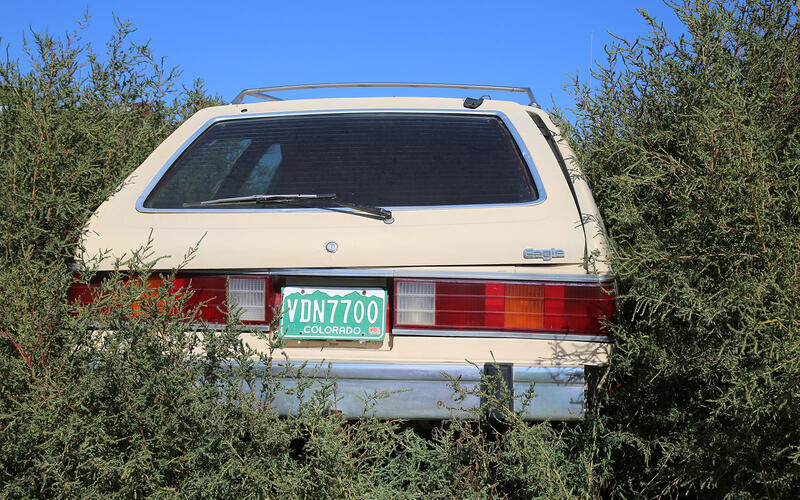
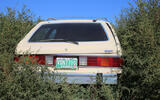
Here is another flightless bird, an AMC Eagle station wagon. It hasn’t been on the road since 1998, yet it’s remarkably clean. No thick dust, no heavy grime, and remarkably the paint isn’t too faded either. In a yard full of long-forgotten cars, this one looks like it was parked yesterday.
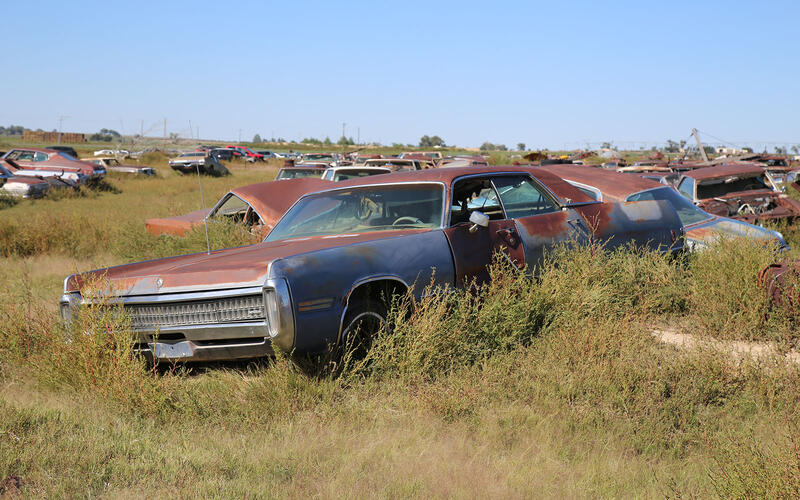
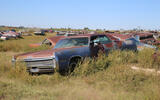
The entire Woller Auto Parts yard is for sale at the right price, meaning everything here could change hands in one deal. That includes this 1972 Imperial, and the acres of machinery stretching out behind it. Let’s hope any future owner values history as much as scrap prices, because a four-door Imperial weighs roughly 5000 lbs (2273 kg), which is a considerable amount of recyclable steel.
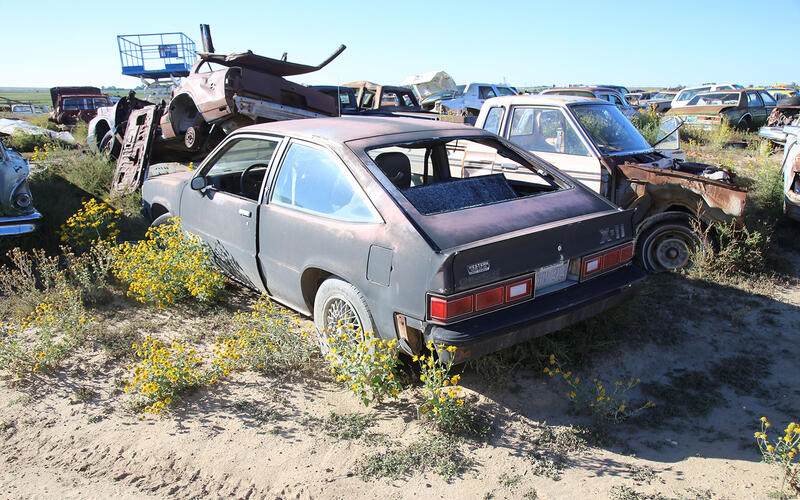
Chevrolet’s Citation X-11 was the sporty version of GM’s front-wheel-drive compact, with firmer suspension and V6 power aimed at buyers who wanted something sharper than the standard car. X-11s were only a small slice of total Citation production, and few survive today. This one was supplied new by Western Motor Co of Leoti, Kansas, some 90 miles from Lamar, and appears remarkably solid. Rarity, however, does not always translate into value.
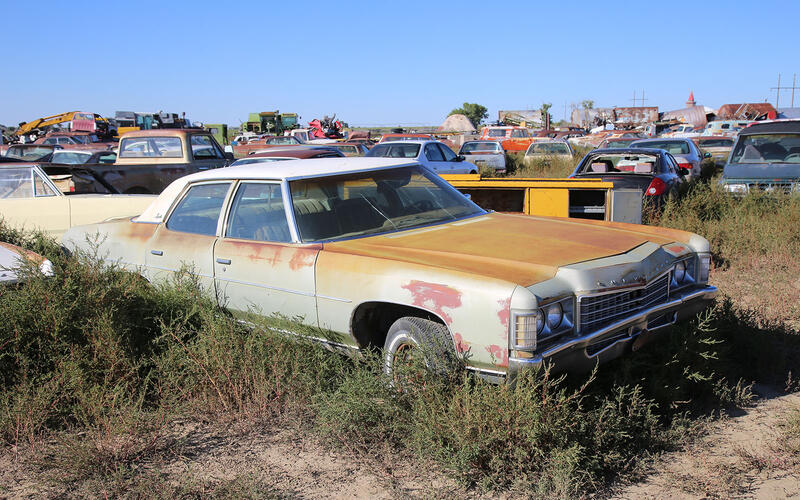
This V8-powered 1971 Chevrolet Impala four-door sedan owes much of its survival to geography. Lamar averages just 15.9in of rain a year, compared with a US average of around 38in and nearly 49in in New York City. In a wetter climate this big Chevy would likely have dissolved decades ago. Here, the paint has burned off, but the structure looks remarkably intact.
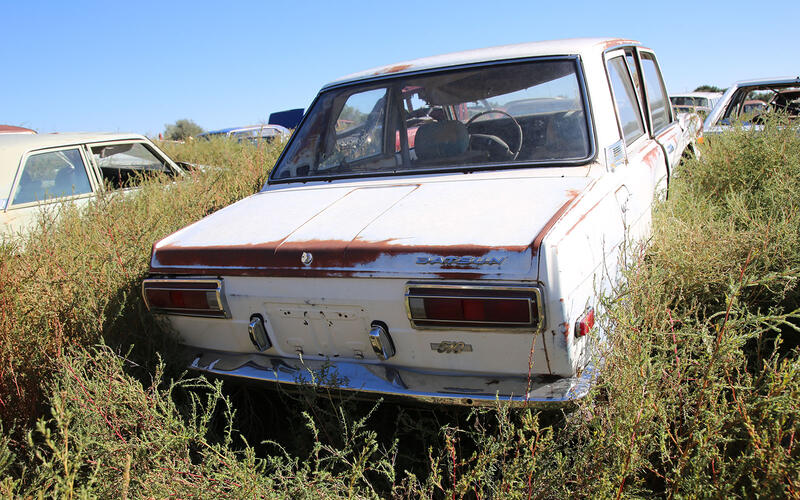
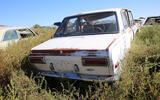
The Datsun 510 was one of the cars that changed how Americans viewed Japanese manufacturers. Launched in the US for 1968, it combined crisp, European-influenced styling with rear-wheel-drive and independent rear suspension, giving it handling that embarrassed many domestic compacts. It was affordable, reliable and, for its class, impressively well assembled. Cars like this helped establish Japanese brands as serious players in the US market.
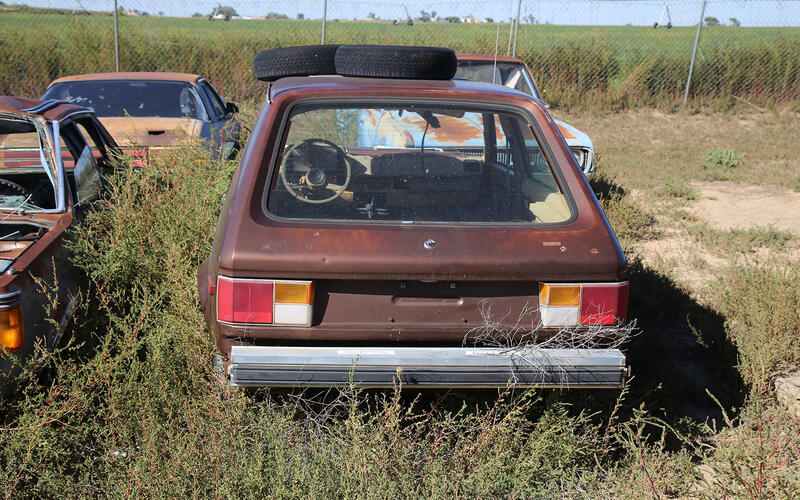
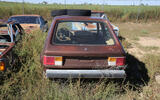
Few cars shout “future classic” less convincingly than this brown Dodge Omni. Chrysler’s US take on the European Chrysler/Talbot Horizon, it arrived for 1978 as part of Detroit’s early push into front-wheel-drive compacts. Sensible, economical and built in vast numbers, it was everyday transport rather than aspirational machinery. The seats have already been rehomed, suggesting someone somewhere still values the model. The rest of it may be waiting a very long time.
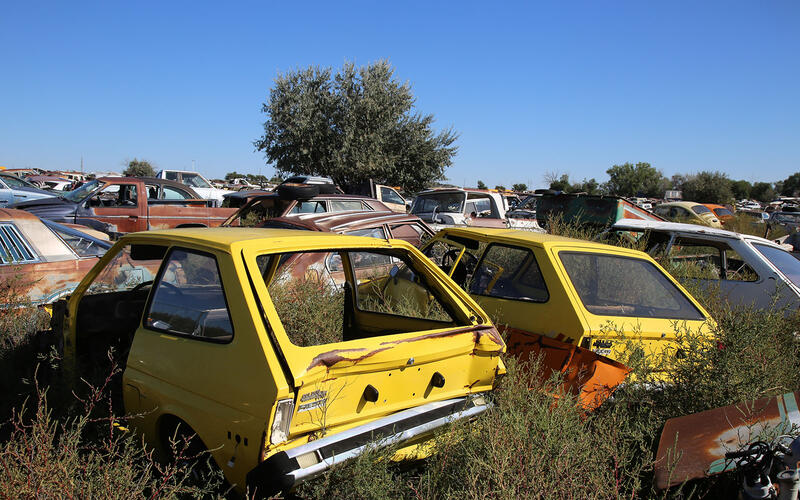
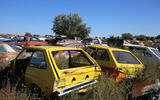
One 1970s Fiesta in a Colorado salvage yard would be unusual. Two in matching yellow feel almost deliberate. Sold in the US from 1978 to 1980, the Mk1 was built in Europe but developed under Ford’s US-led global small-car programme and was billed at launch as the “Wundercar” - light, simple and genuinely economical.
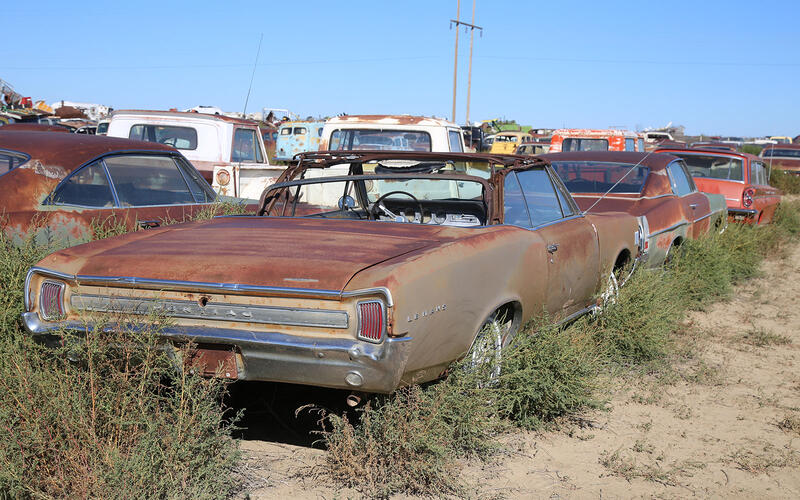
This 1966 Pontiac LeMans convertible is one of 15,763 built that year. Under the hood it would have featured Pontiac’s 230ci overhead-cam straight-six, an advanced engine for its time with a belt-driven camshaft and a character quite different from the V8s most buyers chose. As a result, surviving OHC six cars are rarer than the production total suggests.
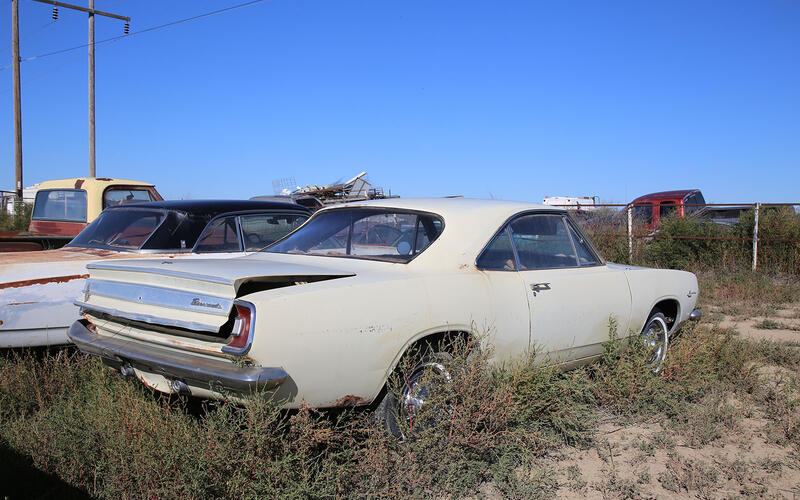
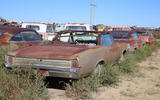
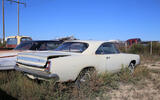
This 1967 Plymouth Barracuda fastback was the most common version of the second-generation model, with around 35,000 built that year. Not rare, then, but this one looks remarkably complete. There’s a rust hole in the rear fender, but the trim, glass and brightwork all appear present. It was purchased by Don in 1978 following an accident, and was driven to its current resting place.
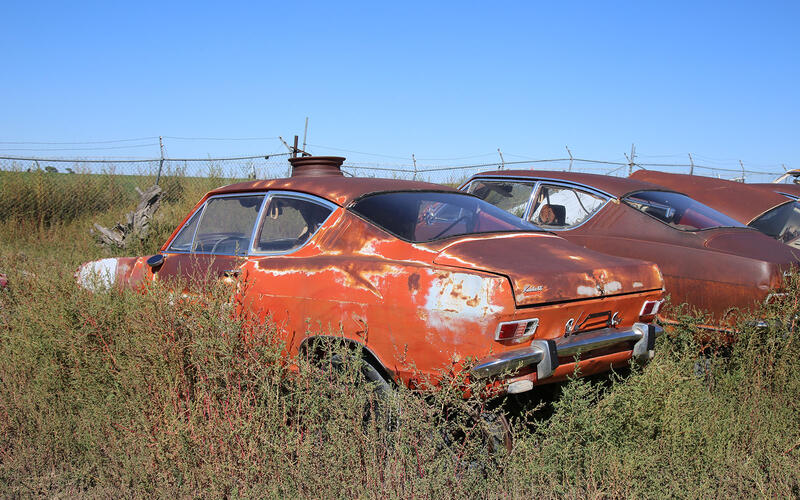
Lamar must have had a wealthy Opel salesman back in the day, because judging by all the examples at Woller Auto Parts, he made a tidy sum in commission. We spotted at least 20 examples of various vintages, including this late 1960s Kadett two-door coupe. As a European General Motors brand, Opels were sold through select Buick dealerships. Ignoring the surface rust, this seems like quite a solid example. But interest tends to come in small circles rather than from general collectors, so we reckon this one is here for the long haul.
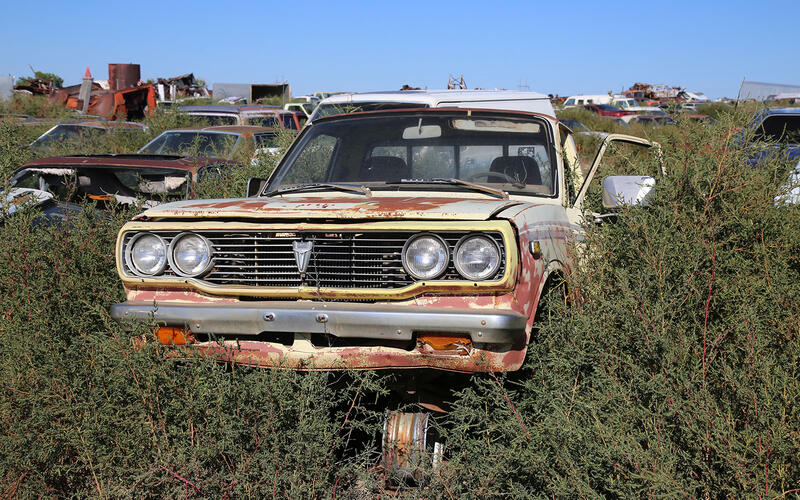
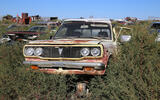
These early Toyota pickups have a huge following, and this appears to be a desirable 1977 SR5 with the 20R engine. ‘SR’ stood for Sport Rally, and the ‘5’ denoted the five-speed manual gearbox. The 2.2-liter 20R produced 95bhp and helped cement Toyota’s reputation for durability in the US market. Despite the weeds and faded paint, it looks remarkably complete, and you can be sure it wouldn’t take too much work to coax it back to life.
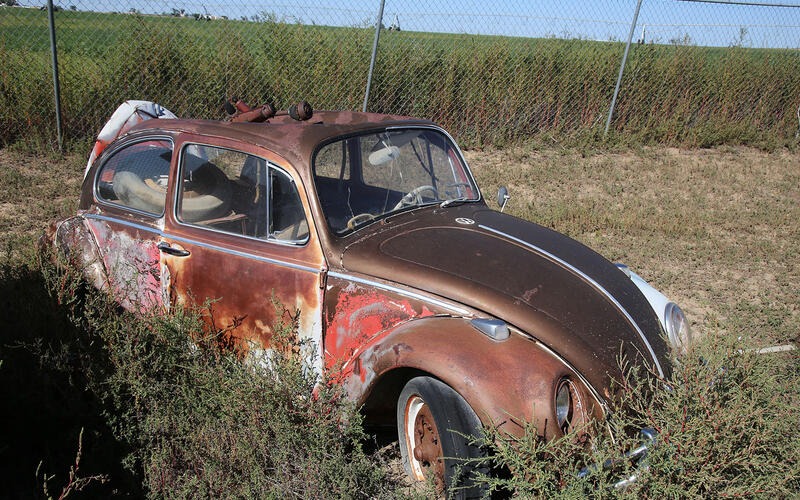
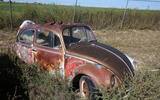
There can’t be a junkyard anywhere in the US without at least one Volkswagen Beetle, and Woller Auto Parts doesn’t disappoint, with several scattered among the weeds. This one looks as though it took something heavy on the roof at some point, judging by the huge dent, but otherwise it’s straight enough.
The panels show surface rust rather than rot. In most parts of the country, it would have rotted away years ago, but here, in the dry Colorado air, it’s simply aging rather than decaying.
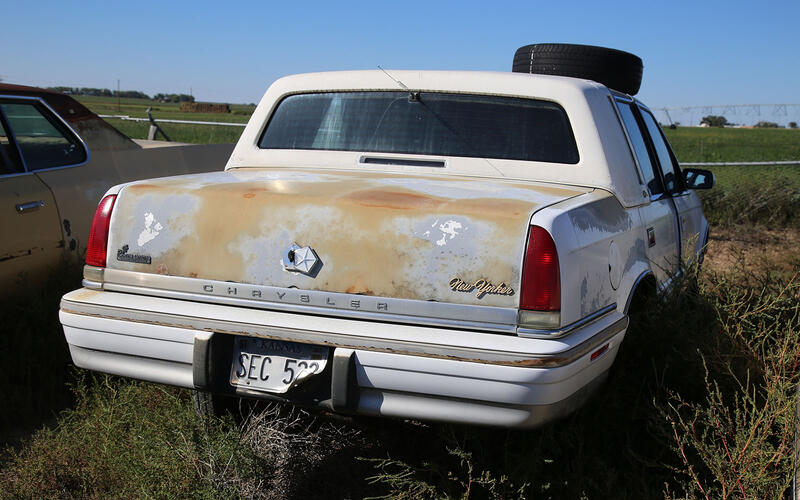
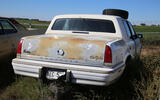
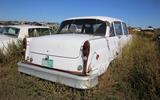
This 1992 Chrysler New Yorker shows just how far the badge had travelled from its origins. When the name debuted in 1939 it signified one of Chrysler’s most prestigious models, a big, rear-drive luxury car with genuine presence. By the early 1990s it sat on the C platform, shared much of its structure with the Dodge Dynasty and was powered by a 3.3-liter V6 driving the front wheels.
Comfortable and well equipped, certainly, but a long way from the imperious New Yorkers of the 1950s and 1960s. The name would last only a few more years, disappearing after 1996.
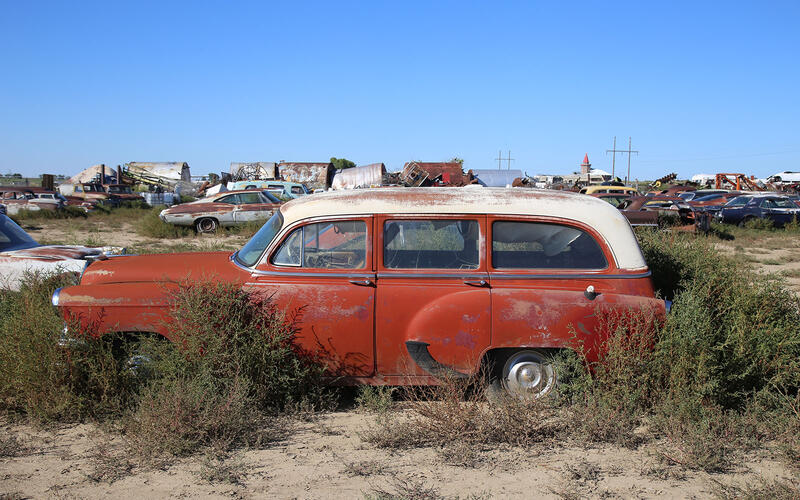
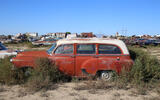
This 1954 Chevrolet 150 Handyman two-door wagon is one of roughly 8,500 built, making it rarer than the better-trimmed 210 and Bel Air wagons. As Chevrolet’s entry-level model, it was a plain, hard-working family hauler rather than a showpiece. That poverty-spec status may make it a less obvious restoration choice today, but despite the scruffy interior and cracked glass, it looks solid where it counts - an ideal canvas for the right project.
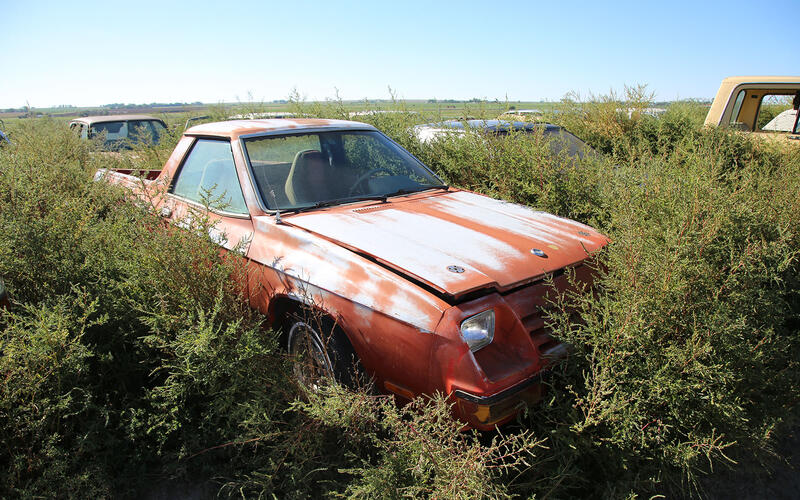
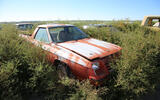
Dodge’s 1982–84 Rampage was Chrysler’s fuel-economy-era take on the car-based pickup. It chased the same niche as the Chevrolet El Camino and Ford Ranchero, but went about it very differently: front-wheel-drive, based on the subcompact Omni/Horizon platform, and powered by a 2.2-liter four-cylinder rather than a V8. With only about 24,000 built across three years, survivors are thin on the ground today.
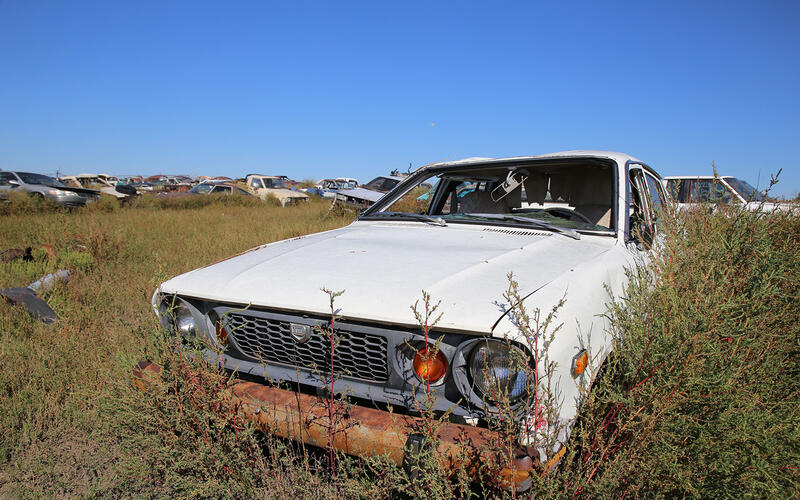
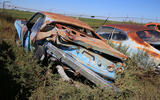
The Datsun B210 (known elsewhere as the Sunny) was one of the right cars at the right time, delivering 40mpg-plus to a fuel-shocked America in the mid-1970s. Millions were sold, but few were saved. Most B210s died of rust, but this one appears to have died of physics, its crushed roof suggesting a rollover. It is a reminder of the era that made Datsun a household name.
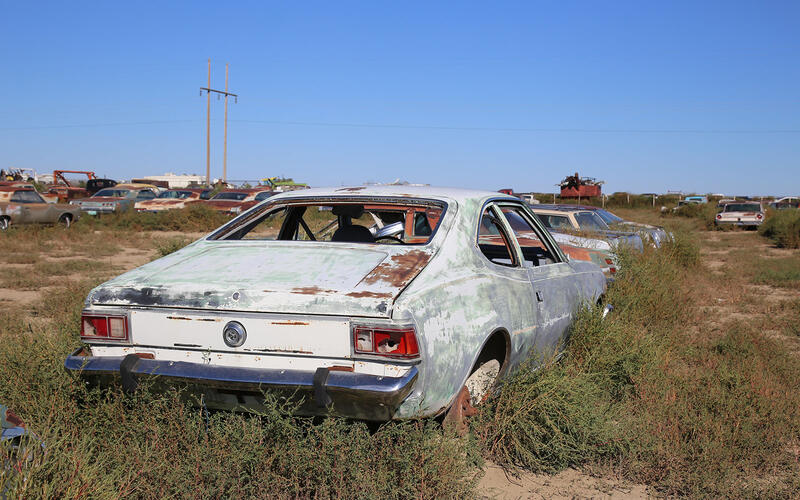
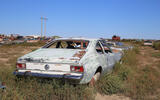
The twin vertical rubber guards and low-mounted license plate mark this as a 1973 AMC Hornet two-door Hatchback. AMC built 40,110 hatchbacks that year, the first season for the new liftback body style and the last before full 5mph rear bumpers arrived in 1974. Once a smart, practical compact that helped steady AMC’s balance sheet, this one now looks more likely to donate parts than make a comeback.
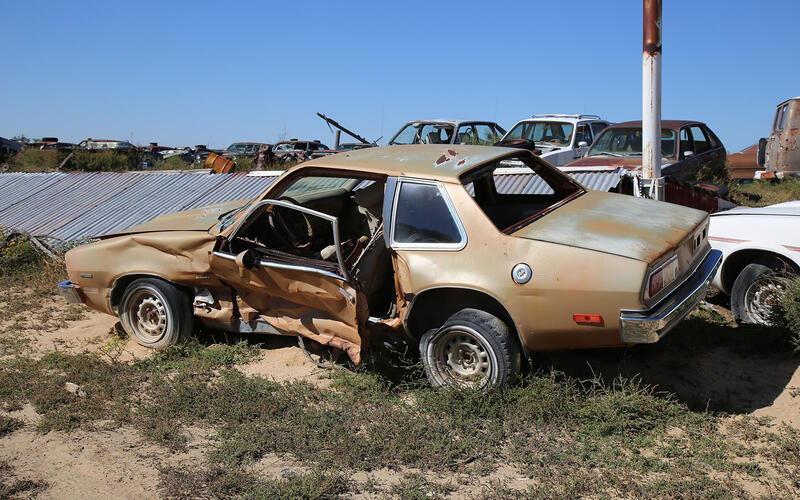
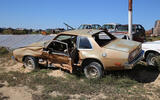
Let’s hope nobody was behind the wheel when the driver’s door of this Chevrolet Monza coupe took that hit. It appears to be a 1979 model, one of 37,878 built that year, and this one carries the optional 5.0-liter small-block V8.
Produced for the 1975–80 model years, the Monza was Chevrolet’s rear-wheel-drive subcompact, based on the Vega and sharing its wheelbase and basic structure. It was originally engineered to house GM’s planned Wankel rotary engine, but when that program was scrapped over fuel economy and emissions concerns, Chevrolet filled the gap with conventional powerplants, including the unlikely but entertaining small-block V8.
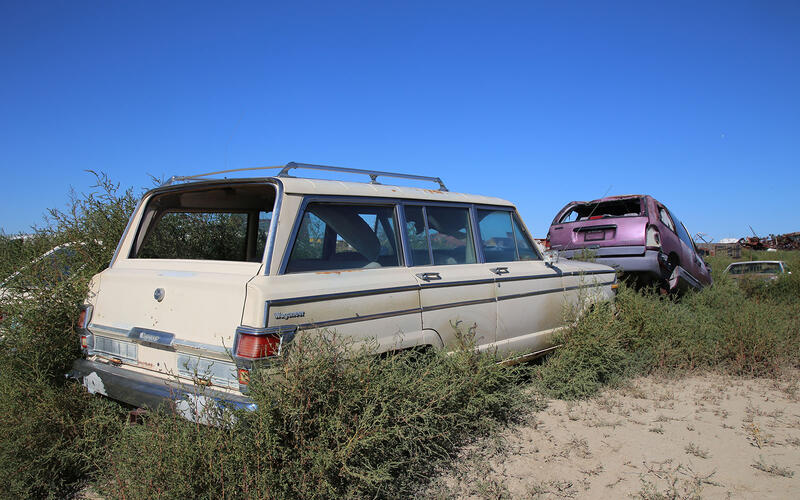
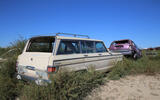
We noticed what looked like a faded “81” scrawled on this tidy Jeep Wagoneer, so it’s likely a 1981 model. Introduced for 1963, the Wagoneer is often credited as the first true luxury SUV, combining genuine four-wheel-drive ability with car-like comfort at a time when most 4x4s were still agricultural.
Its longevity is just as impressive. The original SJ Wagoneer remained in production, in largely the same basic form, from 1963 to 1991. Over that period it passed through the hands of Kaiser Motors, AMC, and Chrysler. The name itself has since been revived under Stellantis, proof that few badges in the SUV world carry quite the same heritage.
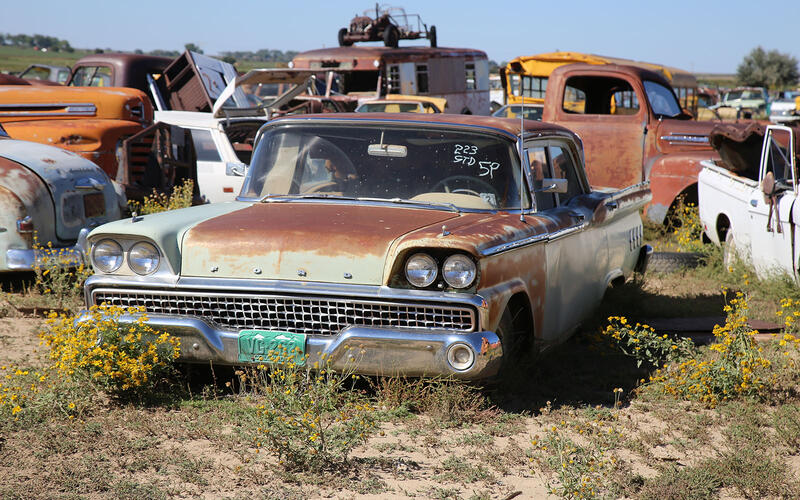
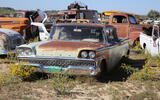
A 1959 Ford Custom 300 sedan, remarkably solid and straight despite the honest surface rust, with straight panels, complete trim and plenty of promise for an enthusiast willing to bring it back to life. It’s just one of hundreds of potential restoration projects dotted around the yard.
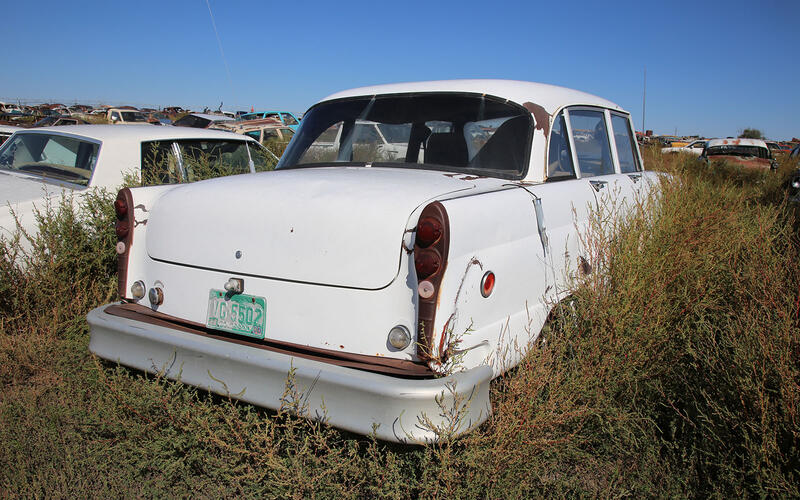
This 1970s Checker Marathon last saw the road in 1985. Built to endure intergalactic mileages ferrying fares across American cities, these cars were engineered as tools first and transport second.
The final Checker taxi rolled off the line on 12 July 1982, bringing to an end more than six decades of production in Kalamazoo, Michigan. By then, tightening federal safety and emissions rules had made it uneconomic to keep updating a design that had changed little since the early 1960s, closing the chapter on one of America’s most recognizable workhorses.
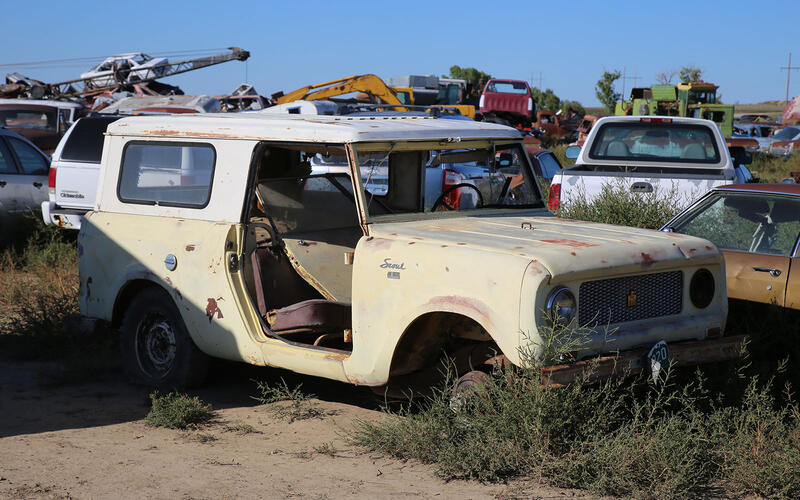
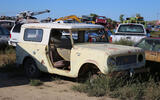
This early 1960s International Harvester Scout 80 predates the Ford Bronco by five years and helped pioneer the idea of a compact civilian 4x4. Basic, tough and built more like farm machinery than a family car, early Scouts even featured sliding side windows and removable roof panels. Production ran from 1961 to 1965, laying the groundwork for the SUV boom that would follow decades later.
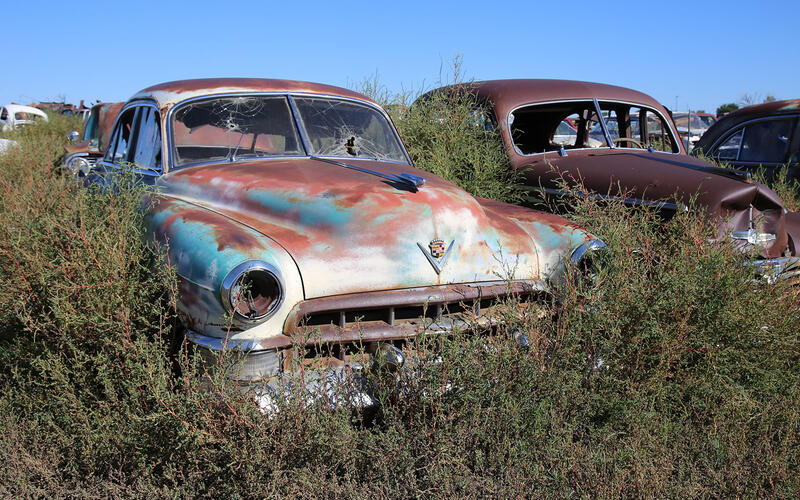
This 1949 Cadillac dates from the year that effectively launched the modern American luxury car. The 1949 models introduced Cadillac’s all-new overhead-valve 331ci (5.4-litre) V8, an engine that set the template for Detroit performance for decades and helped cement the brand’s post-war dominance. It was also the first year for Cadillac’s modest tailfins, inspired by the P-38 Lightning fighter aircraft, a styling cue that would escalate spectacularly through the 1950s.
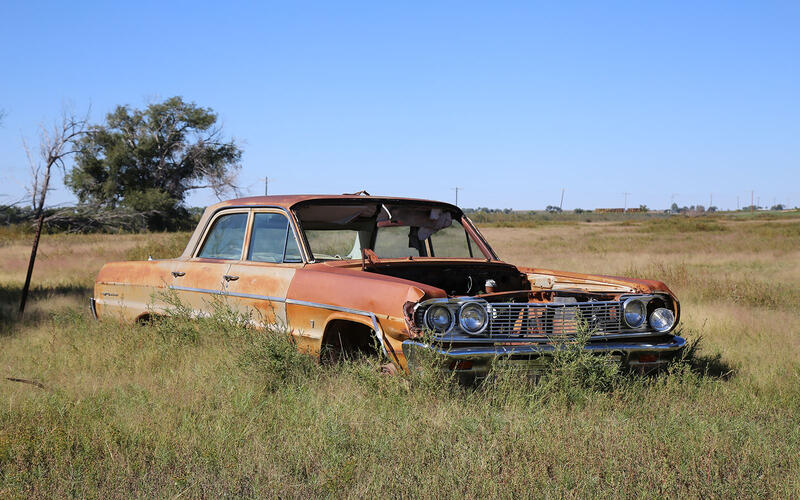
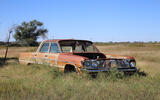
This 1964 Chevrolet Bel Air is unlikely to be restored, but it remains a superb source of rust-free parts. Preserved by Lamar’s dry high-plains climate, the panels, trim and brightwork are far more solid than you’d expect, exactly the sort of donor that keeps other cars on the road.
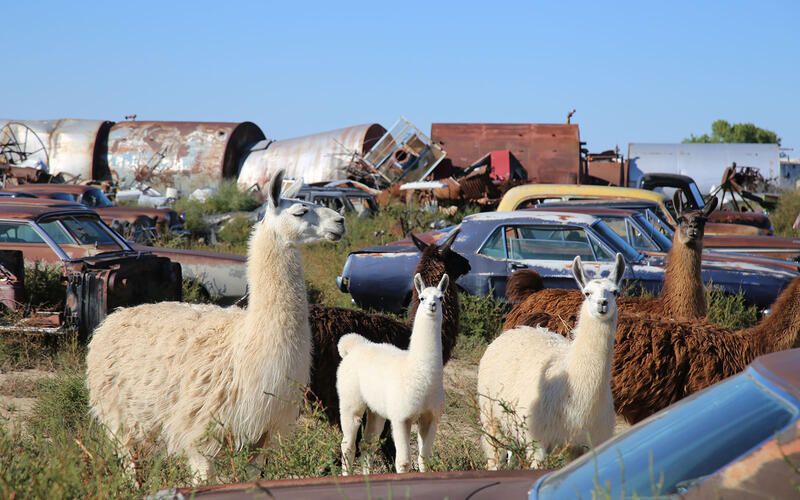
There are around 5,000 vehicles on site, with stock spanning 1950 to the early 2000s. If there’s something you need, give Don a call on 001 719 688 3399, or visit its website.
If you enjoyed this story, please click the Follow button above to see more like it from Autocar