
In the early 1970s, the American automotive industry sank into its 'malaise era'.

Cars from this time were widely regarded as, to put it bluntly, crap. Japanese cars rocketed in popularity and it seemed that the floundering 'Big Three' (General Motors, Ford and Chrysler) were incapable of meeting the market's needs. But there was a lesser-known fourth company in Detroit, whose genius and dynamism have been unfairly confined to the annals of history.

American Motors Corporation emerged in 1954 from a merger of Nash-Kelvinator and Hudson. Against the odds for an 'independent' in the US it survived the 1950s, selling small cars to Americans before it was fashionable. In the 1960s it fitted master cylinders, disc brakes and reclining seats as standard before most 'domestics' even offered them as an option.

The Big Three had most of the market sewn up, but AMC played its cards well in other areas. It earned strong sales in hot climates by fitting aircon as standard in some cars (an industry first) and was the industry's largest exporter to France and Germany (the next biggest LHD markets).

In 1970 AMC bought Jeep. The 4x4 specialist was losing money hand over fist, but it was the biggest player in the growing SUV market, and AMC turned it into what it is today by launching the Cherokee in 1983, then the Wrangler in 1986.

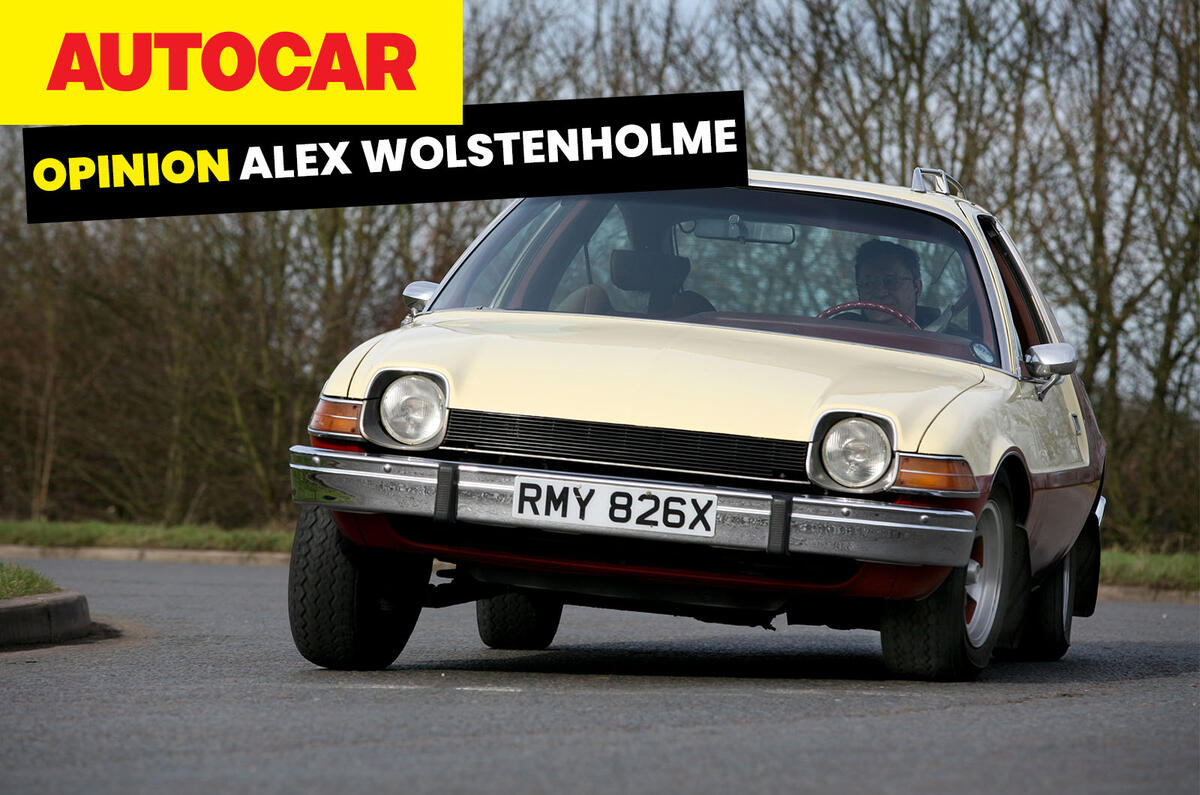
Also in 1970 came the Gremlin, the first 'subcompact' made in the US, followed in 1975 by the Pacer, famous for being a bit ugly and having a 5.0-litre V8 in a relatively compact hatchback body. It was marketed as the first wide small car, but of more interest was its spacious and aeroefficient cab-forward design, a novelty in the US.

AMC's thriftiness attracted the attention of Renault, which in 1980 took a controlling stake in the company, by then teetering on the brink of bankruptcy despite its strong line-up. AMC benefited by making and selling the Renault 5 as the imaginatively named Le Car in the US, while Renault was in turn able to sell Jeeps in Europe. Still, profits were minimal, due to the rise of the Japanese, and AMC had to sell its profitable defence division for national security reasons.