

It's a consequence of being a nerdy petrolhead that, despite most of us living thousands of miles away from northern Scandinavia, we're familiar with the strange names of Arvidsjaur, Arjeplog and Rovaniemi.
These settlements are the storied and chillingly remote testing hubs around which nearly every European car maker congregates each winter. They use facilities both public and hidden to tune ABS software, examine real-world fluid viscosity at -30deg C and so on.
With limited sunlight and horrendously low temperatures, it is a brutal testing environment in every respect.
Never mind the machinery: test engineering teams dispatched from everywhere from Crewe to Bologna can find it mentally tough, even on a relatively short, week-long rotation. It's dark and cold and the work itself can be dangerous and frustrating.
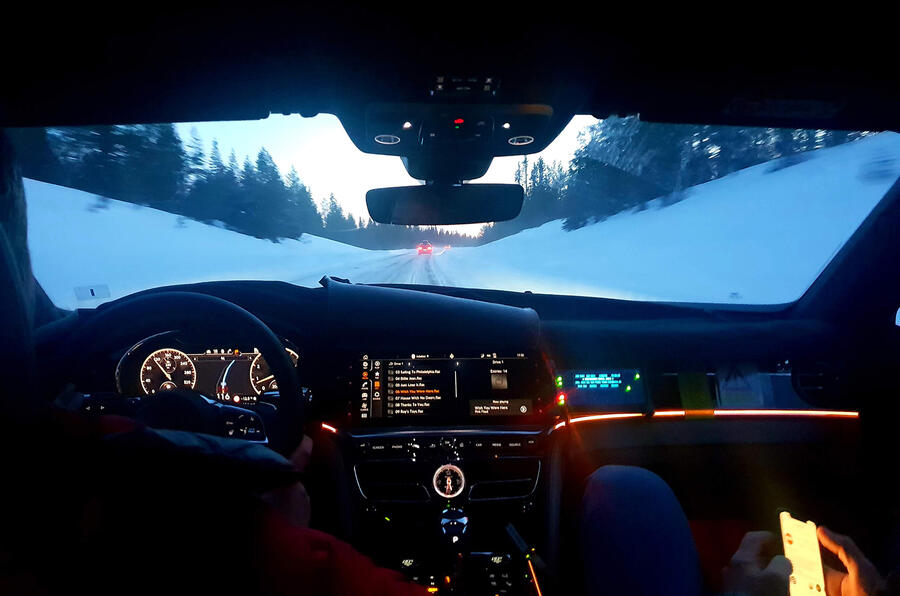
I love visiting these places. I realise this is akin to the Islingtonite who spends the weekend in rural Devon and finds it wonderfully quaint and bucolic, unable to see the plight of farmers barely able to carve out a living and villages struggling after GP closures and cancelled bus routes.
The experience of the journalist invited to spend 36 hours in Lapland, skidding a prototype on a frozen lake or shadowing the traction control wizards as they flow a development car down an ice road at impossible speeds, is not reality. But it is nonetheless an enchanting experience, and the only time in life I look forward to packing long johns.
Now clearly the engineering side of these trips is the main event, and it's reliably very interesting indeed. Car makers use an Arctic environment to assess everything from whether a handbrake freezes overnight to how torque vectoring can ensure a 2.5-tonne saloon remains loosely controllable even if it finds itself in an unintended slide at serious speed.