Currently reading: Very Bizarre Aircraft from World War 2

Very Bizarre Aircraft from World War 2

The Spitfire was sleek, and the Mustang majestic, but not all aeroplanes of the Second World War were conventionally beautiful.

Sometimes due to unique requirements or radical new ideas, aircraft were created of bafflingly strange appearance. Fascinating and peculiar in equal measure, let’s meet the 9 Most Bizarre Aircraft of World War 2.


9: Heinkel He 111Z
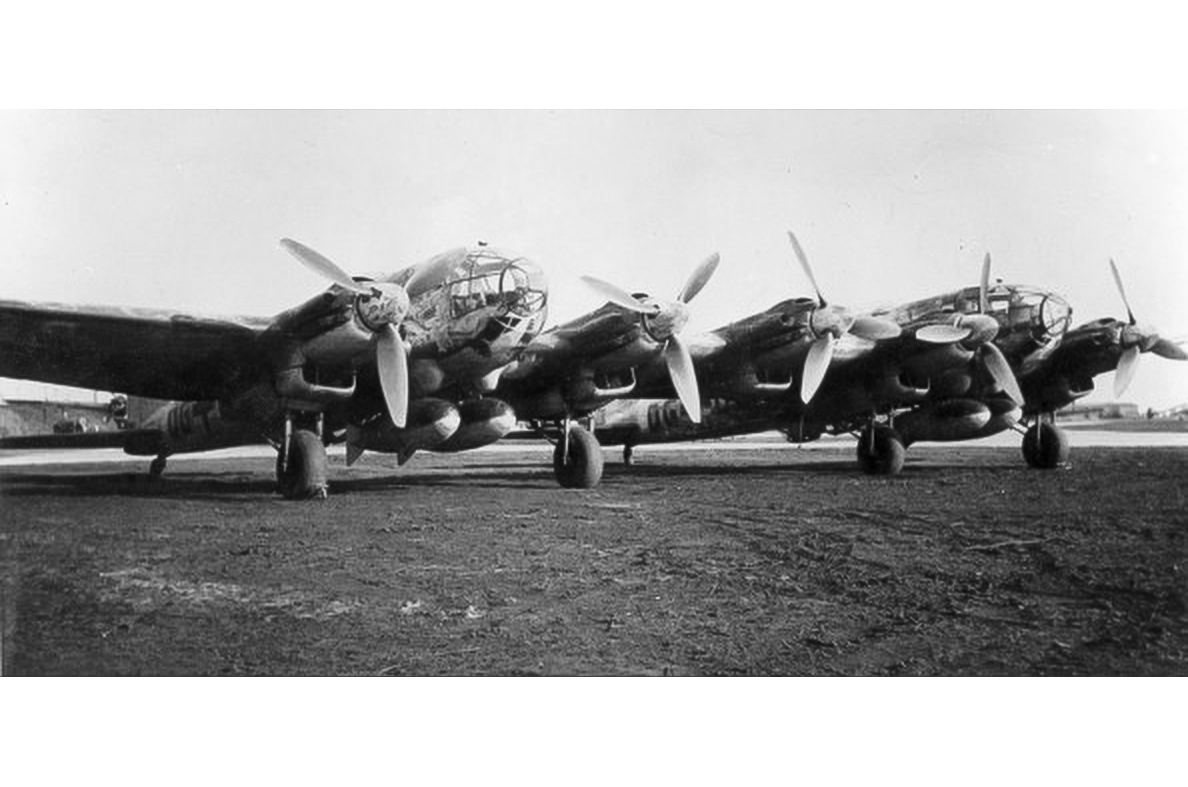
 Heinkel He 111Z

Towing the huge and heavy Messerschmitt Me 321 assault glider into the air proved a nightmare and necessitated the construction of a new and freakish tow aircraft which was essentially two He 111 medium bombers joined together.

The most radical derivative of the Luftwaffe’s ubiquitous Heinkel He 111 bomber was the He 111Z, the Z standing for Zwilling, the German for twin. Indeed it was a twin, as it joined two He 111H-6 fuselages via a new central wing section and added a fifth Jumo engine.


9: Heinkel He 111Z

 Heinkel He 111Z

The result was one of the weirdest shapes in the sky, though was far from the only twin-fuselage aircraft ever proposed or produced. The Dornier Do 335 was weird enough in its own right, yet was proposed as a long-range twin (defeating the Bf 109Z proposal). The US P-82 Twin Mustang was actually mass-produced and served in the Korean War. 

Two prototype Heinkel He 111Zs were created as well as 10 production aircraft. The problems of towing the massive Me 321 would lead it to become a powered aircraft in its own right as the Messerschmitt Me 323 Gigant. Later a conjoined C-5 Galaxy, the largest ever US military aircraft, was proposed but was never built.


8: Blohm & Voss Bv 141
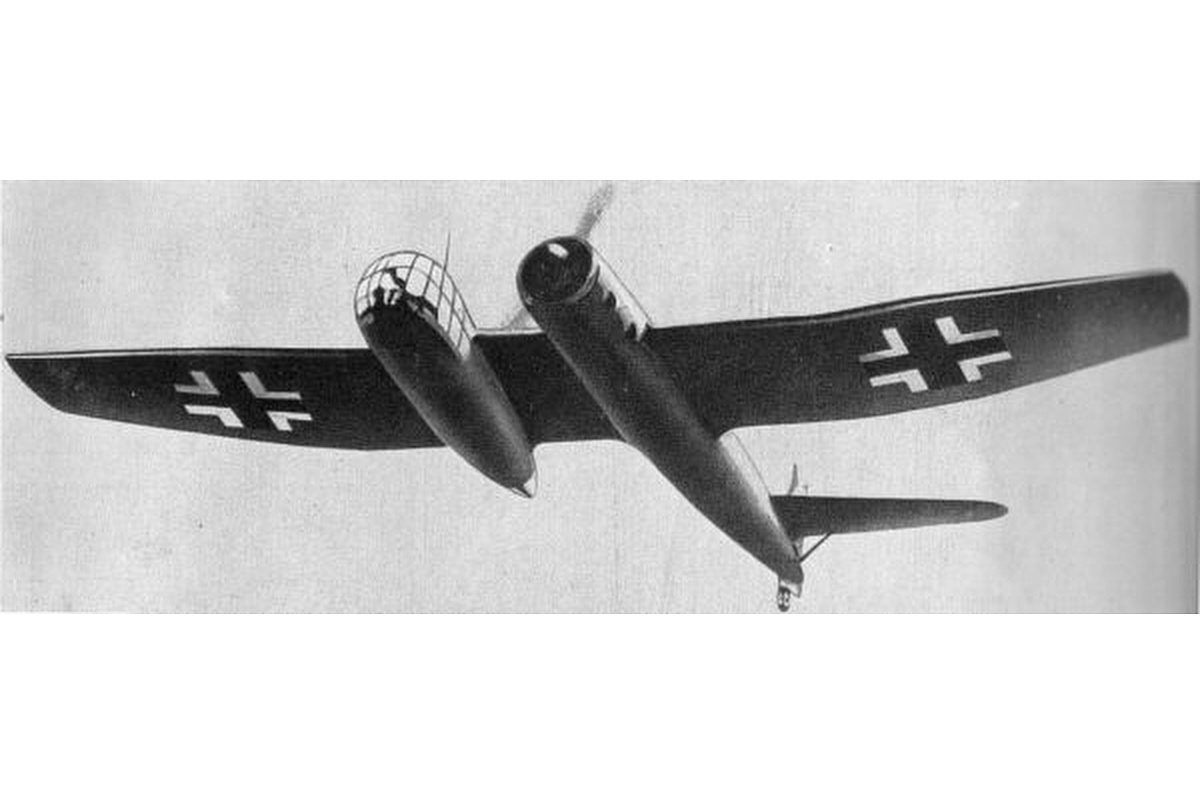
 Blohm & Voss Bv 141

The go-to aircraft when it comes to ridiculing Second World War German aircraft design, the Bv 141 was an extremely efficient design hampered not by its unique layout but by its engine. The seemingly crazed arrangement of fuselage and cabin was the result of an extremely logical design approach to the requirements of the specification.

As a tactical reconnaissance and observation aircraft the Bv 141 was intended to offer the best possible view for its crew, especially downwards, that could be achieved with a single-engine aircraft. Early examples were powered by the BMW 132 engine and it was noted that the aircraft, whilst exceeding all requirements of the specification was slightly underpowered.


8: Blohm & Voss Bv 141
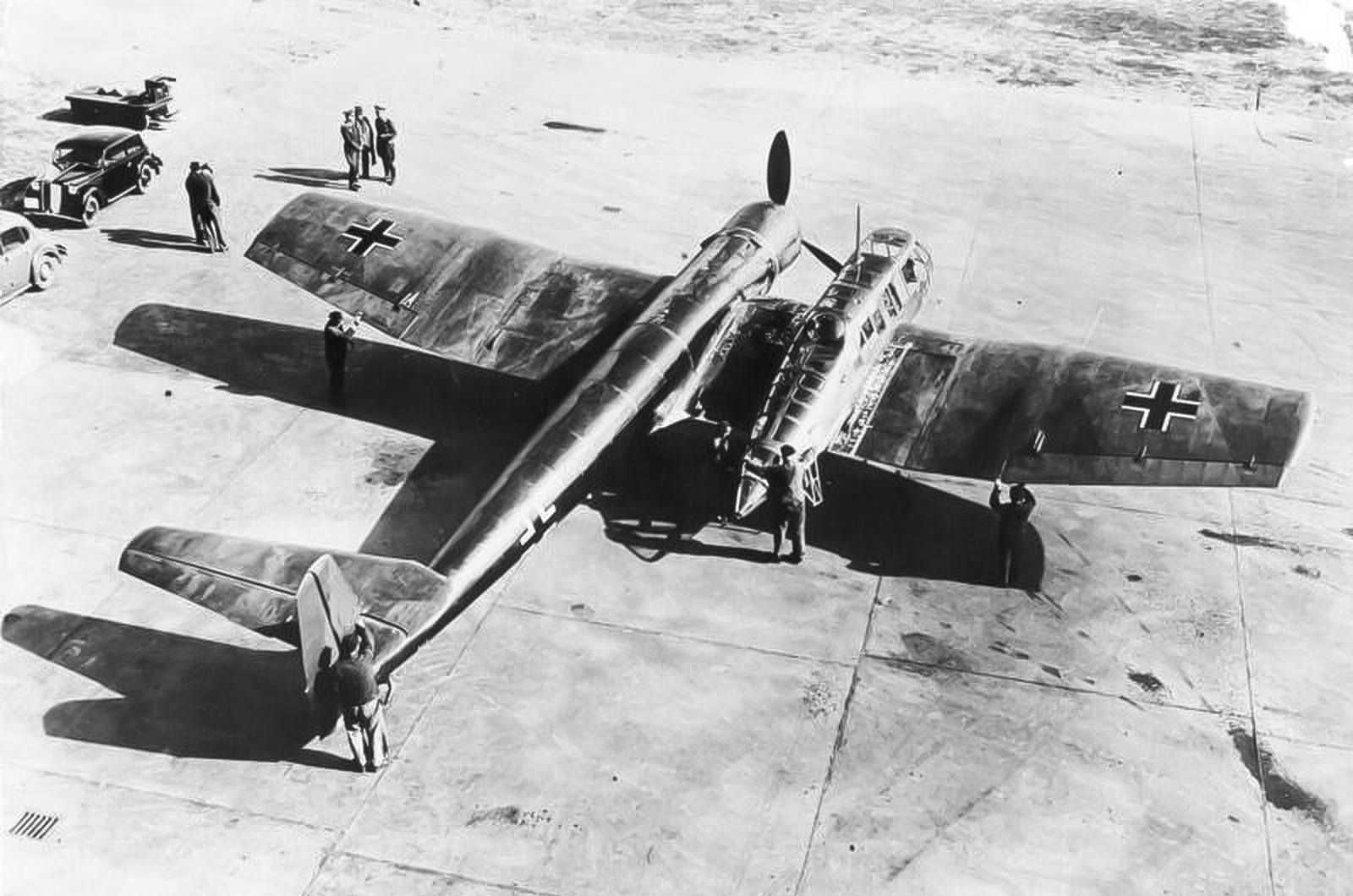
 Blohm & Voss Bv 141

The decision was made to replace the engine with the more powerful BMW 801 and precious time was lost altering the design to accept the new engine. Unfortunately for Blohm & Voss the BMW 801 was also the engine of the highly successful Focke Wulf 190, which by this time was churning off the production lines by the thousand and had priority for engines.

Back to top

Furthermore, the Fw 189 (another quite unconventional aircraft for its era) was in production and proving more than satisfactory in the tactical reconnaissance role. Thus, the Bv 141 was destined to become little more than a particularly striking footnote in aviation history. Around 28 Bv 141s were built.


7: Hafner Rotabuggy
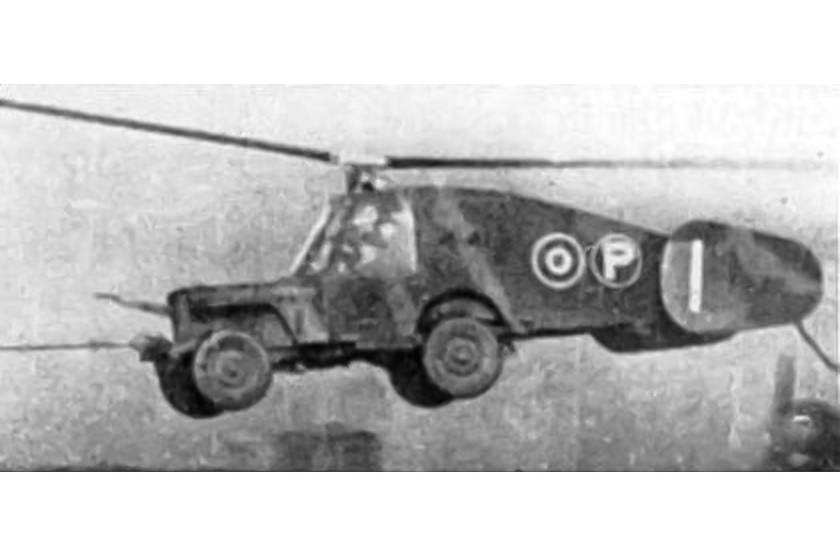
 Hafner Rotabuggy

A rotor kite is an unpowered, rotary-wing aircraft that relies on lift from its rotors. Unlike a normal helicopter, they do not have an engine powering their rotor. Like conventional gliders, a rotor kite needs to be carried aloft by a tow aircraft, car or boat. It can also ride on wind, and fly like a kite.

Raoul Hafner was a pioneering helicopter designer. He had already developed the one-man Hafner Rotachute rotor kite as an alternative to the parachute for the air delivery of soldiers to the battlefield. One advantage of the Rotachute was it did not use silk. He then proposed a similar method to creating a ‘Flying Jeep’.


7: Hafner Rotabuggy

 Hafner Rotabuggy

Fast ground assaults work best with the benefit of surprise, and one way to achieve these is for soldiers, vehicles and equipment to fly in by air. The well-loved Willys MB ‘Jeep’ was among the most useful of military vehicles and a ripe candidate for airborne delivery. Hafner proposed a modified MB able to take itself into war zones by air as the Rotobuggy.

Initial tests launching the Rotabuggy from a ground towing vehicle proved troublesome, as first, the tow vehicles lacked speed, but with the help of a supercharged 4.5-litre Bentley the Rotabuggy could be launched reasonably easily. Air launches, use an Armstrong Whitworth Whitley bomber as a towing platform were even more successful, but the whole project stood aside for the development of large transport gliders.


6: Curtiss-Wright XP-55 Ascender

 Curtiss-Wright XP-55 Ascender

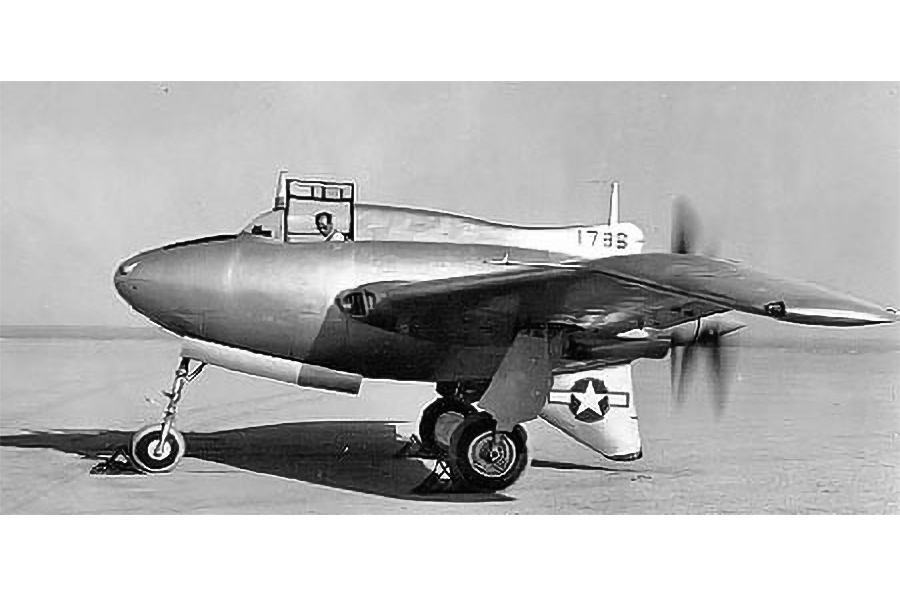
Designed to meet a 1939 specification for a high-performance fighter, the XP-55 Ascender was one of three unorthodox designs selected. The other two were the Vultee XP-54 ‘Swoose Goose’, and the Northrop XP-56 Black Bullet. All three aircraft were of pusher configuration, with the propeller at the rear of the aircraft.

Back to top

Originally intended to be powered by the 2200 hp X-1800 engine, when this engine was cancelled, Curtiss fitted a 1275 hp Allison V1710-95. The now rather weedy Ascender, could in no way reach the originally promised maximum speed of 507 mph.


6: Curtiss-Wright XP-55 Ascender

 Curtiss-Wright XP-55 Ascender

The XP-55 made its first flight on July 19, 1943, and was lost in an accident in November. The aircraft became inverted following a stall, and could not be recovered by the pilot, who bailed out successfully. Improvements were made but the maximum speed of 390 mph was below expectations.

By this time, it was apparent that the performance of in-service aircraft like the P-38 Lightning, P-47 Thunderbolt, and P-51 Mustang far exceeded anything that could be credibly expected from the Ascender. It was also clear that the future lay with jet propulsion, and the XP-55 Ascender joined the XP-54 ‘Swoose Goose’ and XP-56 Black Bullet in being cancelled.


5: Northrop XP-56 ‘Black Bullet’

 Northrop XP-56 ‘Black Bullet’

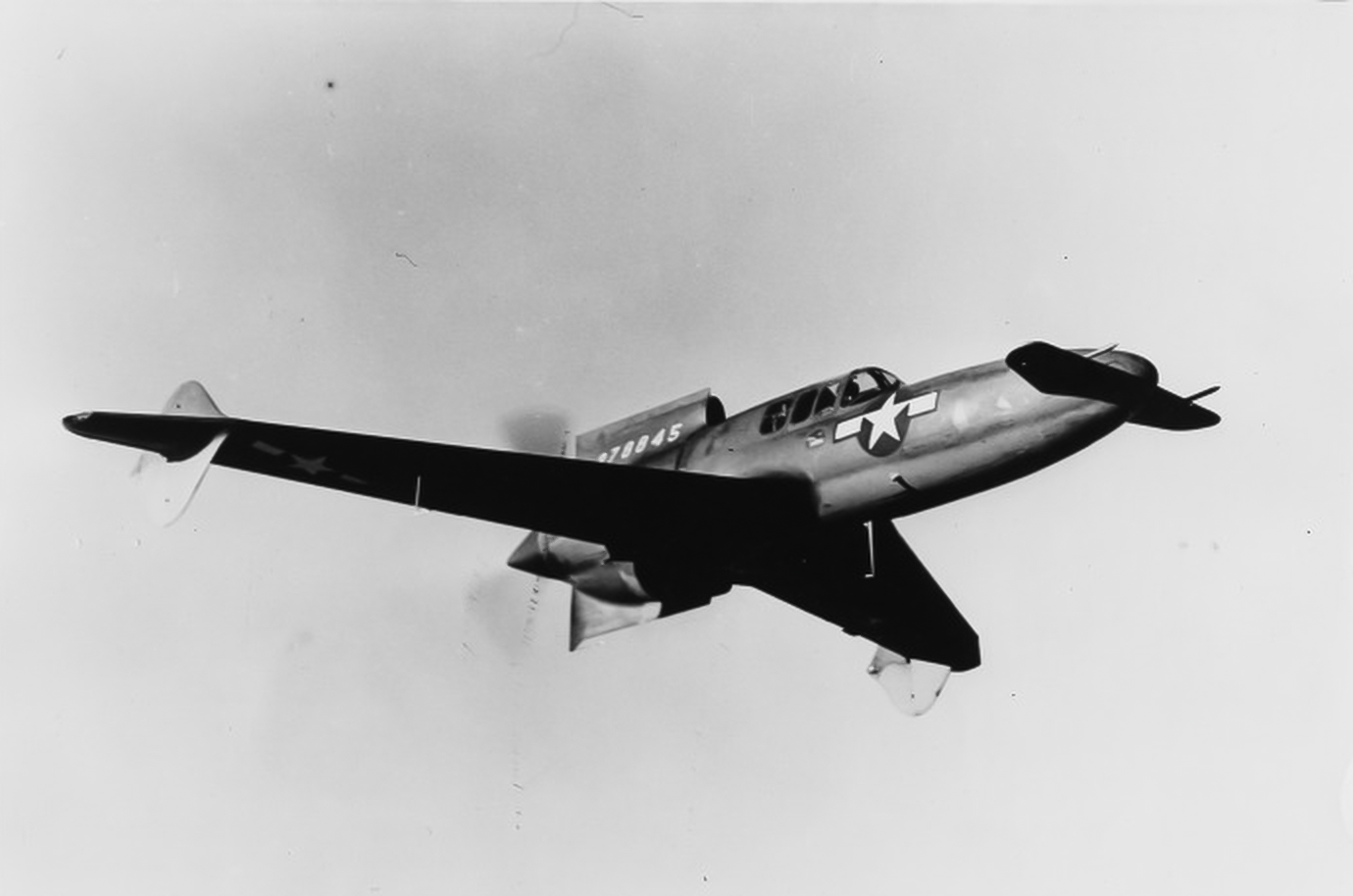
Most aircraft manufacturers used aluminium as their primary material, but some of the more maverick aircraft designers saw the potential of magnesium. These non-conformists also tended to put the propeller at the back in the ‘pusher configuration’. In 1943 Northrop flew the XP-56 ‘Black Bullet’, an aircraft that had seemingly flown in from a parallel universe.

This bat-winged fighter was an extremely unconventional design and like the later Planet Satellite, was a ‘Magnesium pusher’. The XP-56 proved dangerous to fly, and delays in its testing meant it was still unready at a time when piston-engined fighters were yesterday’s technology. Two were built.


5: Northrop XP-56 ‘Black Bullet’

 Northrop XP-56 ‘Black Bullet’

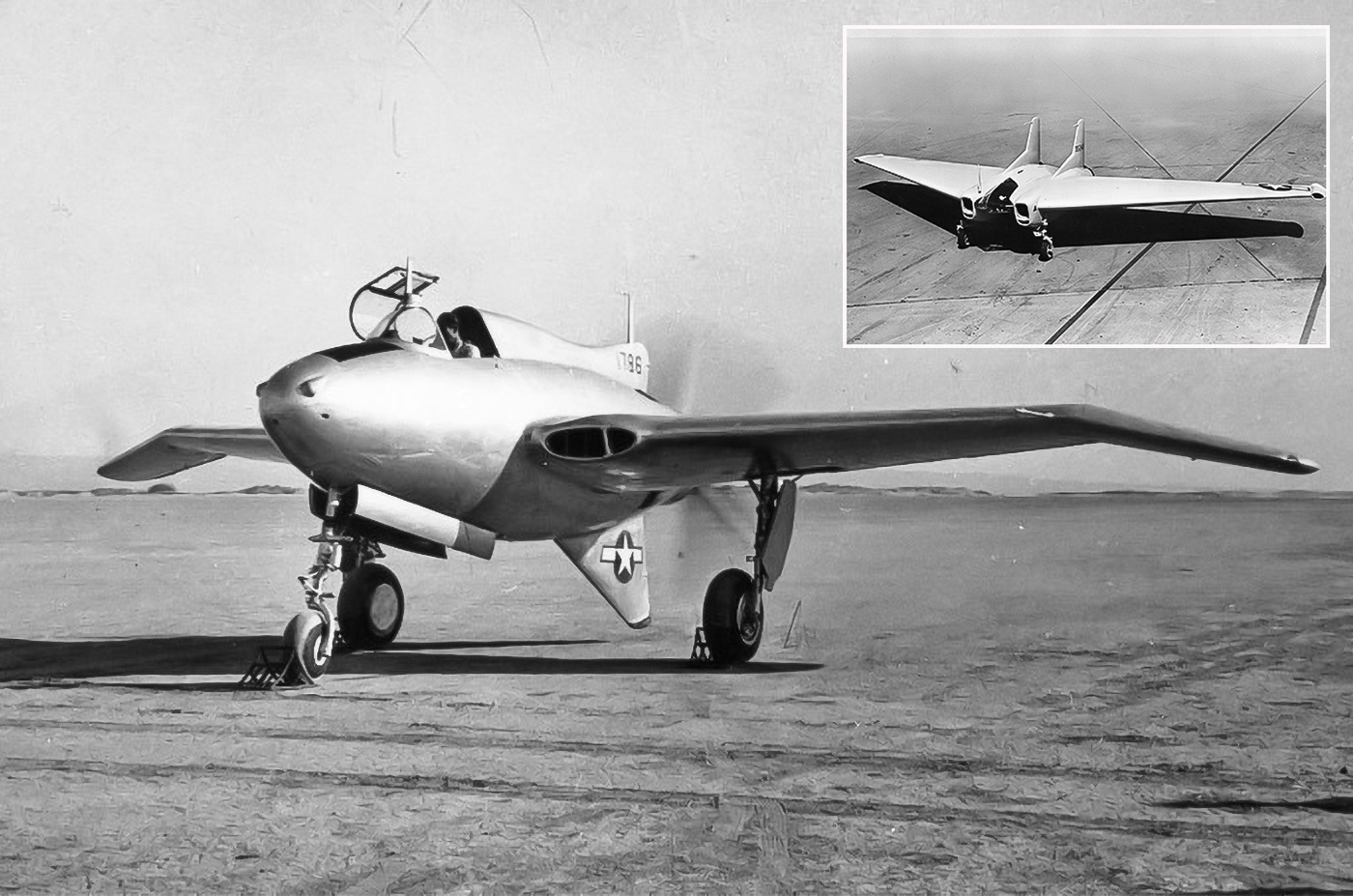
Somebody at Northrop thought the XP-56 was not mad enough and began work on the wonderfully mad XP-79 (pictured inset), in which the unlucky pilot would have to lie down as he controlled a rocket-propelled flying wing while manoeuvring his aircraft to slice enemy aircraft in half with its leading edges.

Back to top

Despite the benefits of magnesium (it is exceptionally light and strong) it had a reputation for bursting into flames and, if impure, to corrode easily. On its maiden flight on September 12 1945, the XP-79 spun out of control after seven minutes of flight. Test pilot Harry Crosby bailed out, but was struck by the aircraft and was killed. Shortly afterwards the project was binned.


4: Northrop N-1M ‘Jeep’

 Northrop N-1M ‘Jeep’

US Aircraft designer Jack Northrop (1895-1981) loved the idea of the ‘flying wing’ aeroplane. The flying wing gets rid of a central tube-like body (the fuselage) and instead houses all the aircraft’s parts within the wing. The entirety of a flying wing aircraft contributes to lift with huge increases in efficiency compared to a conventional aircraft.

This strange machine took its first flight in July 1940. With its pusher propellers and sleek form, it looked a world away from the Spitfires, Hurricanes and Messerschmitts then battling over England.


4: Northrop N-1M ‘Jeep’

 Northrop N-1M ‘Jeep’

The N-1M led to bigger and more powerful Flying Wings, not including a planned but unbuilt N-1 medium bomber. In 1946 Northrop flew the gargantuan YB-35, a long-range heavy bomber with a wingspan of 52 metres defended by 20 50-calibre heavy machine-guns, but failed to enter service due to myriad technical problems.

Jack Northrop died in 1981, but his championing of the Flying Wing concept since the 1920s, led directly to the Northrop B-2 ‘stealth bomber’ of 1988 and today’s Northrop Grumman B-21. It was the stealthy advantages of the Flying Wing that would eventually win it favour, without it also becoming the shape of choice for a new generation of Uncrewed Combat Air Vehicles, the so-called ‘Batwing Generation’.


3: Baynes Bat

 Baynes Bat

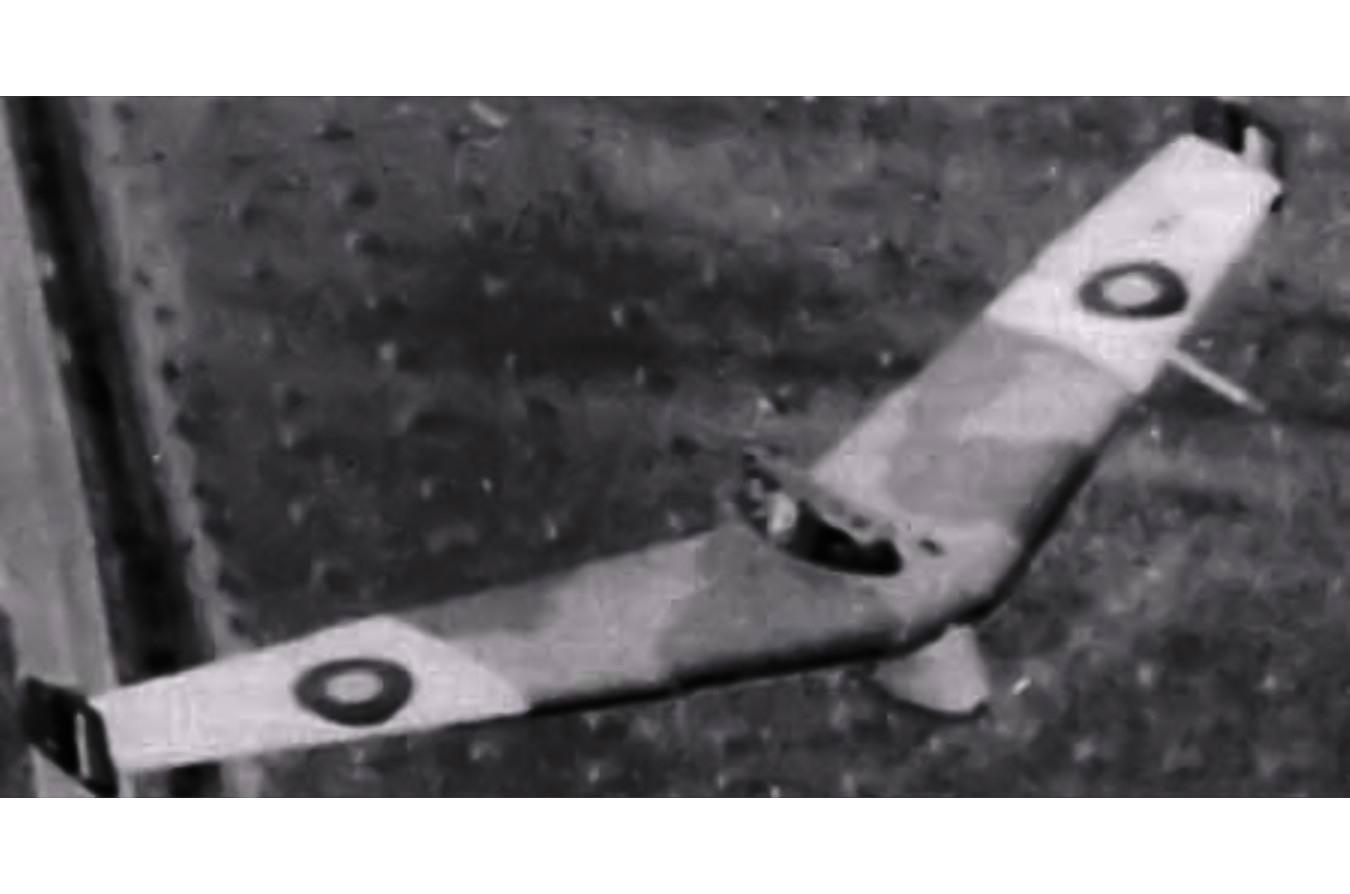
Many military minds were concerned with how you could move army tanks quickly and quietly to the frontline. The unlikely solution of both Baynes in Britain and Antonov in the USSR was the attachment of glider wings to tanks! Such an aircraft was to be towed into the air by a powered aircraft, the Bat was built to research these ideas.

Back to top

Military planners were concerned about how large numbers of Baynes gliders could be recovered from the area of operation, which was likely an unnecessary worry. In a full-scale invasion, the relatively inexpensive glider sets would have been a small sacrifice for the delivery of tanks close to the frontline.


3: Baynes Bat

 Baynes Bat

In the end, this idea was not adopted. There was neither a suitable tank nor an interest in flying tanks, as the focus of tactical gliders turned to larger unpowered aircraft, like the Airspeed AS.51 Horsa. The Horsa proved extremely successful, and over 3799 were built and aided in the victory in Europe.

Despite its role in flying tank research being over, the Bat was a useful experimental aircraft for the study of tailless flying wings. In a rather unromantic end to such an interesting project, the Bat was last seen rotting away in a quiet corner of Croydon Airport in 1958.


2: Savoia-Marchetti SM.92

 Savoia-Marchetti SM.92

Italy’s SM.88 heavy fighter had a sound design but was hampered by the absence of suitable engines and too much overlap in capabilities with the proven Messerschmitt Bf 110. Thus the SM.88 never went into production, but did sire two derivative designs, the SM.91 and SM.92. The SM.91 was a heavy fighter similar in configuration to the US P-38 Lightning, but the SM.92 was more bizarre.

To obtain the desired range and speed required for the SM.92 fighter-bomber, every effort was made to reduce drag and the frontal cross-section of the aircraft. The central nacelle that housed the crew on the SM.91 was gone, with the crew now finding accommodation in a shared unit with the port engine.


2: Savoia-Marchetti SM.92

 Savoia-Marchetti SM.92

It was powered by two German Daimler-Benz DB 605A-1 engines. The aircraft first flew in October 1943. Armament was three 20mm cannon and five heavy machineguns. Another bizarre feature of the SM.92 was that one of the heavy machine-guns was remotely controlled in a built-in pod the horizontal tail.

The aircraft had promise but came at the wrong moment in history. It was test-flown for 21 hours, during which time it was almost the victim of friendly fire, when an Italian Macchi C.205 mistook the prototype for a USAAF P-38. The aircraft survived through evasive manoeuvres but was severely damaged by the encounter and grounded for months. The unlucky (and only) SM.92 was then destroyed by Allied bombers in 1944.

Back to top

1: Lippisch P.13a

 Lippisch P.13a

For all-out bizarreness, it is hard to beat the Lippisch P.13a, which in terms of shape, propulsion and concept was as off the wall as they came. Let’s start with the propulsion: a coal-powered ramjet. Coal was chosen as Germany was losing the war, conventional fuel was in very short supply, and coal was notionally easier to place within the propulsion system.

Next, we have the appearance, a triangular (delta) wing, with the pilot in a vertical triangular fuselage-cum-tailplane (this configuration returned with the French Payen Delta), and tube-like intake in the nose for the ramjet. The delta wing was needed as the top speed was expected to be an unprecedented 1025 mph.


1: Lippisch P.13a

 Lippisch P.13a

Then there was the concept. It was to be a supersonic interceptor (the ‘sound barrier’ had yet to be broken in controlled fight) and to take out enemy bombers, not with anything as bland as guns or rockets, but hitting them with the aircraft itself.  The Lippisch P.13a never flew and was likely totally implausible. The wing was too thick to achieve high speeds, the fuel source seemingly batty and the promised range of 620 miles improbable.

Even with some optimism on whether it could have worked, it would have been underpowered and likely suicidal for the pilot to slam into enemy bomber formations at 1000 mph, if he could even manoeuvre well enough to impact with them at such speeds.

Follow Joe Coles on Substack, Twitter X  or Blue Sky. His superb Hush-Kit Book of Warplanes is available here.

If you enjoyed this story, please click the Follow button above to see more like it from Autocar

Photo Licence: https://creativecommons.org/licenses/by/4.0/deed.en

Join our WhatsApp community and be the first to read about the latest news and reviews wowing the car world. Our community is the best, easiest and most direct place to tap into the minds of Autocar, and if you join you’ll also be treated to unique WhatsApp content. You can leave at any time after joining - check our full privacy policy here.

Add a comment…