9

Volkswagen Group’s newest car brand stepped up with its first stand-alone model

Find Used Cupra Formentor 2020-2024 review deals
Used car deals
From £12,995
Other Services
Sell your car
84% get more money with

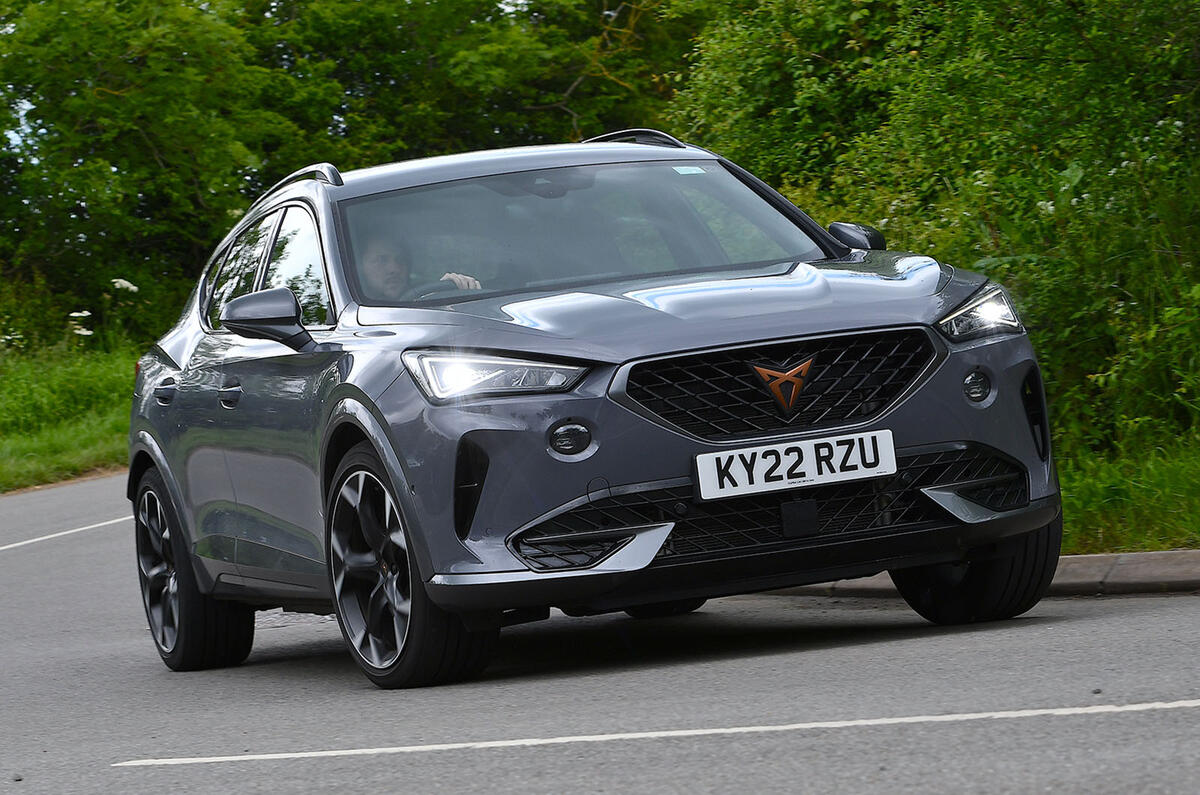
The Cupra Formentor is both a brawny-looking crossover and a brilliant all-rounder with the taut handling of a well-sorted hatchback and the practicality of a crossover. The segment-blending family hauler - updated recently but we're focusing on the pre-facelift car here - had a stuttering start due to its arrival during the 2020 pandemic.

But the Formentor has become Cupra's best-selling model, with so many finding homes that the used market now provides rich pickings, with prices starting from £13,000. There's an array of engines to consider: pick from a BIK-swerving plug-in hybrid or a pseudo-hot hatch with more than 300bhp. Or keep things simple by opting for the widely available 148bhp 1.5-litre or 187bhp 2.0-litre turbo petrols. The 1.5 TSI isn't the most exciting powerplant, but it will easily return 45mpg.

If the Formentor is short on anything, it’s probably the enigmatic handling appeal of a more communicative, natively rear-driven fast 4x4

If you want a bit more poke, the 2.0 TSI is a solid choice and it sends its power to both axles, which is good news for dynamics and all-weather traction. For spicing up the commute or school run in the snow, it's the better all-rounder.

The 201bhp 1.4-litre plug-in hybrid isn't short on appeal, with 37 miles of claimed EV range still looking pretty competitive against newer rivals. Daily driving is a doddle on electric power, but even with a drained battery it should do 40-50mpg. They're easy to find and rather good value: you'll pay around £17k-£18k for a tidy PHEV with about 60,000 miles on the clock.

Advertisement
Back to top

The 1.5-litre cars cost about the same, but you'll have to dig deeper for a 2.0 TSI, which are priced from around £20,000. It's worth bearing in mind that all three powertrains are tied to entry- and mid-level V1 and V2 trims, but neither of these feels spartan.

V1 cars get 18in wheels, LED headlights and a 10in infotainment screen, while V2s have heated seats, larger wheels and a rear-view camera.

Inside, the Formentor offers good practicality. Despite the rakish roofline, there's enough head and leg room in the back for adults, although three on the rear bench can be a squeeze. You'll have no trouble carrying suitcases, buggies or pets in the 420-litre boot - although this drops to 345 litres on the plug-in hybrid because of the battery in the boot floor.

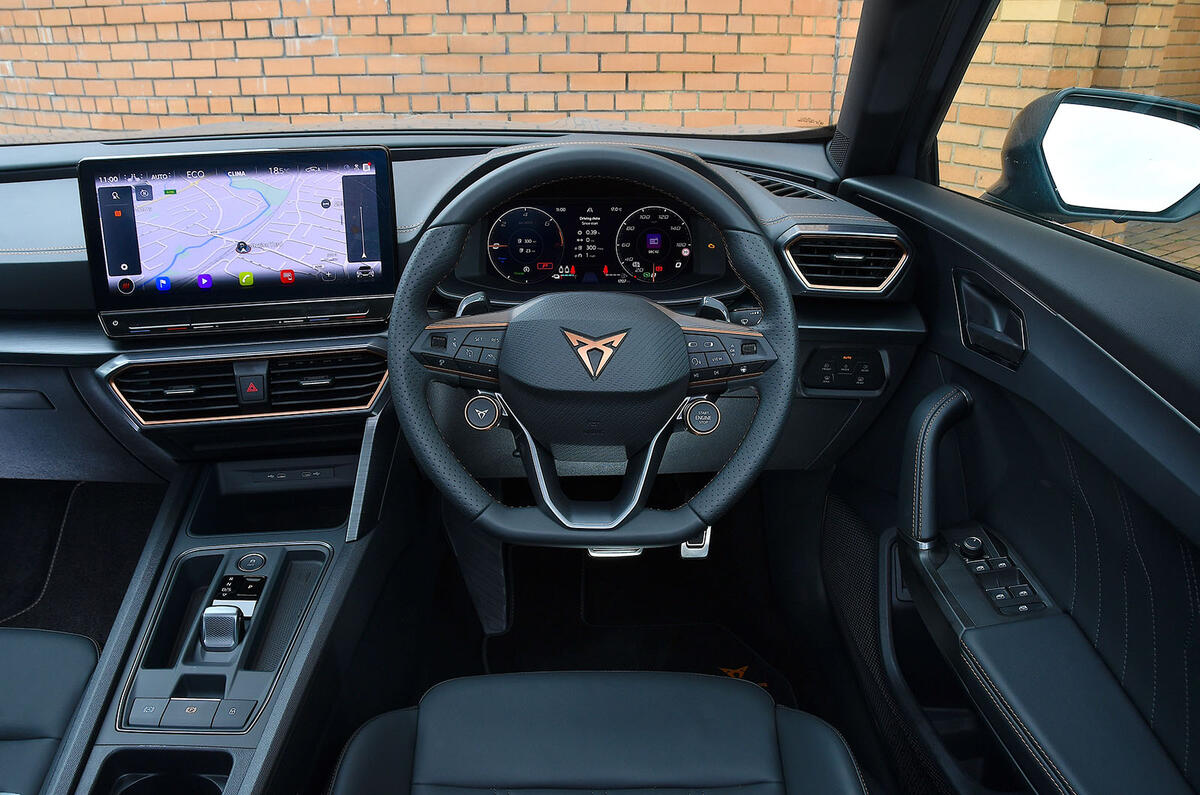
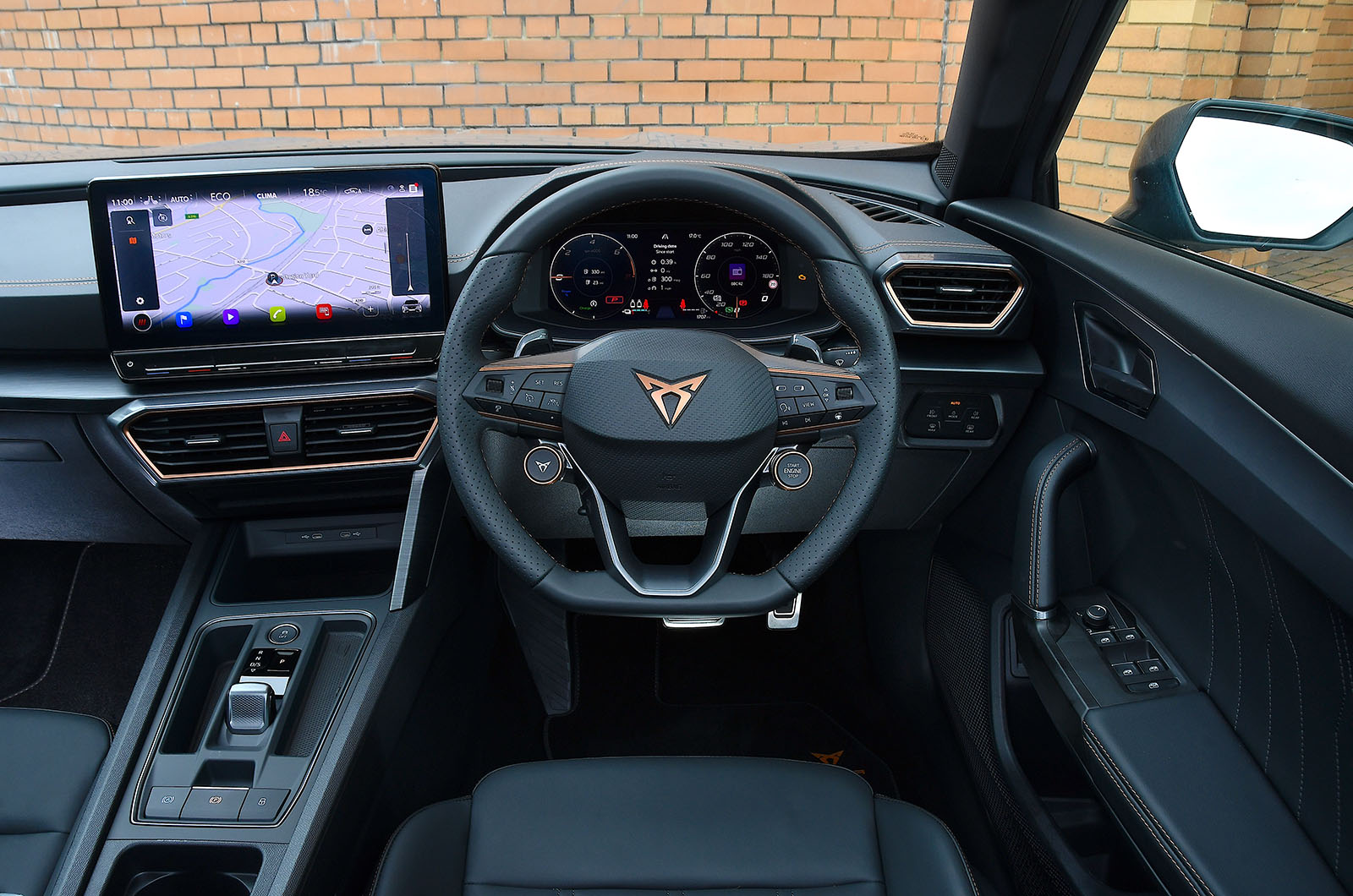
Interior quality is strong with plush leather and copper trim upping the ambience. All versions get the same crisp 10.3in driver display, while the infotainment screen is a trim-dependent 10in or 12in. The central display is user-friendly and well configured, but the slider controls for volume and temperature aren't backlit and thus all but useless at night.

VZI trim and above gets you the EA888 turbo four-pot that powers the Volkswagen Golf GTI and R. The 242bhp version has serious pace, but it's the 306bhp, four-wheel-drive model that cements the Formentor's high-riding hot hatch billing. It isn't quite as engaging as a fast Golf, but while many hot crossovers suffer for their jacked-up suspension and extra weight, the Formentor delivers just the right amount of grip, agility and body control to satisfy keen drivers.

You'll need about £23k for a clean example with a reasonable mileage, and it's worth stumping up for VZ2 spec, which gets adaptive dampers. Then you'll have one of the best-riding, best-looking and best all-round crossovers, and all for less than the price of a new Golf.

RELIABILITY

8
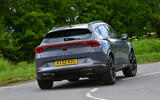
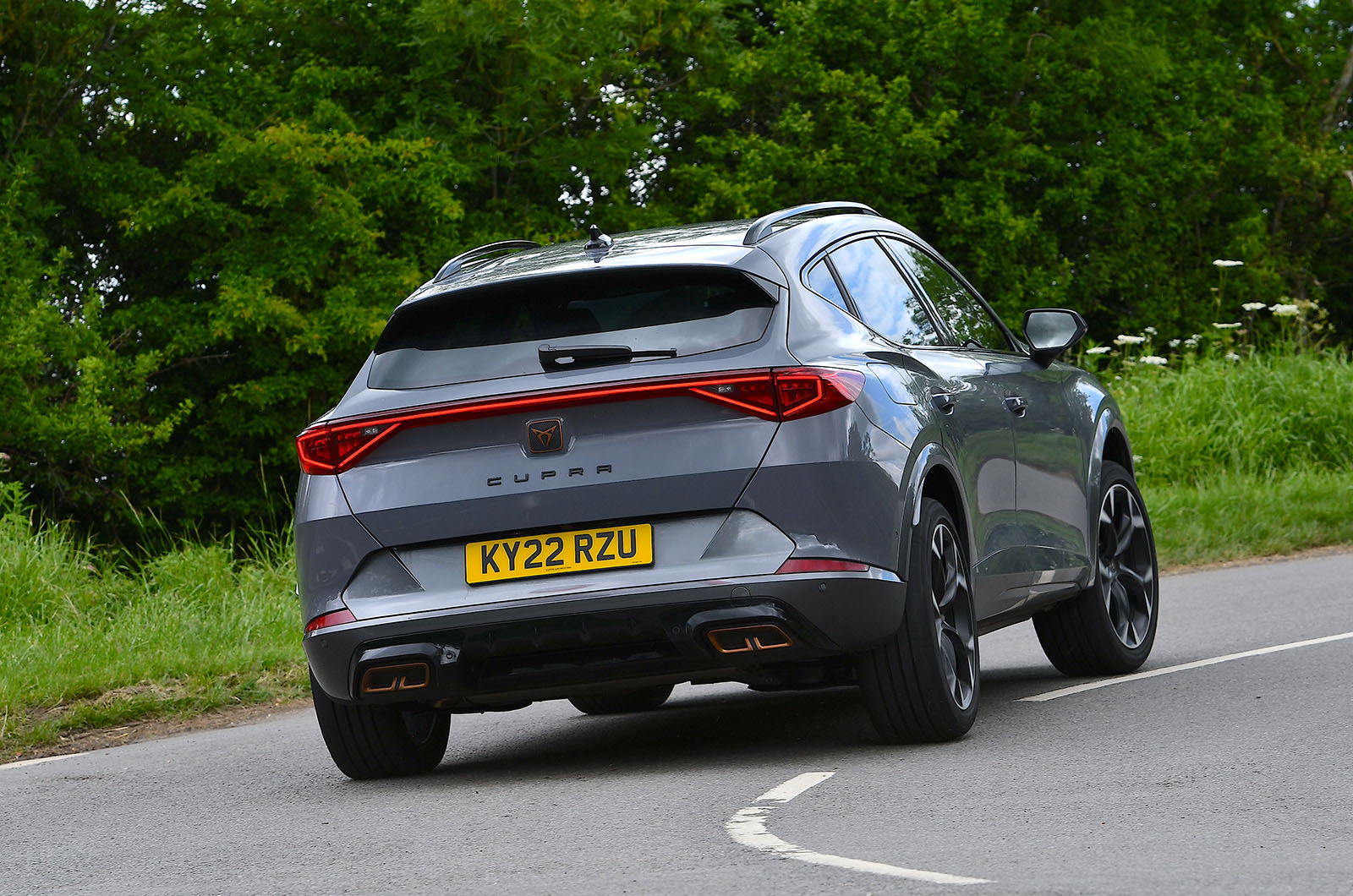
Cupra Formentor 2 rear3:4

Is the Cupra Formentor reliable?

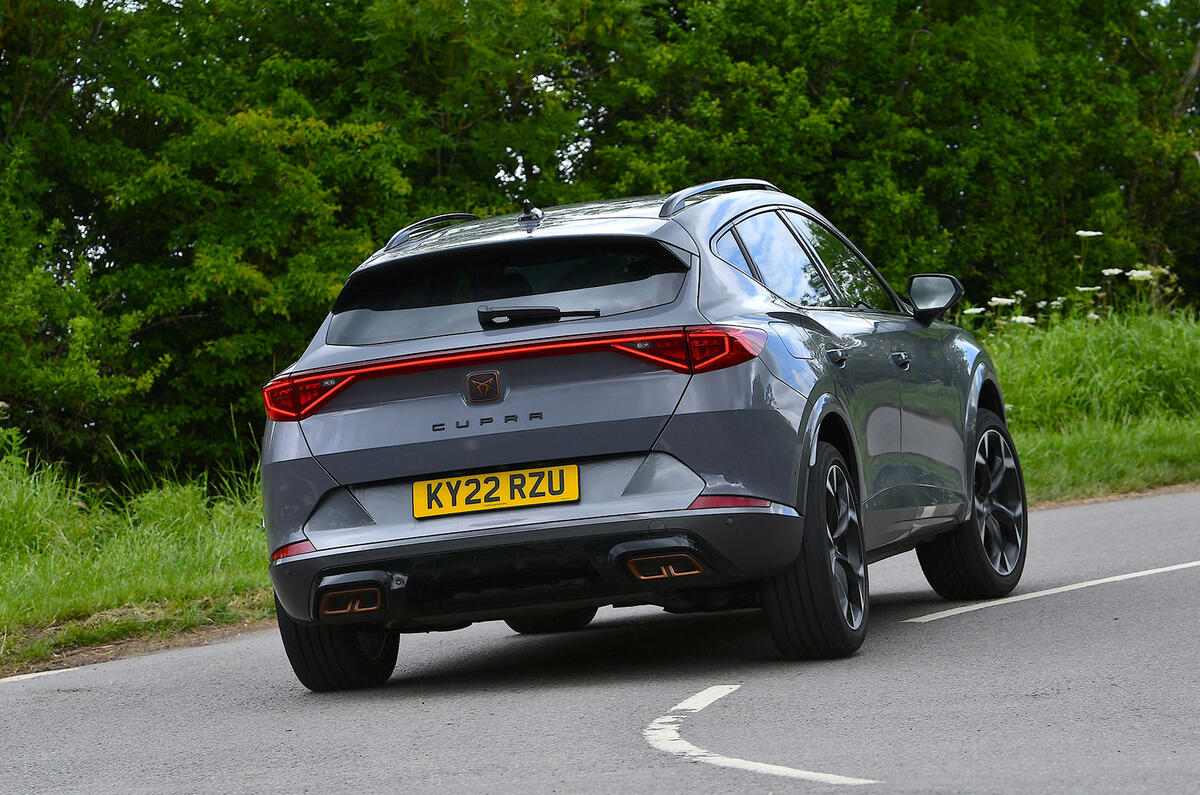
The Formentor doesn't have a great reputation for reliability. In What Car?'s most recent reliability survey it finished in 25th place out of 33 cars with a score of 89.8% in the family SUV section, which is better than the Range Rover Evoque, but worse than the Audi Q3, Volvo XC40 and Jaguar E-Pace.

Cupra as a brand redeemed itself in our 2024 survey, finishing in 17th place out of 31 manufacturers – that's an improvement on 2023, where it finished in last place. 

Plug-in hybrids seem to have suffered the most reliability glitches, although many owners are happy

It should be noted that we had an issue with a 2024 plug-in hybrid example that we had for a Cupra Formentor long-term test. The car displayed a couple of error messages relating to the gearbox, with it leaving the car undriveable in one instance. This doesn't bode too well for reliability, especially considering the car's poor results in the past – it finished in 33rd place out of 34 cars in the family SUV section of the 2023 survey.

With that in mind, here are some things to watch out for:

Engine: Oil leaks, timing belt issues, overheating and a rough idle are known issues. Faulty sensors can flag erroneous warning lights on the dash.

Hybrid System: Cable can get stuck in the charging port even after it has been unlocked. Charging door actuators can fail, preventing it from locking and unlocking. Also watch out for the car getting stuck in its pure-EV mode.

Gearbox: Rough or jerky gearchanges, gear slippage or delayed shifting aren't uncommon with the DSG dual-clutch auto 'box. Faulty solenoid valves, mechatronic units or electrical components can be the culprits.

Air Conditioning: Air-con condensers behind the lower bumper are susceptible to damage from stones, causing them to leak refrigerant gas. It can cost up to £1000 in parts and labour to fix. Warm air from the vents, or a grinding noise when the air-con is turned on, could be an issue with the compressor. A replacement can cost between £200 and £600.

Infotainment: Software glitches can cause the infotainment screen to freeze. Issues connecting phones via Apple CarPlay/Android Auto and audio glitches are also common. Software updates help but aren't a concrete solution.

Driver Assistance: SOS and lane assistance issues can occur due to faulty modules in the steering assembly. The Formentor is also known to make unexpected calls to roadside assistance.

Also Worth Knowing

Cupra rolled out a more powerful version of the 1.4-litre PHEV, which makes 241bhp and can travel up to 34 electric miles on a charge. You could also get the Formentor with a tuning pack from German specialist Abt. The pack included lowered suspension, a 59bhp hike in power, to 365bhp, bespoke alloys, an Akrapovic exhaust system, carbonfibre bucket seats and Brembo brakes. Prices start from around £40,000.

An owner's view

Adam McCalden: "After three successive Fords, the wife and I decided to dive into the world of hybrid vehicles and bought a Formentor VZ21.4 eHybrid. We flew to Gatwick and drove it home to Northern Ireland, and we've never looked back.

"Having 25-35 miles of EV range is great, and our three-pin charger installed on the drive is enough to keep the battery charged. It only needs 10kW to boost the battery and it costs about £1.60 overnight. I like the look of the recent facelift, but for now we're staying put."

DESIGN & STYLING

9
Cupra Formentor 3 side

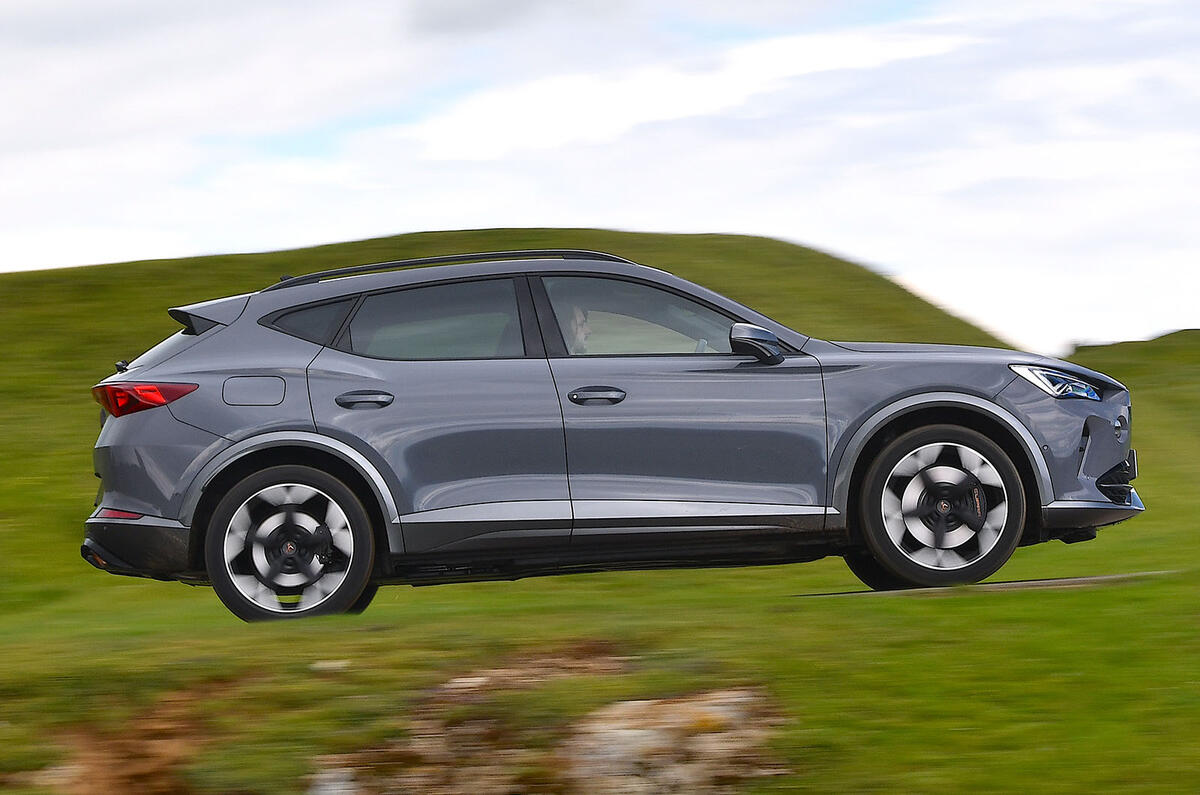
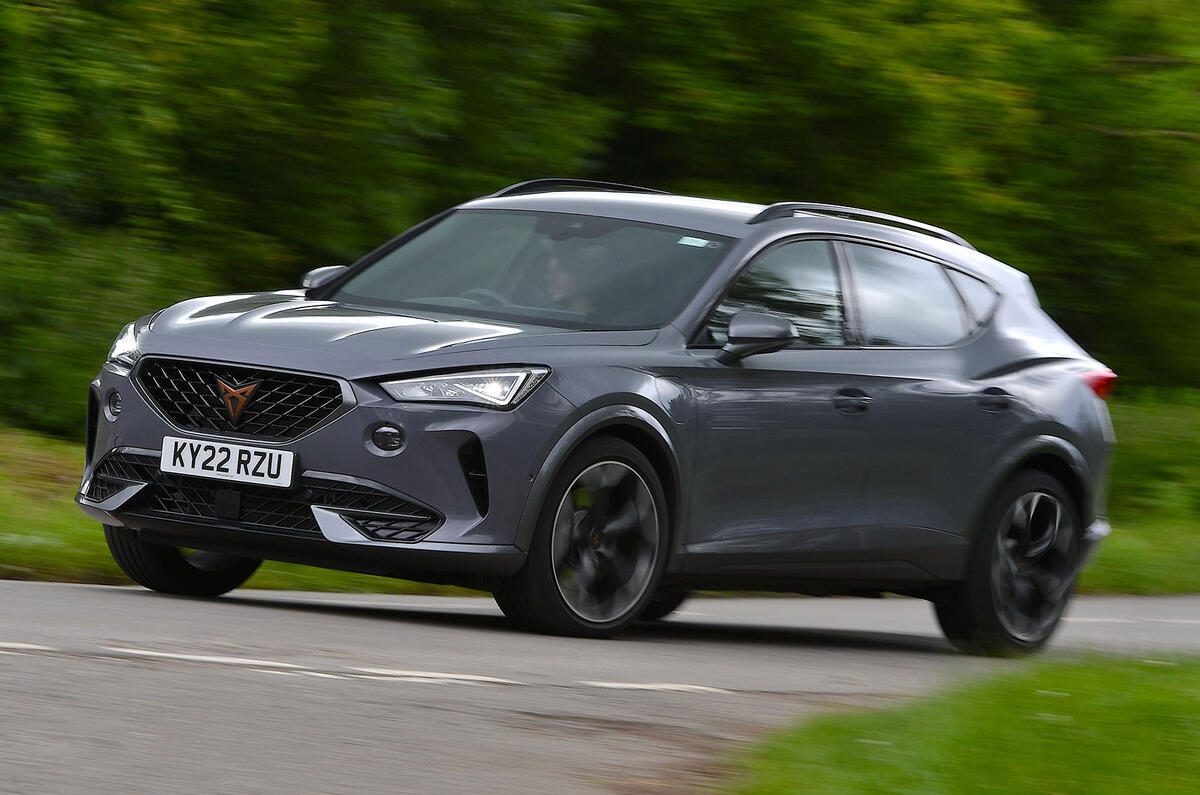
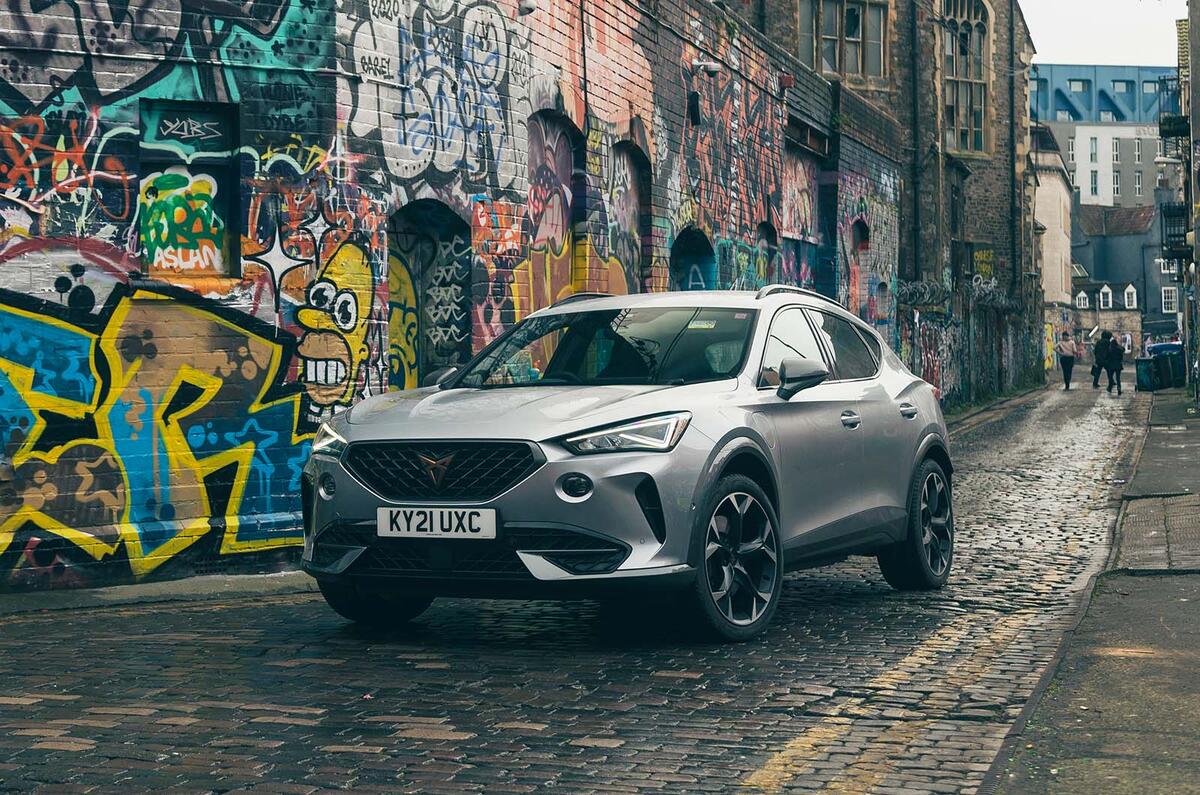
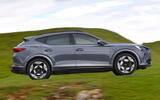
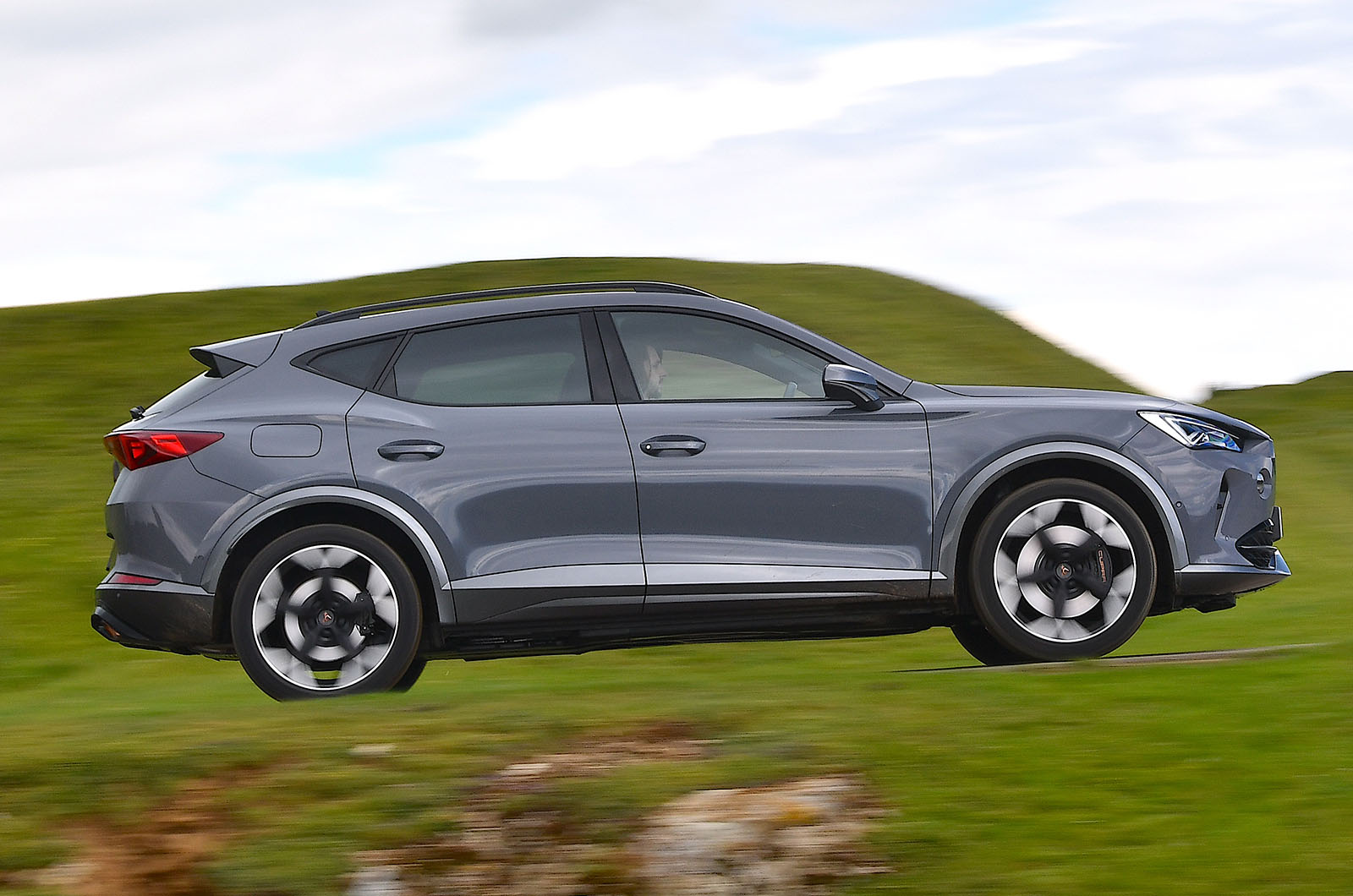
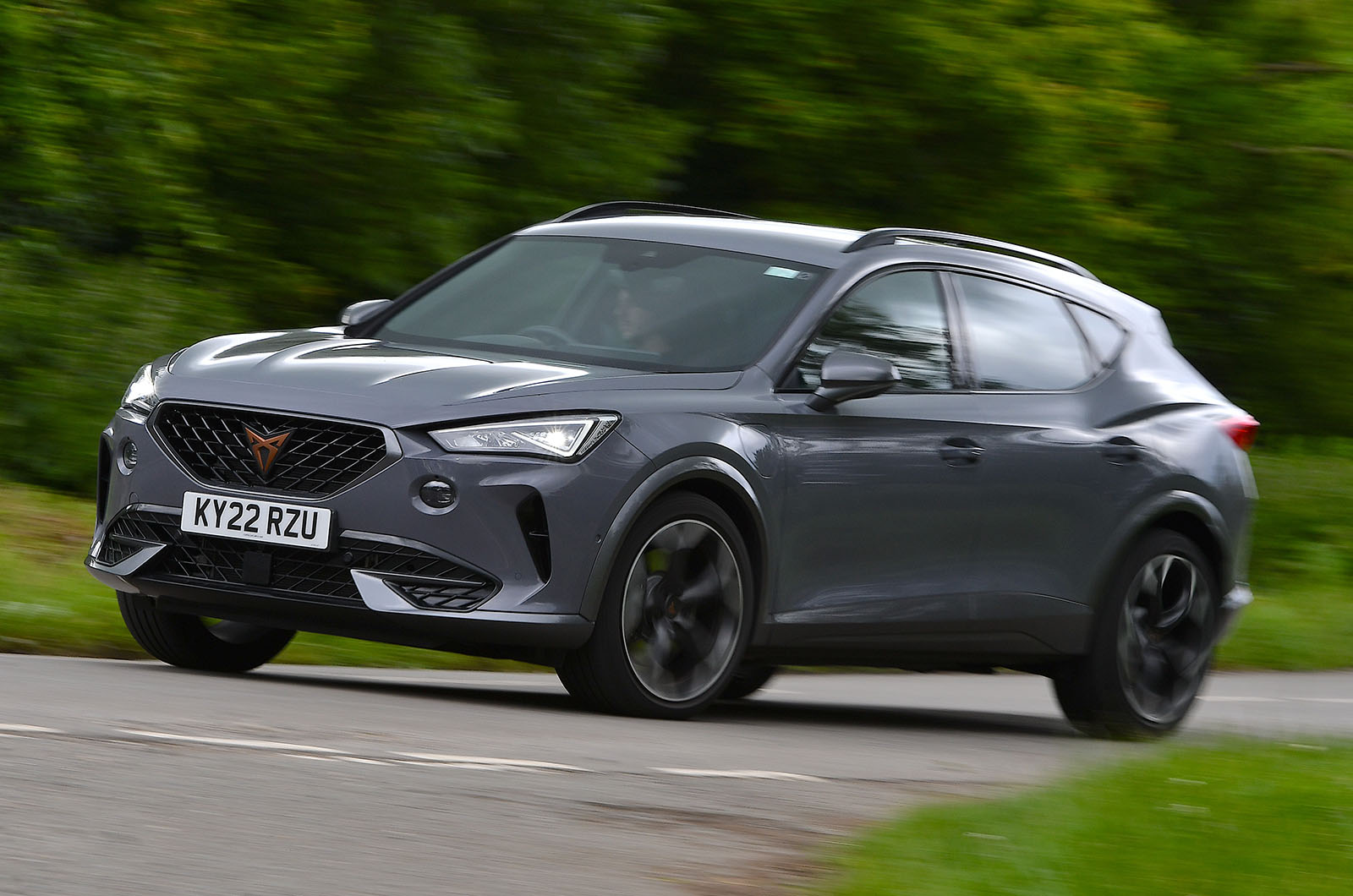
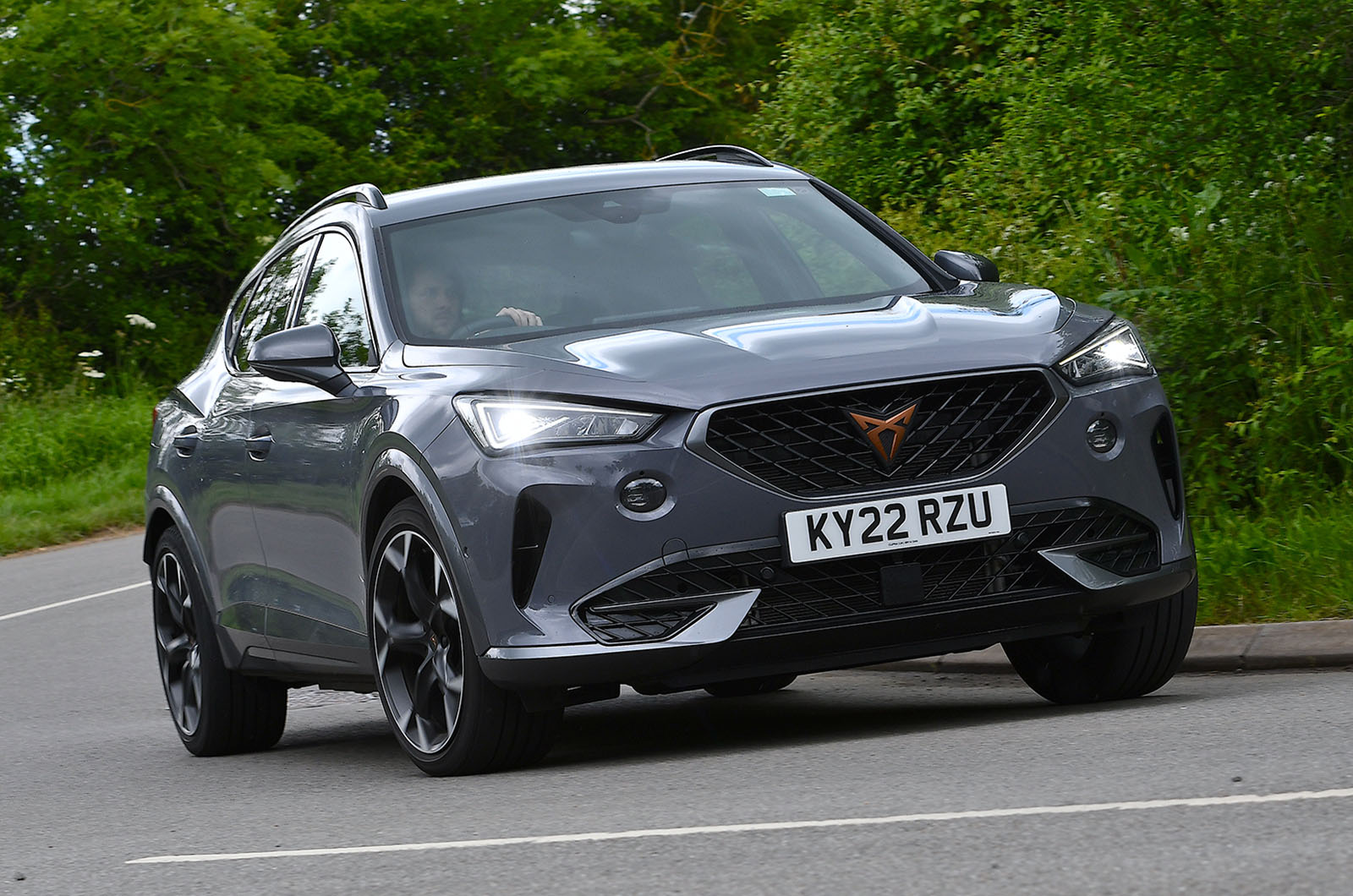
his long, wide-arched, unexpectedly svelte and swooping family hatchback-cum-wagon has a sporting stance and visual purpose that’s rare in a high-riding car. Moreover, Cupra doesn’t seem to have allowed a brief for crossover versatility to corrupt the car’s skilfully crafted lines or proportions.

Design-wise, this is quite the accomplished piece of work.

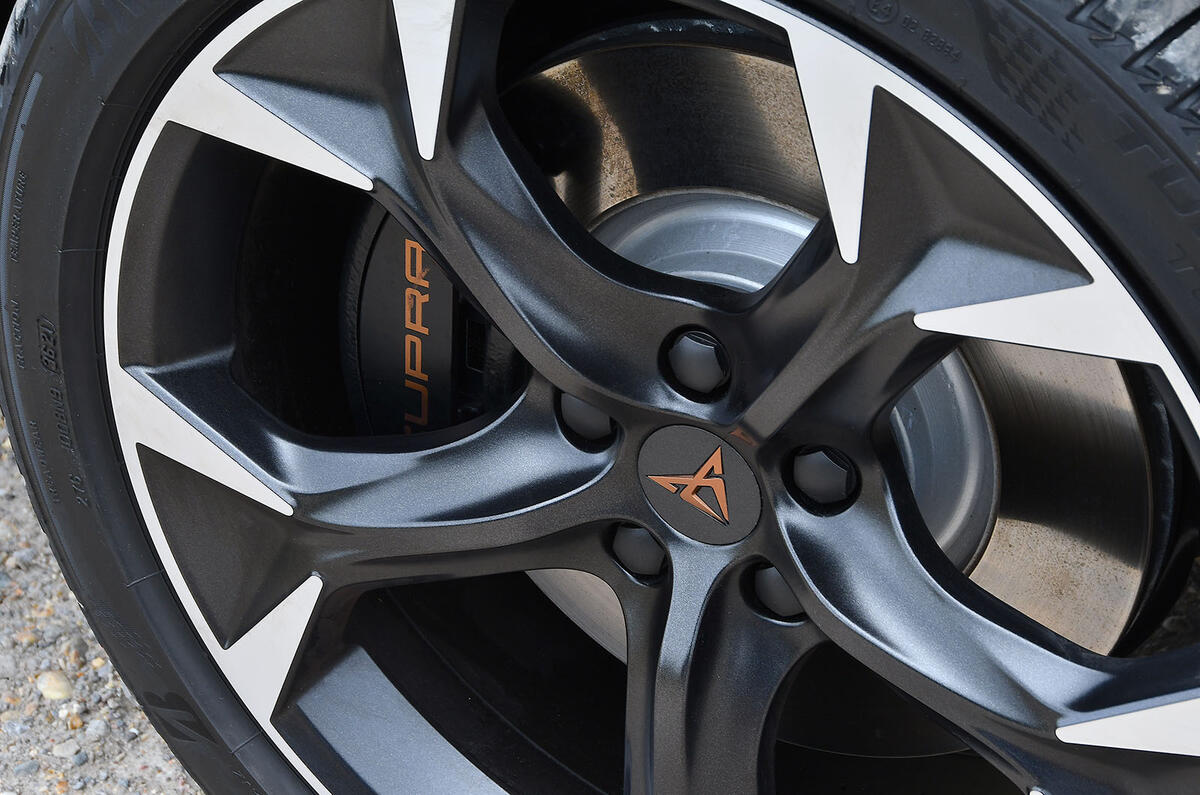
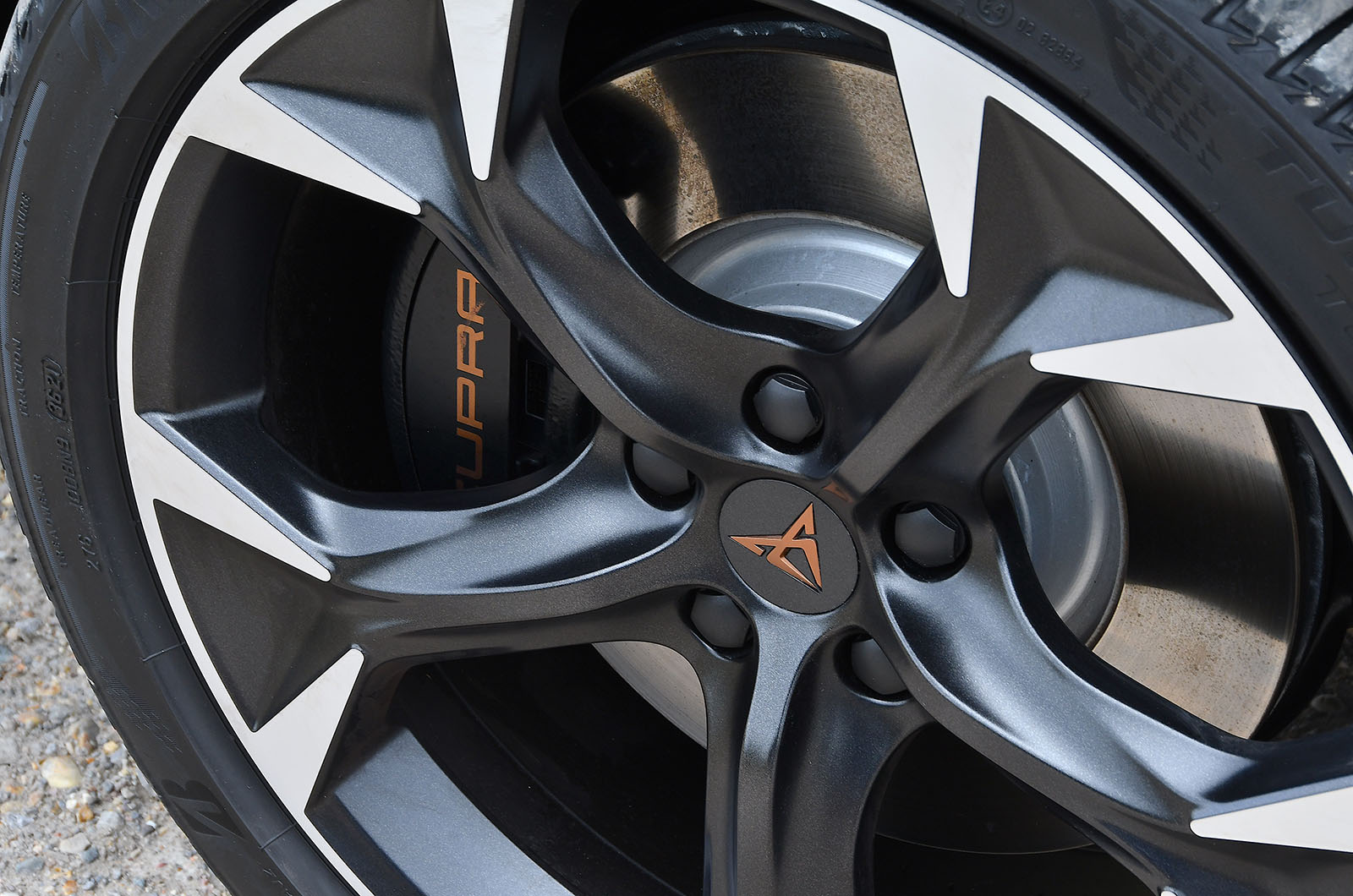
Entry-level Formentors get 18in rims, while upper trim levels all get 19s in various designs. There’s also a Brembo brake upgrade for range-topping cars

Size-wise, the car is just under 4.5m in length and a little over 1.5m in height. It rises higher than a Skoda Octavia Estate but is nearly a foot shorter for overall length, while also being notably longer than an Audi A3 Sportback.

And for anyone wondering how close a match the Formentor might be for Subaru’s boxier but equally left-field mid-noughties sporty crossover, the Forester STI? Apart from a longer wheelbase and wider body and tracks for the newbie, the dimensions of the two cars are almost identical.

Unlike its MQB-platform relatives, the Formentor gets fully independent suspension and ‘progressive’ rising-rate steering irrespective of the engine fitted. Lowered sport suspension with adaptive damping is fitted from mid-level VZ1-trim cars and upwards, with four-wheel drive (coming in tandem with a dual-clutch gearbox) on 2.0-litre versions. 

INTERIOR

9
Cupra Formentor 4 interior

You get an abiding sense of a rightsized modern family car when you survey the passenger quarters and boot of the Formentor. As a big hatchback, the car sits between the dimensional norms of the market’s C- and D-segments.

It’s roomier in the back than a typical hatchback and, although not quite rivalling the likes of the Octavia or Honda Civic for outright space, it has good everyday practicality and carrying versatility.

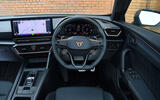
Steering wheel design is one of a slimmish rim and spokes and a relatively modest airbag boss. The shift paddles are easy to see, and to grab, which we like

But the space isn’t what will strike you about this interior at first. Instead, it’ll be Cupra’s imaginative application of colour and t r im around the cockpit and its particularly bold ambient lighting features.

You can’t fail to miss the strip of coloured ambient lighting running across the base of the Formentor’s windscreen and into either door. The illumination here is colour-selectable and changes with the drive mode; and while it can seem a little overly bright and distracting at night, it adds just enough visual drama to the cabin once you’ve gone to the trouble of picking a shade and intensity for it that you like.

It also doubles up to draw the eye to your mirrors, with a yellow visual accent, as cars enter your blind spot, which is a clever bit of technological synergy.

The VW Group’s fully digital 10.3in instrument console features as standard on all Formentors, as does a 12.0in touchscreen infotainment set-up.

The former we like, thanks to plenty of configurability and not too much contrived visual flourish in the instrument layout; while the latter divides opinions a little more, not least because the physical controls that it offers for the adjustment of heater temperature and audio volume aren’t backlit so they’re as good as useless after dark.

There are a few places in which the material quality of the Formentor’s interior doesn’t quite match its ambitions, at the lower levels of the fascia and on the centre console, mostly. Even so, few would have bet on a brand spun off from Seat three years ago to produce an interior as rich, imaginative and inviting as this. 

ENGINES & PERFORMANCE

8
Cupra Formentor 5 dynamic

The 306bhp version of the Formentor isn’t quite quick enough to really surprise or excite.

However, it has a very muscular performance level that is more than serious enough to keep you interested in the driving experience and that, thanks to the car’s unbreachable traction and pragmatic chassis tuning, can be fully (if judiciously) deployed on the public road even in less than perfect driving conditions without making its driver feel boorish, profligate or antisocial.

We would prefer more throttle adjustability, although its composure and stability are reassuring

This is the kind of car that a ‘real-world performance’ billing was coined to describe.

The flexibility and linearity on offer from the VW Group’s EA888 2.0-litre motor here are typically great. We noted the merest flat spot from it under load when spinning at less than 2500rpm, and a sudden rush of torque immediately thereafter – but it’s the kind of weakness that only a road tester doing in-gear acceleration tests would be likely to find.

It spins from middling revs up to beyond 6000rpm with real vigour and freedom and the noise it makes inside the cabin, although quite clearly digitally augmented when you pay it close heed, doesn’t grate on the ear. From the outside, as one tester noted, the Formentor sounds surprisingly ordinary, and an engine with more than four cylinders might well have needed less enhancement.

But it’s to the benefit of the car’s dynamic versatility that it can be so quiet in Comfort driving mode, and perhaps attract little of the wrong kind of attention when driven quickly, and yet still sound lively and enticing to its driver.

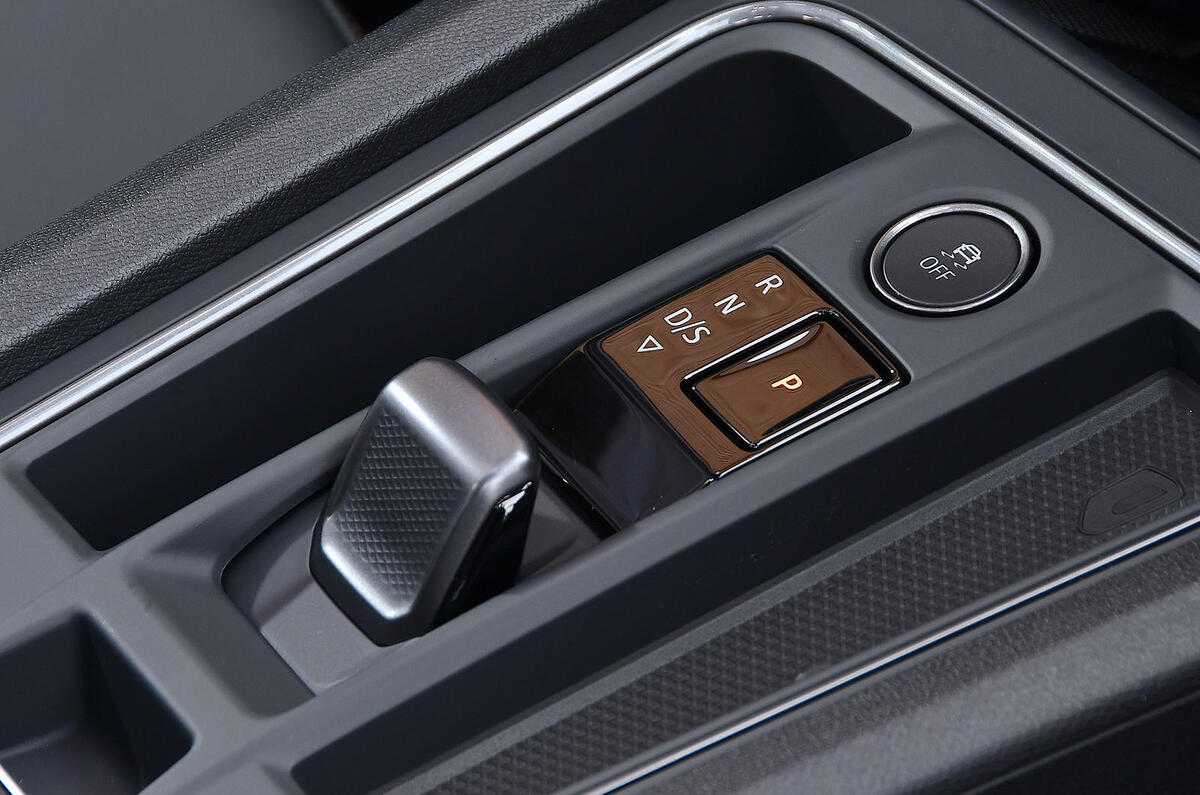
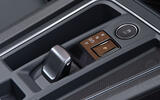
The seven-speed dual-clutch gearbox does a first-class job here, too. You don’t feel the need to always manage it with the paddles in Sport mode. It tends to be in a useful gear for responsive roll-on acceleration in give-and-take motoring when operating in ‘S’ mode, and then calms down nicely in ‘D’ for around-town mooching and heavy-traffic plodding.

Unlike other torque-vectoring four-wheel drive systems, Cupra’s 4Drive system doesn’t seem to be able to put quite as much torque at the Formentor’s rear axle as the car could use during limit handling (which we’ll expand on shortly) and we did note some perceptible snatches of wheel slip at the front axle before torque was sent rearwards during full-bore launches on slippery Tarmac.

That’s not something that happens in typical driving, though, when the car’s hold on the road always seems strong.

RIDE & HANDLING

8
Cupra Formentor 6 wqheel

The Formentor handles like a fast crossover that knows what it’s for, which sounds straightforward enough but it’s not as common as you might think.

Instead of doing some doomed, jacked-up impression of a circuit-est ranged hot hatchback, it has just the right amount of grip, agility and body control blended with the kind of any-weather, any-surface stability, compliance, composure and drivability that would make the car a natural choice for the quicker, keener sort of everyday driving.

On a hatchback handling spectrum that has circuit-ready specials like the Renault Mégane Trophy-R at one end and high-riding, four-wheel-drive crossovers like the Subaru XV at the other, the Formentor belongs much closer to the former

The car’s clutch-based four-wheel drive system and its taut but measured, progressive suspension tune make it stable and sure-footed over bumps and on slippery surfaces. The variable-rate steering is usefully weighty in the sportier driving modes and doesn’t pick up pace so quickly off-centre as to suddenly become hyper-responsive.

It filters quite a bit and some testers would have preferred more tactile feel, but the way it’s tuned nonetheless suits the brisk, compliant, easy-driving temperament of the car well.

Body control is subject to a little roll when cornering hard, but grip levels are medium-high and turn-in comes with a clear sense of keenness and immediacy. When exiting bends, the chassis maintains good dynamic balance, but it does feel natively front-driven ultimately, gently washing wide to signal its limits if you open the throttle early rather than vectoring torque to the rear to keep the chassis rotating under pressure.

In that respect, dynamically at least and predictably enough, this is more l ike a longer-travel Golf R wagon than a reincarnation of some noughties-era Subaru; supple, stable, fast and pleasingly composed, but given to little in the way of expressive body movement and offering little or no throttle adjustability.

The wheel and tyre specification that Cupra has chosen – a biggish rim but a fairly generalist Bridgestone Turanza tyre – allows the car to deal well with wet conditions. Any scrub radius there may be at the front axle doesn’t make the steering dive one way or the other through kerbside standing water, while the suspension maintains grip levels and keeps the tyres on the ground very effectively.

The driver’s seat doesn’t grant a particularly high-feeling vantage point, but visibility is good. The sports seats are strikingly comfortable, with well-judged backrest bolsters and an adjustable cushion angle. They’re particularly comfortable over distance and easy to slip into and out of.

Both wind and road noise are kept reasonably low, with the suspension only protesting slightly over sharper edges because of those 19in wheels. Even so, the ride can be made surprisingly comfortable.

Higher-end Formentors get adaptive dampers as standard and they come with the same ‘DCC slider’ suspension controller (available in the car’s Individual driving mode) that’s found in the latest Golf GTI. Unlike in the Golf, however, the Formentor’s ride really can be made as supple and absorptive as you’re likely to want it to be, by sliding that bar and softening the dampers beyond where they might be set even in Comfort mode.

This car clearly needn’t ride like something tall and firm with lots of lateral stiffness, then. It deals well with asymmetrical inputs and doesn’t shimmy around its roll axis too much over camber changes, while those decent isolation levels and medium-weighted controls decline to become wearing, even on longer journeys. 

MPG & RUNNING COSTS

8

Don’t let any left-field allusions cast throughout this test mislead you: the Formentor really does represent a spreading of wings for its maker. It’s ready to take on fairly ordinary family hatchbacks and crossover SUVs at one end of its model range and plenty of design and dynamic star quality with which to attract private buyers.

It will also do the PHEV thing. Then, at the higher end of the model range, the Formentor will square up to junior performance SUVs and sporty estates and it shouldn’t struggle with the comparison.

It's a close match for the latest Golf R hatchback, but it’s cheaper and better than the premium-branded Rivals (such as BMW’s X2 M35i and Mercedes-AMG’s GLA 35) that are arguably its closest competitors.

VERDICT

9
Cupra for verd

It’s precisely the kind of early offering to demonstrate the alternative style, everyday versatility and breadth of appeal that the firm can now aspire to conjure for a whole range of future models.

The Cupra Ateca really wasn’t, and isn’t, any of the above. After something of a false start, then, this car seems to set a mould that Cupra can follow, or occasionally depart from, as it sees fit; and it’s a fresh and interesting mould that offers something to a whole range of would-be buyers.

I was, and am, pleasantly surprised by the Formentor. Its interior looks and feels way snazzier than that of its VW T-Roc R sibling, and its ride is comfier over distance. Its stance is properly mean-looking, too

There is abundant real-world practicality here, as well as some luxury-level material richness and flourish, a striking sense of style and an appealingly pragmatic but still compelling driving experience.

This isn’t a driver’s car that approaches really immersive levels of reward, but the slightly laid-back compromise it aims for is rather successfully produced. As tested, it’s also better looking, better priced and more usable than most of its premium-branded rivals.

Sam Phillips

Sam Phillips
Title: Staff Writer

Sam joined the Autocar team in summer 2024 and has been a contributor since 2021. He is tasked with writing used reviews and first drives as well as updating top 10s and evergreen content on the Autocar website. 

He previously led sister-title Move Electric, which covers the entire spectrum of electric vehicles, from cars to boats – and even trucks. He is an expert in new car news, used cars, electric cars, microbility, classic cars and motorsport. 

Sam graduated from Nottingham Trent University in 2021 with a BA in Journalism. In his final year he produced an in-depth feature on the automotive industry’s transition to electric cars and interviewed a number of leading experts to assess our readiness for the impending ban on the sale of petrol and diesel cars.

Matt Saunders

Matt Saunders Autocar
Title: Road test editor

As Autocar’s chief car tester and reviewer, it’s Matt’s job to ensure the quality, objectivity, relevance and rigour of the entirety of Autocar’s reviews output, as well contributing a great many detailed road tests, group tests and drive reviews himself.

Matt has been an Autocar staffer since the autumn of 2003, and has been lucky enough to work alongside some of the magazine’s best-known writers and contributors over that time. He served as staff writer, features editor, assistant editor and digital editor, before joining the road test desk in 2011.

Since then he’s driven, measured, lap-timed, figured, and reported on cars as varied as the Bugatti Veyron, Rolls-Royce PhantomTesla RoadsterAriel Hipercar, Tata Nano, McLaren SennaRenault Twizy and Toyota Mirai. Among his wider personal highlights of the job have been covering Sebastien Loeb’s record-breaking run at Pikes Peak in 2013; doing 190mph on derestricted German autobahn in a Brabus Rocket; and driving McLaren’s legendary ‘XP5’ F1 prototype. His own car is a trusty Mazda CX-5.