
From £35,0057

Quiet British success story continues with a fresh look and bigger battery for EV version

The Vauxhall Astra is one of the UK’s best-selling cars of recent years, racking up more than three million sales across 46 years and eight generations. Yet it often feels a bit underappreciated. It’s hard to imagine the Astra’s demise would garner the same coverage granted that of its shorter-lived rival, the Ford Focus.

But it should be celebrated, because this longtime Volkswagen Golf rival is still going strong, battling valiantly against SUV hegemony. It has just received a mid-life update and now offers a more extensive line-up than ever: you can pick either a hatchback or Sports Tourer estate body and pure-petrol, hybrid, plug-in hybrid or fully electric power.

Vauxhall has made much of offering pricing parity across both bodystyles and the three electrified powertrains (the pure petrol remains the cheapest), but that’s a bit deceptive: thanks to the UK government's Electric Car Grant, the EV is actually £1500 cheaper than either the hybrid or PHEV even before you account for lower first year VED and BIK rates.

All this makes this Astra Sports Tourer Electric a bit of a bargain, even in top-spec £32,495 Ultimate trim tested here (an entry-level Griffin will set you back £28,495). 

Advertisement

DESIGN & STYLING

8
Vauxhall Astra Sports Tourer electric review 2026 040

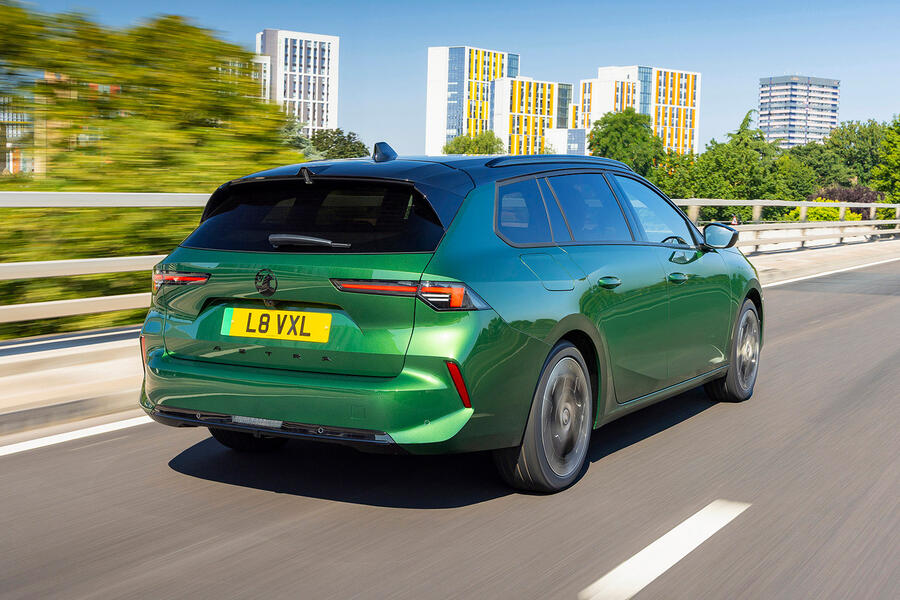
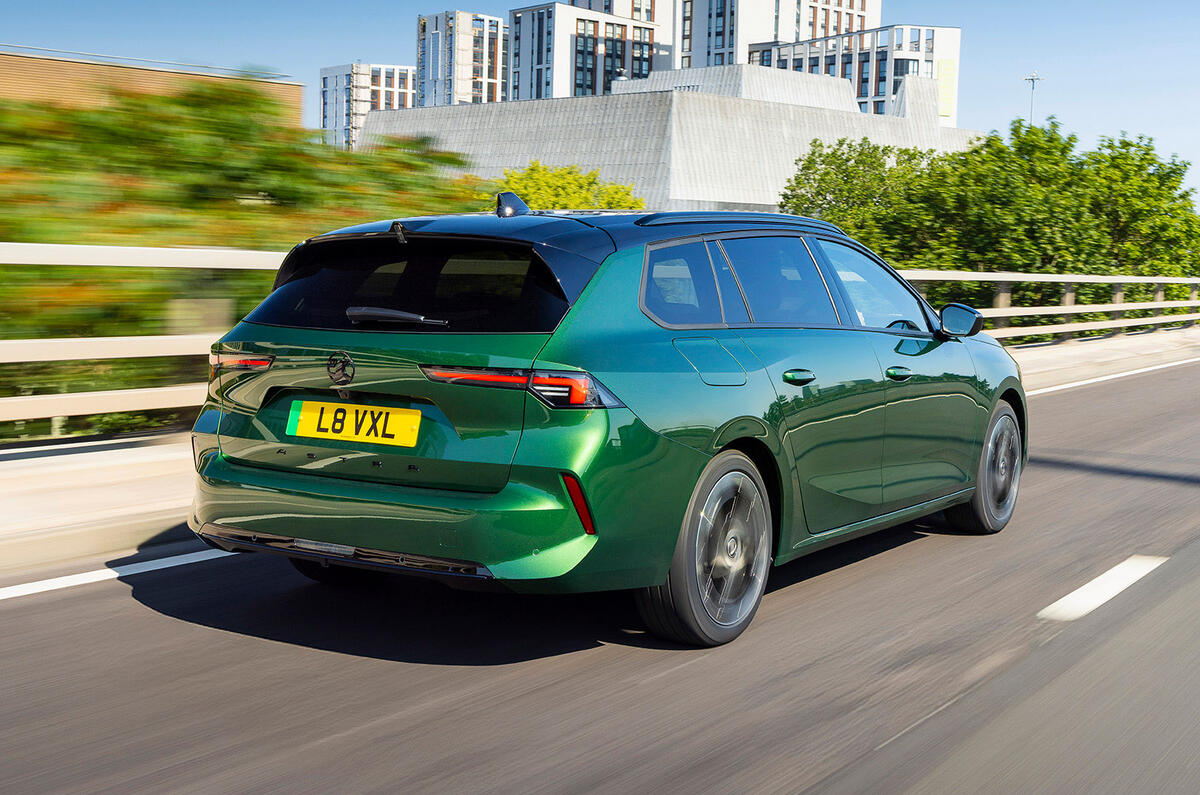
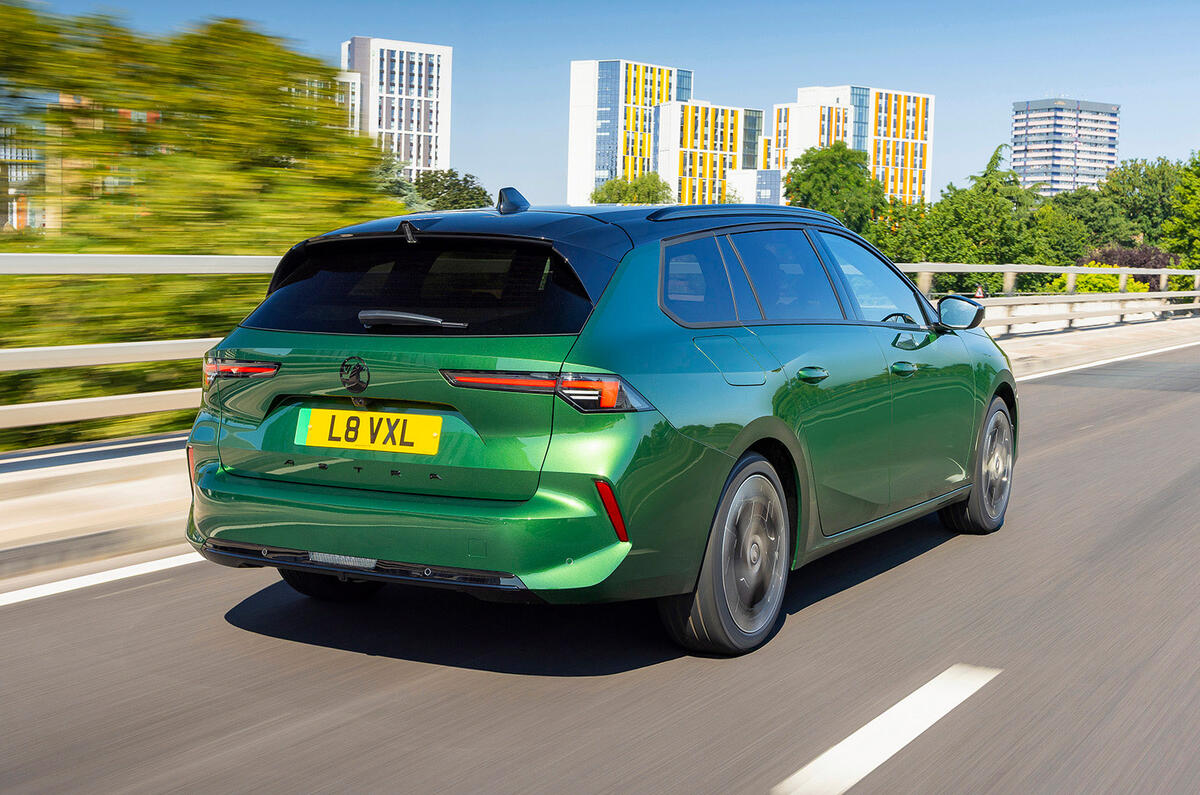
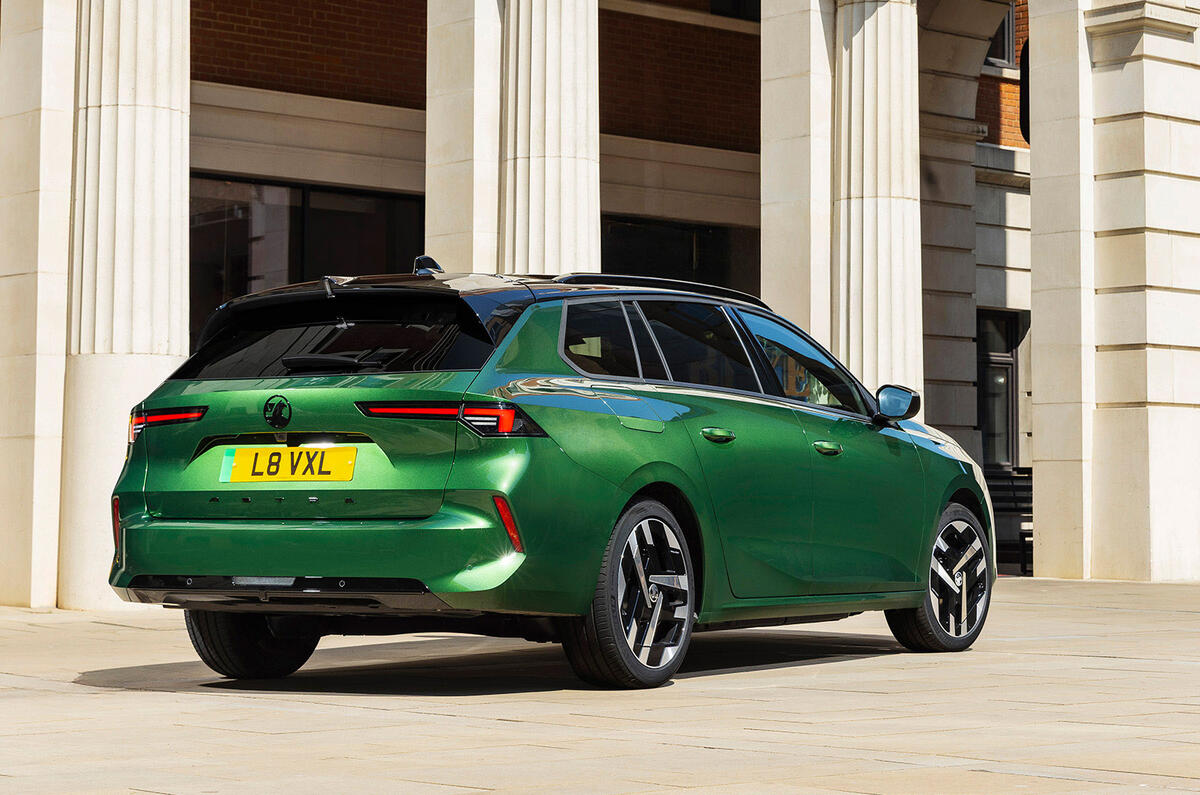
The Astra Electric is a 4.4m-long, mid-sized hatchback or 4.6m-long estate, just like the petrol and plug-in hybrid versions.

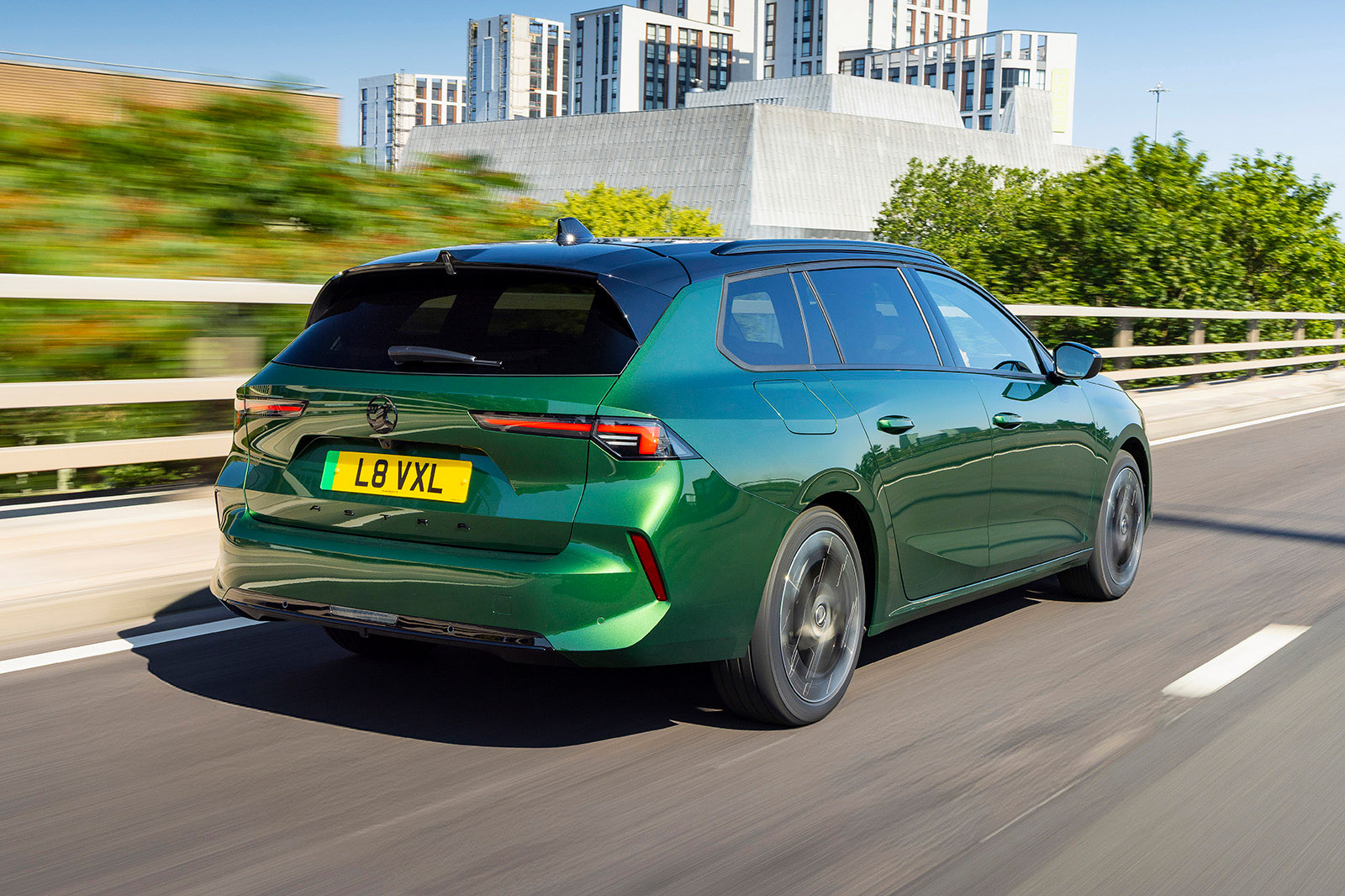
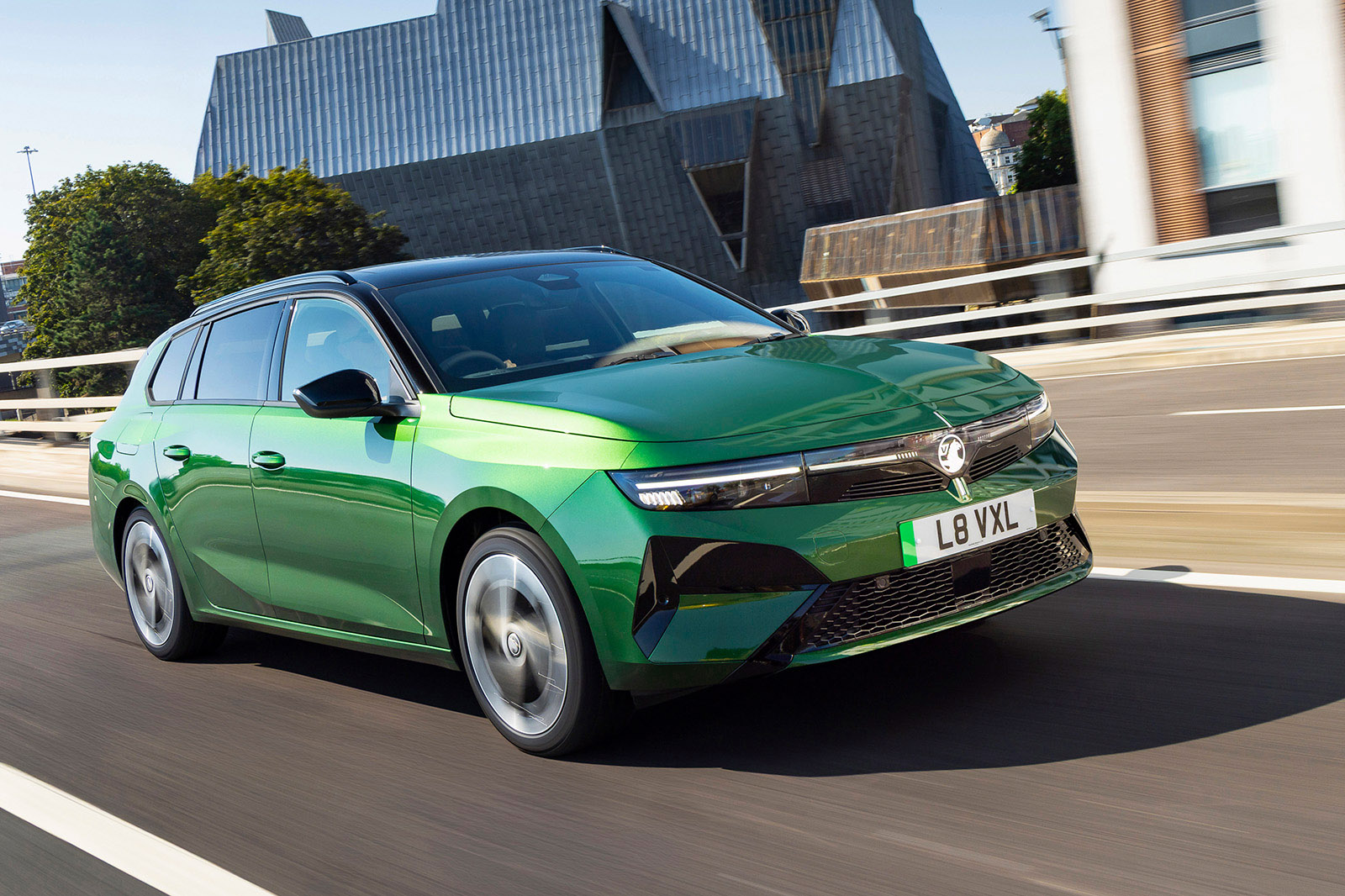
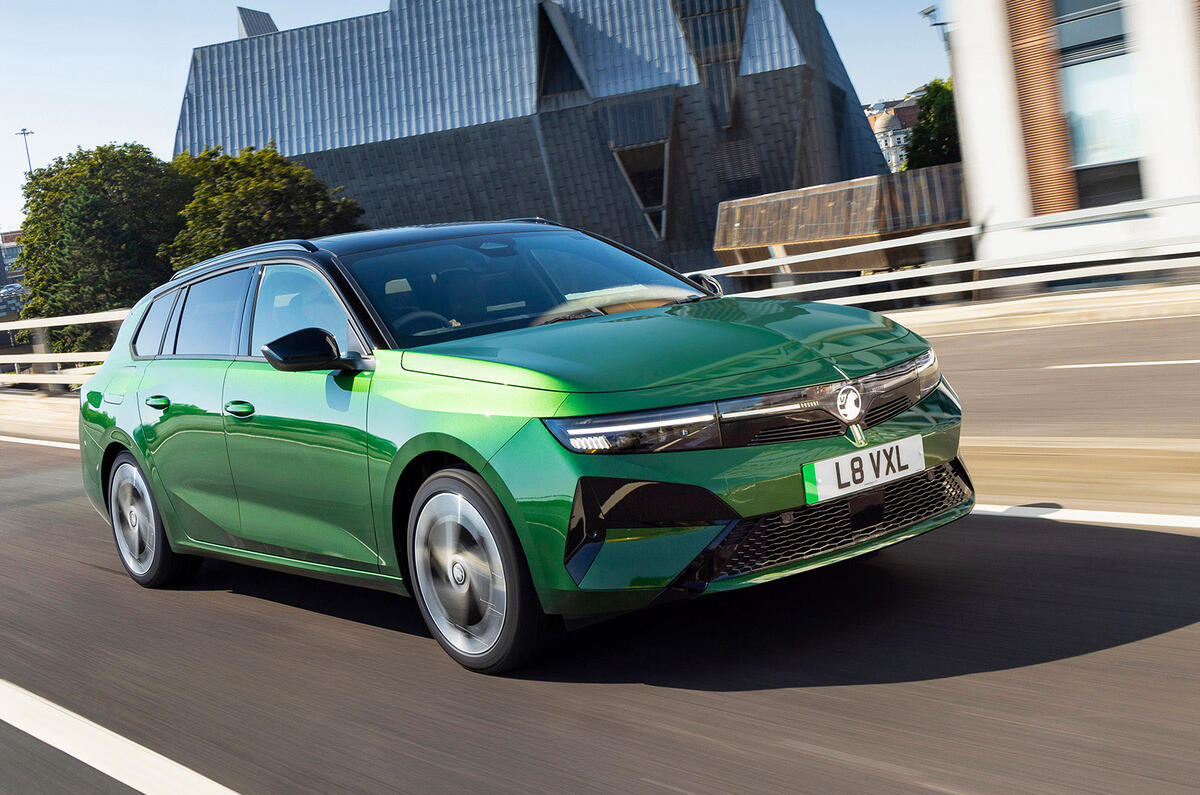
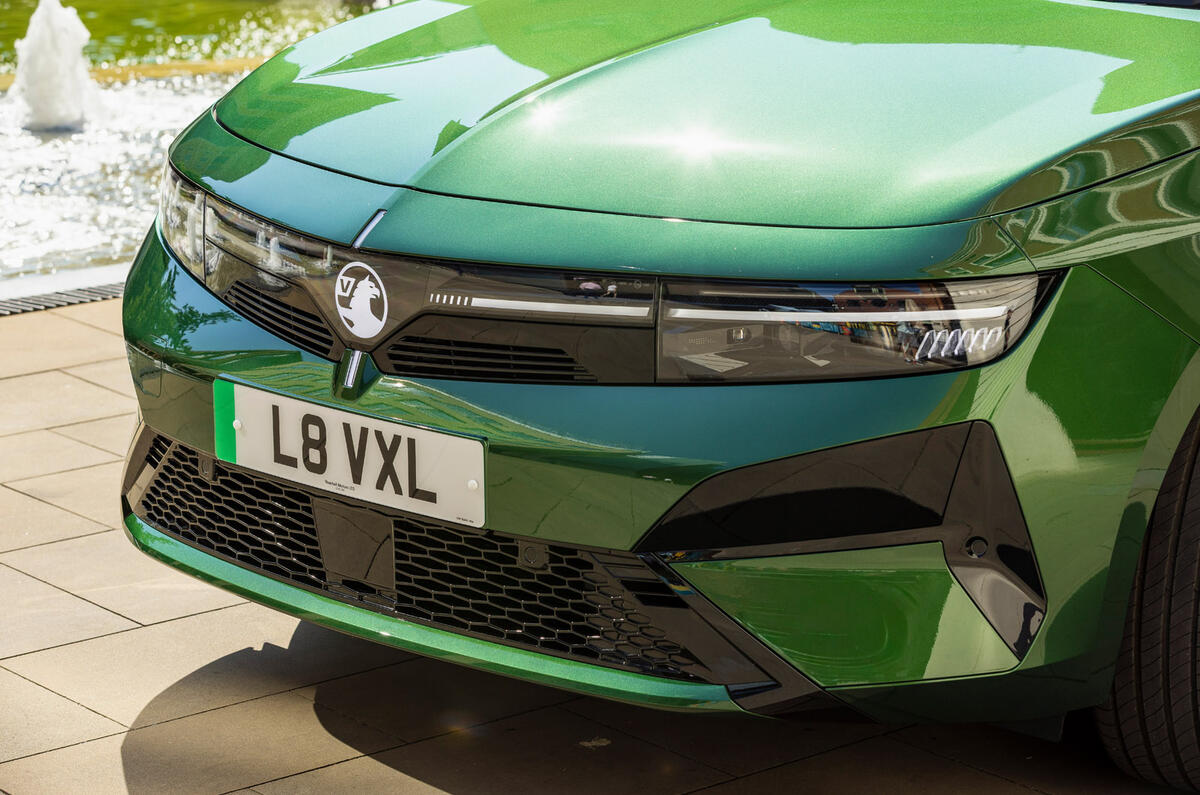
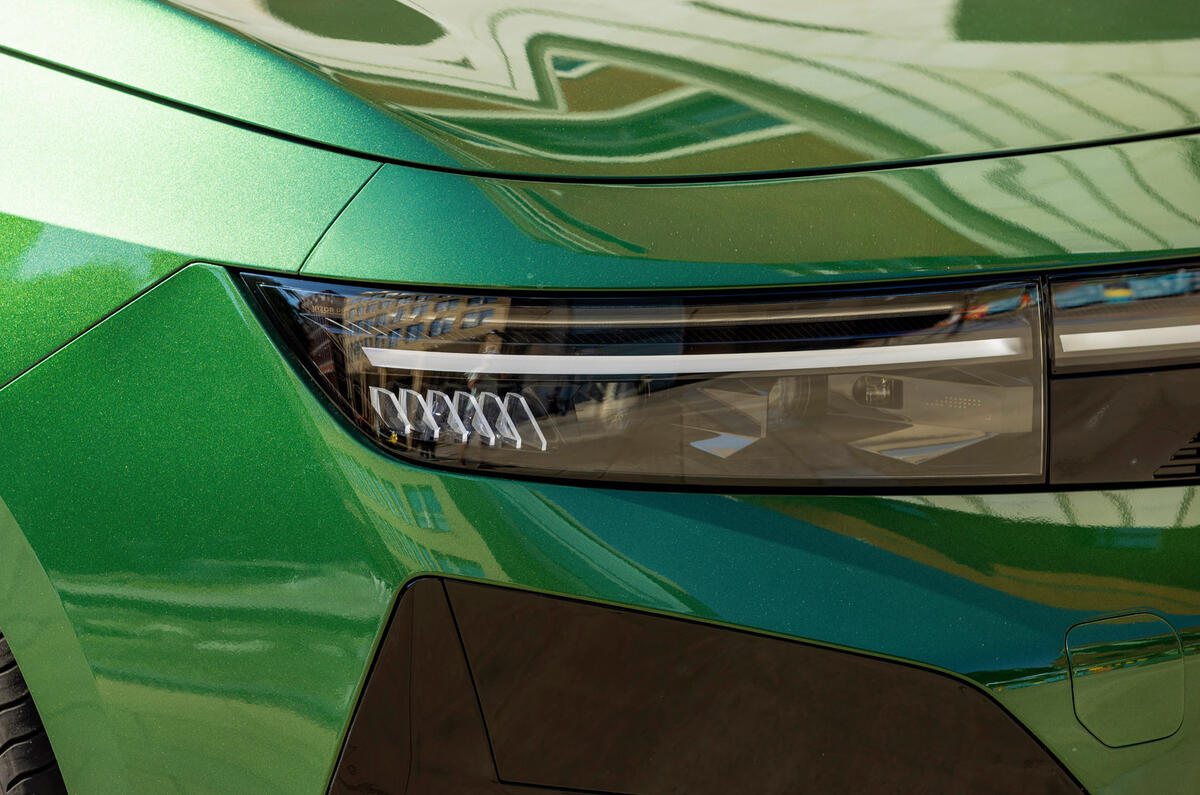
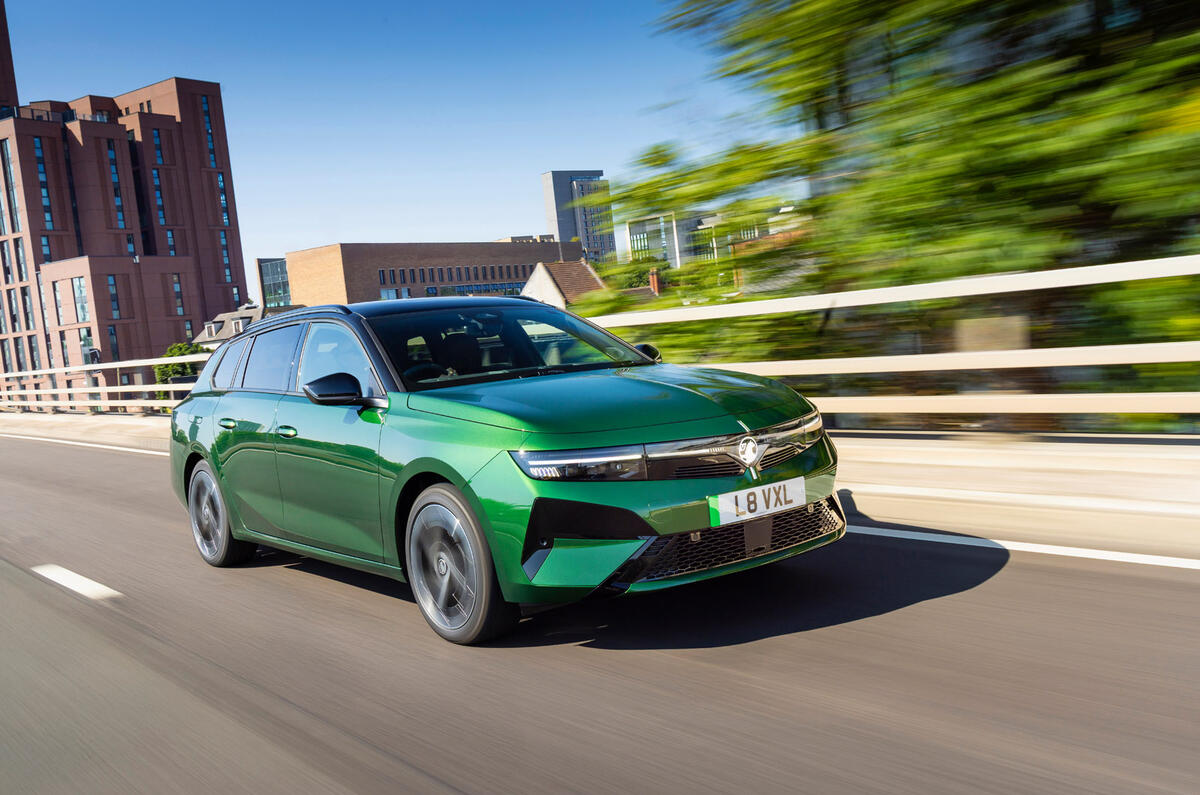
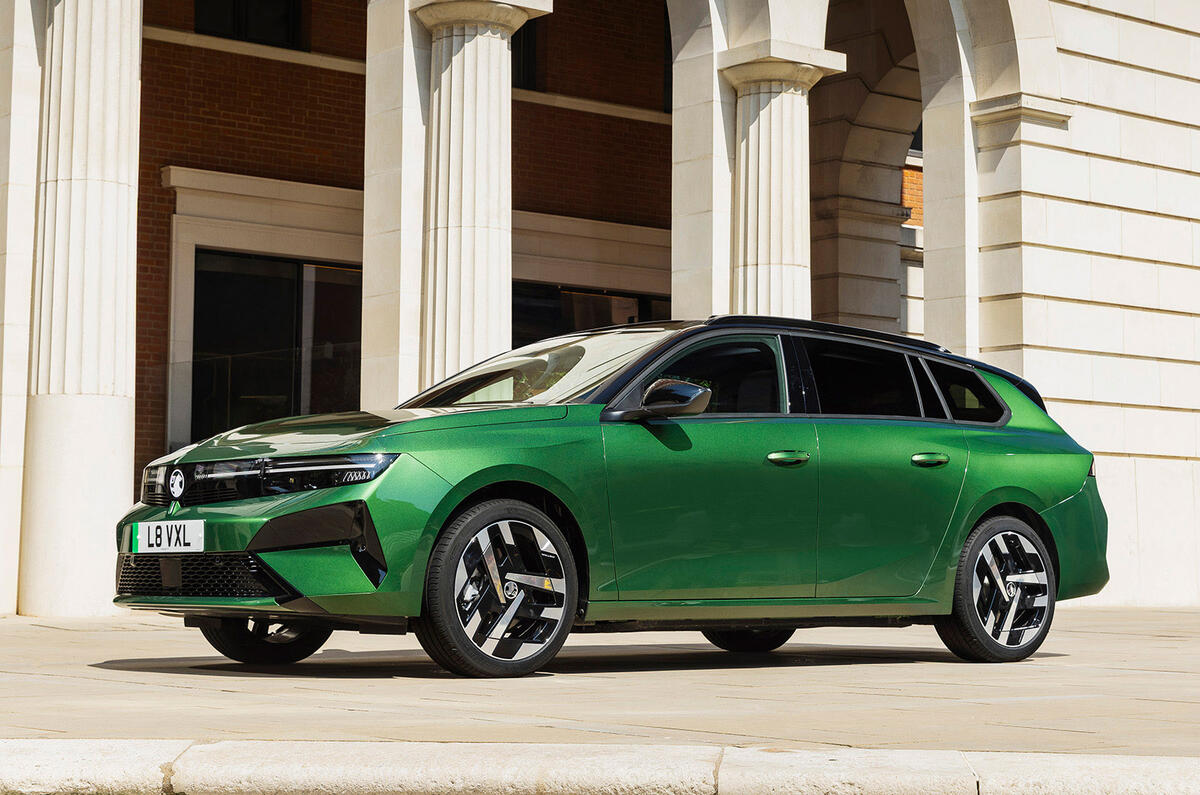
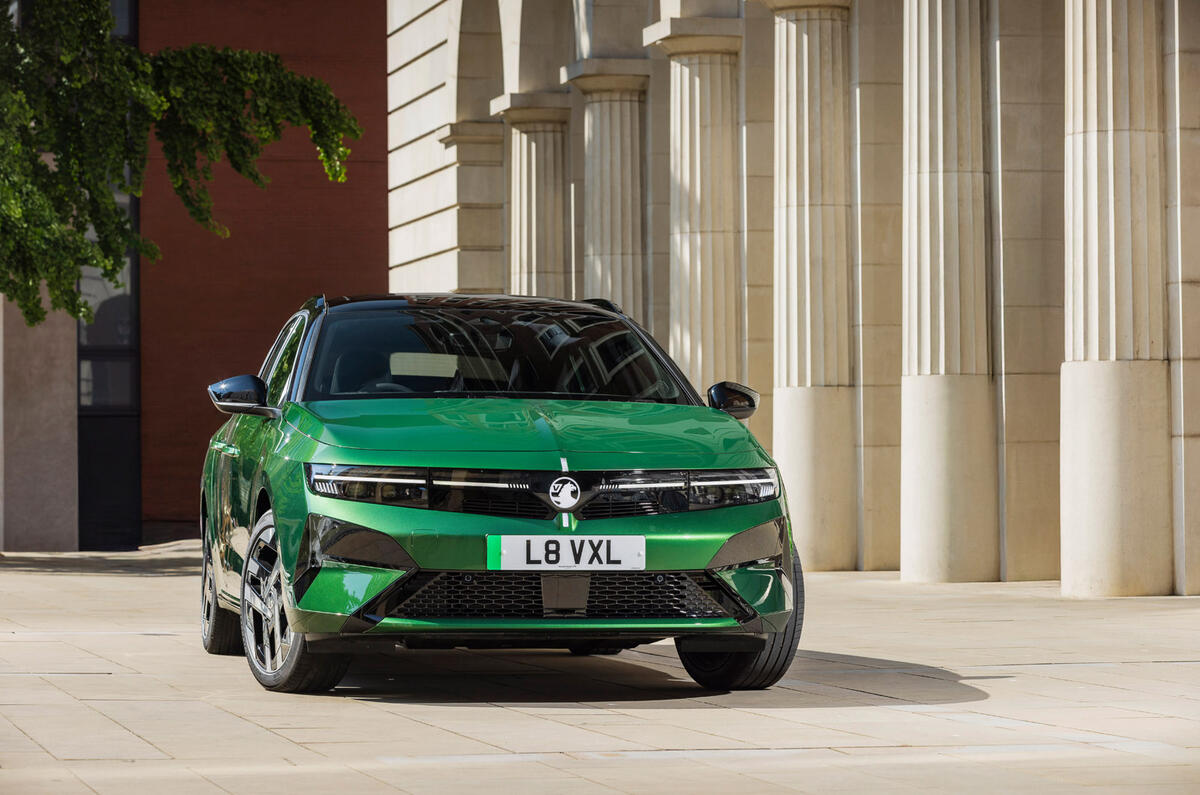
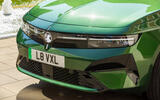
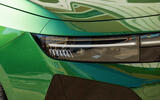
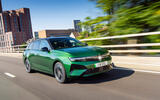
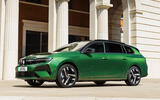
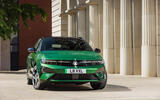
You will find little visually to distinguish this EV from its ICE brethren, aside from a modestly different Vizor front-end and bespoke, aerodynamically honed alloys.

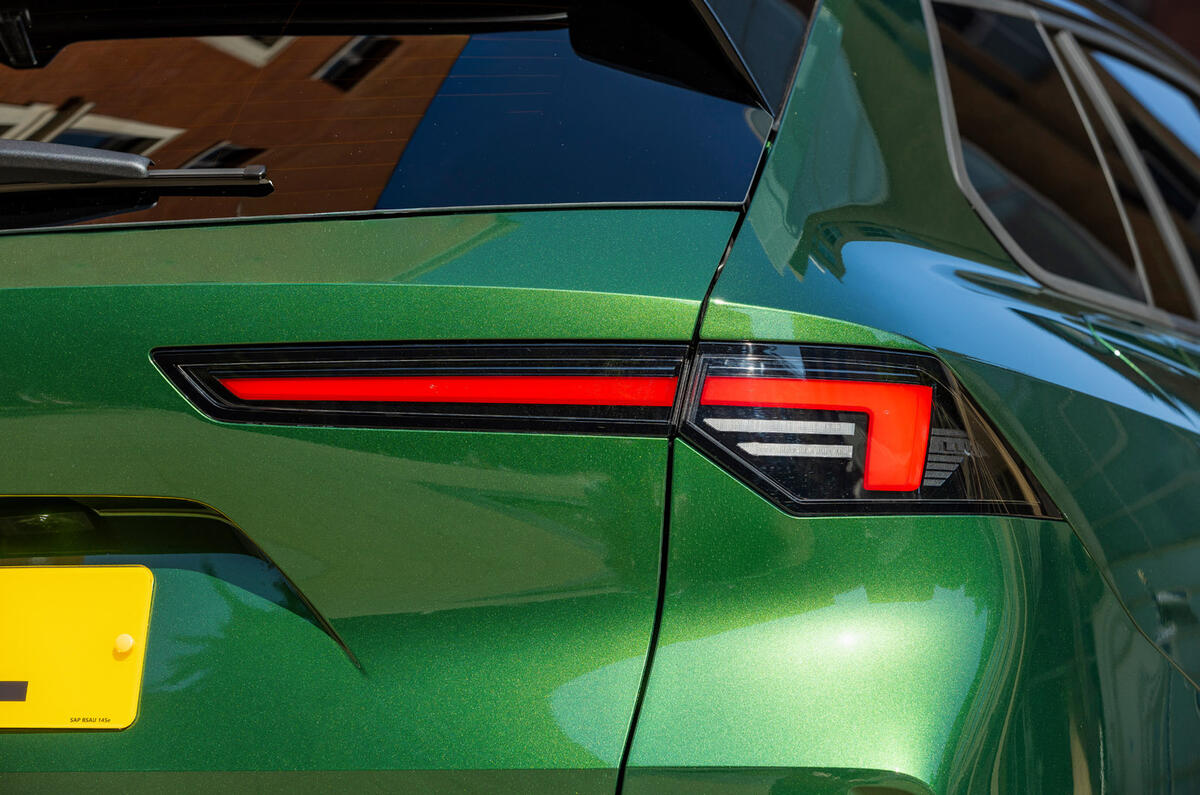
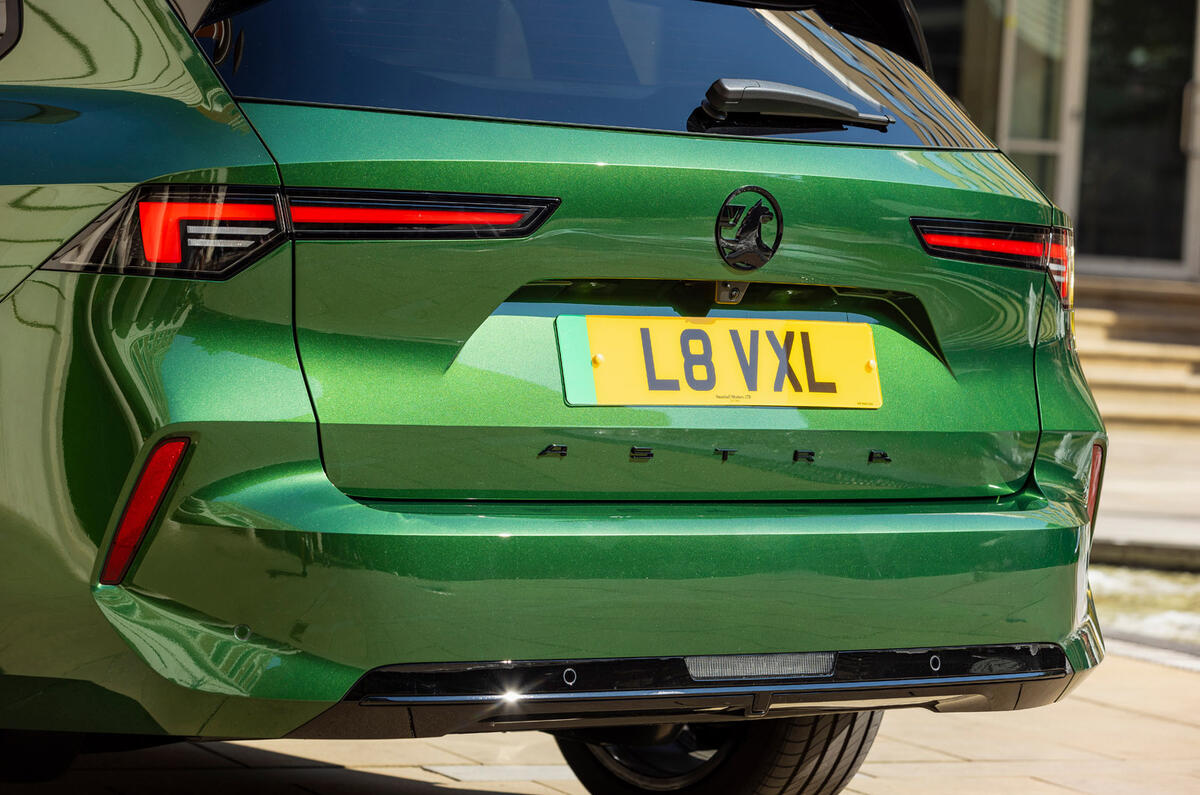
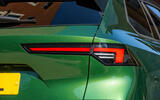
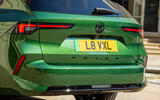
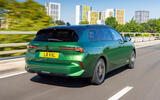
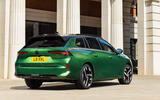
There are seven paint choices, with a contrasting black roof offered on most. The hatchback and estate have each gained a bespoke colour. The latter’s Clover Green is particularly nice.

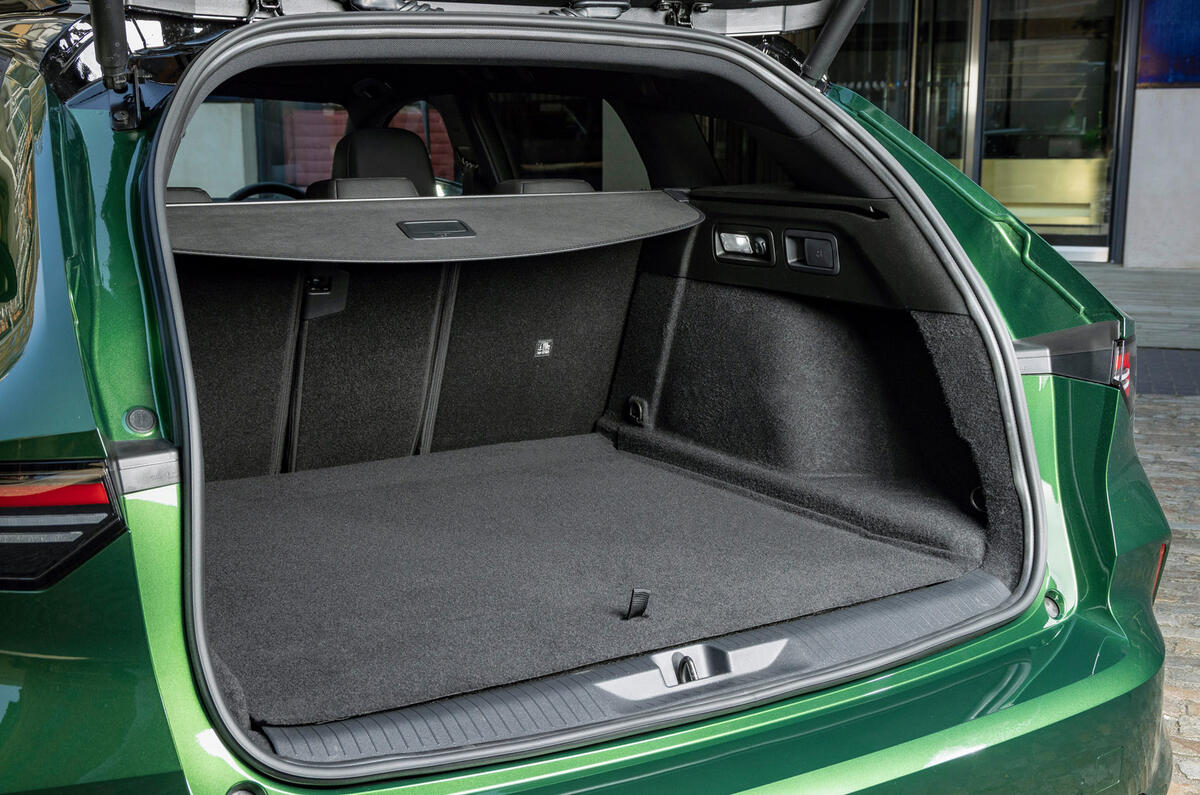
They’re essentially identical inside, too, although the underfloor batteries mean the 516-litre estate boot is smaller than that in the hybrid or petrol Astra (although bigger than the PHEV's).

The H-shaped battery pack carried under the seats and along the transmission tunnel; and while the associated high-voltage gubbins steal a little space under the boot floor, it adds torsional rigidity to the Astra's platform (this latest battery pack is also marginally lighter than the one that powered the original Vauxhall Corsa Electric).

For this mid-life update, the changes to the Astra Electric go beyond a facelift. The 156bhp motor draws power from a new 56kWh usable battery (4kWh bigger than before), a heat pump is fitted as standard and there’s both a new battery preconditioning function and variable regenerative braking settings.

It means range for the EV is now 274 miles in the estate or 280 in the hatchback – up 22 miles in each case. Vehicle-to-load functionality has been added, too, although charging speed remains limited to 100kW.

The Sports Tourer weighs 49kg more than the hatchback, is about 270mm longer and is just under 60mm longer in the wheelbase. It shares the standing-start performance claimed for the hatchback. 
 
Early in 2023, Vauxhall said it would like to be perceived as sitting at the upper end of non-premium brands. Given that you might perceive everyone from Skoda to Hyundai as one of those these days, it's debatable if the Astra quite delivers on this aspiration. But the exterior is sleek and smart, while the interior is bold.

The bonnet looks a bit odd when you look down it from inside the windscreen. Instead of beefing up the wheel arches to add muscle, its prominent centre line is reminiscent of some curved-hood 1950s Americana.

INTERIOR

6

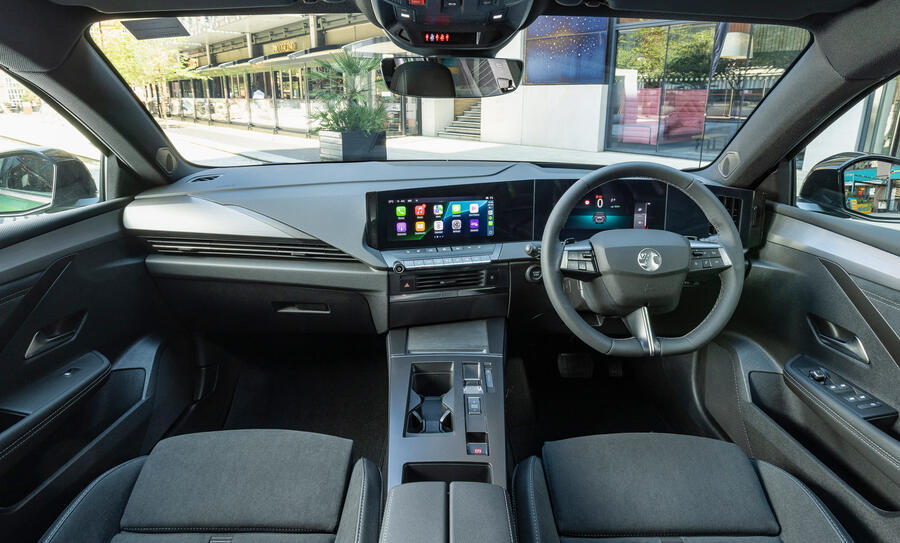
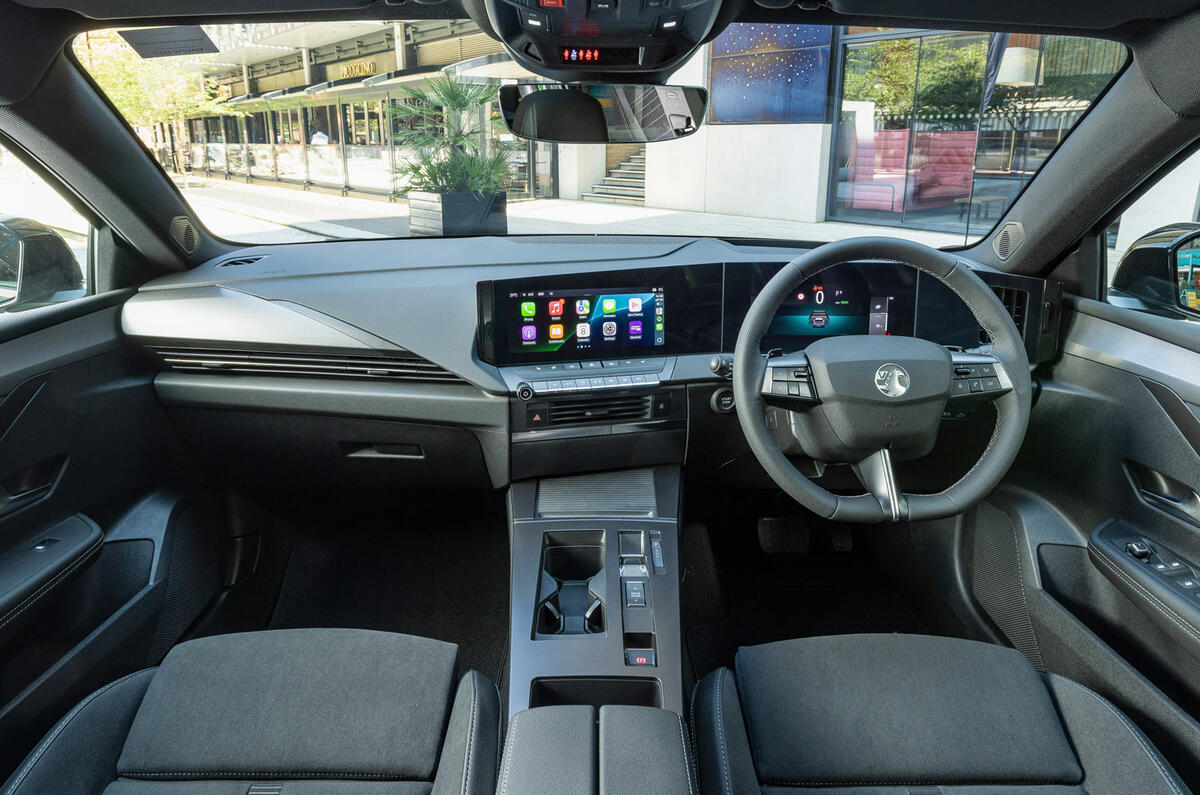
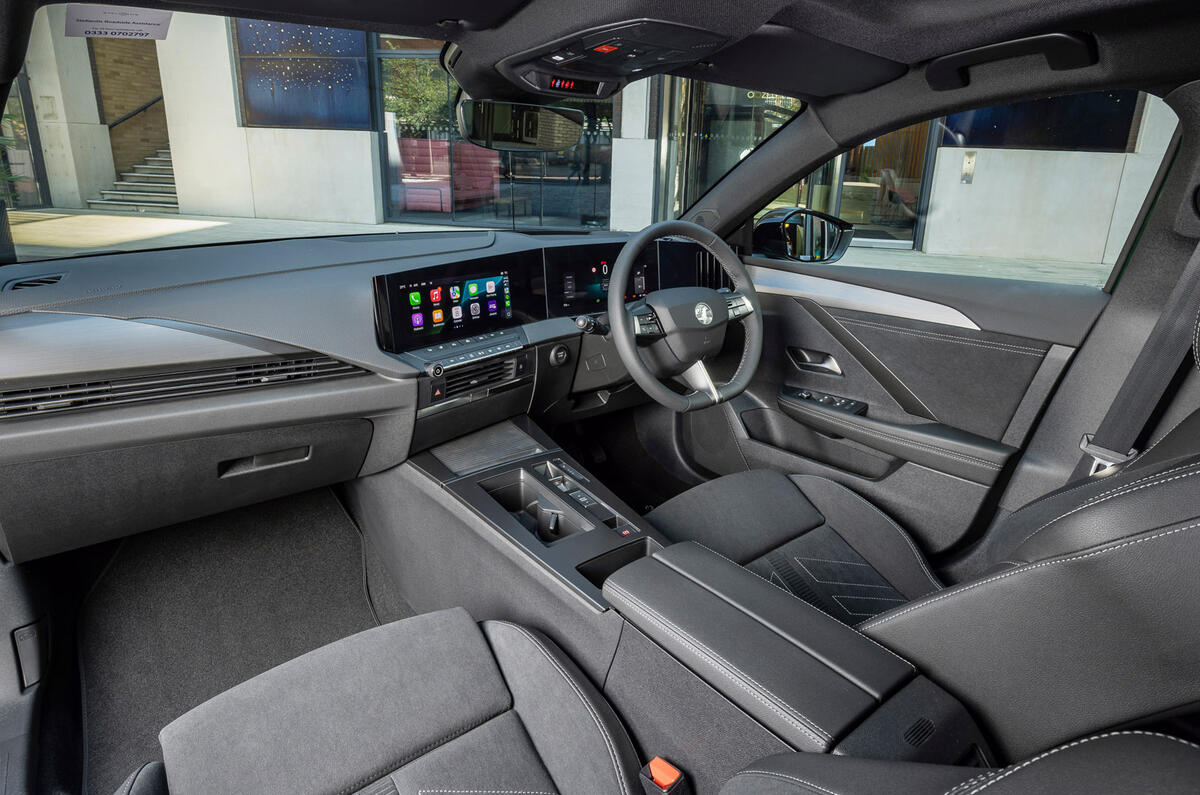
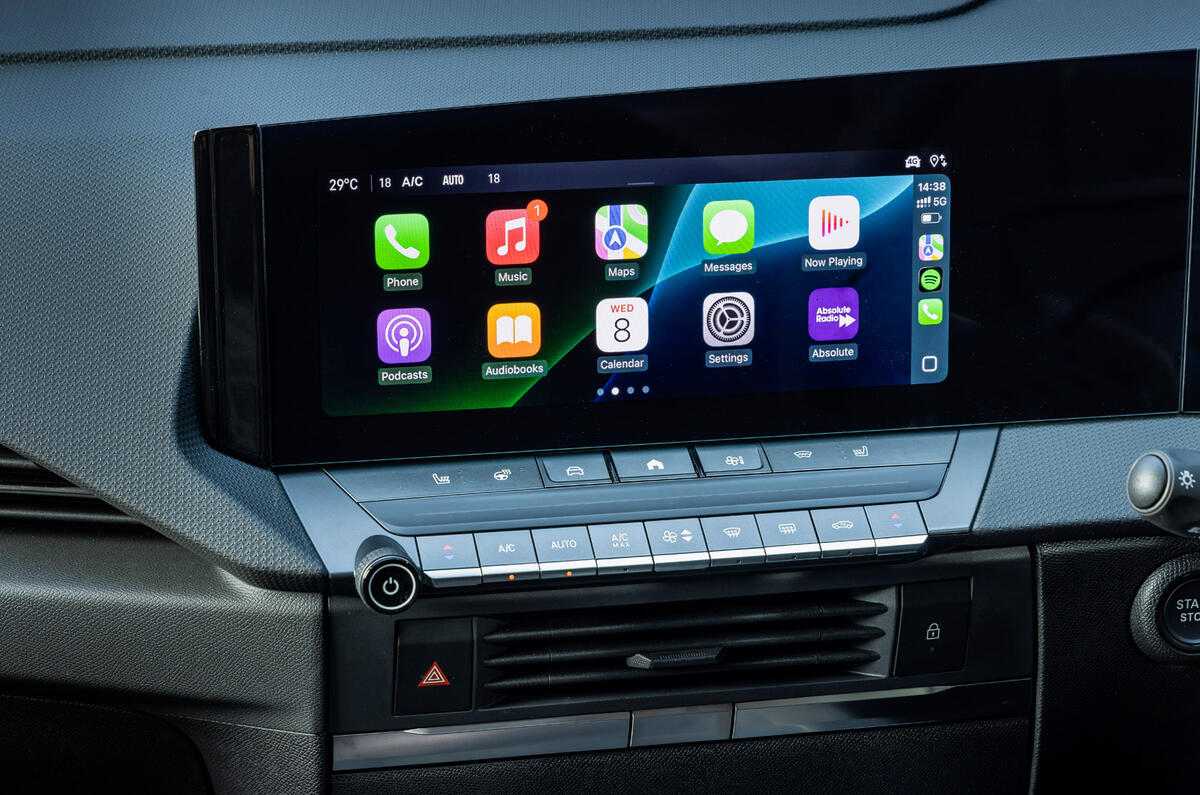
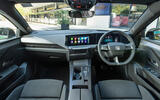
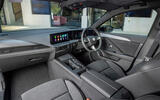
Until recently, Vauxhall continued that central exterior feature line into the interior, but not on this car. The Astra's dashboard is broad and boldly accented horizontally, with two clear 10in displays (one for instruments, one an infotainment touchscreen) and soft-touch materials above but hard materials in the lower cabin.

Little has changed with this mid-life facelift, although the centre console now has a scratch-resistant matt finish to reduce reflections and better disguise grubby fingerprints.

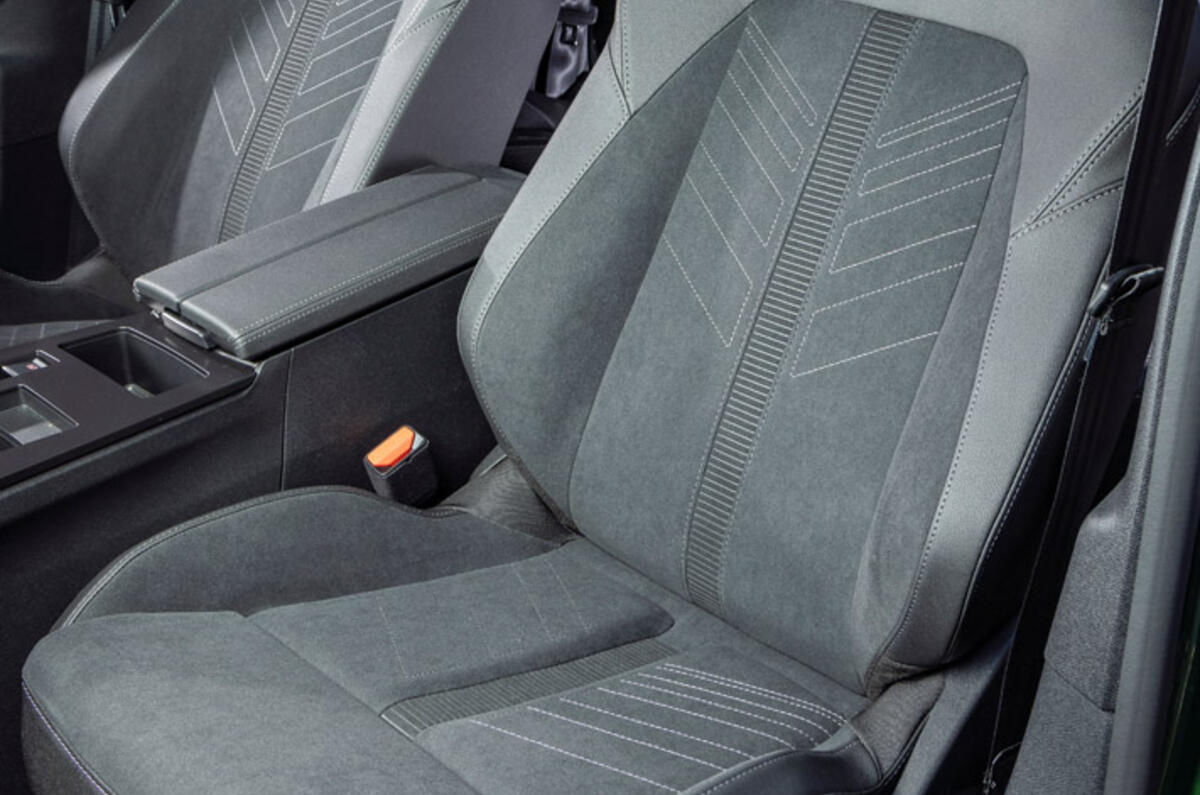
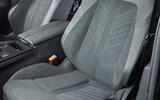
The generously sized and firmly comfortable front seats are some of the best in the class and the driving position is good.

Ergonomically it’s mixed. The temperature controls are buttons, as they should be, but changing the air distribution – notably disabling a centre vent that seems keen to blow air on somebody, anybody, and whose breeze can’t be stopped in isolation – is on the touchscreen, as it shouldn’t be.

One of our criticisms of the 2023 original was the small button to control the regenerative braking; happily Vauxhall listened to our request and has now fitted paddles behind the steering wheel.

In the second row, space is tighter - and, a little annoyingly, the extra second-row space promised by the Sports Tourer doesn’t exactly transform it for passenger comfort.

Astras used to be among the roomier cars of their kind, but now - after Vauxhall decided to prioritise design appeal and leave customers who want a roomy second row to seek out an SUV, basically - they are no longer.

The second-row seats are still only suitable for smaller-of-stature adults and kids, despite the dose of extra leg room, and if you do need to carry adults back there regularly, you will risk shouts of complaint. 

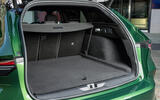
The estate's boot, however, may well be worth the price of admission. It’s 516 litres by volume up to the window line (the EV loses the underfloor storage of the 597-litre ICE car), with a lower loading lip than the hatchback, a wider load bay and 40:20:40-split folding back seats as standard.

ENGINES & PERFORMANCE

7

The Astra Electric is a calm if slightly unremarkable car to drive. Step-off is relaxed, rather than insisting on giving you a notable nudge in the back, so it eases away pleasantly.

This isn't one of the most powerful EVs available for the money - and, while most of the time performance is perfectly adequate, you may want more urge when departing a roundabout onto a dual carriageway, even if you've chosen the sportiest driving mode. 

There’s 199lb ft of torque (although you only get full access to it in Sport mode) but, as the official 0-62mph time of 9.5sec suggests, this isn’t an EV honed for rapid acceleration. Still, it’s smooth, responsive and agreeably pleasant.


RIDE & HANDLING

7

The Astra Electric's extra-rigid chassis makes for an impressively settled, fairly quiet ride, with quite crisp handling response. 

The steering is pleasantly smooth and, even on the longer-wheelbase estate, has a way of making the car handle precisely and with assuredness.

This isn't one of the EV segment's more exciting cars to drive, and it is a bit short on dynamic character; but if you want an affordable EV that's more supple and refined than many and that handles in the same straightforward, fuss-free style that it performs, you will like what you find.

The steering lacks a touch of feel, even compared with the Astra PHEV, and there’s not that much in the way of response or excitement here, but it’s light and direct, making the car easy to position on the road. 

There's certainly none of the sense of dynamic compromise here that you will find if you compare an ICE Corsa with its EV sibling. The Astra Electric's body control is just as good as most other derivatives, it steers almost as well and its higher-speed ride is reasonably well-isolated and settled.

The fact that the EV carries a weight penalty of only 68kg compared with the Astra PHEV may well help to explain why.

MPG & RUNNING COSTS

8
Vauxhall Astra Sports Tourer electric review 2026 039

The Astra Electric gets plenty of usable range from a relatively modest battery pack. The hatchback is rated for a WLTP combined range of 280 miles, the estate only six miles less – 22 more than before the facelift.

Despite offering more range and revamped styling, Vauxhall has actually reduced the starting price for this facelift, and notably it doesn't charge a premium for the extra space of the estate body.

The line-up starts with the budget-conscious Design trim level, which still comes with a full suite of ADAS, a 10in touchscreen system with sat-nav and wireless smartphone mirroring, climate control and 18in alloy wheels.

If you want Vauxhall's excellent AGR-approved, adjustable front seats, you will need GS trim; and for its equally impressive 'Intellilux 2.0' matrix LED headlights, a powered tailgate and a panoramic sunroof, you will need Ultimate trim.

VERDICT

7

The Astra Electric looks stylish, ride and handles creditably, is well-equipped and has an efficient, easy-to-operate powertrain that gets respectable daily range out of a fairly lightweight, modestly sized package.

Like its ICE rangemates, it's not an Astra quite like we've come to know them in recent years. Sacrificed for the sake of those good looks, the car's practicality has taken something of a backwards step since the last General Motors-engineered generation of the car, and even in Sports Touring form it still only really has a second row fit for growing kids.

The challenge for this Astra Electric is the same reason it’s a bit underappreciated: there are rival EVs that are similarly priced but offer more range and plusher kit.

That said, electric estates are still somewhat rare, which adds to the appeal of the Sports Tourer version, especially given it’s no extra outlay.

On those grounds, the venerable Astra remains worthy of serious consideration.

Additional reporting by Matt Saunders

James Attwood

James Attwood, digital editor
Title: Associate editor

James is Autocar’s associate editor, and has more than 20 years of experience of working in automotive and motorsport journalism. He has been in his current role since September 2024, and helps lead Autocar's features and new sections, while regularly interviewing some of the biggest names in the industry. Oh, and he once helped make Volkswagen currywurst. Really.

Before first joining Autocar in 2017, James spent more than a decade in motorsport journalist, working on Autosport, autosport.com, F1 Racing and Motorsport News, covering everything from club rallying to top-level international events. He also spent 18 months running Move Electric, Haymarket's e-mobility title, where he developed knowledge of the e-bike and e-scooter markets. 

Matt Prior

Matt Prior
Title: Editor-at-large

Matt is Autocar’s lead features writer and presenter, is the main face of Autocar’s YouTube channel, presents the My Week In Cars podcast and has written his weekly column, Tester’s Notes, since 2013.

Matt is an automotive engineer who has been writing and talking about cars since 1997. He joined Autocar in 2005 as deputy road test editor, prior to which he was road test editor and world rally editor for Channel 4’s automotive website, 4Car. 

Into all things engineering and automotive from any era, Matt is as comfortable regularly contributing to sibling titles Move Electric and Classic & Sports Car as he is writing for Autocar. He has a racing licence, and some malfunctioning classic cars and motorbikes.