Currently reading: The V12 Aston Martin you can buy for the price of a Golf

Bag a 200mph, four-seat, James Bond-approved GT for two-thirds off the new price

Aston Martin’s ‘DB’ lineage of sporting GTs began in 1948 with the DB1, the first product under the ownership of David Brown.

By 2016 Aston was 12 years into production of the elegant Aston Martin DB9, but that car was starting to feel behind the times, and sales and profits were on the decline.

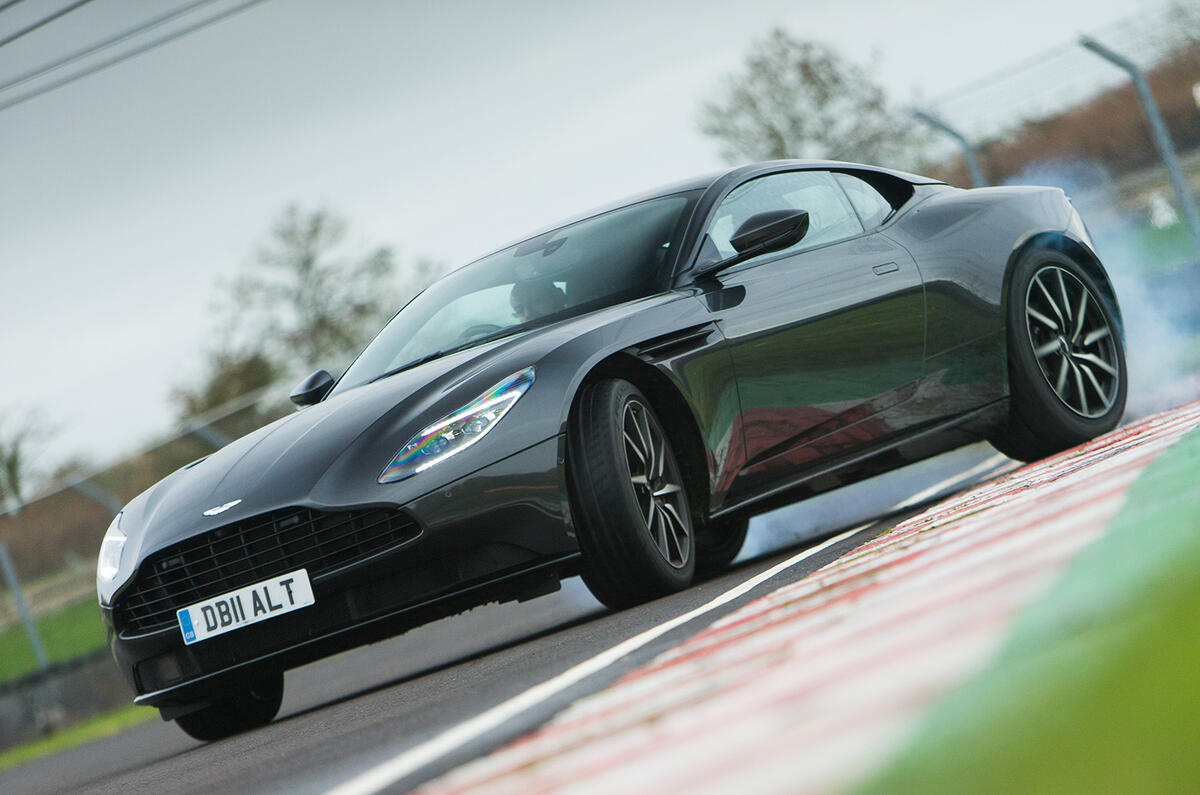
Then the Aston Martin DB11 arrived, with a new, more aggressive design by Marek Reichman, proven Mercedes tech and a snarling V12.

The first car of Aston’s revolutionary ‘Second Century’ plan also had a new aluminium platform, electric power steering, multi-link rear suspension and torque vectoring by braking.

We liked it – so much, in fact, that we named it a Game Changer at the 2017 Autocar Awards and one of our top five cars of the year.

Eight years later, dramatic depreciation means you can now pick up this era-defining GT for less than the price of a new Ford Mustang or Alpine A110 – in other words, a third of what it cost new.

At launch, the DB11 came exclusively with that 5.2-litre twin-turbo V12, with 600bhp and 516lb ft. Based on the unit used in the DB9, it is fundamentally an evolution of a design that goes back to the mid-1990s, but it’s a reliable lump and was modified so extensively that it feels bang up to date even now.

A year into production, a 503bhp Mercedes-AMG V8-powered DB11 joined the range. It not only weighed 115kg less than the V12 but, with 498lb ft, also had more torque per tonne. The V12 takes 3.9sec to reach 60mph, but the V8 needs only 0.1sec longer. And, if you’re interested, fuel economy climbs from 24.8mpg to 28.5mpg.

The V8 also addressed some criticisms levelled at the early cars, chiefly that the suspension didn’t firm up enough for twisty roads and the steering felt too artificially assisted. The modifications to rectify both issues boosted the DB11’s sporting credentials without sacrificing comfort. To tell the V12 and V8 apart, look at the bonnet: the V12 has four vents, the V8 two.

Advertisement

Read our review

Car review

Aston kicks off its ‘second century plan’ with an all-new turbo V12 grand tourer

Back to top

In 2018, Aston extended the V8 upgrades to the V12; it also bestowed upon it an extra 30bhp, thanks to a less restrictive exhaust, and the 0-60mph time dropped to 3.7sec. In 2021, the V8 received a boost to 528bhp and 513lb ft. Both engines sound excellent, the V12 being slightly more special – and particularly so in the drop-top Volante. Maybe the DB9’s atmospheric powerplant has the aural edge, but these newer cars are more drivable and well behaved.

The outdated interior was always a weak point of the DB11. In 2016 it was just about acceptable, but even then it didn’t use Mercedes’ latest infotainment system. By the end of production the tech was very dated, being slow, small and lacking phone connectivity. Happily, the rest of the cabin is much better, with solid-feeling build quality and extensive use of leather, wood and Alcantara, although the Mercedes column stalks do feel a little plasticky.

Now is a great time to buy: there’s a plethora of low-mileage, as-new cars with few owners and full service histories. Put your money into a high-spec, classic colour combo and it should be a relatively sensible extravagance, but be aware that even the best examples are likely to carry on depreciating for now, not least because the Aston Martin DB12 that took over in 2023 is improved in most areas.

What to look out for

Engine and gearbox: The Mercedes-Benz V8, Ford-built V12 and eight-speed ZF automatic gearbox are all familiar units and come with a proven reliability record. But even so, look for cars with a minimum of one service per year, because main dealers are more likely to fix a fault for free if the car is out of warranty but has a full Aston Martin service history.

Interior: Mostly very well built, but some owners have reported the dashboard leather shrinking if left in the sun. Aftermarket Apple CarPlay/Android Auto conversions are a boon.

Back to top

Electrics: Steering column motors, haptic sensors in the dashboard and button control panels have all been known to fail, but most have been replaced by Aston for free, even if the car is out of warranty.

Body: Boot struts are known to break, as is the ‘aeroblade’ spoiler. Some owners have had damaged roof strakes, which can begin to leak. Most will have been fixed, though.

Wheels: Look for cars with Michelin tyres instead of the standard-fit Bridgestones; they suit the nature of the car much better.

Also worth knowing

The V8/V12 mix in the classifieds is roughly half and half. Only one in five are convertible Volantes, and all of those are V8s, specifically the higher-tuned unit with 513lb ft to compensate for the open-top car’s extra 110kg.

The 11 was the first DB model without a manual gearbox (and the first with an electronic handbrake), and as such you only need to choose a car based on the engine, roof and any options. The AMR upgrade on early V12s is desirable. The AMR engine tweaks can be retrofitted for a 30bhp boost, but you won’t get any of the suspension and steering changes.

An owner's view

Jeremy Wayne: "I’ve put almost 20,000 miles on my V12 in less than two years. One of the window motors broke, and it needed new spark plugs due to a misfire, but nothing else has gone wrong with it. The Aston is my daily driver, and until now I’ve averaged 15.5mpg in it. It always gets positive attention, especially when I drop the kids off at school in the snow. My only other car is a Lotus Emira, for fun roads."

Back to top

"I love the sound, the look, the smell and the leather. The in-car tech isn’t great, but the small integrated infotainment screen stops it from looking dated. Interior quality is fantastic: the shift paddles are masterpieces – perfectly weighted and their metal click is sublime and the headliner is a thing of beauty. It’s a special place to be, and people are always in awe when they see inside. It’s probably my favourite of all the cars I’ve ever owned."

How much to spend

£55,000-£64,999: Mostly early V12s. A lot of car for the money at this price point, and the tech isn’t too disappointing compared with contemporaries.

£65,000-£79,999: Plenty of high-spec, low-mile V8 and V12 coupés with few owners. Like-for-like V8s and V12s are worth roughly the same money.

£80,000-£99,999: Later V8s and V12s with their respective updates, as well as a plethora of convertibles.

£100,000 and above: Last-of-the-line, nearly new examples. A DB12 requires another £50,000 jump.

Join our WhatsApp community and be the first to read about the latest news and reviews wowing the car world. Our community is the best, easiest and most direct place to tap into the minds of Autocar, and if you join you’ll also be treated to unique WhatsApp content. You can leave at any time after joining - check our full privacy policy here.

Alex Wolstenholme

Alex Wolstenholme
Title: Editorial Assistant

Alex joined Haymarket, the publisher of Autocar, in 2023. A car fanatic, he loves to delve into the spec-sheet, especially when it concerns something obscure or quirky. He currently drives a 2007 Alpina D3 estate but is often seen in his mum's Ford Fiesta (much to her annoyance). 

In his current position, as an editorial assistant, Alex mainly assists in managing Autocar's presence on MSN, but also writes features for the magazine.

Join the debate

Comments
1
Add a comment…
Peter Cavellini 26 January 2026

If I only had the spare cash, yes, driving a car like this and others is special makes you feel good every time you drive it but I couldn't see myself keeping it for more than two maybe three years,still, every time I see one I smile.