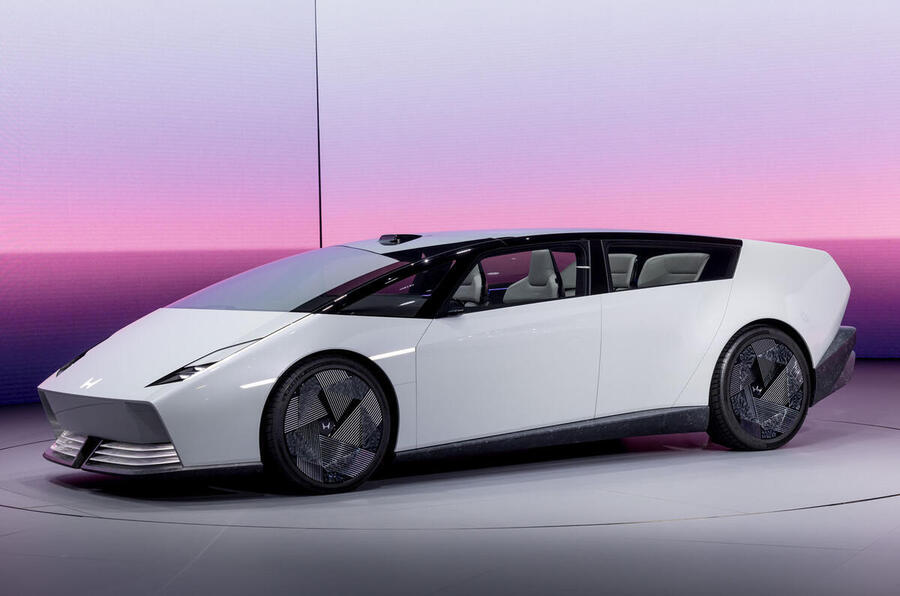

Honda will launch a wave of new hybrid models powered by what it calls “the world’s most efficient” combustion powertrain in response to lagging EV sales.
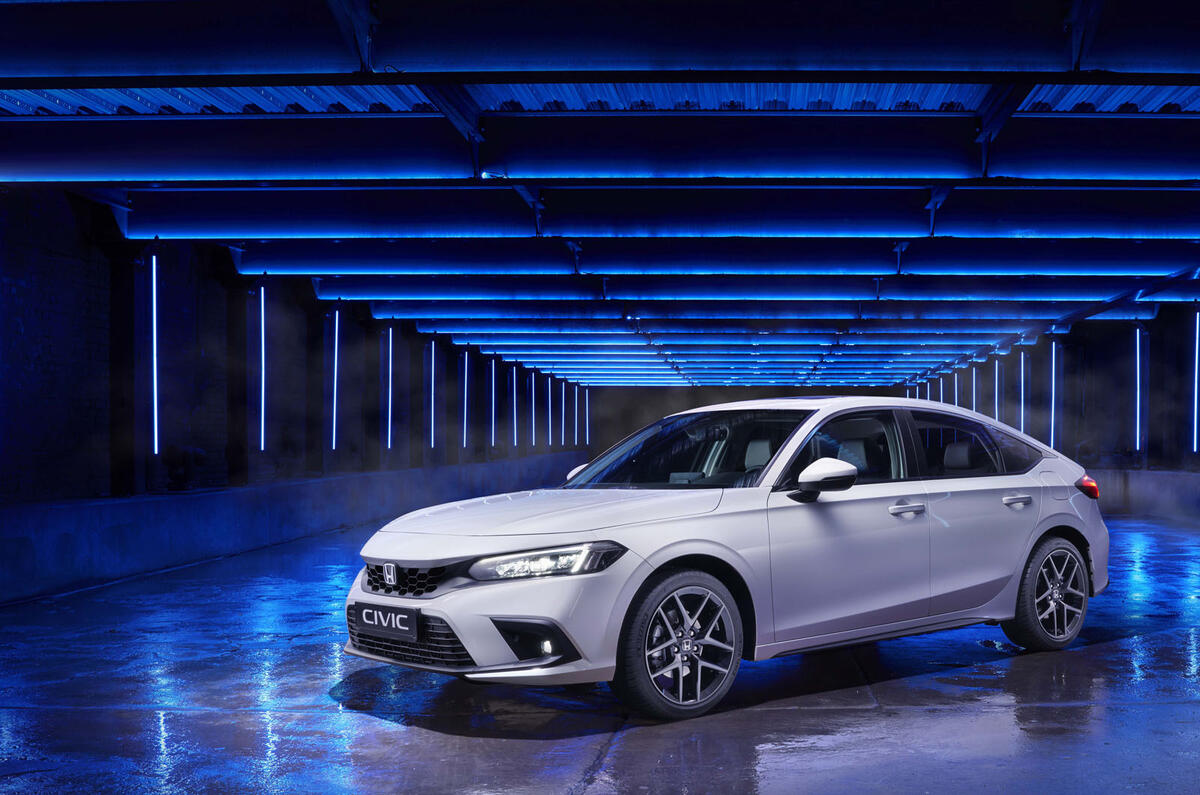
At least 13 new Hondas will arrive between 2027 and 2030 in a revised range of hybrids that could kick off with replacements for today’s Civic and Jazz.
The new electrified combustion cars will help the company to navigate the “transition period” until electric cars are suitable for mass-adoption. The move is a response to the speed of changeover to EVs, which has so far been slower than Honda expected.
Announcing the strategic rethink recently, Honda CEO Toshihiro Mibe noted that “demand for hybrid-electric vehicles is growing”, while “the expansion of the EV market has fallen behind the initial projection”.
Mibe suggested the relaxation of CO2 emissions and EV sales targets in the US were to blame for the slower than expected growth of EVs, because these were “the main premise for the widespread adoption of EVs”.
Honda has not said which cars will be first to receive the new powertrain – expected to use the same non-plug-in set-up as currently – but has confirmed that it will come in 1.5- and 2.0-litre forms. That matches the capacities of the engines in the current Jazz and Civic, which are both due substantial updates in the coming years.
The 1.5-litre version will provide peak torque over a rev range that’s 40% broader than currently to maximise efficiency without compromising grunt. Both variants will deliver the best thermal performance of any combustion engine on the market, claims Honda. Meanwhile, the hybrid system’s electric motor is being slimmed down to reduce weight and improve packaging.
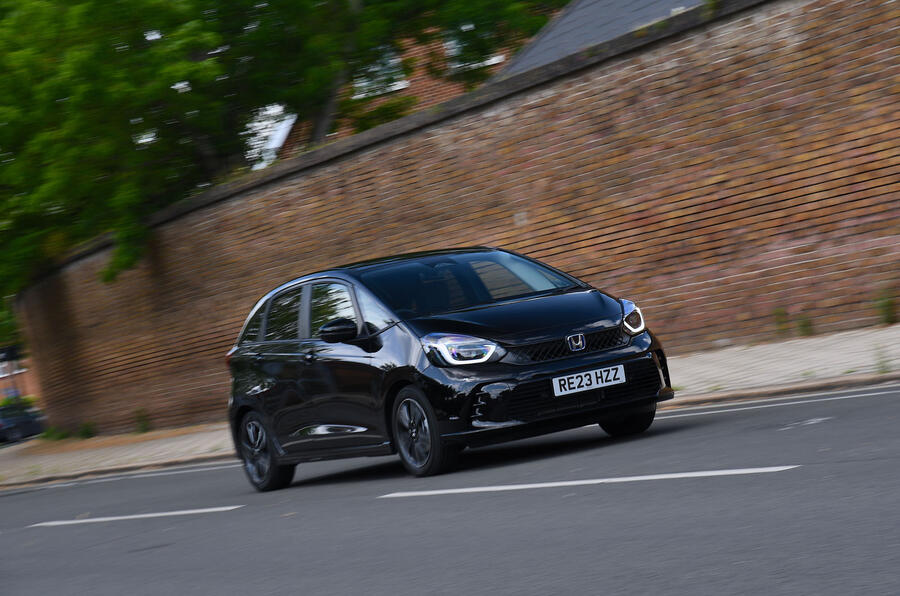
Combined, the new developments will yield a 10% improvement in fuel economy. For reference, the current 1.5-litre Jazz returns 62.8mpg while the 2.0-litre Civic manages 56.5mpg.
The arrival of the two powertrains will coincide with a new platform that promises improvements in driver engagement, comfort and safety. For medium-sized cars, it will be 90kg lighter than the current structure and the bodies applied to the frame will bring a further 10% saving in mass.
Cost-cutting is also a key directive in the development of Honda’s upcoming cars. Models based on the new platform will share at least 60% of their parts, such as the engine bay and rear floor. The new hybrid powertrains, meanwhile, will be 30% cheaper to produce than those launched in 2023.