Currently reading: Inside the new tests making ADAS systems you'll actually want to use

Driver assistance systems annoy motorists on real roads, but testing body Thatcham Research is on the case

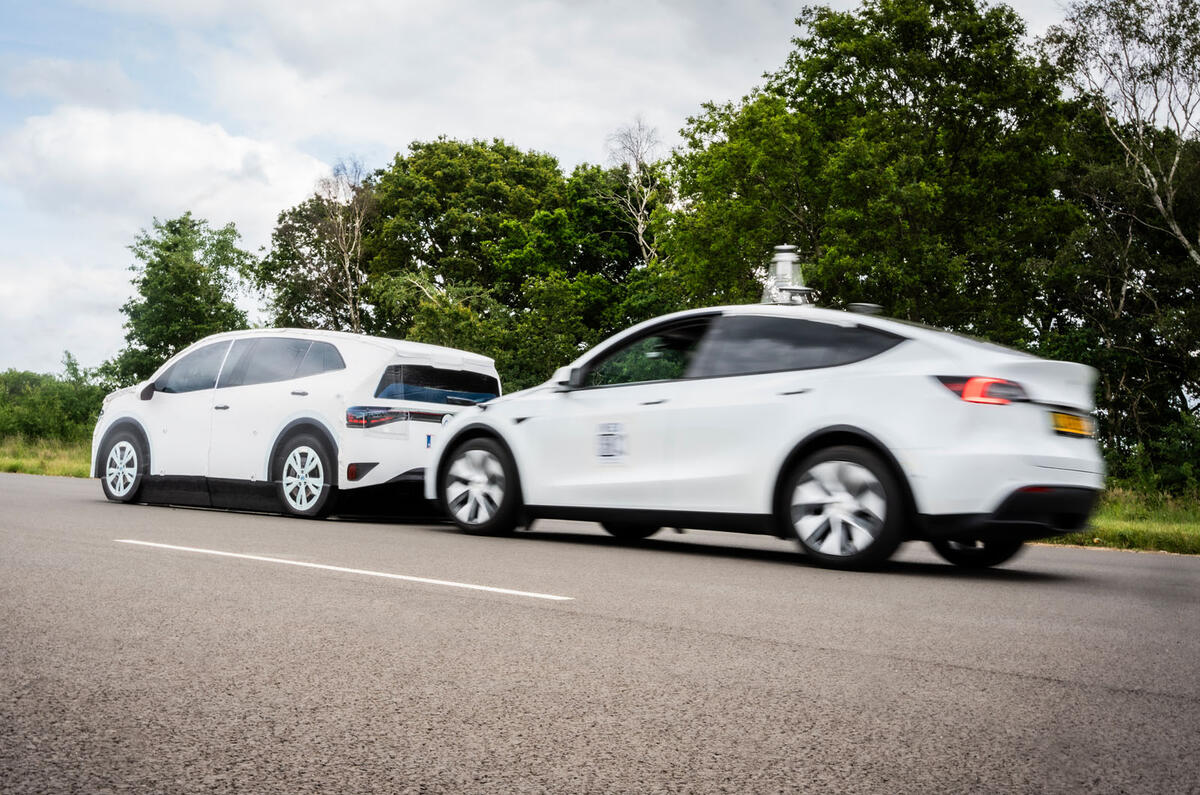
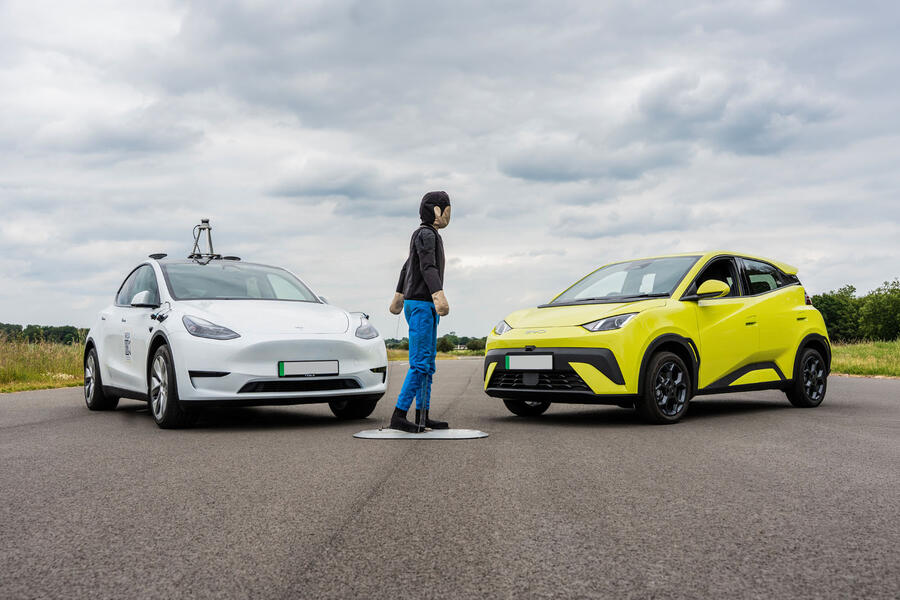
Just inches from the crash test mock-up of a compact SUV, the automatic emergency braking system (AEB) fitted to the Tesla Model Y that is travelling at 12kph towards it deploys, bringing the car to a dead stop.

The test is repeated but now at 6kph. This time the AEB doesn't deploy, forcing driver Yousif Al-Ani, principal ADAS engineer at Thatcham Research, to apply the brakes instead.

He now swaps the Tesla for a BYD Dolphin Surf. It approaches the target but this time at just 4kph. The AEB cuts in as expected, bringing the car to a stop, but then, two or three seconds later, it drives on. Al-Ani brakes but, as he points out, were this a live scenario - a busy roundabout, for example, where the driver of the BYD mistakenly believes the car in front has pulled away - they could be facing an angry driver and an expensive insurance claim. Had the car they'd rear-ended been a pedestrian instead, the consequences could be far more serious.

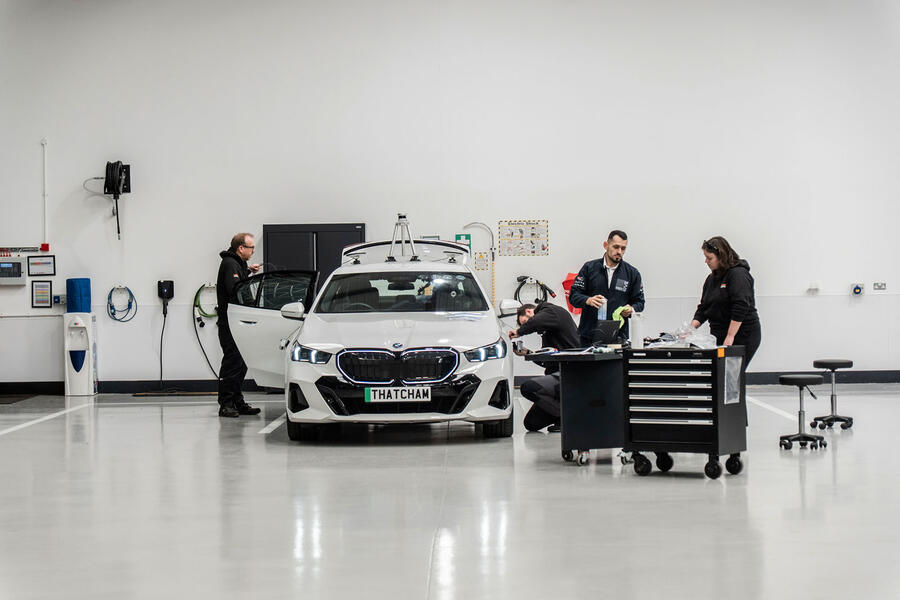
These events are a fraction of what Al-Ani and his team of engineers based at Retford Gamston airport - owned by Thatcham Research and where the organisation tests vehicle safety and technology - are discovering about AEB and the other features collectively known as advanced driver assistance systems (ADAS).

They know what each is designed to do to satisfy GSR2, the EU safety regulation that mandates them. What the members of Thatcham's event-based testing programme have been doing since it was launched in September last year is understanding how they work in the real world during repeated use, partly on a closed track but mainly on public roads, away from the EU's controlled test environments. The results have surprised them.
Thatcham ADAS testing

Four years since GSR2 came into force, many drivers are familiar with how annoying some ADAS features can be with their often indeterminate warning noises, aggressive lane departure corrections, inconsistent and erroneous speed sign recognition and hesitant autopilot behaviours.

The Kia Sportage Hybrid that I drove to Gamston applied moderately aggressive steering corrections and sounded frequent alerts in response to speed limit breaches and changes (thankfully, different sounds for each). Meanwhile, in a review of the Leapmotor B10 recently, Autocar's tester described the vehicle's ADAS functions as "some of the most annoying yet fitted to a car. The lane keeping assistance tugs the wheel very aggressively and there's an orchestra of bings and bongs that are hard to tell apart."

Al-Ani is acutely aware that badly designed functions undermine the safety argument for ADAS but says car makers are deaf to the subjective criticism that characterises current debate.

Back to top

"If you go to a manufacturer with subjective feedback on their product, they're not interested," he says. "However, if you go to them with objective data - 'Here are the logs. Your car has done this this many times. This is the real-world impact. This is what it's going to cost you in insurance' - they're very responsive to having that conversation." Thatcham's ADAS test project aims to generate data that will make them take notice.

Thatcham ADAS testing

Al-Ani and his team use a comprehensive instrumentation system to measure the circumstances around the multiple deployments of each ADAS feature they test, plus its performance in terms of its availability (when and how often it deploys), its ability to collaborate with the driver (whether it can be adjusted on the fly) and its configurability (whether it can be customised).

Whether or not warning sounds are differentiated, so that the driver knows what they're being alerted to, is also recorded. Performance is tested in all weather conditions and on all types of roads.

Ultimately, it comes down to how usable an ADAS feature is, and if it isn't, whether it will cause drivers to switch it off. To help judge this, the team also scores each system on factors such as how annoying it is, how often it does something they don't want it to do and how often it intervenes when it shouldn't.

"With our knowledge of each system's limitations, we can tell manufacturers that if they make a system to this level, most drivers will accept it, but if it's below that, they will turn it off," says Al-Ani. "We can tell insurers what is likely to happen when the system is used for real and manufacturers what more they need to do to improve it. We can also go to the regulators and tell them that if they're considering adopting a system for GSR2 or for GB type approval, these are the tweaks they should consider that will mean people actually use the system."

Back to top

BMW driver assist

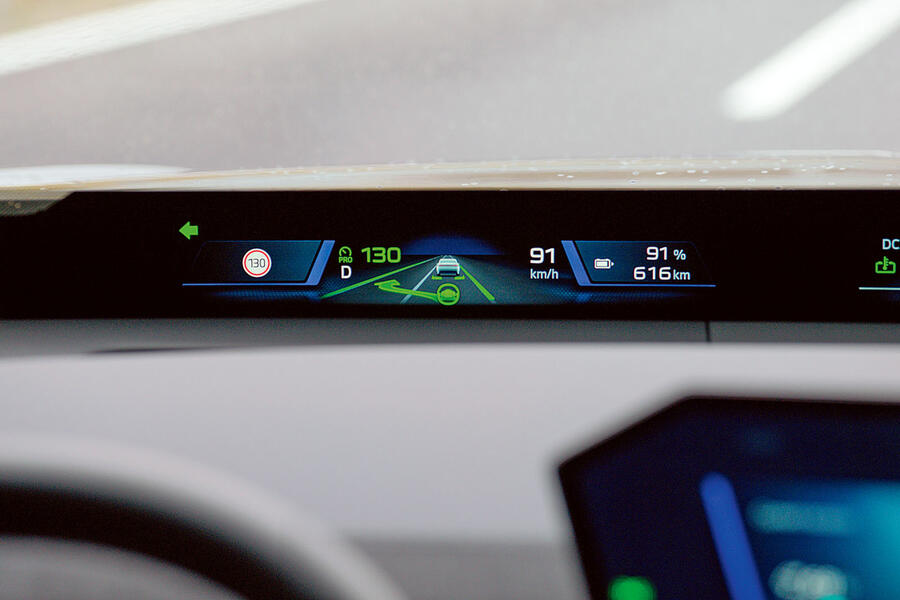
Among the team's more startling discoveries so far is how the current EU test standard for intelligent speed assist (ISA) may not be fit for purpose. For this test, ISA systems are assessed based on their accuracy over distance travelled but it can overlook performance at key moments, such as when speed limits change. In contrast, Thatcham's event-based testing measures ISA's accuracy at each of these change points. When applied in real-world conditions across three vehicles, it produced very different results.

The worst-performing vehicle, an MG ZS, scored 91.3% accuracy across the driven distance, but when assessed on an event-based metric, Thatcham found that its ISA was 74.3% accurate. So in around one in four events, its ISA was displaying the wrong speed limit.

The best-performing vehicle, a BMW i5, scored 98.39% and 90.3% respectively. Al-Ani is unimpressed: "Even the i5, the best ISA of the three cars on our test fleet, is wrong in one in every 10 events. That's not good enough." Thatcham also found the ISA systems it tested displayed speed limits that aren't legal in the UK. They included multiple instances of 5, 10, 15 and 100mph.

"When ISA misreads speed limits, it can lead to unexpected or inconsistent system responses. Over time, this risks reducing driver confidence in the technology, which is critical to achieving its intended safety benefits," says Al-Ani.

Back to top

What follows is the scenario where the first thing a driver does on entering their car is turn off as many of its ADAS features as possible. Al-Ani sympathises but believes that greater configurability of systems is the correct way forward. "If the ALK [active lane keeping] is too sensitive, rather than turn it off you should be able to turn it down. BMW is getting very good at offering levels of configurability so the driver can set up the system the way they like it and it stays that way. You don't have to reset it when restarting the car. Until ADAS have improved sufficiently, that's a better condition to have."

On the road with Thatcham

Thatcham ADAS road testing

Thatcham Research's event-based ADAS test programme takes place mainly on public roads but also, for more controlled work, on a closed circuit. Three cars are used: a BMW i5, Tesla Model Y and MG ZS. In terms of their ADAS, says principal ADAS engineer Yousif Al-Ani, they represent around 10% of new cars.

Each car sports a roof-mounted, 360deg lidar plus cameras inside for recording the infotainment screen and ADAS functions. These provide forward and roadside views that are key to recording the presence of speed signs and lane markings and the car's position relative to them.

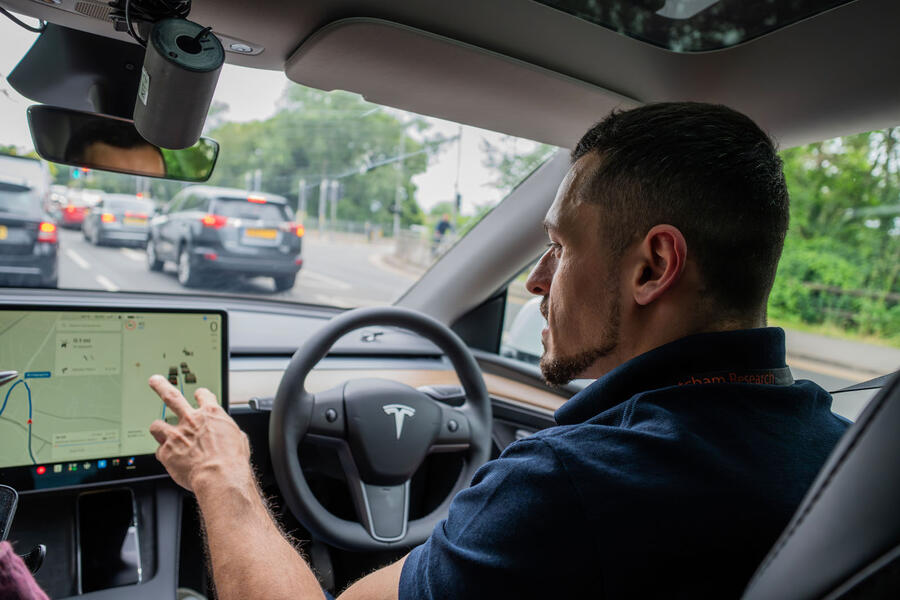
Driving the Model Y, Al-Ani showed how its ADAS can do things that prompt drivers to switch it off. The first was how, in autopilot mode, the car slowed excessively for a sharp corner on a main road. Then, entering a built-up area and rounding a corner, it braked excessively for a parked vehicle.

"This car has software designed only to pass the EU regulation," says Al-Ani. "In the slow-moving queue we've joined it's brilliant, but for many drivers its unpredictability is enough to discourage them from using it at all."

Al-Ani is critical of the way the Tesla's system disengages each time he makes the slightest correction: "It's not collaborating with me, so I become frustrated and leave it off."

Later, a bus turns into our road from the right while, a little way ahead, a pedestrian crosses in front of us: "The car braked for the bus when it needn't have and the steering correction was for the pedestrian who was still a safe distance away. The system then disengaged, leaving us in a bad situation with not much time to react. Working at its best, Tesla's system offers real benefits, but drivers need to understand its limitations."

Back to top

Thatcham vs Euro NCAP

Like Thatcham Research, Euro NCAP, Europe's main vehicle safety body, is running a real-world test programme to make sure the ADAS technologies it judges in the laboratory are delivering in practice. Every vehicle that it tests is equipped with a suite of exterior and interior sensors to accurately monitor its system's responses to a variety of road signs and conditions. It is driven a total of around 1200 miles in at least three European countries and every reaction is logged.

"We have worked on ADAS for years and now we want to make sure the technologies are delivering not only on the test track but on the road," says Adriano Palao, ADAS technical manager at Euro NCAP. "For example, is the lane keeping assist annoying and aggressive? What is the accuracy of the speed limit information? Were there any false braking events? This is the first time we have sought to find out what is the experience of the end consumer."

Thatcham Research was an active member of Euro NCAP for 22 years but earlier this year ended its relationship to focus on its own test programmes.

Yousif Al-Ani, principal ADAS engineer at Thatcham Research, denies its departure risks weakening Thatcham's power to influence regulators and car makers. "We have quite a lot of power, actually," he says. "We hold the keys to motor insurance risk rating in the UK, the second-biggest car market in Europe. "Vehicle manufacturers listen to us when something threatens their customer base. It's no use having systems that work well in France or Germany where approval testing is carried out but not so well on British roads."

Insights from ADAS engineer Al-Ani

Thatcham Yousif Al-Ani

Lane keeping assist: "We didn't find a single false event in the BMW i5, while the MG ZS recorded just 0.43 per 100km. These latest systems display less aggressive assistance too."

Crash avoidance: "In a variety of scenarios, the Tesla Model Y deploys its brakes sooner than the other test cars, although the BMW i5 runs it close. However, instances where the test driver has to intervene are roughly equal between the Tesla and the BMW."

'Ghost braking': "Instances where the cars braked unnecessarily were greatest in the Tesla, at 122 events, versus eight in the BMW and six in the MG. The Tesla's sensitivity has been turned up to exceed the regulation but at the risk of annoying the driver, who will just switch it off. It avoids crashing but is overly sensitive."

Back to top

Lane markings: "Almost a quarter of our test routes had no road markings, meaning we couldn't score a lane keeping event, because the system had nothing to detect. If you [the authorities] want to get the best benefit for road safety, leave the potholes and repaint all the lines."

AEB vs LKA: "Autonomous emergency braking has a much bigger impact on safety than lane keeping assist systems."

The case for testing: "ADAS can be incredibly effective. But how well vehicles perform outside the regulated test scenario and in all conditions and environments, that's a big unknown. For us it's about finding the differentiation."

Join our WhatsApp community and be the first to read about the latest news and reviews wowing the car world. Our community is the best, easiest and most direct place to tap into the minds of Autocar, and if you join you’ll also be treated to unique WhatsApp content. You can leave at any time after joining - check our full privacy policy here.