
The price of ICE cars in the UK will increase if the government’s electric car sales targets aren't redrawn, Volkswagen’s head of sales has warned.
Martin Sander said that immense discounting on EVs by manufacturers in order to boost demand and comply with the zero-emission vehicle (ZEV) mandate is unsustainable.
Last year, the average discount on a new EV was £11,000, as car makers offered a collective £10 billion in discounts to UK buyers, according to the Society of Motor Manufacturers and Traders (SMMT).
Manufacturers are offering discounts to drive EV sales and thereby avoid being hit by a £12,000 fine for each ICE car sold over the mandated EV sales mix target. For 2026, that target is 33% of total registrations, and it will incrementally rise to 80% by 2030.
However, this discounting will result in increased ICE car prices as manufacturers look to recapture lost profits, Sander warned on Thursday at the SMMT’s Electrified conference in London.
“I believe that the cost of individual [ICE] transportation will go up significantly, because I can't believe that by 2030 there will be natural demand that takes us to 80% electric vehicles - because prices [of EVs] and costs [of parts and public charging] are still too high,” he said.
“So we are unable to offer [EVs] at the same price level as vehicles with combustion engines – not today, not three or four years from now. And there is a limit to how much we as the car industry are willing and capable to incentivise electric vehicles to get to a certain [target] number. And if we have to get to 80% [electric], this will not only happen by incentivising even more, but if we do that the cost of ICE vehicles will go up.”
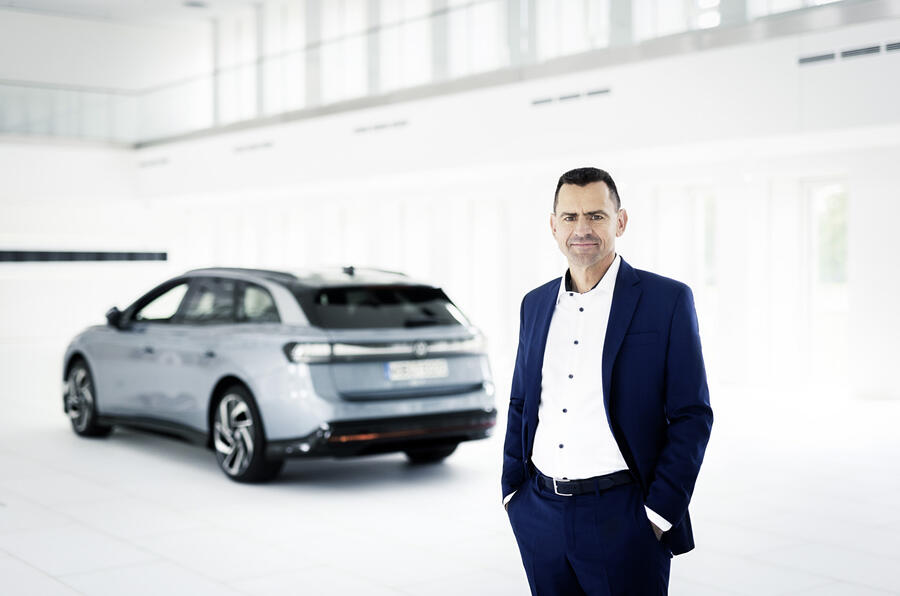
Sander (pictured below) also warned that when the mandated EV limit is reached, discounting will stop and prices for EVs will rise rapidly.
The pot for discounting is also “not bottomless”, Volvo UK boss Nicole Melillo Shaw warned at the same event.
She said: “We have invested so much to make sure that we're on this [EV] journey. The cost of that, the tech, all of that was done years ago, so now we're at the peak of our investment curve. [The market is also] hyper-competitive, so spending more [via discounts] just to stand still, that can’t go on.