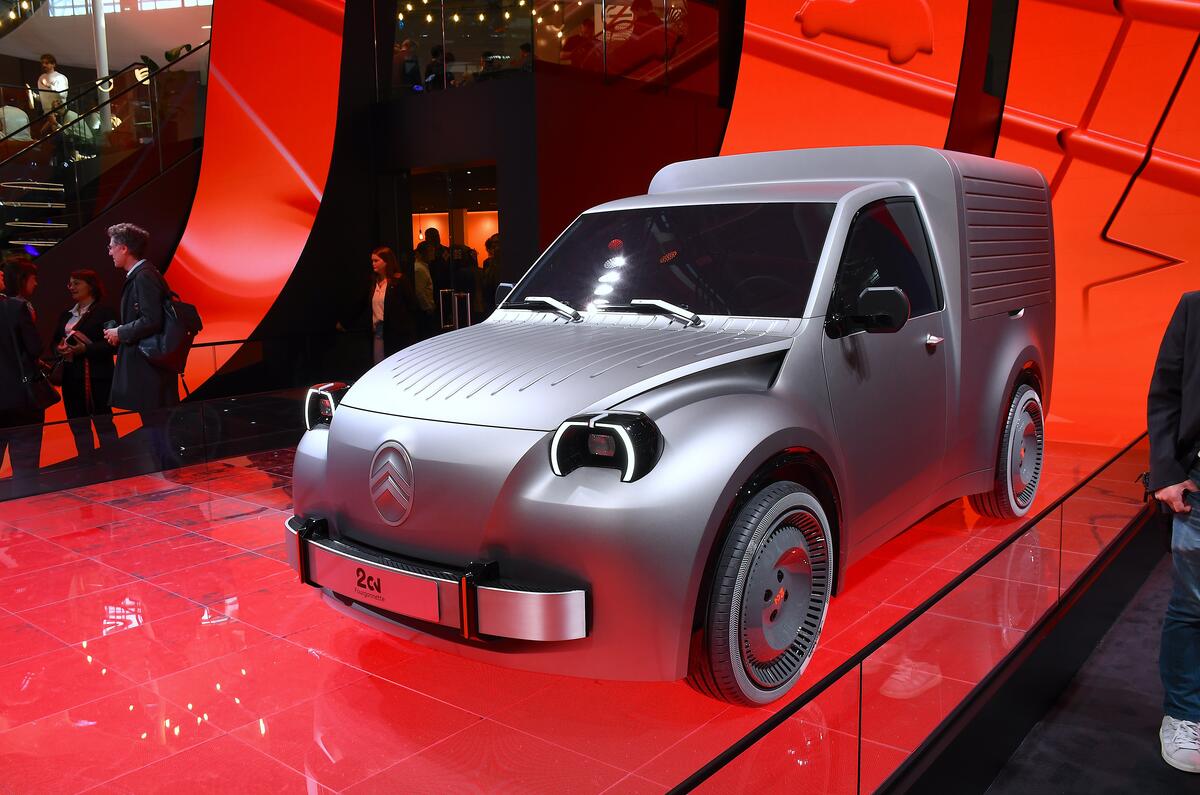
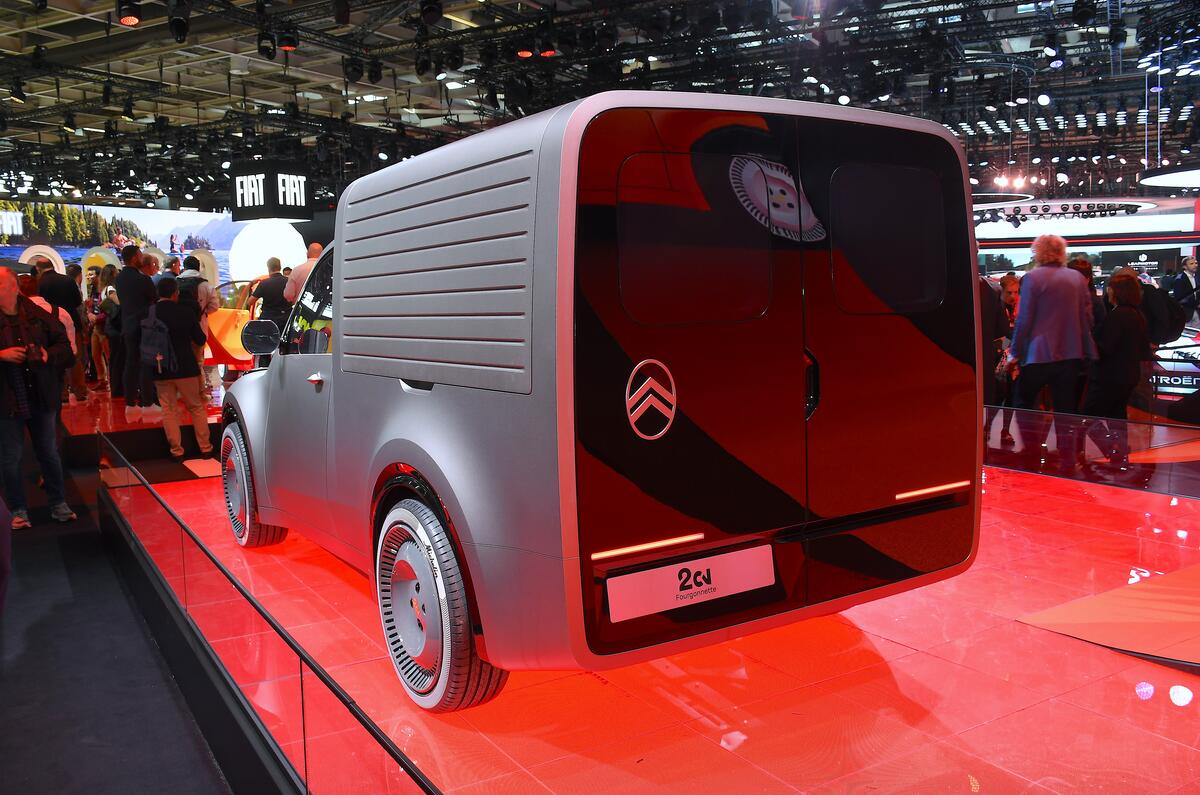
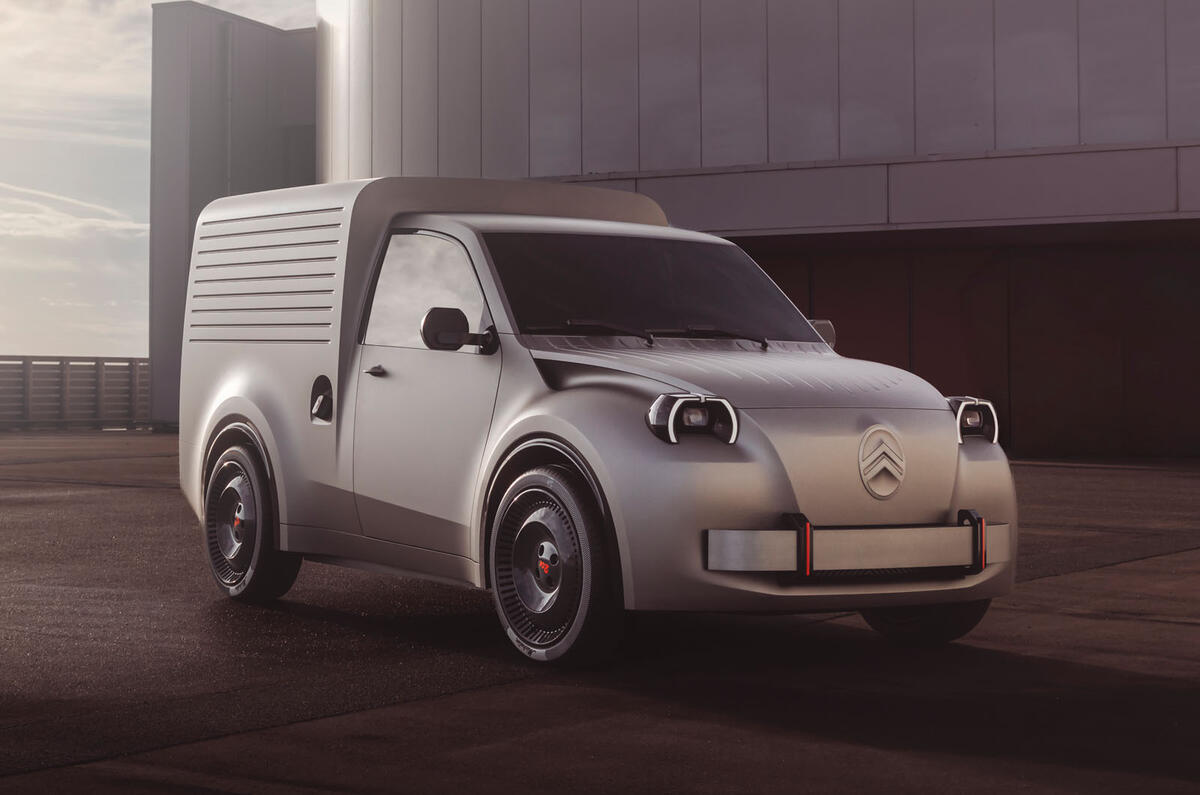
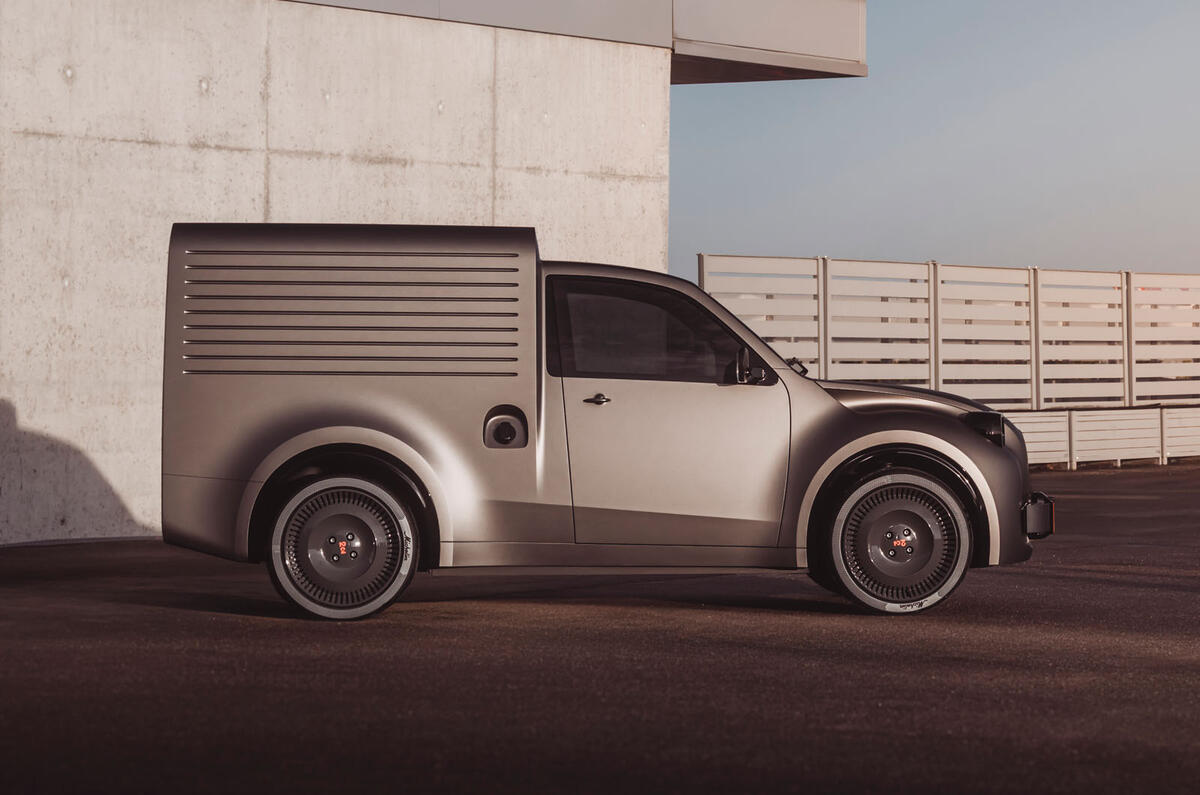
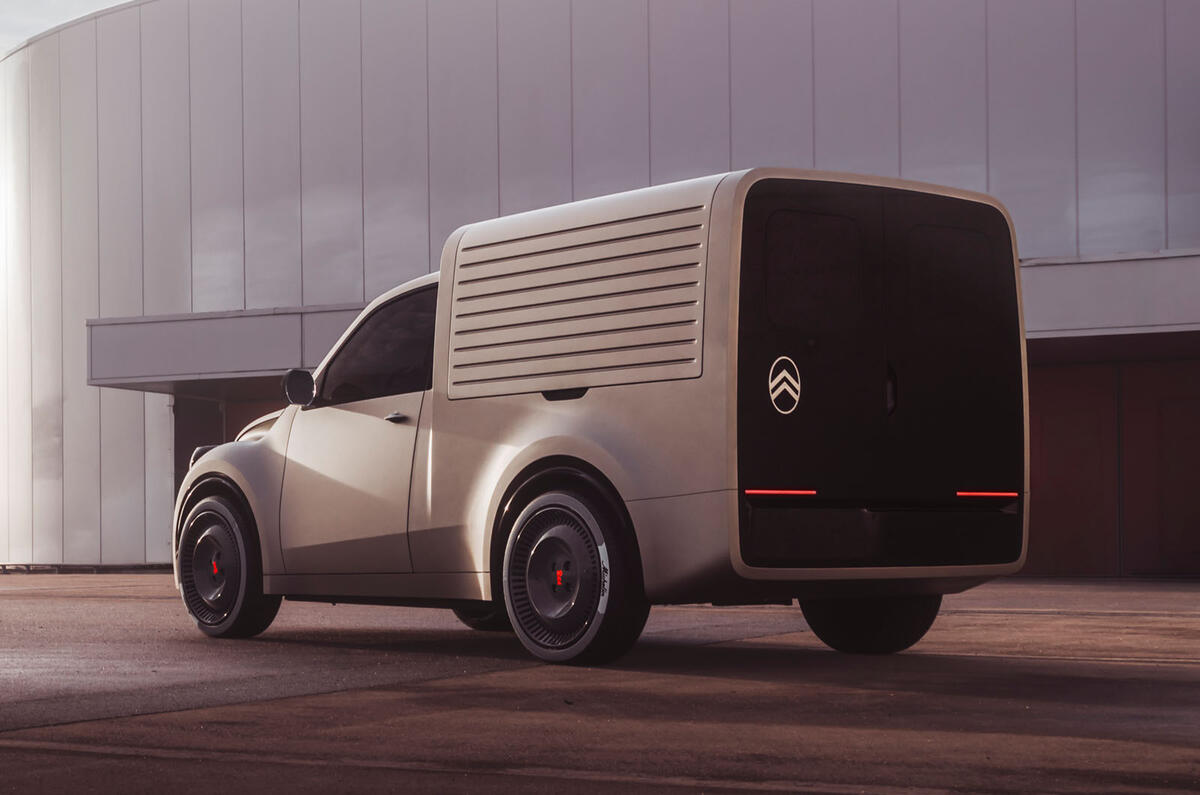






Citroën is mulling the prospect of reviving the 2CV Fourgonnette – the square-backed van based on its long-running people's car.
A new generation of the people-carrying 2CV is due in two years’ time, based on the new concept car that was unveiled yesterday evening. But, as part of its press conference at the Paris motor show, Citroën has now revealed a cargo variant of the passenger car.
The most significant difference comes aft of the Fourgonnette’s B-pillar, where the passenger 2CV's rear seats and sloped roofline are replaced with a large box. Access to the cargo bay is provided through flip-up side windows or split rear doors.
Citroën CEO Xavier Chardon said the original Fourgonnette, built from 1951 to 1977, showed that vans can have “soul”. Indeed, the emotional appeal of the 2CV was a significant reason for its revival as an affordable EV: Citroën believes that nostalgia can give it an edge over the wave of new Chinese competitors in Europe, which threaten its positioning as a value-oriented brand.
However, Citroën has yet to green-light the Fourgonnette for production. It said the show car “does not preview a future production model in the short term” but added that “it opens up new avenues for consideration” in the years to come.
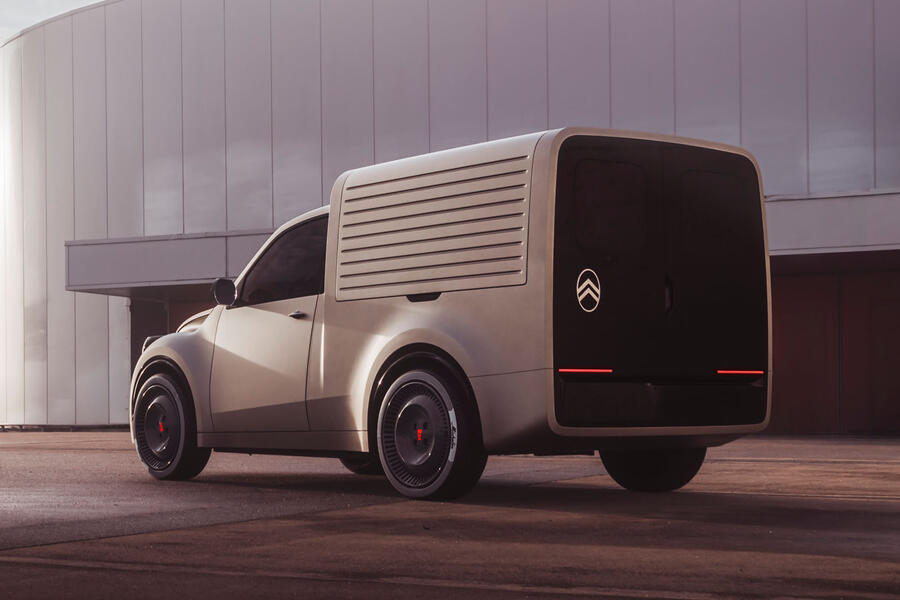
It has also described the show car as a “passion project” that came about as a “spontaneous desire” amid the creation of the new passenger-hauling derivative.
It is possible that it could arrive a couple of years after the regular 2CV – potentially replacing the current ë-Berlingo, or to slot into the line-up below that model.
Any road-going derivative is likely to closely mirror the passenger car in its development brief: Citroën is targeting a starting price of €15,000 (equivalent to £12,700) and a kerb weight of a tonne – hinting at a small battery. Its ambition is to make electric motoring accessible to a much broader range of buyers, mirroring the original 2CV’s mission of getting rural France moving both before and after the Second World War.