
Experts have challenged the perception of Chinese manufacturers as electric vehicle brands, claiming the initial wave of low-cost EVs allowed them to gain traction in the UK before increasing sales of plug-in hybrids and ICEs.
A senior fleet industry source described EVs from new entrants as “a Trojan Horse” and pointed to the popularity of PHEVs sold by the same brands.
“I think the industry has been sleepwalking into this, and it’s interesting, because everybody’s been worried about Chinese electric cars,” they told Autocar, “they haven’t realised that China has developed the engines and the hybrid drivetrains at lightning speed, and they’re now as good, if not better, than the Europeans.
“The Chinese brands are now doing plug-in hybrids – which they weren’t going to do. They were [originally] just going to do EVs, but they’ve now gone, ‘hey, we’ve got another option here’, and the PHEVs are coming in stunning numbers.”
Of the seven Chinese brands – including MG – selling EVs, PHEVs, self-charging hybrids and petrol cars at scale in the UK between 2024 and 2026, petrol was the dominant powertrain with 199,700 registrations (rounded to the nearest hundred) or 32.1% of the seven brands’ collective total. EVs were a close second at 194,000/31.2%, PHEVs third at 144,300/23.2% and self-charging hybrids totalled 83,700/13.5%. Powertrains in which internal combustion played at least some part collectively made up 427,700 or 68.7% of the seven Chinese brands’ total.
EVs accounted for 1.2 million/30.1% of non-diesel new car registrations in the wider UK market during the same period, so the seven Chinese brands’ equivalent figure was only 1.1% greater.
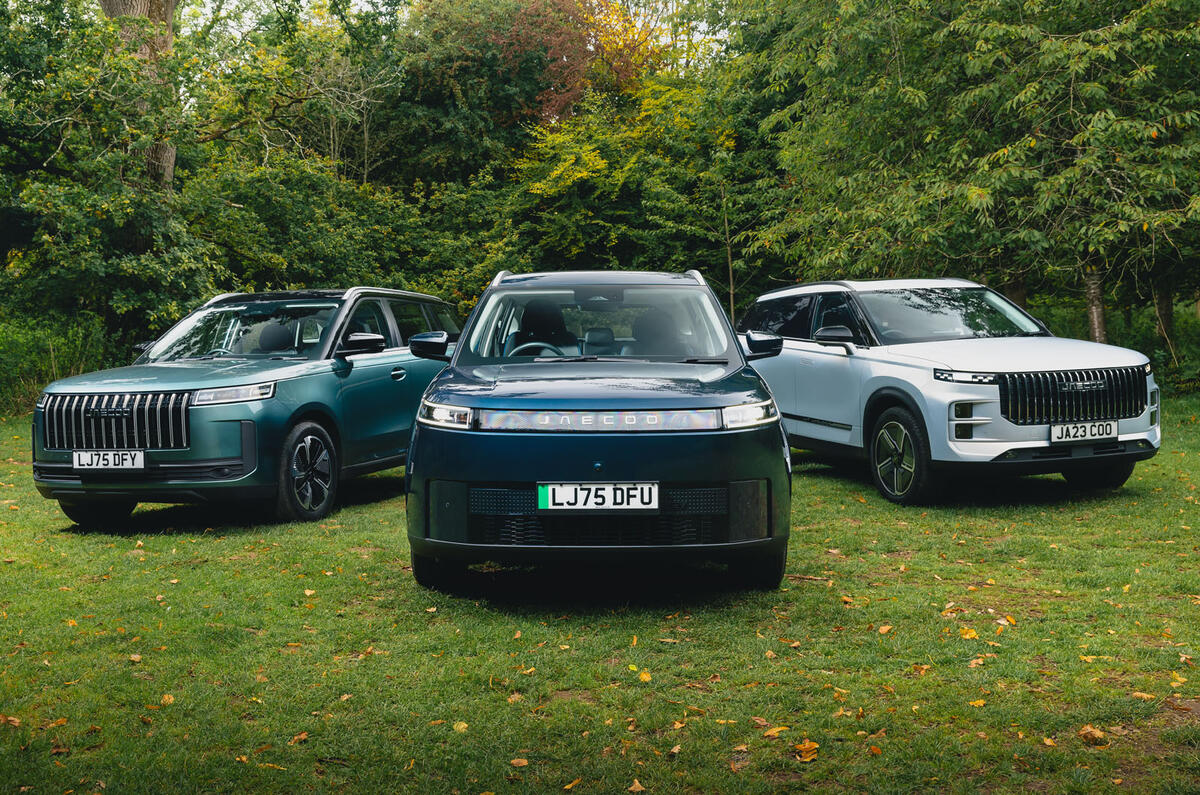
As an individual example, Omoda and Jaecoo’s new car powertrain mix between 2024 and 2026 was 3,600/3.2% self-charging hybrid, 17,900/15.7% EV, 43,100/37.9% petrol and 49,100/43.2% PHEV. The Jaecoo 7 – available with petrol and plug-in hybrid powertrains – was the UK’s third best-selling car year-to-date as of July, according to SMMT new car registration figures.
Philip Nothard, head of insight at Cox Automotive, said a change to the ZEV Mandate in favour of internal combustion could work in favour of Chinese brands by allowing them to pursue PHEV and hybrid sales.
He added: “The pending ZEV Mandate consultation could indirectly support Chinese new entrants even more, because any softening of it would allow them to go even harder and longer on plug-in hybrid and hybrid growth.
“The speed of model lifecycle that they operate with means they can be very reactive to any kind of deadline. Whether it’s 2030 or 2035, to them, that’s three, four or five cycles away before they think about it, and they can have a car on the road in 12 to 18 months. Whereas the established manufacturers are thinking, ‘To get where I need to be by 2030, I need to start building my production lines and supply chains today’.”
Autocar's fleet source said Chinese brands were not alone in their approach, and that they had worked with other manufacturers employing EVs to similar effect with fleet customers, to whom they are attractive due to low tax.