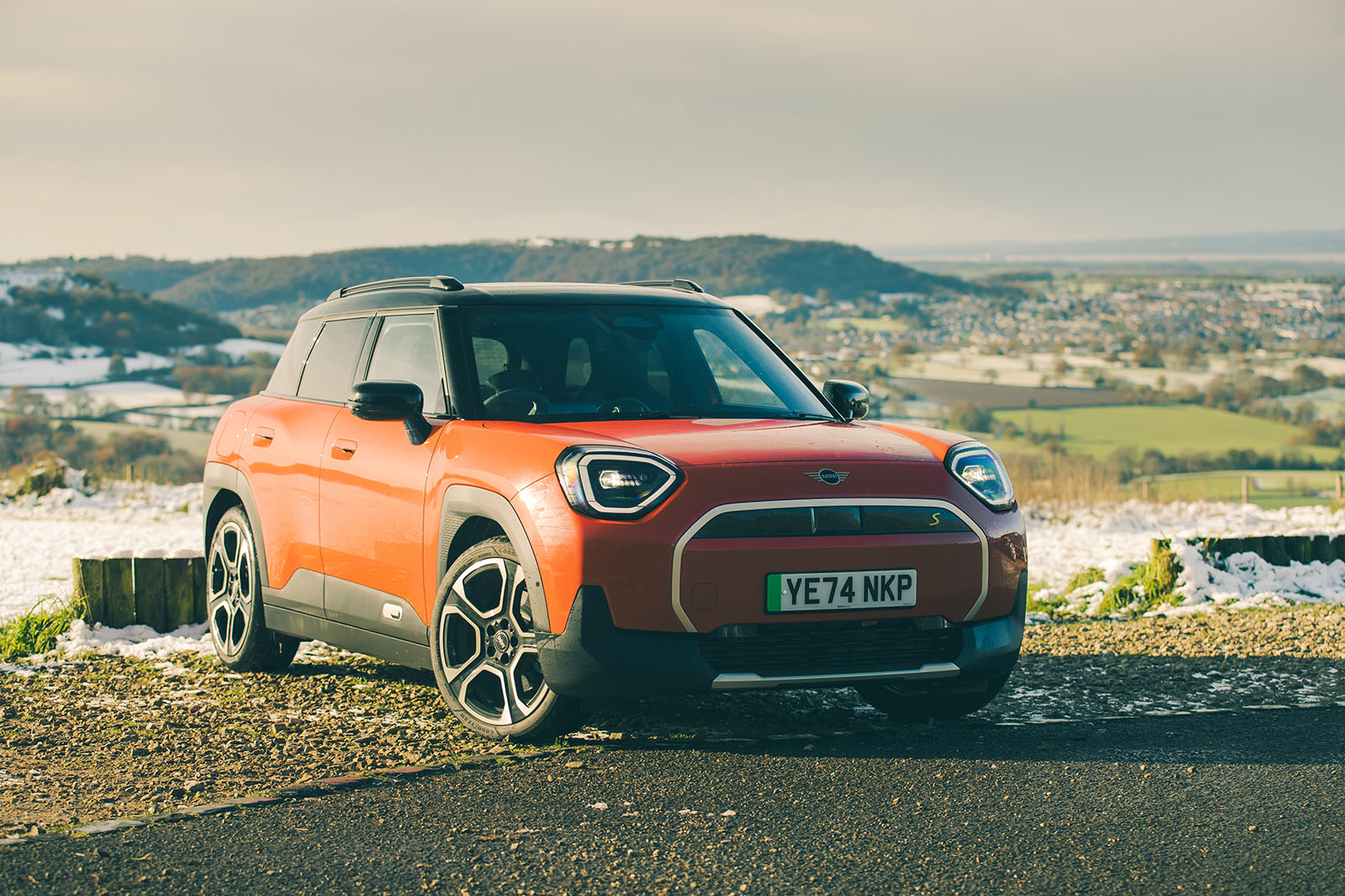
E 40.7kWh Monochrome Hatchback 3dr Electric Auto (184 ps)
Submitted by dev_editor on
I’ve had my 2005 Mini Cooper S – an ‘R53’ for the chassis code fans – for almost six years now. I didn’t think it would be a keeper when I bought it, but despite quite a few life changes in that time, it still fits very well.
It’s gone from being my only car – a sort of combined daily driver and fun car – to being on standby for when I don’t have a test car, or simply for when I get tired of the assorted tech nonsense in modern cars.
In that time, it’s had the odd bit done to it, mainly on an ad-hoc basis of keeping a cheap car going. Compared with all the brand-new cars I’m exposed to, the 105,000-mile, 19-year-old Mini was starting to feel a bit baggy, so I booked it in to my trusted BMW/Mini specialist, TWG Automotive in Camberley, to go through it with a fine-tooth comb.
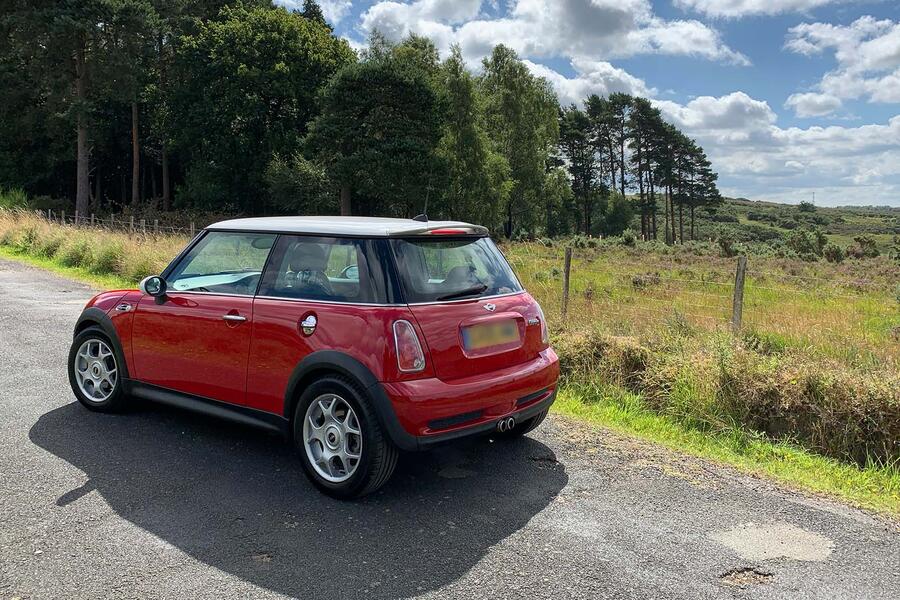
The result was an A4 sheet of recommendations, going from the obvious (milky headlights, tired suspension) to the unseen but unsurprising (various oil leaks, a torn intake pipe, rusty front subframe).
R53s are modern classics by now, but there are still too many around for them to be valuable. Any money invested in getting it up to scratch is, well, not an investment. But then I really like the car and would find its combination of smallness, driving fun and long-distance ability hard to replace. Also, I’m a sentimental sucker.
I’m rather fond of the Mini and don’t want to be that person who buys a car, runs it into the ground and then dumps it, so I decided to start addressing some of the issues. The garage suggested doing the chassis bits first, because the rusty springs and brake pipes would be needed for the MOT, rather than be just nice-to-haves.
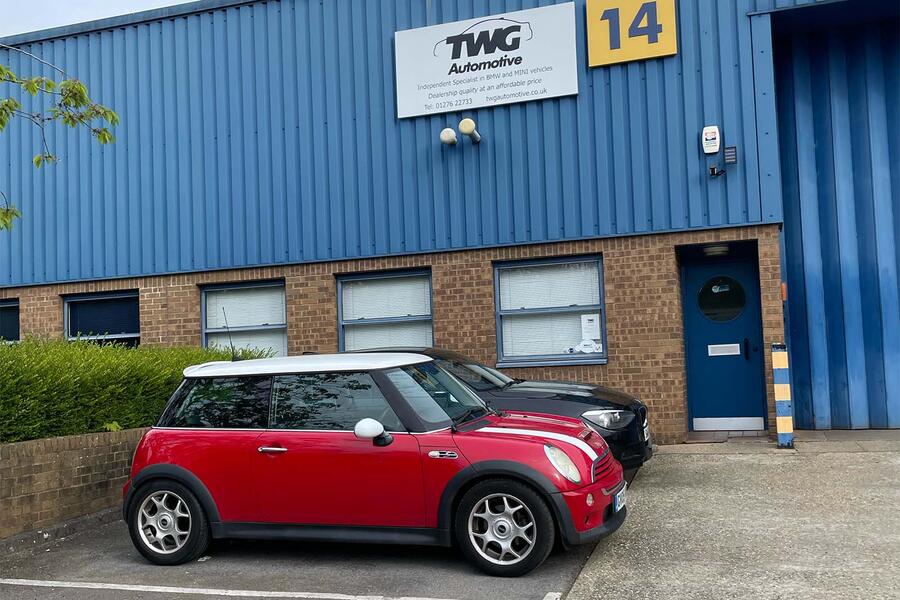
It turns out these R53s are stuck in a kind of purgatory between new cars and classics when it comes to parts supply. BMW is pretty good at supporting them, but for these Minis – similarly to E46 BMWs and the like – a number of parts are no longer available. Add in plenty of rusty bolts and my car ended up spending a good few weeks at the garage.
Serviced, MOT’d and with plenty of new suspension bits, it certainly felt better than before. I love the supercharger whine, quick chassis responses, communicative steering and manual gearbox. But at the same time I have some doubts.
The garage recommended going with OEM Sachs dampers, so that’s what I had them fit. While the car is more composed and less ragged, the ride is still pretty crashy. A modern Mini is firmer but doesn’t clatter over expansion joints like mine.
Should I have gone with an aftermarket upgrade like a Bilstein, or is something else not right? I’m not sure, but I’m not keen on redoing a bunch of stuff, and there is still a list of powertrain-related ills to attend to, like the supercharger service and the engine mounts.
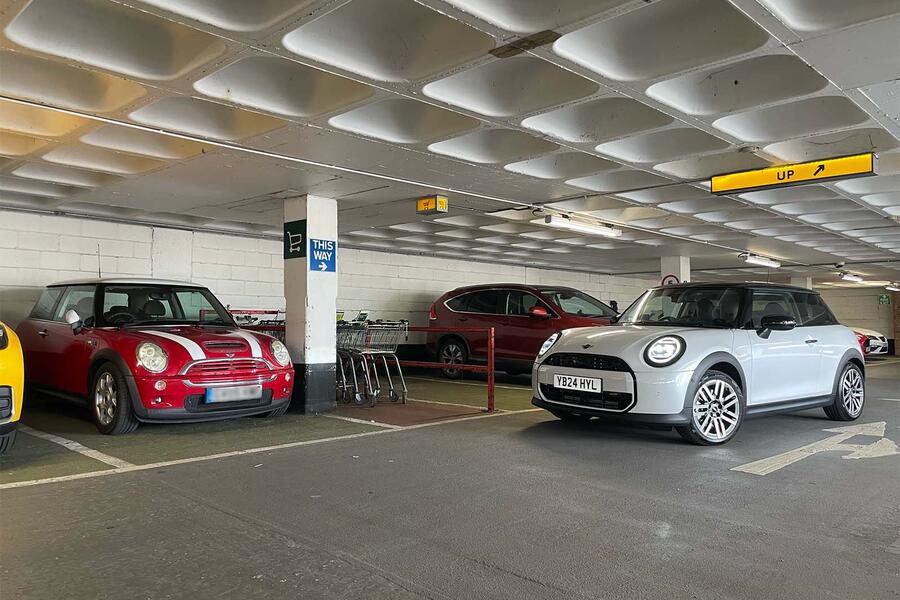
Whose car alarm is that going off? Is that my Mini's? I had better check. And just as I was coming down the stairs, I was greeted by an apologetic Sainsbury's delivery driver who had reversed his van into the side of my car as he was threading it down the narrow lane on which I lived at the time.
After getting the suspension sorted out, the next stage was to get the rusty exhaust replaced and the supercharger serviced, but all of that was put on hold as I dealt with the aftermath of what seemed like a minor incident.
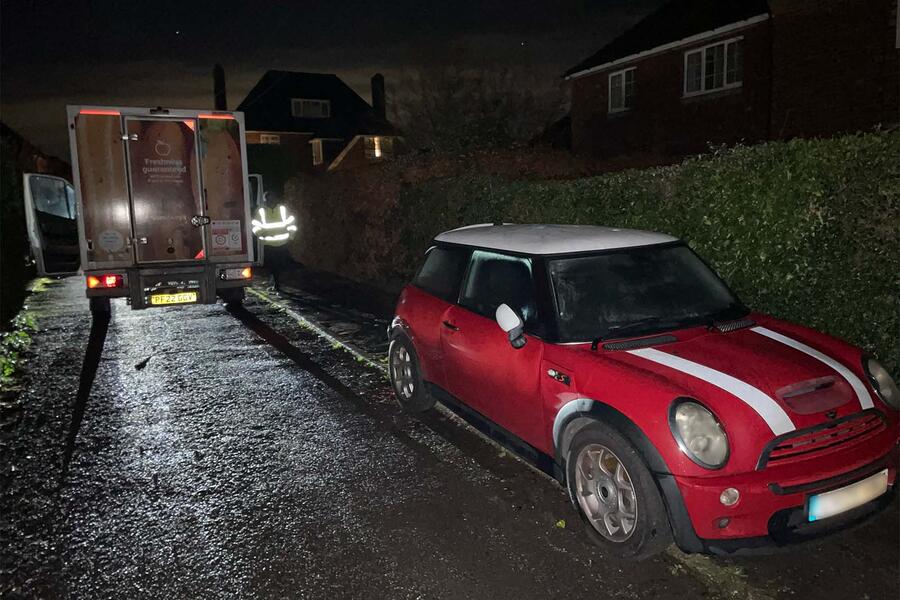
After all, the extent of the damage was an ugly dent and a few mullered but easily replaceable plastic panels. To the driver's credit, he didn't do a runner, but he didn't have his approved accident form with him and was reluctant to give details.
Still, you would imagine that such incidents happen regularly and supermarkets would have a well-oiled protocol for dealing with them. Instead, it took weeks to get hold of Sainsbury's relevant insurance person, who then informed me that they had up to 90 days to 'investigate'.
I didn't have video footage, but I did take a picture of the van with a busted rear light next to my maimed Mini – a pretty open-and-shut case, I should think. I probably could have got my insurance to deal with it but, given that I obviously wasn't at fault and am in the lucky position of having other cars to drive, I let it run its course which ran, and ran, and ran.
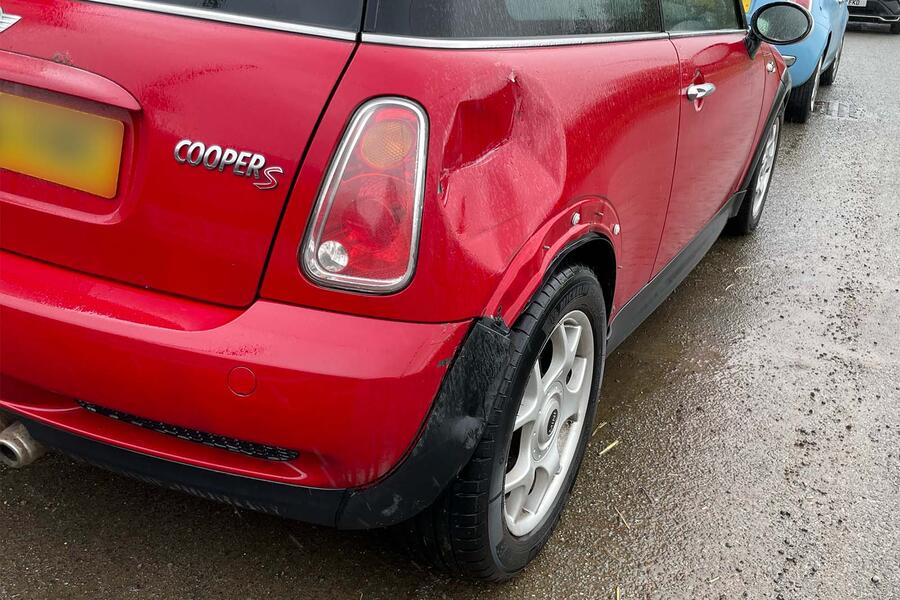
After two months and much chasing, Sainsbury's insurance (finally) concluded that, yes, the van driver who hit my parked car was at fault. At that point, they handed it over to my insurance company to deal with the rest.
After a phone call, it was quickly assumed the car would be a write-off, because insurance companies usually can't be bothered to find an economical way to repair older cars. Even more worryingly, they wanted it to be collected by Copart – which runs salvage car auctions – to be inspected.
I pointed out that this would be a massive waste of everyone's time and money compared with a person coming round to look at the car, or me sending over some pictures, but they wouldn't budge.
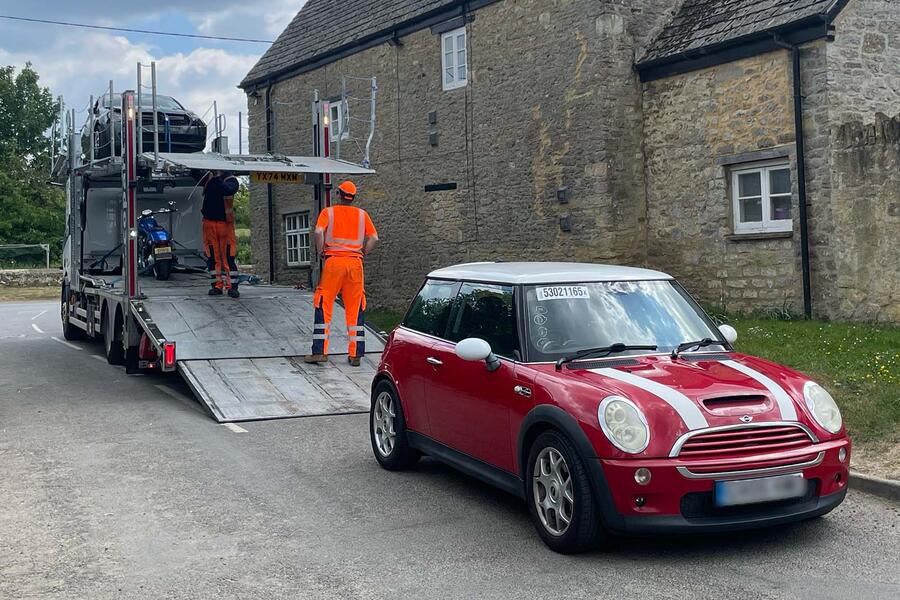
My experience with Copart wasn't too bad. The guys collecting it with a big car transporter were nice enough. The following week I was called to be told they wanted to declare it a Category S (for structural damage). I argued that a bit of panel damage is not structural, so they listened and changed it to Cat N (non-structural), bumping up the payout slightly.
Just over £2000 promptly appeared in my bank account (I wonder if I can claim Nectar points on that), with the Mini due to be delivered back to me.
As a car reviewer, I get delivered cars quite often, but I've never been as excited as I was for the Mini to return. It came on a multi-car transporter, and in the same condition it left. They even washed it – not very well, but it's the thought that counts.
Submitted by dev_editor on
Submitted by dev_editor on
A brisk Mini and a Great British adventure: a pairing to rival jam and cream or salt and vinegar. Yes, I might be hungry, which is why we’re starting in the implausibly picturesque Robin Hood’s Bay, a postcard illustrator’s dream ensconced in the North Yorkshire coastline.
The concept of destination road trips has been ascending for a while, none more famous than the North Coast 500, right at the tip of Scotland. Perhaps we’re all tempted to get stuck in but simply can’t find the time, and for many Autocar readers the rollercoaster roads of the North York Moors might prove a tad easier to reach.
Easier to plan, too, maybe. We’ve thrown out the A-Z and kept Google Maps intervention to the bare necessities, as photographer Max and I aim to get joyously lost in the verdant vistas that surround us. But not before shielding our chips from the marauding gulls and snapping a few pics beside the seaside, of course,
Robin Hood’s Bay itself is not a driver’s mecca; it is best accessed on foot from its outskirts, but boy is it worth it. Cobbled paths, dramatic staircases and idle fishing boats surround you while the dramatic North Sea laps just feet away if the tide has rolled in.
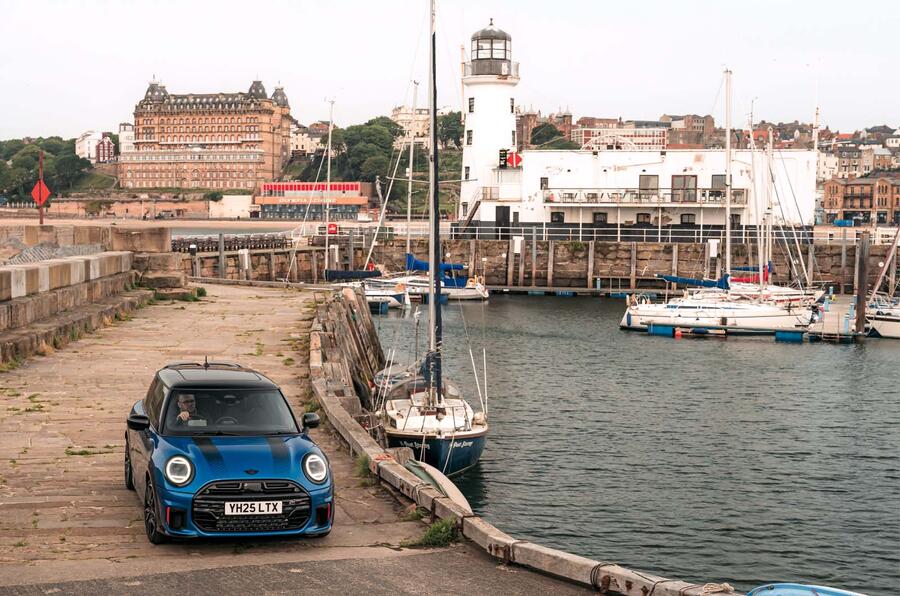
Farther up the coast you’ll find Whitby, with its storied vampiric abbey and goth conventions, while the unabashed old-school charm of Scarborough lies to the south. All three are tourist magnets, so a moment of clarity (and a lungful of sea air) in Robin Hood’s unique little bay before the hordes arrive is a great way to start our trip.
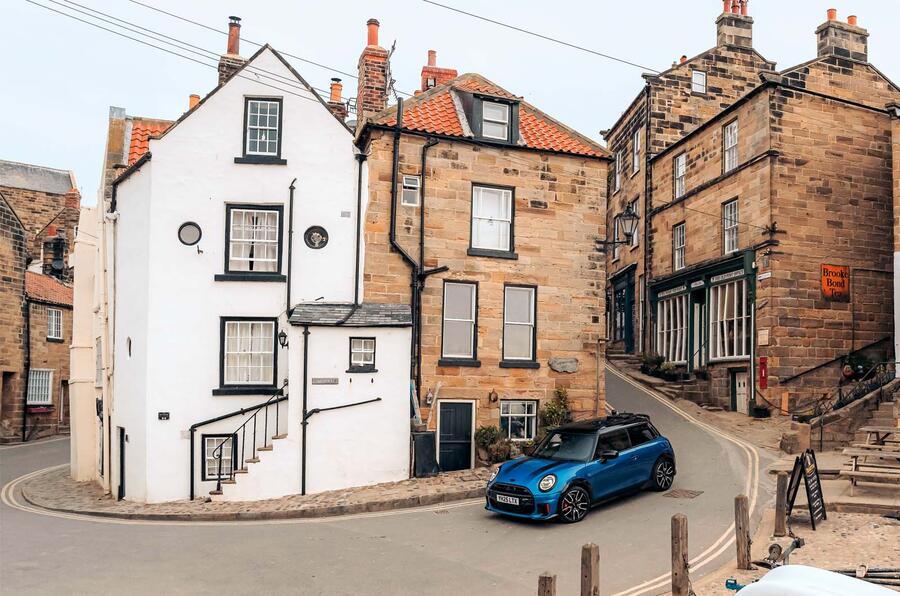
The latest Mini John Cooper Works quickly punctures our moment of zen, though, as its turbocharged 2.0-litre engine adds a cheeky flourish of revs on start-up. Its rather taut suspension is soon jiggling us over the humps and bumps of the urban Tarmac leading us out of town and into the wilds.
We’ve praised this car before on these pages, even if it pursues its performance with some wantonly rough edges. ’Twas ever thus with JCW-badged cars, but the vigour of their damping appears to have reached a whole new level here. Over a standard Cooper S the suspension uses bespoke springs and dampers, plus more negative camber on the front wheels, to more keenly point you into corners, while its four-cylinder ‘B48’ engine has 228bhp and 280lb ft peaks for 0-62mph in 6.1sec.
The big headline, however, goes to its gearbox. The JCW is now offered only with a seven-speed dual-clutch automatic ’box – yes, the manual Mini hot hatch is dead. Indeed, the manual petrol hot hatch as a whole.
My wistfulness is soon decimated by the madcap Mini’s turn of pace. Without the minor pause of a clutch dip and a flick of your wrist, it snarls forward insatiably, and you’ll encounter brief moments of wheelspin or torque steer if you try to deploy too much of its potency on cool or damp surfaces – there’s no clever differential set-up here to smooth the edges.
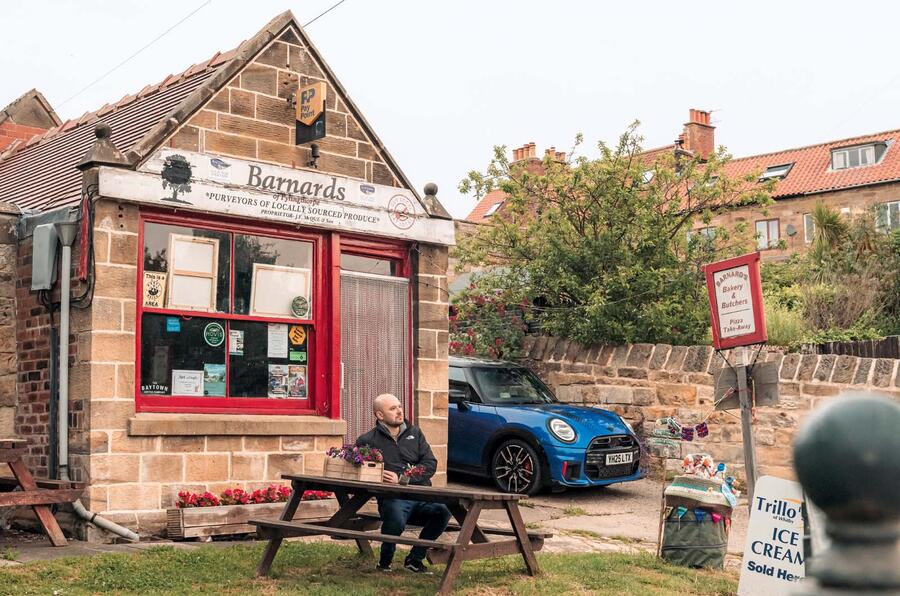
It’s a boisterous bucking-bronco of a car over the crests and into the dips of the roads that lead us inland, but it’s hard not to be enraptured by the experience. You’ve no choice but to get stuck in.
Our next stop lies 18 miles south, and it is an essential visit for any petrolheads in the area. Oliver’s Mount is England’s only road racing course that’s open to the public, and it’s a chance to pop the Mini between some painted kerbing with no need for a helmet or race boots.
The track hosted its first race in 1946 – a celebratory affair to welcome home the troops of World War II – and essentially morphs a tight and twisting park service road into a quite fearsome circuit. Its 2.43 miles span 10 corners, and in the heat of its motorcycle races, riders reach 150mph; repeated 30mph signs ensure our pace is much calmer today.
Yet with the grid markings upon its start/finish straight, its domineering control box and a roll of honour awash with Isle of Man TT legends, it won’t be long before your ears pick up the phantom buzz of highly strung engines and stratospheric rev limits in the air.
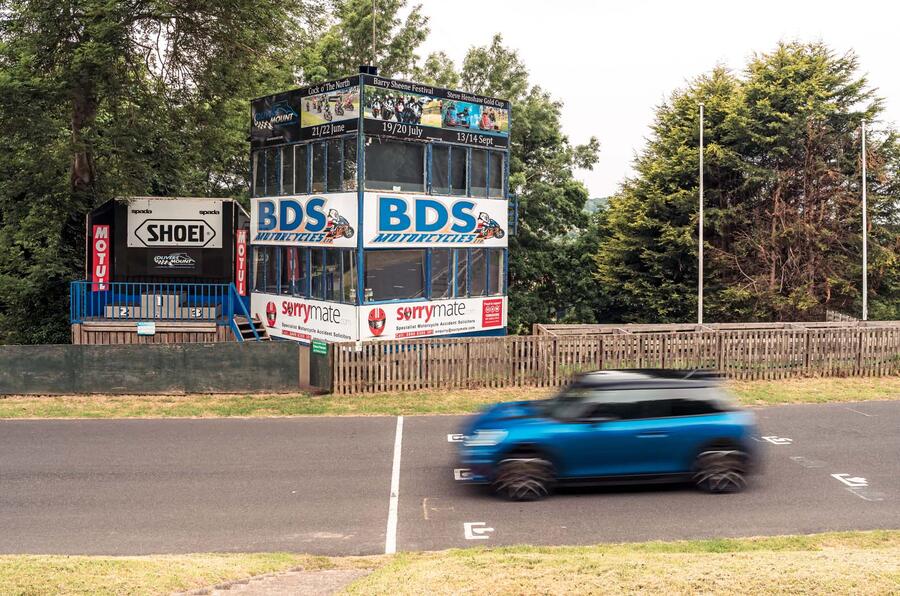
We simply have to indulge in a lap. Starting from the grid, we barrel straight into the supremely tight Mere Hairpin. TT hero and unlikely TV star Guy Martin describes notching back from fourth gear (and 130mph!) to tackle the first turn, so I channel some of his spirit with a rambunctious run through the JCW’s raucous first gear on exit.
The seven-speed ’box isn’t exactly the star of the show – I’m finding it desperately hard not to miss a manual – but a set of pleasingly short ratios means you can meaningfully flick-flack up and down its paddles at will. Oliver’s corners are a hedonistic mix, and its tree-lined sections through Sheene’s Rise and Drury’s Hairpin feel ominous in the context of the race speeds achieved through them – there’s perilously little run-off.
Those striped kerbs make this two-way road feel all too much like an actual racetrack today, so I work hard to keep my enthusiasm in check. Luckily the Mini is generous with its character – a euphemism for ‘blooming bolshy’ – at even these speeds, ensuring a sensibly driven lap still feels scintillating.
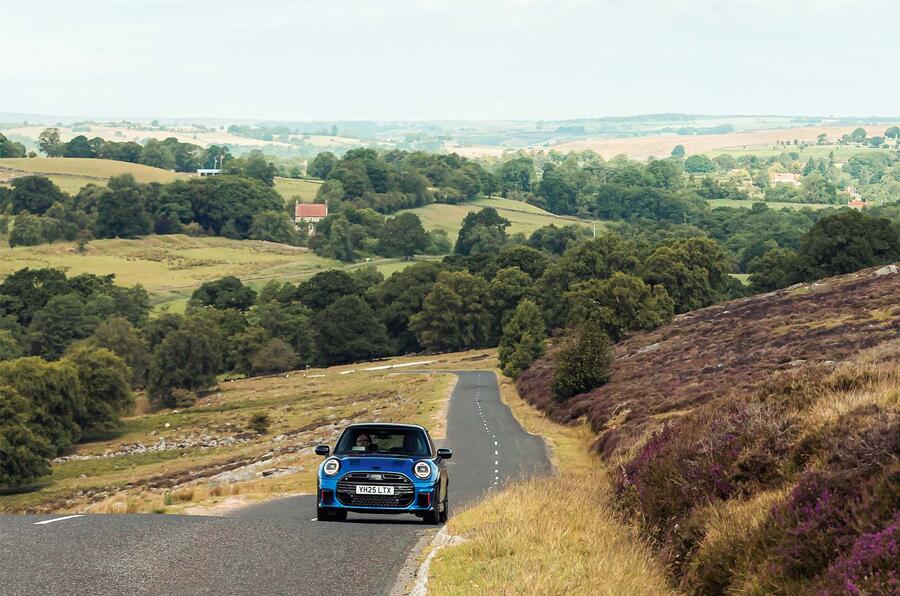
The famed Yorkshire spirit is alive and well up here too, an approaching runner zig-zagging to clear geese from the road to ease our progress. I suspect that doesn’t happen quite so often in London’s Royal Parks…
It would be easy to stay up here all day, Scarborough perched below us, but it’s the empty moorland roads inland that drew us here in the first place. So after a quick run past the town’s chintzy amusements and seafood shacks, we head off to explore. Not before being held up in an unlikely jam, though, our progress entangled with that of the Three Coasts Vintage Tractor Run.
Perhaps 550 miles between Liverpool and Whitby on one of these would make the Mini feel more urbane. Even pottering through traffic there are huffs and whistles from its engine and a choreographed popping of its exhaust in sportier drive modes.
While the sounds don’t always tally with the alacrity of its performance, the JCW offers a more bewitching character than its recently launched electric twin – whose extra 320kg and even sterner ride would make progress tough before any range anxiety had crept in.
Clear of our curious snarl-up, I drop a few gears and extend the Mini’s powertrain. Its muscular torque easily overcomes a kerb weight that looks portly in the context of its predecessors.
Out of town and with more forces working its damping, the ride doesn’t feel quite so uproarious, and it’s hard not to beam at the sight ahead: enveloped by the rolling hills and fields around us, the Tarmac dips and rises ahead in perfect harmony with the landscape.
The roads surrounding the brutalist structure of RAF Fylingdales are dreamlike – if you can avoid the trundling tour buses ready to swarm the Goathland tea rooms like wasps around a freshly garnished scone. Just watch out for the sheep…
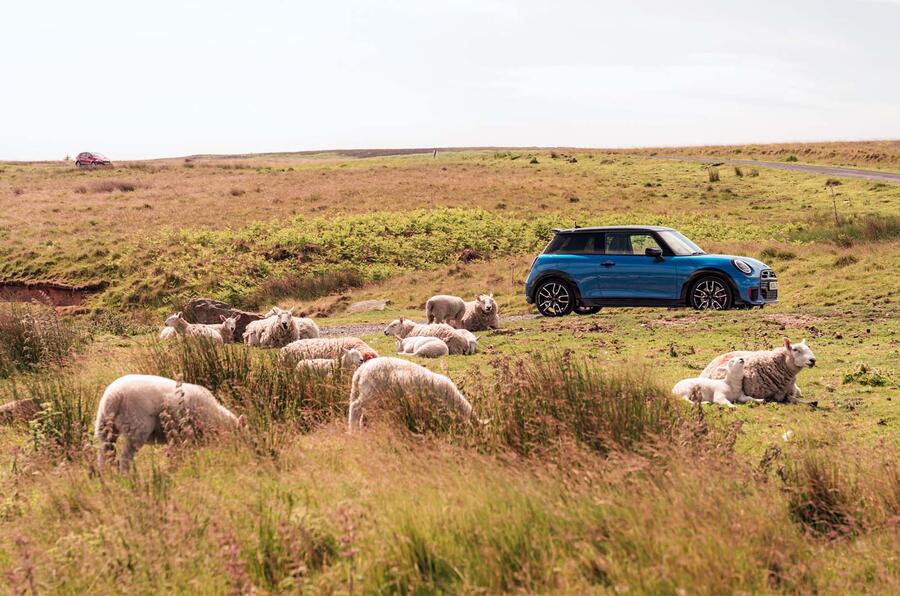
Perhaps a rip-snorting little Mini is a mite too brash for the beauty of the roads we’re on – a freshly polished classic MG or Healey might be more befitting of the scene we’ve entered. But the JCW’s dinky size and easily won performance quickly banish those worries. You can lean hard into its limits, feel grip come and go at both ends and start to work with its agility.
It’s nowhere near as nuanced as the very best of the hot hatch pack – oh, how we sorely miss the Ford Fiesta STs and Hyundai i20 Ns of this world – but it’s not short of spirit up here, and working around its rough edges brings its own unorthodox satisfaction.
The all-time great performance cars typically meet you at your level, enhancing and elevating you with them. This JCW falls into a somewhat more rough ’n’ tumble category of cars that demand you play along to their tune.
It’s a car that feels happiest and sharpest when you start to throw it around a bit, at which point its ragged character starts to make more sense. Modern Works Minis were always the brasher, more uncouth offerings in the hot hatch sector, of course, but the party around this one has emptied so rapidly – the much meeker Volkswagen Polo GTI is its closest ICE-powered rival – that the JCW now stands for resilience as much as for its rapscallion attitude.
There’s plenty of professionalism inside. Its interior is a bouquet of idiosyncrasy – as is the modern Mini way – but with a convincing tech overhaul and confident material choices. The vast OLED screen is a real standout, whatever you think of its dinner-plate dimensions and the fact that Apple CarPlay sits as a crude box among it.
Mini’s sense of humour has never dimmed – indeed, it’s increasingly crucial in the face of swelling Chinese competition. A fresh highlight comes from your doubtless rare flicks into ‘Green’ mode, which animate either a hummingbird or cheetah on the screen depending on how efficiently (or otherwise) you’re driving.
A cute encouragement to amble even more gently through the quaint villages punctuating our route, even if our ideal gamification of the driving experience would be a good ol’ gearstick and three pedals.
It bests its electric sibling in a number of ways, more so on days such as these. It will be a good while before charging facilities will be extensive enough to allow the wanton exploration of the twisting roads, dinky lanes and amazing scenery that we’ve enjoyed today – however nice it might be to slink through North Yorkshire’s prettiest tableaux in reverential silence.
Jaunty seaside, sprawling moorland and a bonus (not so) hot lap: this is the perfect place to get intentionally, wonderfully lost. A punchy and pugnacious yet ultimately charming performance car slots neatly into the picture postcard.
Submitted by dev_editor on
Submitted by dev_editor on
Submitted by dev_editor on
Submitted by dev_editor on
Submitted by dev_editor on