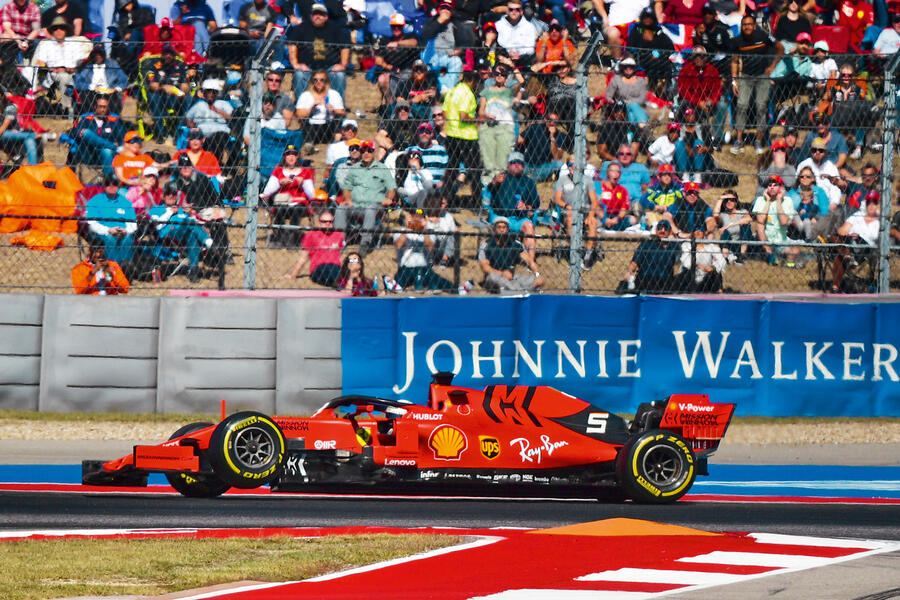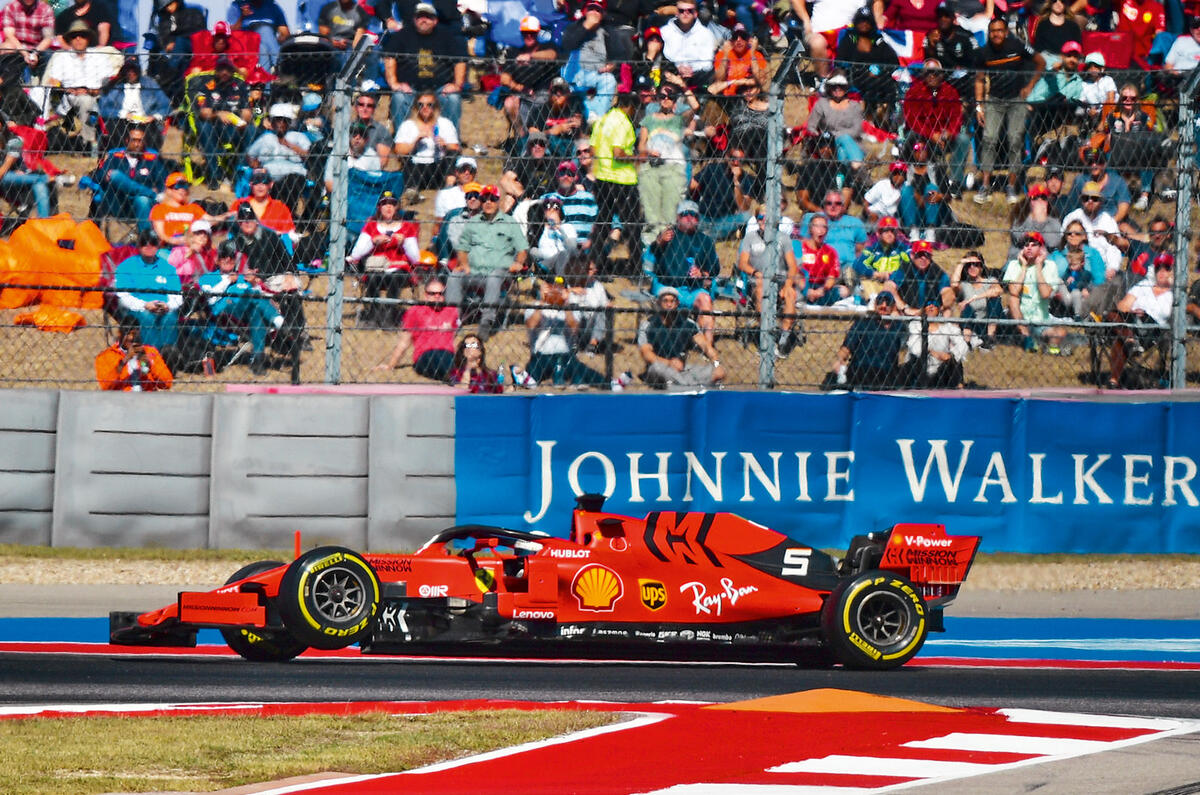

If things had worked out a little differently, Charles Leclerc could be taking Lewis Hamilton down to the wire in Abu Dhabi. In his first season at Ferrari, Leclerc has taken seven pole positions to Valtteri Bottas’s five, Hamilton’s four and Sebastian Vettel’s two.
He could and should have won race two in Bahrain, where the car let him down. In Monaco he was quickest in final practice but Ferrari banjaxed his race by not sending him out for a second Q1 run, which left him qualifying only 16th.
In Azerbaijan he was the stand-out before crashing in Q2 when Ferrari needlessly tried to get him through on a harder tyre. In Austria he took pole but was kept on the leash in the opening stint to maximise tyre life, which ultimately allowed Max Verstappen to pass him with two laps to go.
In Germany he had the car to win but, in keeping with others, Hamilton included, skated off on a treacherous surface. Belgium and Italy he won brilliantly, back-to-back. It should have been a hat-trick in Singapore where he started from pole and led, until Ferrari accidentally leap-frogged him with Vettel by stopping the four-time champion first to undercut Hamilton. And then failed to order a position reversal.
A week later, another win went west in Russia when Leclerc followed a pre-race plan to tow Vettel into the lead but Sebastian reneged on the deal to allow him back in front. A Virtual Safety Car period then handed Mercedes cheap pitstops and a one-two ahead of Charles.
Leclerc himself torpedoed a decent chance in Japan when the arrival of arch-rival Verstappen around his outside at Turn 1 prompted a red mist moment. Then, arguably conservative Ferrari strategy cost Leclerc in Mexico. Right there, 10 races Leclerc could have won from the first 19, instead of the two he actually claimed.
The pace is clearly there, and that’s Ferrari’s problem. Vettel is the senior statesman, a good guy, intelligent, with a wry sense of humour and a fine ambassador for the sport. He’s hard not to like.
But Eddie Irvine always told it like it is and has done so recently in an interview with an online gambling company. Vettel, Irvine says, is not a worthy four-time champion. He’s good but mistake-ridden. And Eddie doesn’t think he’s super-quick either, claiming that we saw that when he was bested by Daniel Ricciardo in 2014, and are seeing it again.
There were times this year when Vettel has not been sacrificed because of his status and Ferrari has lost races because of it. The intra-team rivalry had flashpoints in Monza, Singapore and Sochi and is becoming a problem. Team principal Mattia Binotto calls the ‘problem’ a luxury. But it’s one he could do without.
At the start of the season Ferrari announced that it would start off prioritising Vettel. It’s now time they did the reverse. The timing screen, ultimately, decides a team’s number one.