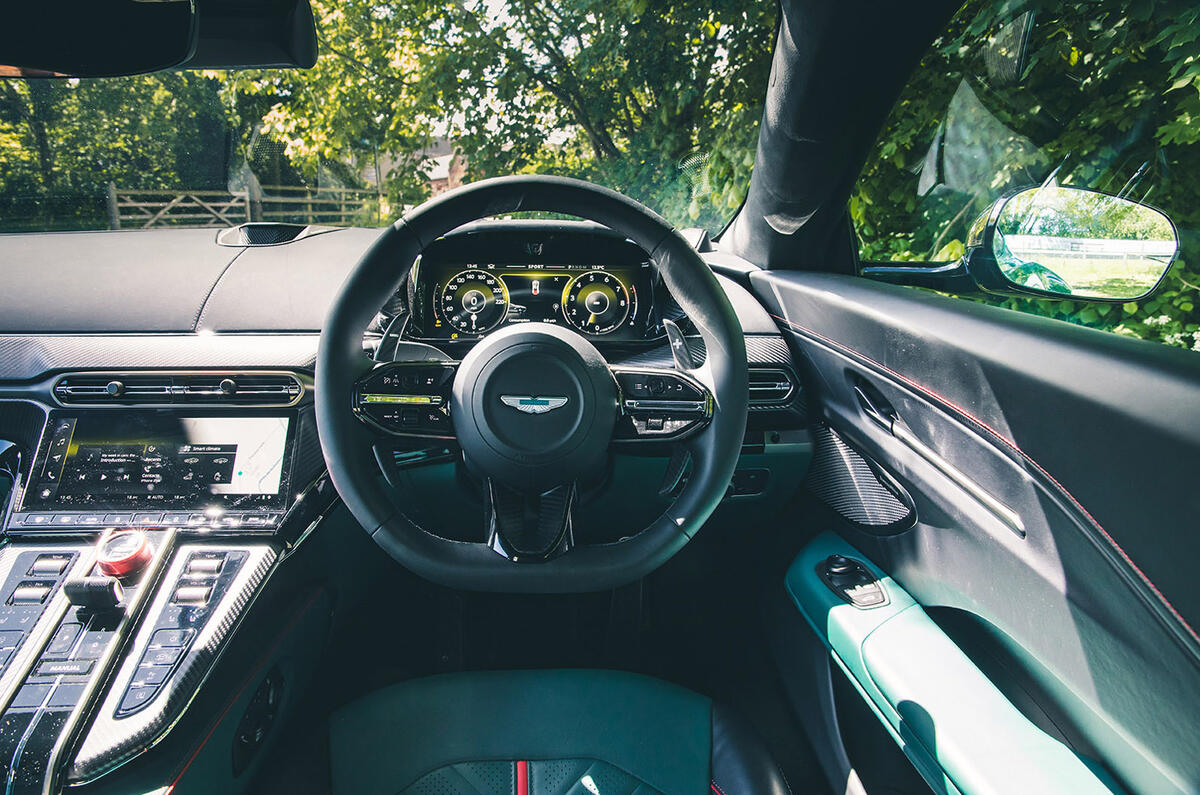
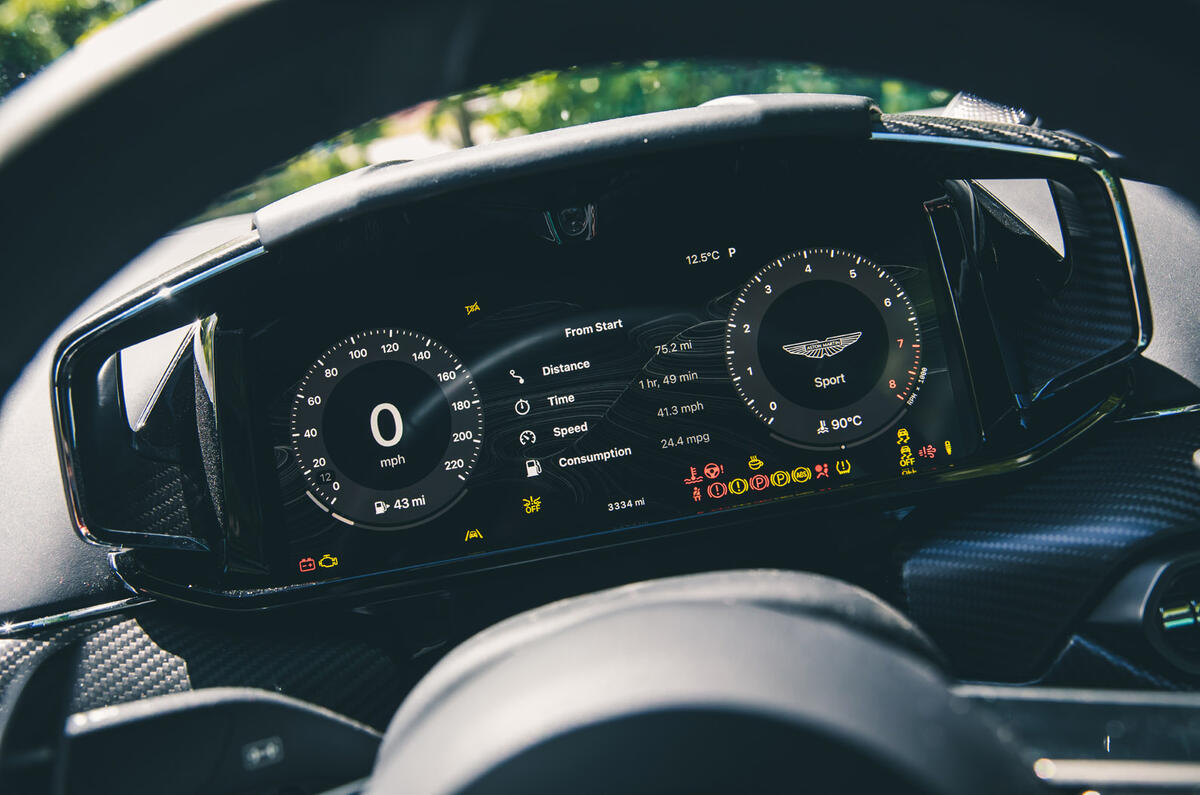
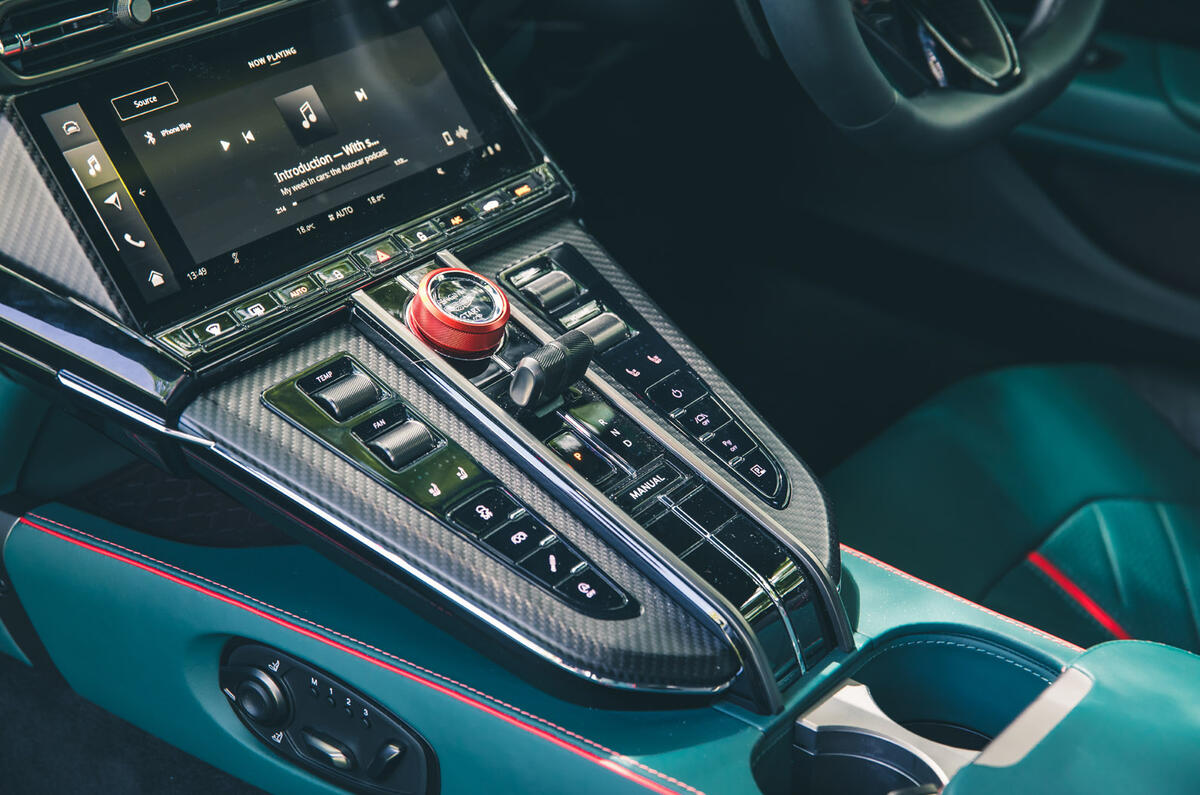
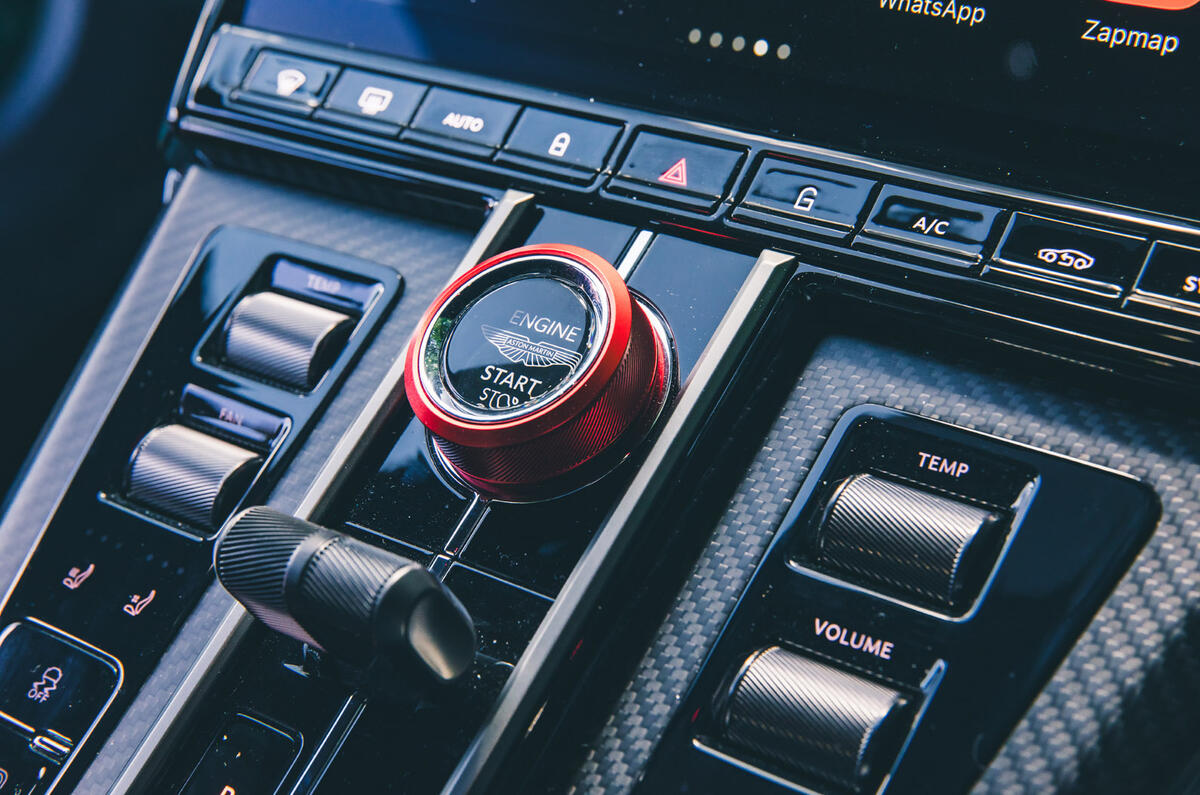
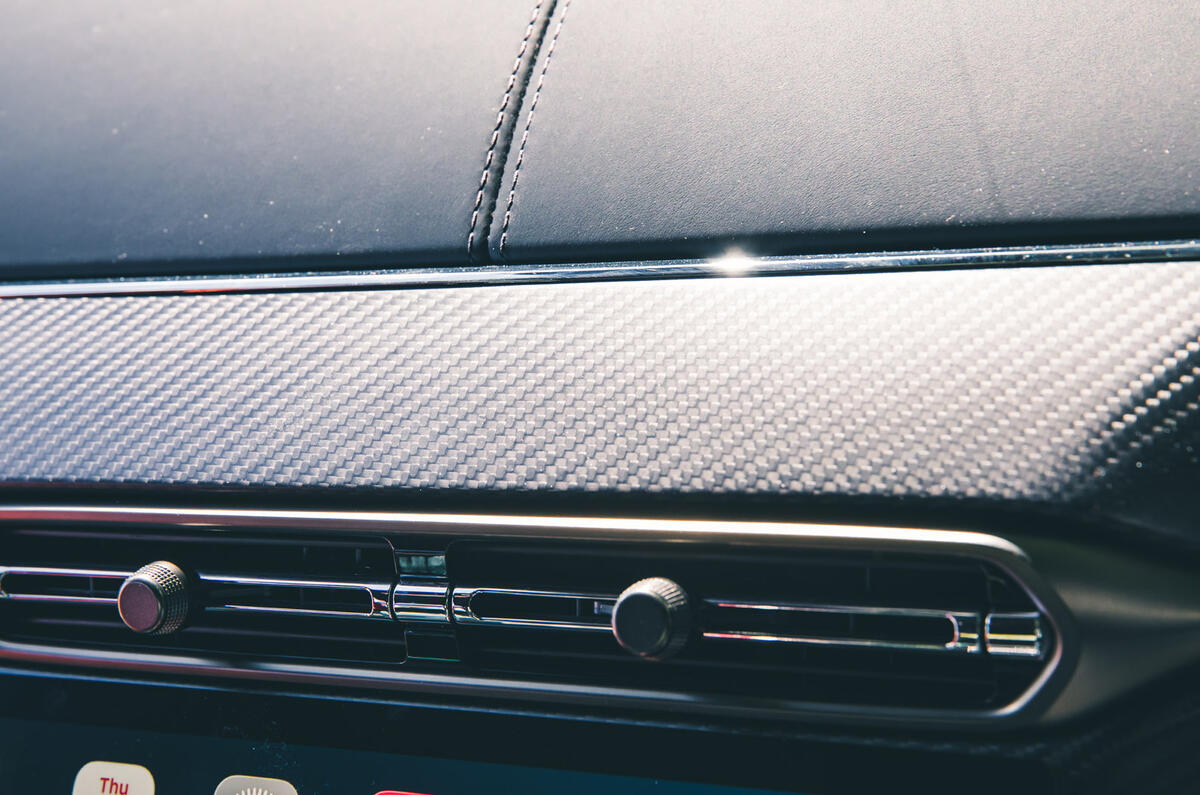
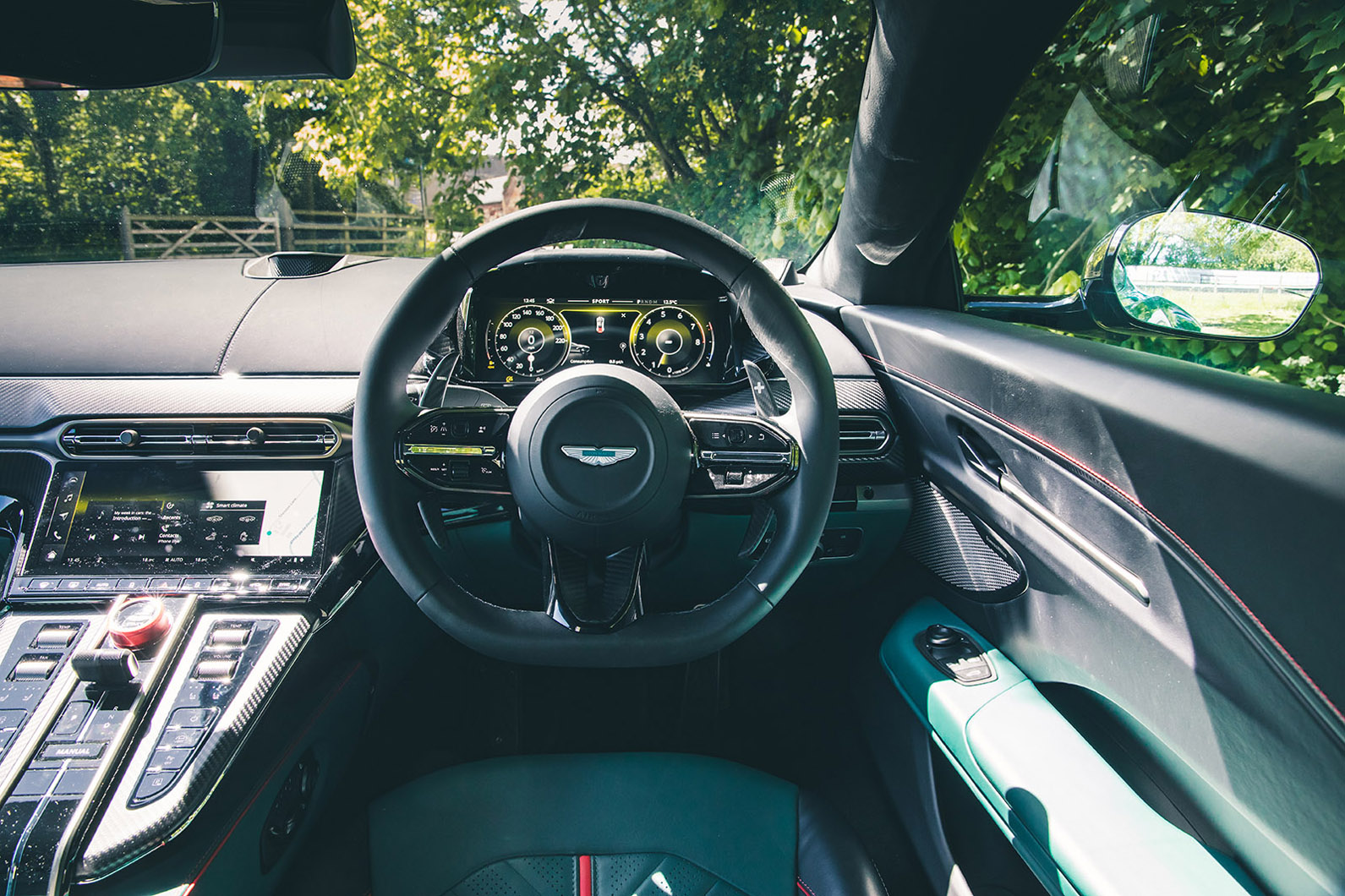
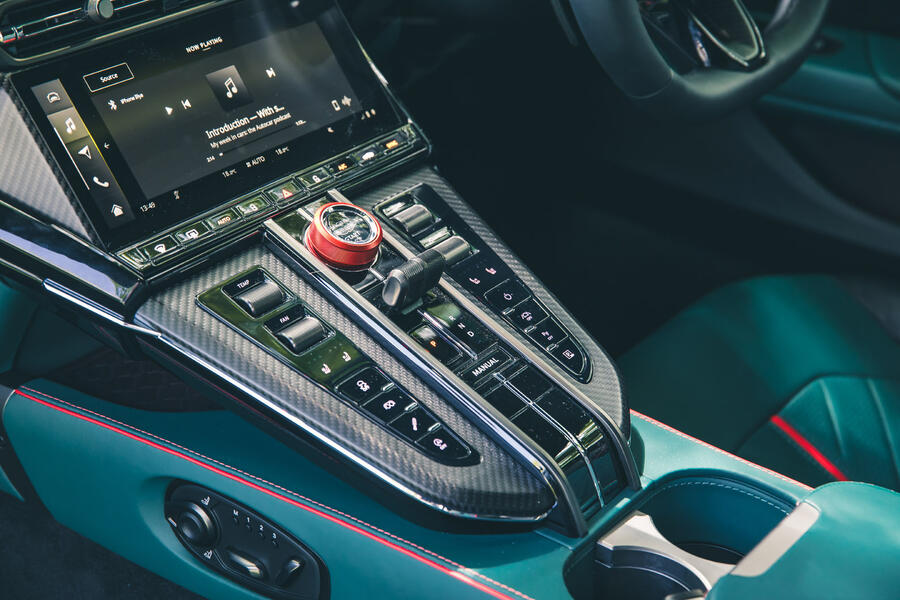
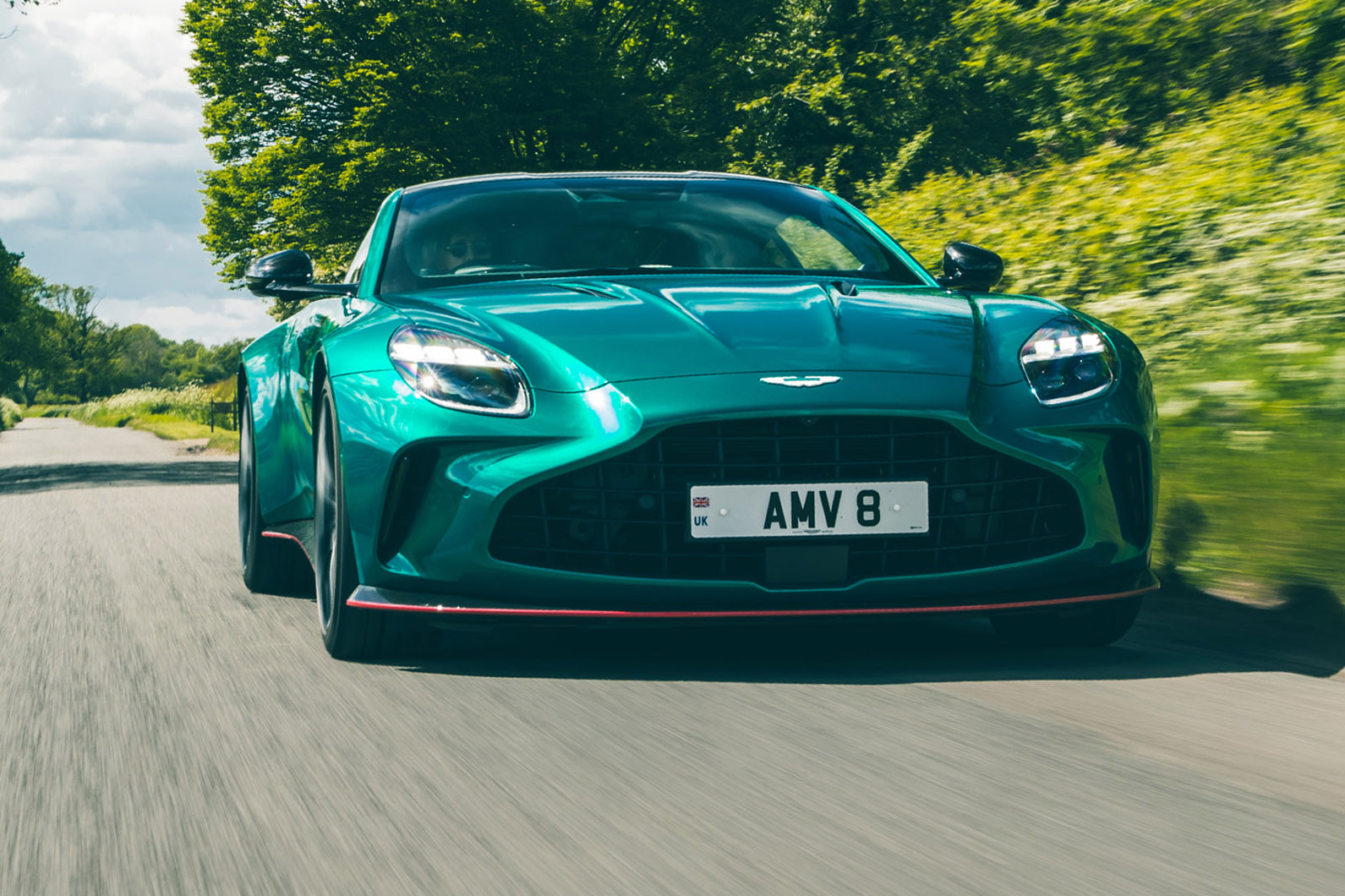
Designing interior switchgear that meets regulations while still remaining tactile, easy to use and robust is an expensive business, so it was a bold move from Aston when, for the current DB12 and Vantage, it chose to wean itself off the Mercedes parts bin and developed its own dashboard architecture and infotainment system. Unlike Ferrari, which gets around the same problem by relying heavily on a touchscreen, Aston has designed some beautifully mechanical-feeling buttons and rollers.
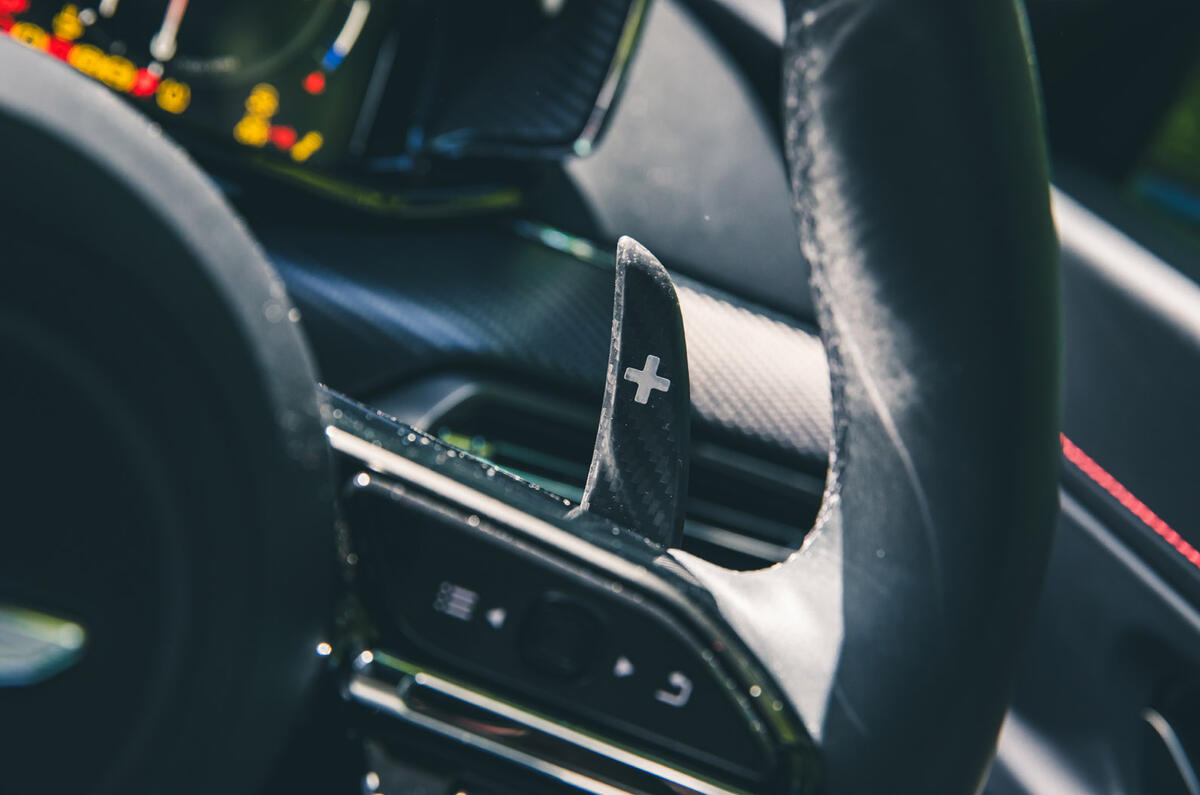
Is it disappointing that all current front-engined Astons now have effectively the same dashboard? Not really, not when swinging the swan door out and slightly up invites you to a truly high-end luxury cabin. Aston has to amortise the cost somehow. Since the Vantage’s launch in 2024, Aston has also addressed some issues that plagued early cars: the driver display isn’t as eye-searingly bright as it used to be, and the gear indicator is much clearer, even if the driver display still lacks the sense of occasion that a set of real analogue dials might impart. While we’re nitpicking, some of the buttons in the centre console and on the steering wheel could be more responsive.
As well as for luxury, the Vantage hits high marks as a sports car. While a Ferrari Amalfi sits you slightly too high, the Vantage’s seat will adjust down, and down, and further down. The effect is helped by the high scuttle, which can make the car a little intimidating to drive at first. To get the classic view out over the long bonnet, it’s best to move the seat up a tiny bit.
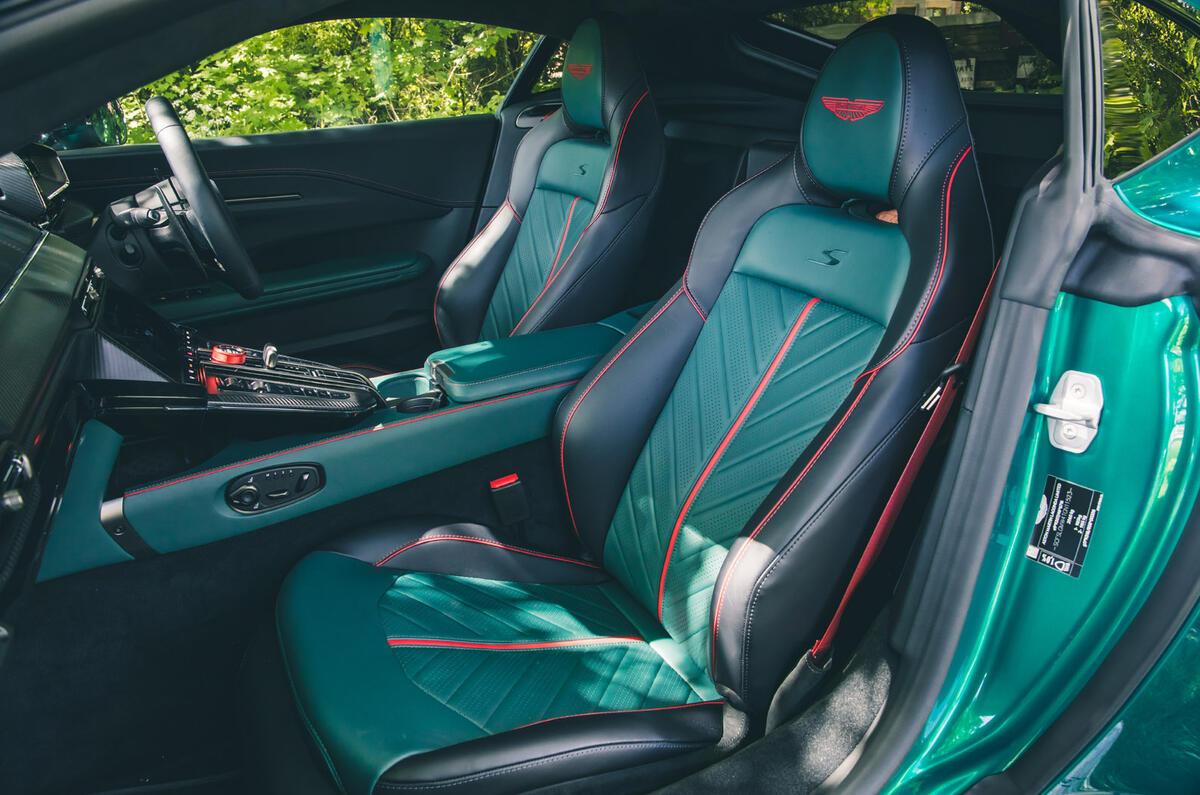
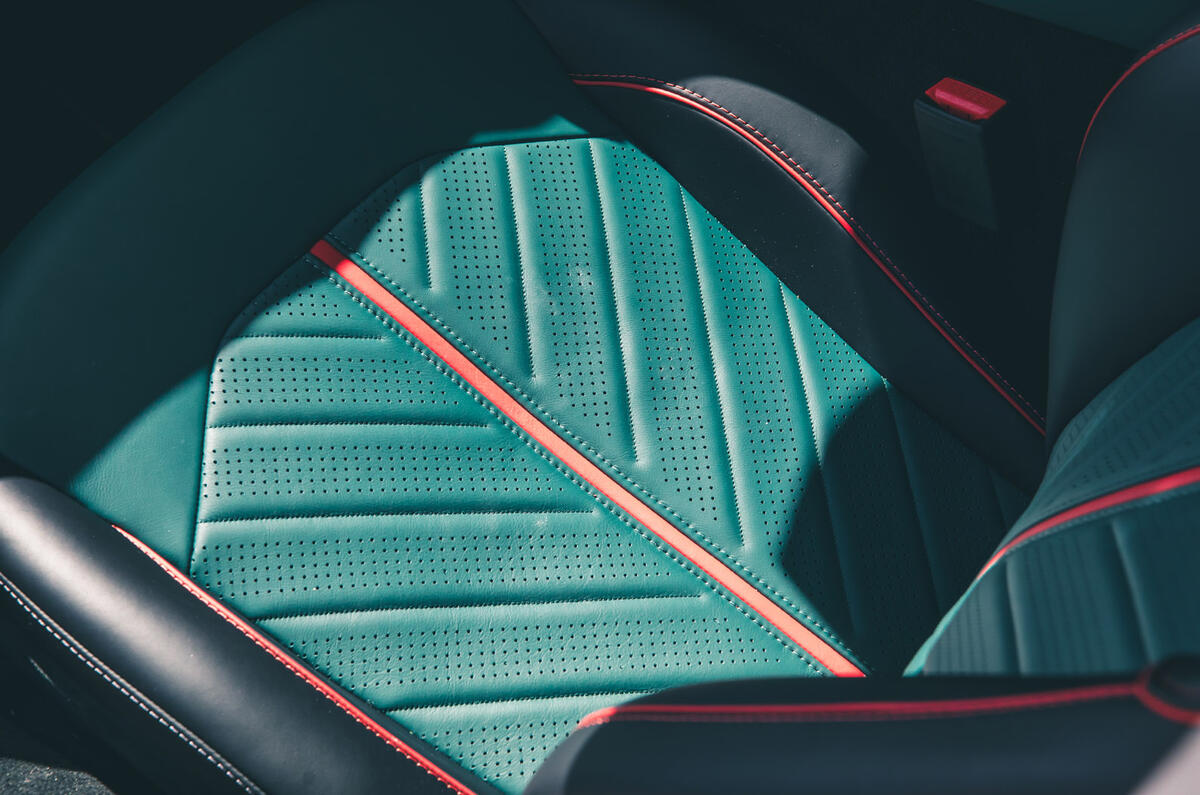
Our test car had the standard Performance Plus seats with memory, heating and ventilation, which proved comfortable and supportive on long drives, and thanks to the adjustable side bolsters kept even the thinner testers in place on track. A skeletal-looking carbonfibre performance seat, which is still heated, is an option, but unless you’re an avid track day-goer, we wouldn’t bother.
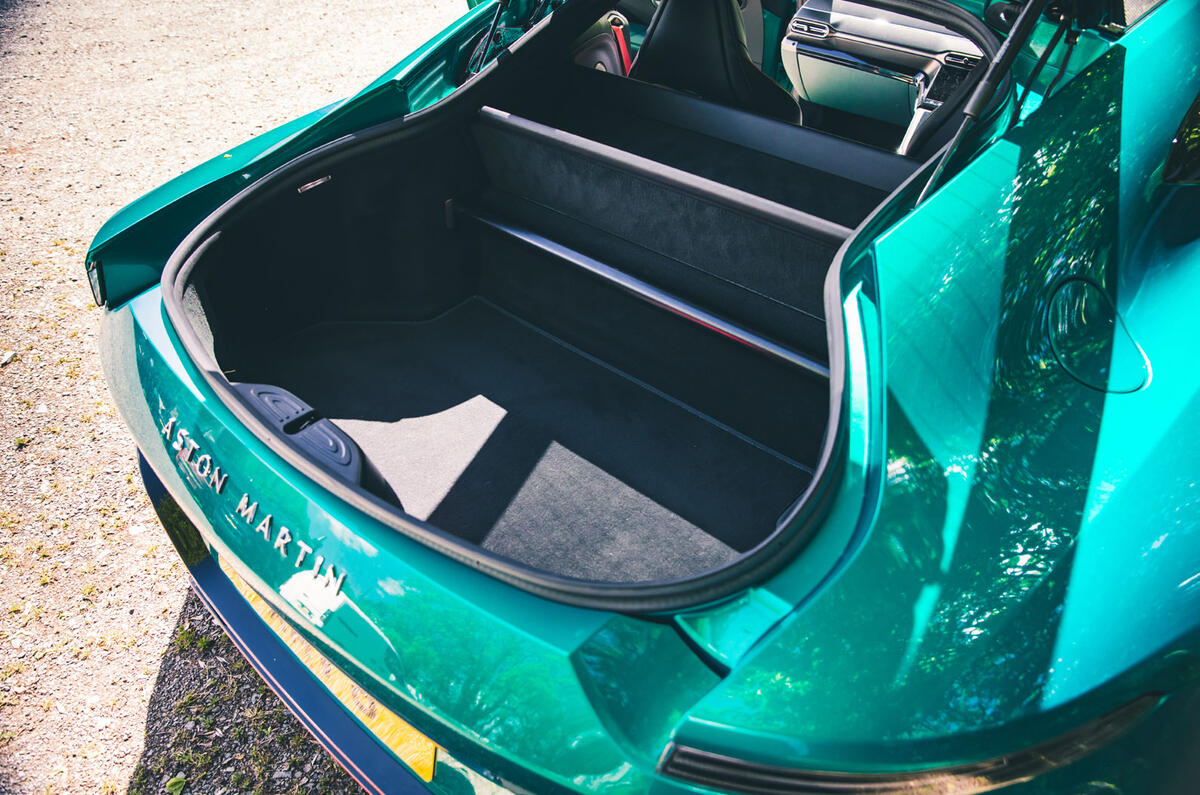
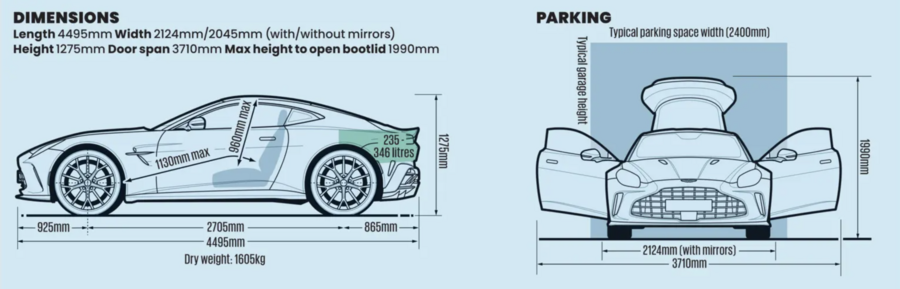
Aston hasn’t neglected practicality. The hatchback boot has a tall loading lip but is quite a usable space, and there’s further stowage room on a shelf behind the seats. The Vantage is a strict two-seater, though, and doesn’t have the emergency +2 seats of the bigger DB12 or the Ferrari Amalfi.
Multimedia
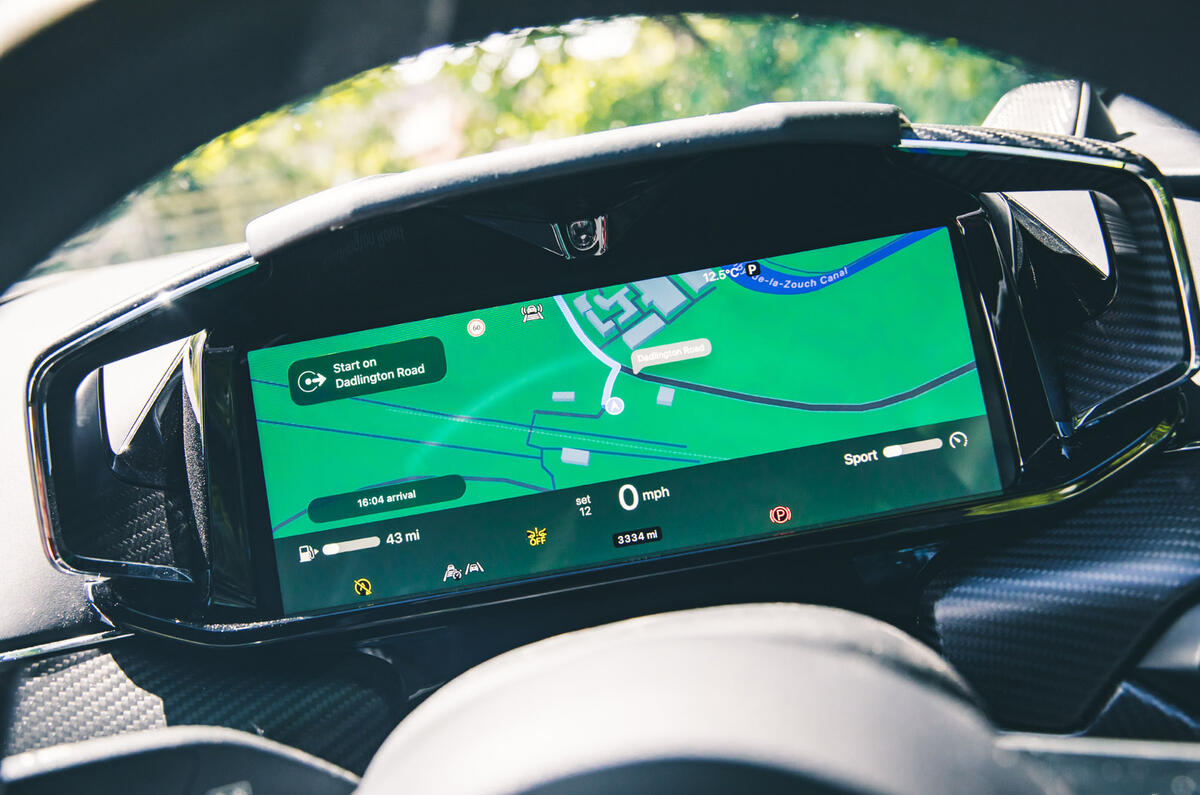
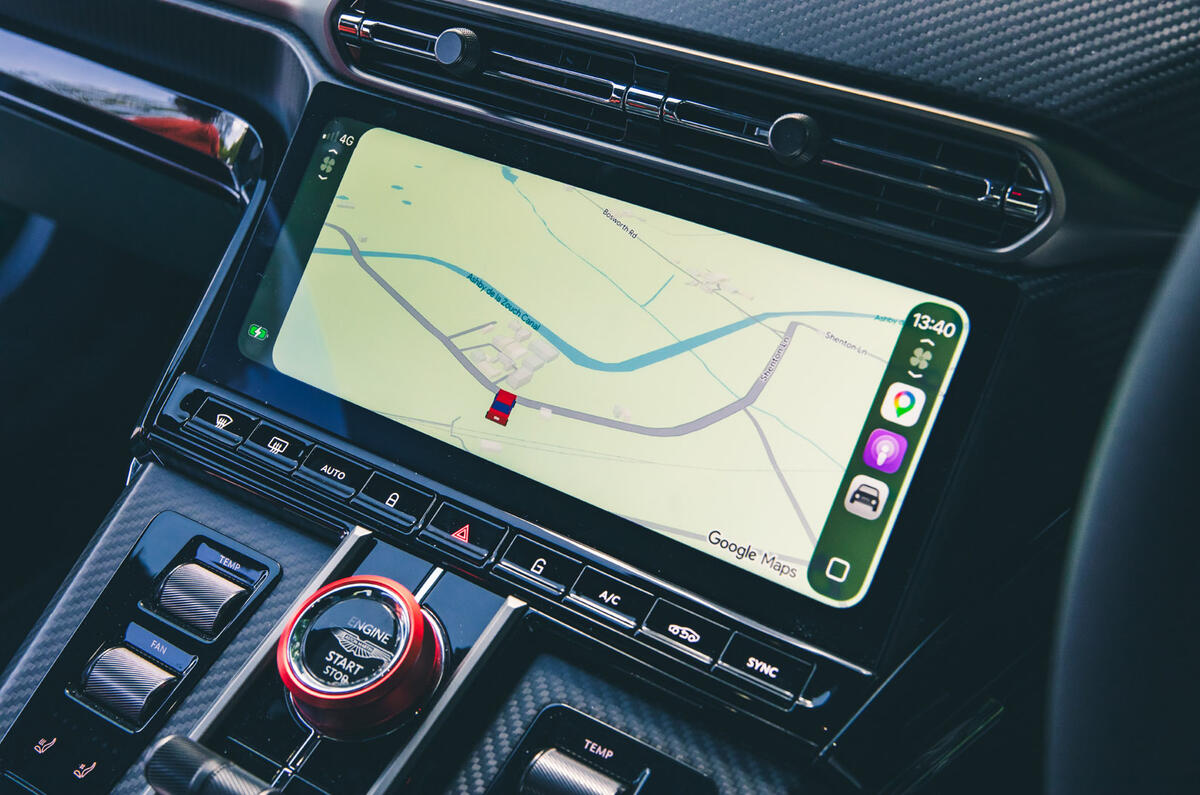
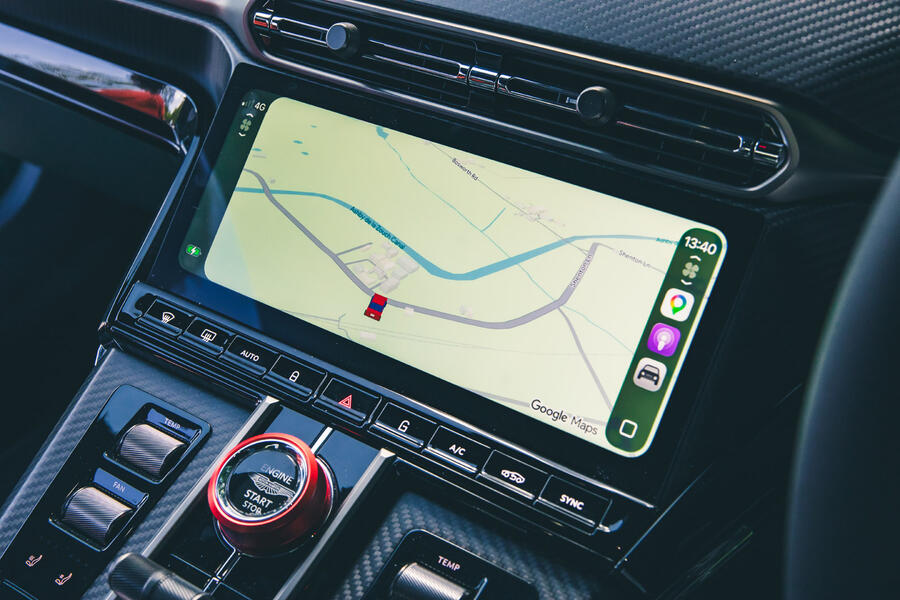
Infotainment is typically seen as a secondary concern in a sports car, even though you don’t interact with it any less than you would in a Volkswagen Golf. Aston Martin has taken it seriously, though. For this generation of Vantage, DB12 and DBX, it developed its own system to finally shake the dependence on old Volvo and Mercedes interfaces. It’s simple and responsive enough, with fairly attractive graphics. The home screen could have been put to better use and the navigation is quite basic, but it’s not a bad effort.
It’s slightly odd, then, that Aston also gives you the option to bypass it with Apple CarPlay Ultra. It has normal CarPlay and Android Auto if you prefer, but Ultra takes over all the vehicle functions such as the climate control, drive mode configuration and gauge cluster, displaying it all in a very clean Apple style. Fine if Aston hadn’t gone to the trouble of designing its own interface, but since it has, the cold and appliance-like feel of the Apple graphics don’t add anything.
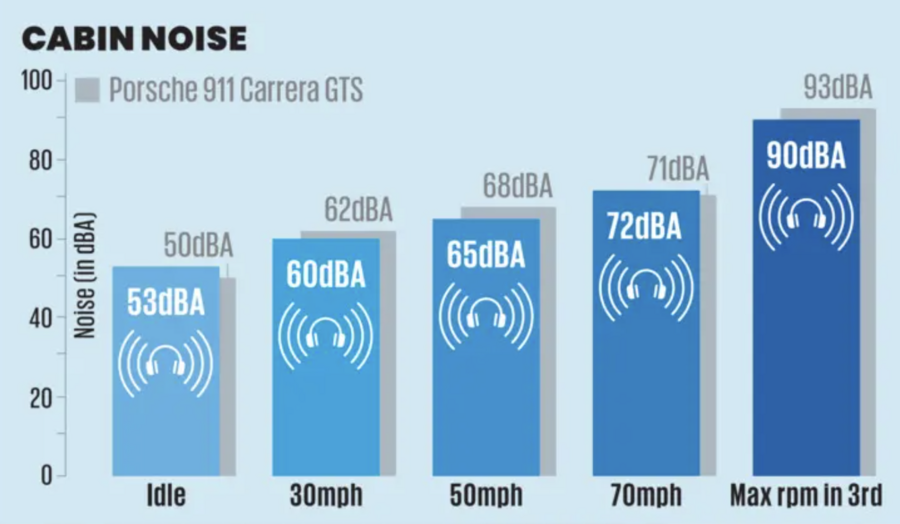
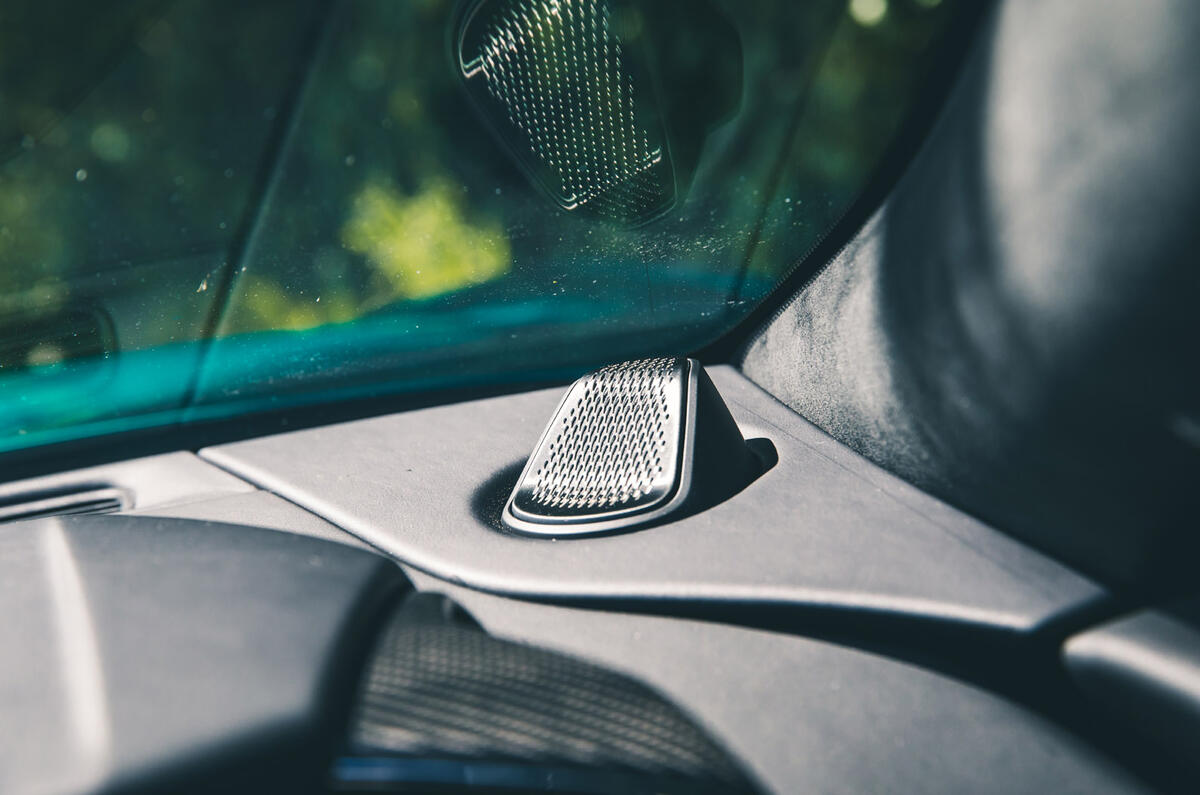
Our test car had the optional Bowers & Wilkins hi-fi, which has a powerful and detailed sound, though the Vantage’s cabin is rather too noisy at a motorway cruise for a genuinely good audio experience.