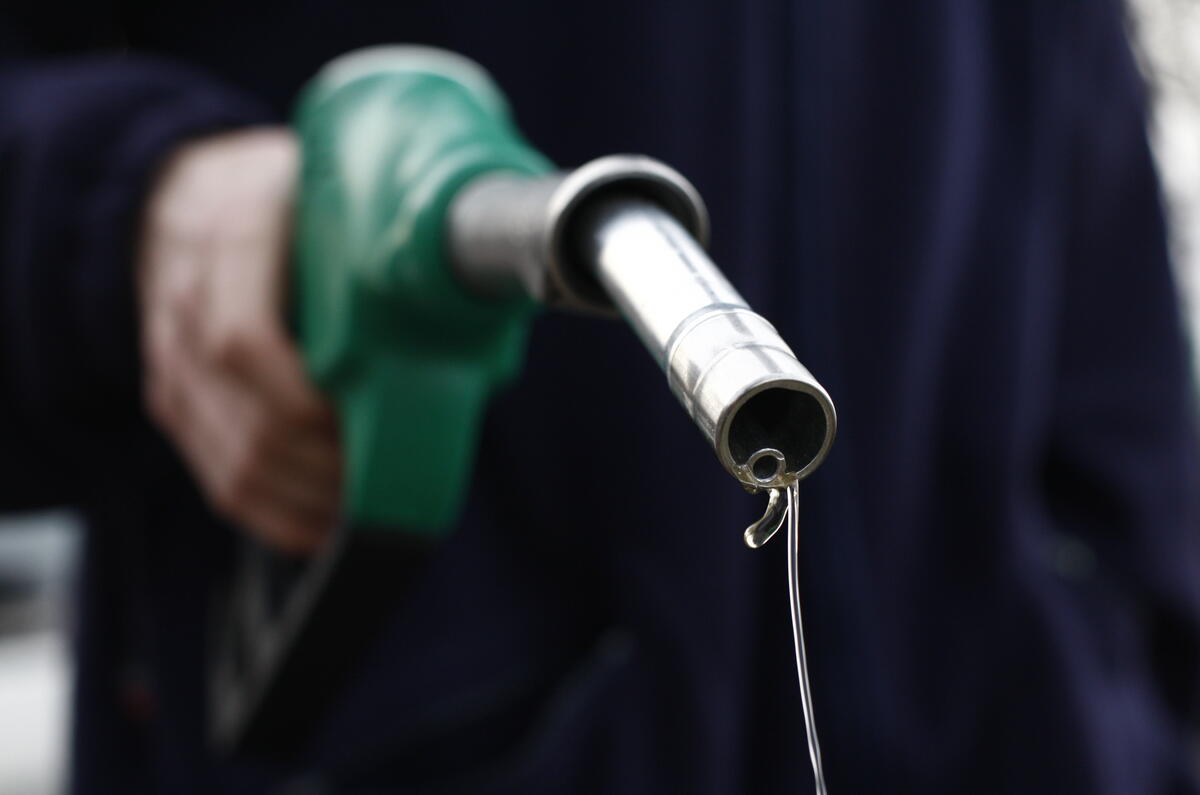

Toyota has proposed a new 'VEEF' category for cars which run on renewable fuels and said such models should be treated in the same way as electric cars in Europe.
Sanding for 'Vehicles running Exclusively on Eligible Fuels', VEEF would accord renewable fuel-powered ICE cars the same incentives as battery-electric alternatives, in recognition that they also emit no CO2 at the tailpipe.
Toyota said renewable fuels should be officially recognised as a zero-emission solution by the EU, and that regulatory support for the new category would enable Europe to dramatically cut emissions from the 300 million ICE vehicles already on the regions' roads today, rather than gradually replacing them over the coming decades with BEVs.
Toyota has long been a vocal advocate of renewable fuel, using them in various motorsport applications and partnering a number of other automotive firms to evaluate it for real-world use.
Over the past six months, it has collaborated with BMW, Bosch and energy company Repsol on a trial in Spain, where some 20 production-spec cars were operated using 100% renewable fuel over six months to prove the viability of the technology.
The fuel, made from residual biomass, is said to have no impact on a car's performance and requires no modifications to its mechanicals.
Toyota said the trial proved that such fuels work in real-world situations and that they can be supplied using existing fuelling infrastructure - whereas BEVs and hydrogen FCEVs need their own networks of expensive bespoke chargers and pumps.
Bosch's contribution to the trial was in ensuring the traceability of the fuel used – crucial to determining its environmental credentials – and ensuring that any cars involved only used the renewable fuel.
Any ICE car designated as a VEEF under the proposals would have to be blocked from running on conventional petrol - likely using technology to determine the type of fuel nozzle used at a fill-up.
Toyota acknowledged that production of renewable fuels is currently far too low to power vehicles on any meaningful scale but said the creation of a new regulatory framework for VEEFs would lay the foundations for the industry to scale up.
The specific fuel posited by Toyota as an alternative to batteries or hydrogen is second-generation biofuel, made using waste residue from organic products - much cheaper to produce than the fully synthetic e-fuel being produced by Porsche, for example.
Toyota estimates that at current levels, there's enough biomass in Europe to sustain the region's ICE vehicle fleet through to 2040.
"If we are serious about reducing carbon emissions as much and as fast as possible, renewable fuels have a big role to play," said Toyota Europe's chief technical office, Shinichi Yasui.
R&D boss Thiebault Paquet concurred and said that compared with BEVs and FCEVs, they "do not require much investment on the vehicle side, because they're 'drop-in' fuels - they can be used and we don't have to change anything.
"It's not like 100% ethanol where you have to have a different injector, the valve seats need to be protected etc."