Currently reading: EV emissions in spotlight as increased weight drives up tyre wear

Increased wear, owner neglect and driving style cited as factors, as particulate emission rules present new challenge

New research shows that increased weight and neglected maintenance cause EVs to suffer more tyre defects than combustion-engined cars - but experts say faster tyre wear won't erase their overall climate advantage.

According to a report by analyst New Automotive, for every 1000 MOT tests on cars three to eight years old, about 26 EVs recorded tread below the legal limit, compared with 18 petrol cars.

Cuts reaching the cords were recorded in approximately 30 EV tests, compared with 14 petrol cars. The comparison covered 1.6 million EV tests and 17.9 million ICE car tests.

"For a per cent extra weight of car, you get a percentage extra in tyre abrasion," said Nick Molden, founder of Emissions Analytics, calling it "a rough rule of thumb".

He added: "An EV would typically be 20% heavier than an ICE car. Before fitting specialist tyres, you're looking at 20% or so more wear on an EV."

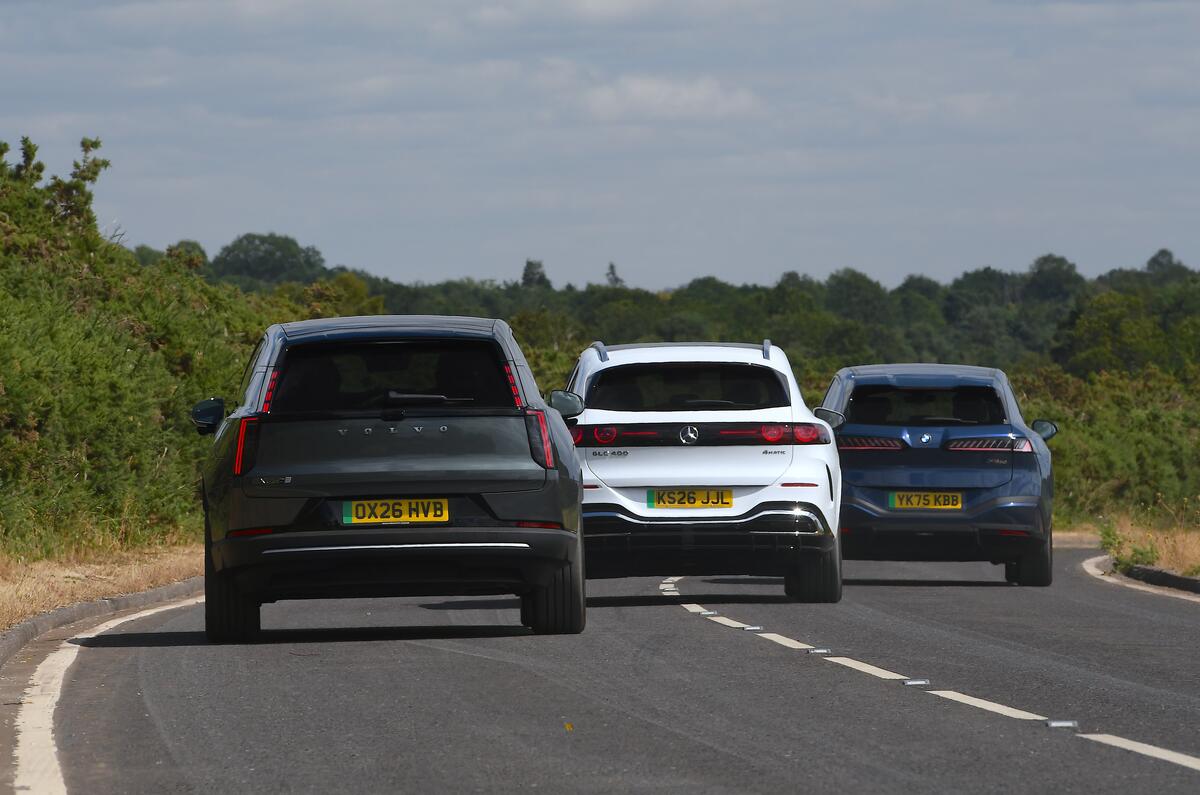
The British Tyre Manufacturers Association (BTMA) has also found a higher tyre failure rate among EVs. Its latest figures put the failure rate for EVs at 6.0%, compared with 4.7% for diesels and 4.3% for petrol cars.
The BTMA points to greater weight and instant torque wearing tyres more quickly.

Darren Lindsey, head of the BTMA, said driver behaviour and maintenance are also part of the problem, explaining: "People tend to drive and forget now."

He argued that because EVs need less routine servicing, tyres can be overlooked.

Lindsey warned that the higher reported defect figure - roughly 80% higher than for ICE cars - shouldn't be interpreted as a direct measure of wear.

"That's probably down to how people are treating the vehicle," he said, pointing out that a defect could be "a cut in the sidewall", "a small bulge" or another problem that isn't simply down to tread wear.

Maintenance aside, Jon Andersson, Ricardo's global technical expert on emissions measurement and standards, pointed to several reasons why EV tyres wear more quickly.

"Mass is definitely an important factor - perhaps the most significant," he said. "But speed, braking, tyre characteristics, alignment, maintenance and driving style can all play a part."
Back to top

CAN EV-SPECIFIC TYRES CUT WEAR?

Molden said specialist EV tyres are generally "just offsetting the added wear from the extra vehicle weight and torque" but that comes at a price: EV tyres, "in round numbers, are up to 50% more expensive than normal ICE tyres".

Molden said the main problem comes when "these heavy cars with high torque" are fitted with tyres "which are not suitable for that" and that the wrong tyre can double wear rates.

WHAT ABOUT EMISSIONS?

While EVs wear out their tyres more quickly, experts say increased degradation does not necessarily mean more pollution - but EV-specific rubber could bring its own set of concerns.

Andersson said wear and airborne emissions aren't equivalent: "A tyre with higher overall wear does not necessarily generate proportionally more airborne particle pollution."

Yet as impending Euro 7 abrasion standards compel manufacturers to create longer-lasting compounds, solving wear may simply shift the hazard. Molden said new compound formulations "will affect the toxicity of the particles".

That chemical profile remains a critical blindspot. University of Surrey professor Prashant Kumar, who studies the impact of air pollution on health, said tyre-wear particles can contain metals and chemicals whose long-term health impact "is not very well understood". Larger rubber fragments stay on the ground and are washed away by rain but finer particles "could become airborne" and pose a risk.

Asked to comment, the BTMA pushed back, saying any changes to materials or product design are subject to "extensive technical evaluation and scrutiny".

SUSTAINABILITY CONCERNS

If EVs wear through tyres more quickly, another issue is what happens to them once they are spent.

Molden said "around two billion" end-of-life tyres are discarded globally per year. Manufacturing more tyres would add to CO2 emissions, he said, but that wouldn't wipe out the overall CO2 advantage of an EV. He put this at "approximately 50% on a life-cycle basis", not including the impact of the tyres themselves.

Back to top

He added: "Intuitively, the combustion engine produces a lot of CO2. Tyres on average last about two years, so there is no way going through tyres faster will negate the benefit of electrification."

WHAT'S NEXT FOR EV TYRES?

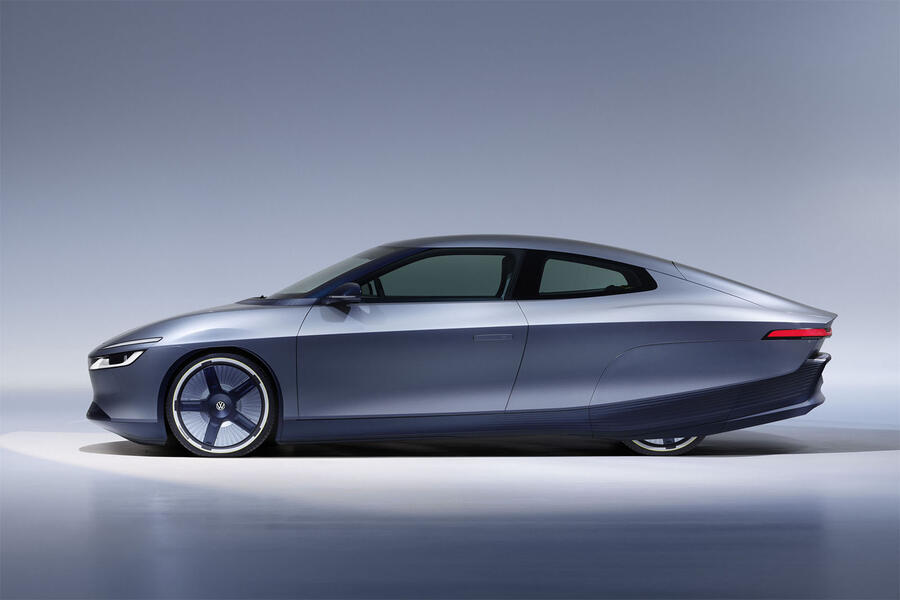
Volkswagen Mission Efficiency: Continental has developed a new compound for VW's new streamliner. The tyre has an 'industry-leading' rolling resistance around 25% less than needed to hit an 'A' rating under the EU's energy-efficiency label system. The tyres will influence Continental's next-gen EV compounds.

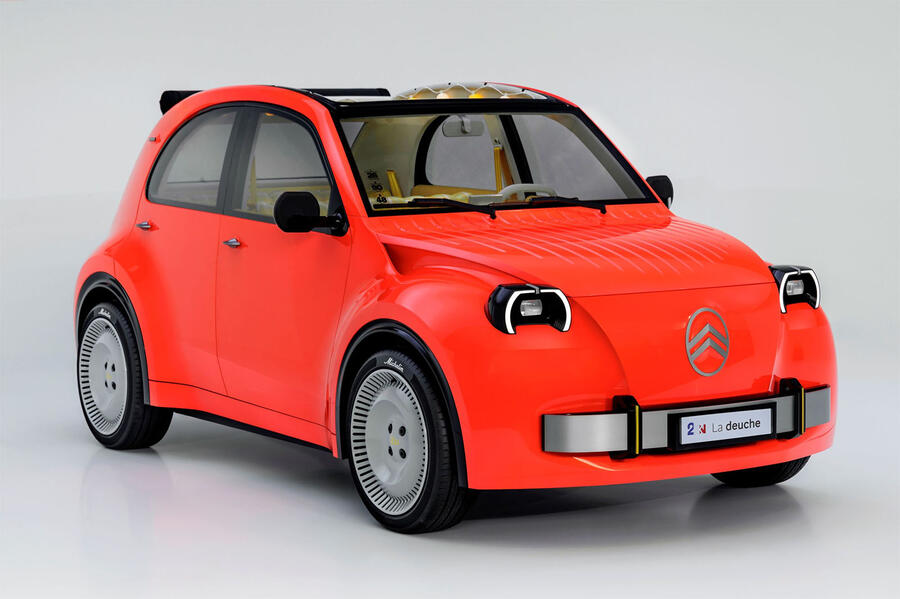
Citroen 2CV: Here 'digital twin' technology monitors the car's and the tyres' metrics (laden weight, temperature, pressures etc) to create a digital simulation of the tyre - its 'twin'. The car then adjusts its behaviour to suit - for example, ramping up the stability control in lower-grip conditions.

Join our WhatsApp community and be the first to read about the latest news and reviews wowing the car world. Our community is the best, easiest and most direct place to tap into the minds of Autocar, and if you join you’ll also be treated to unique WhatsApp content. You can leave at any time after joining - check our full privacy policy here.