Currently reading: Electric Porsche 718 Boxster driven: Forget the flat six - it could be the best yet

After years of delays, we finally get behind the wheel of the new Porsche Boxster, and it doesn't disappoint

Will 2027 be the year that electrons prove a worthy substitute for reciprocating pistons in the dedicated driver’s car? It just might. Last week, Matt Prior pronounced the electric M3 the most fun EV he’d driven, and now here’s the most fun EV that I’ve ever driven: the electric Porsche 718 Boxster.

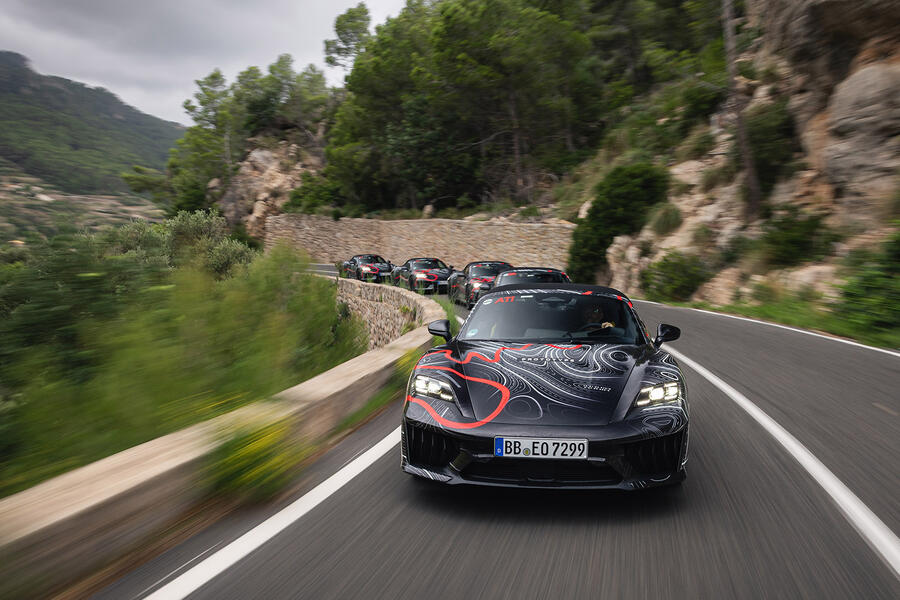
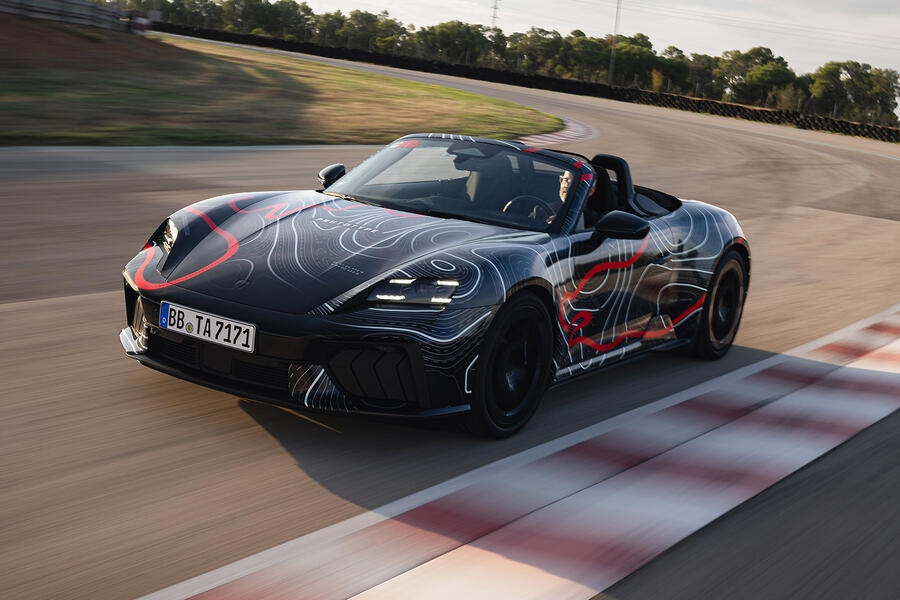
Caveat alert: I spent an hour in the passenger seat being driven around the Mallorcan hills by the head of vehicle dynamics, and then got a tantalising six laps of a racetrack behind the wheel of a late-stage prototype, so this is no full verdict. This is only an early stage of the elaborate hype machine Porsche is putting into motion, but I, for one, am pretty hyped.
Having already invited journalists for passenger rides, Porsche now invited journalists to have a short drive, ahead of inviting journalists to see the finished car, and to later invite journalists to drive the finished car – hopefully by the summer.

Porsche is teasing it every step of the way because it has something to prove. After heavily delaying the project due to battery supplier troubles and uncertainty about whether anyone actually wants an electric sports car, management is now fully behind it again, having cancelled the briefly mooted flat-six version. You might think it should have learned from its mistake of not replacing the ICE Macan, but unlike with the SUV, there isn’t an appropriate platform with Euro 7 compliant engines here that can be quickly subbed in. And anyway, we’re several years of EV tech further down the line now, and closer to various ICE bans.

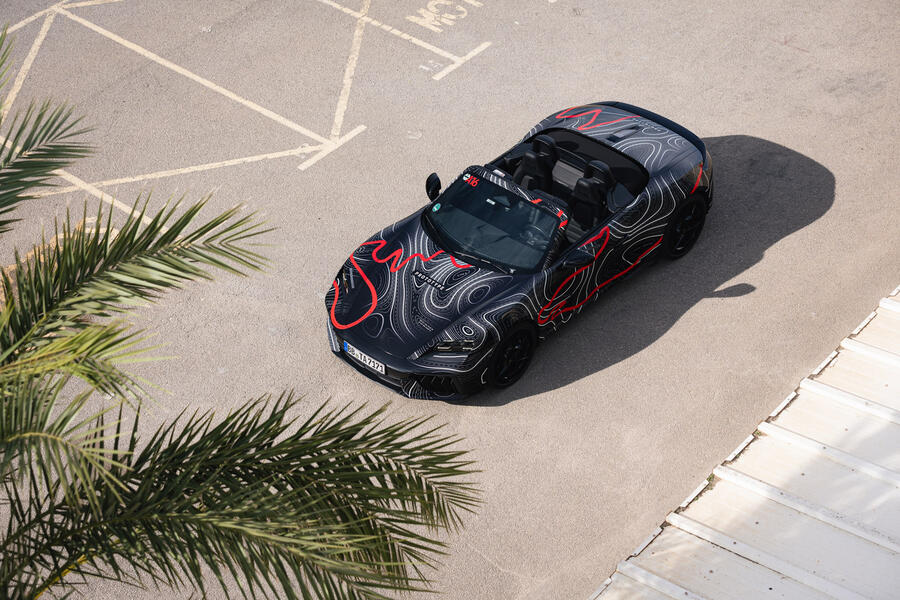
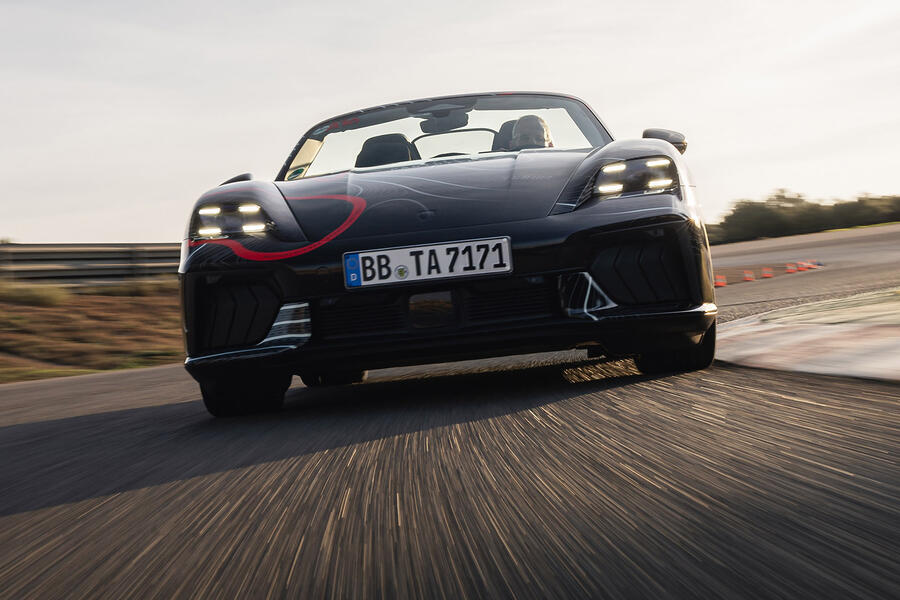
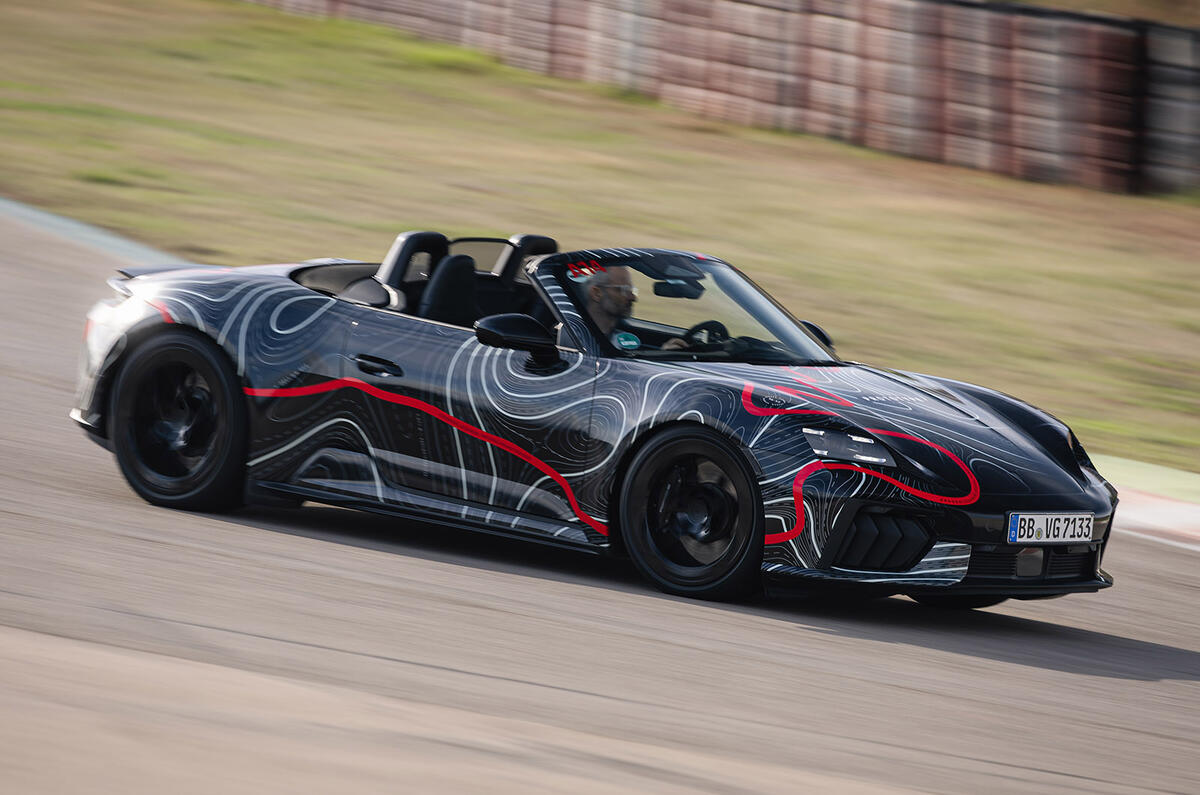
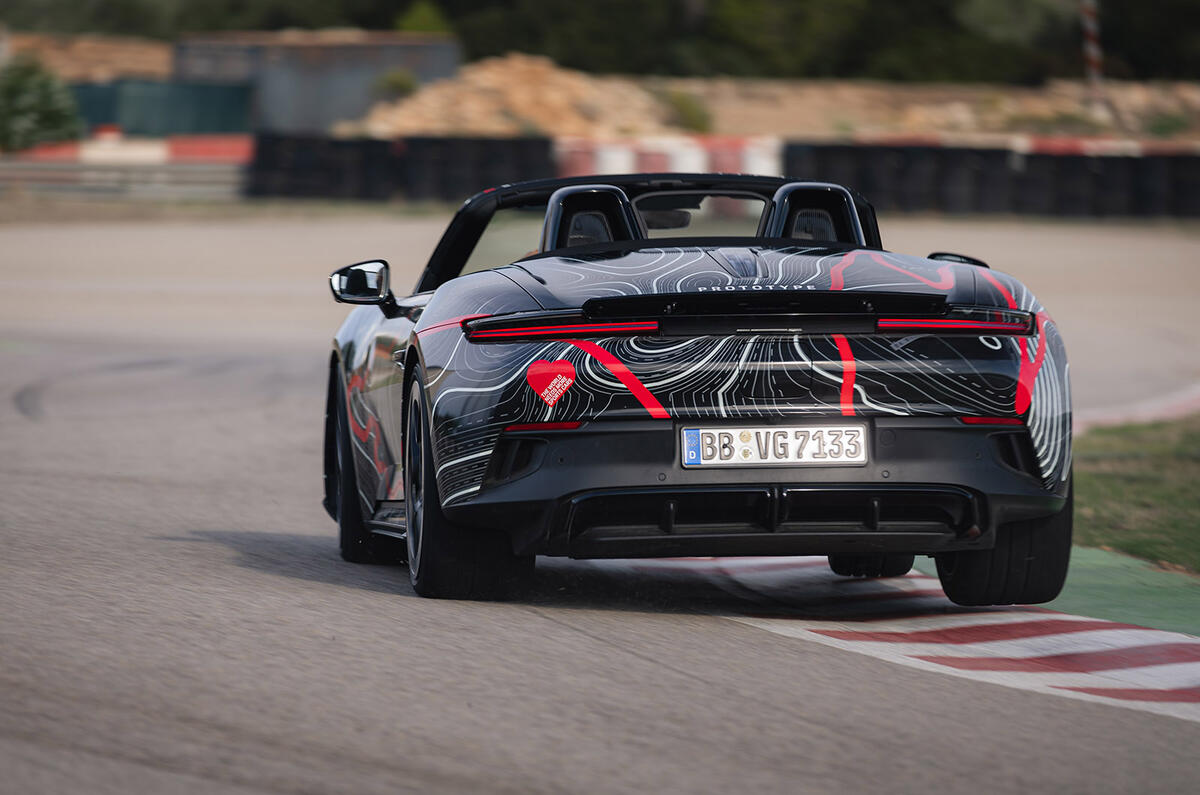
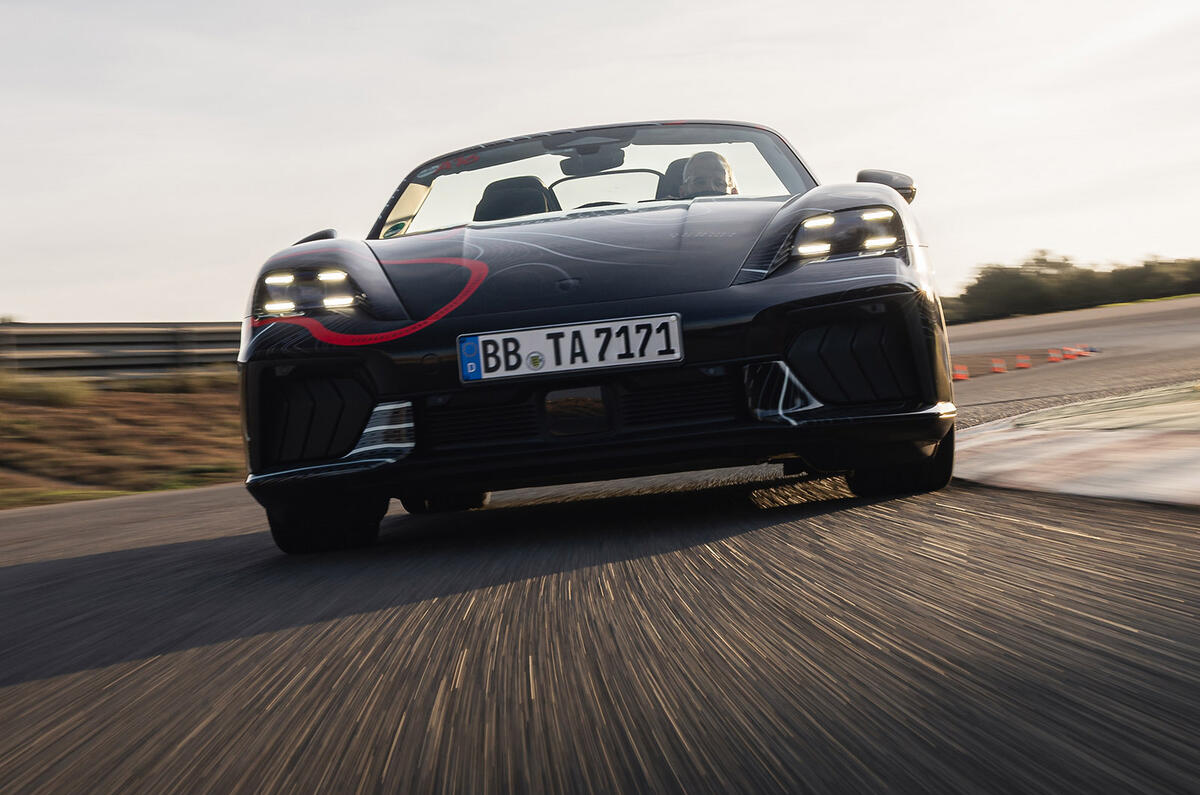
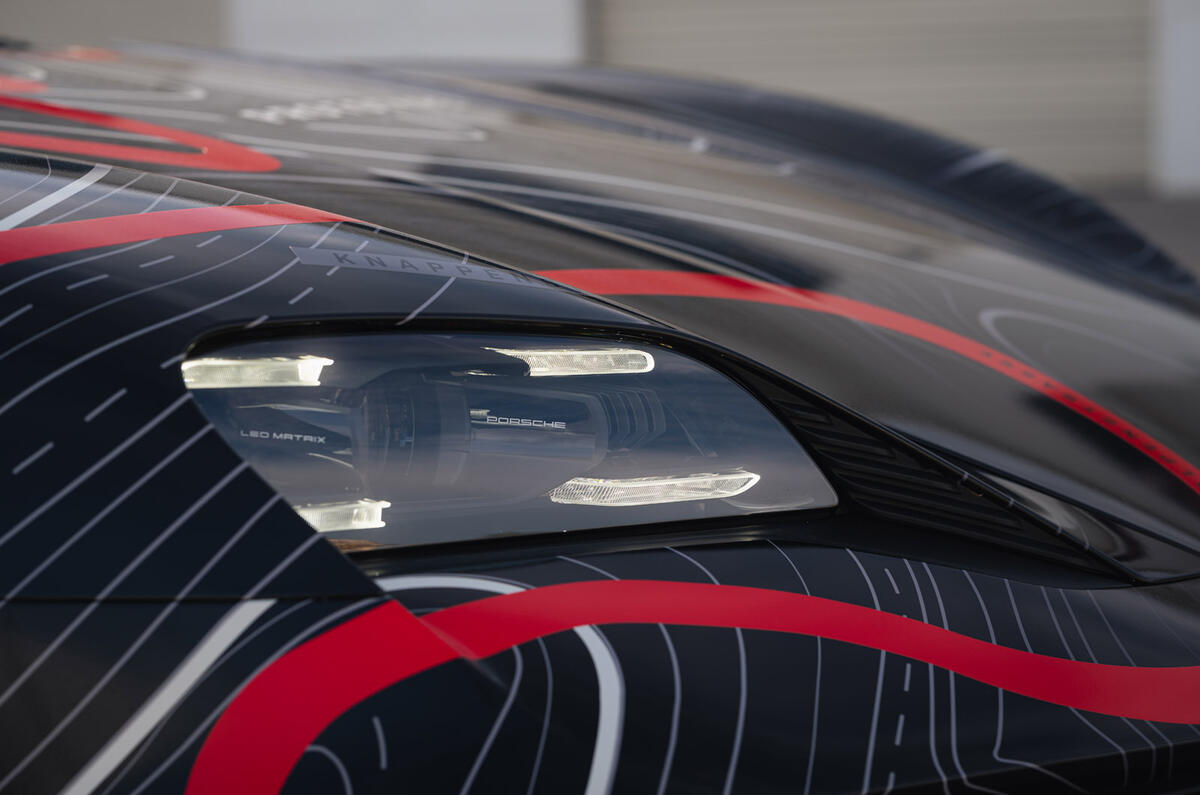
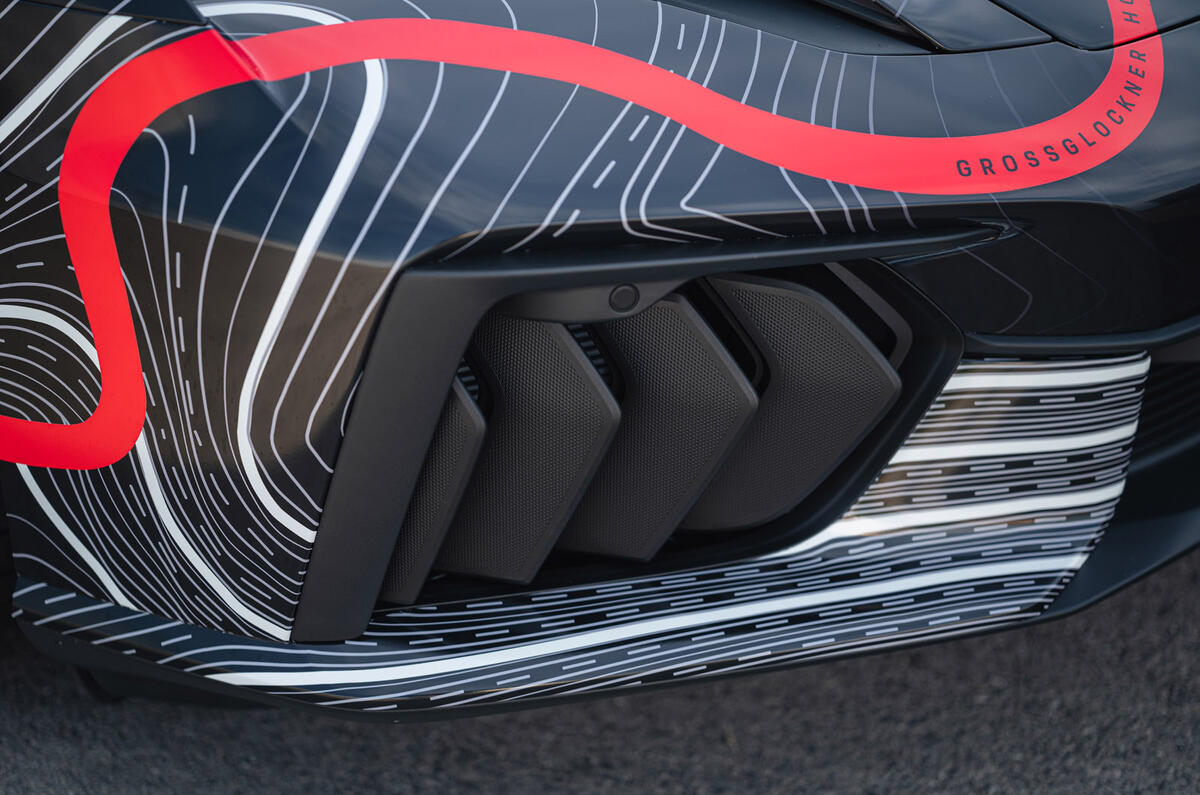
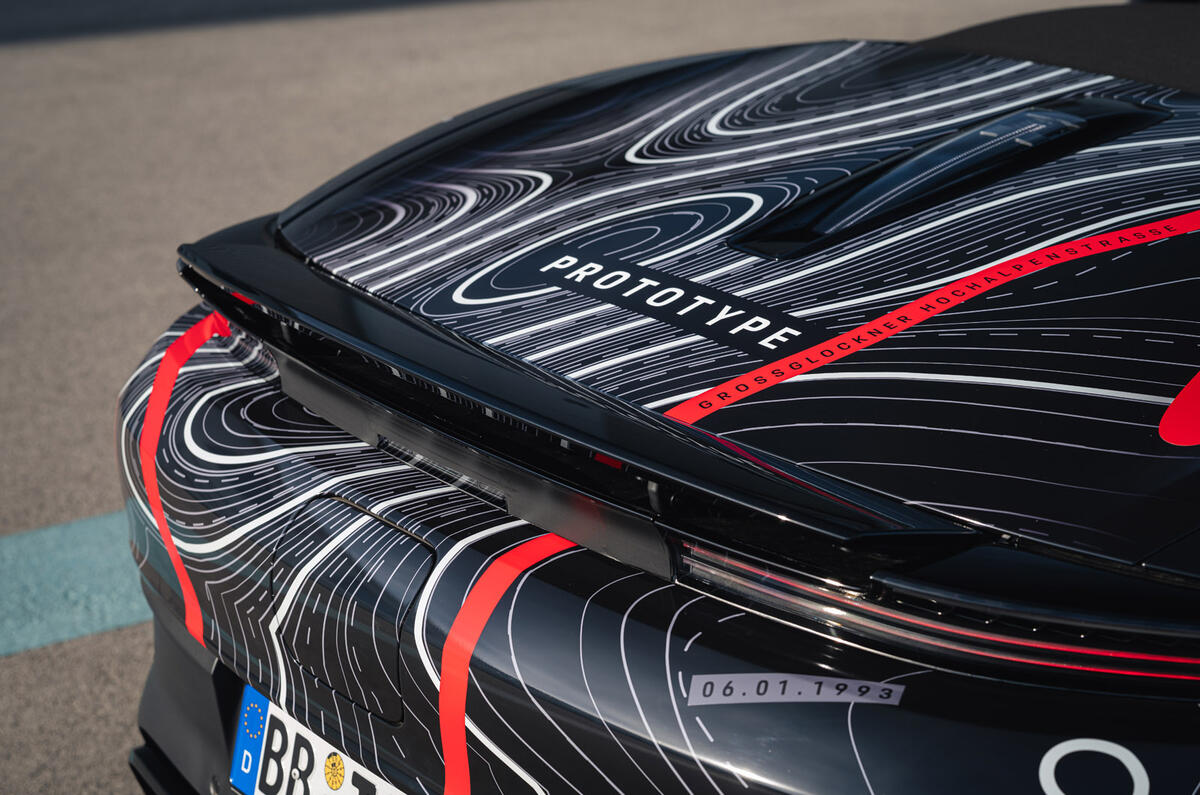
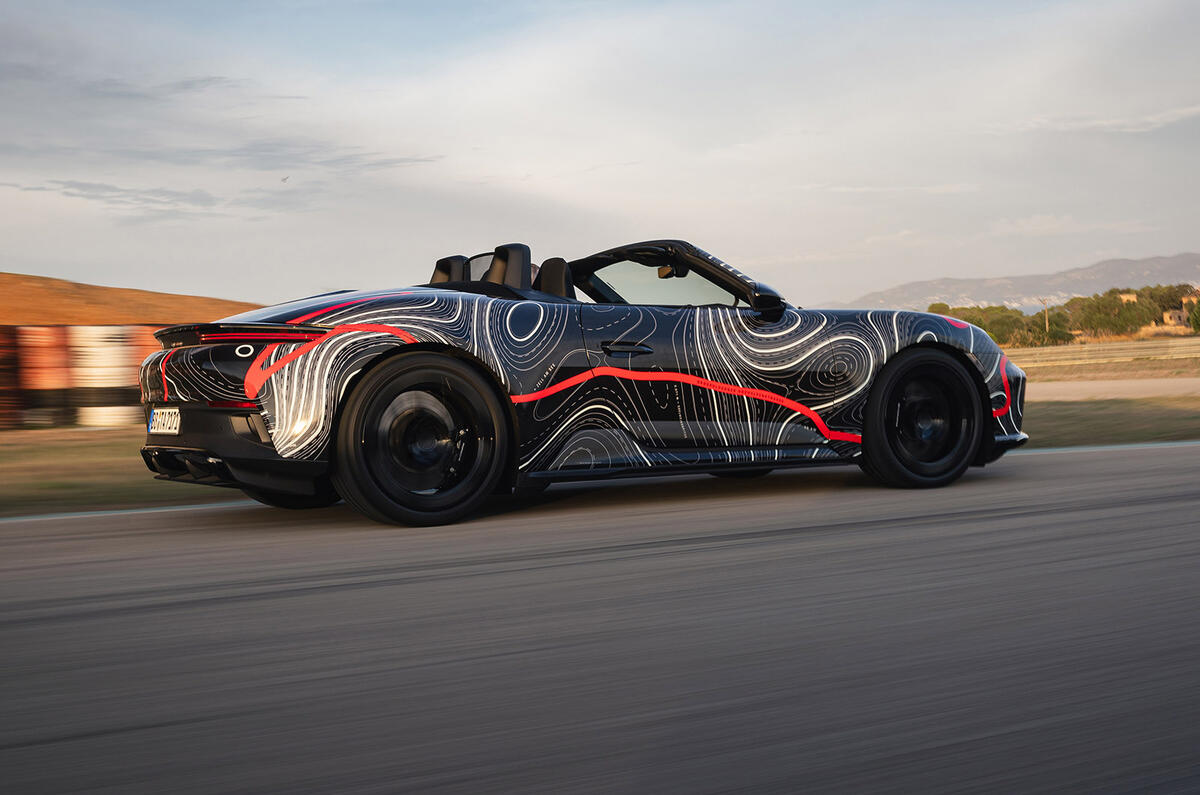
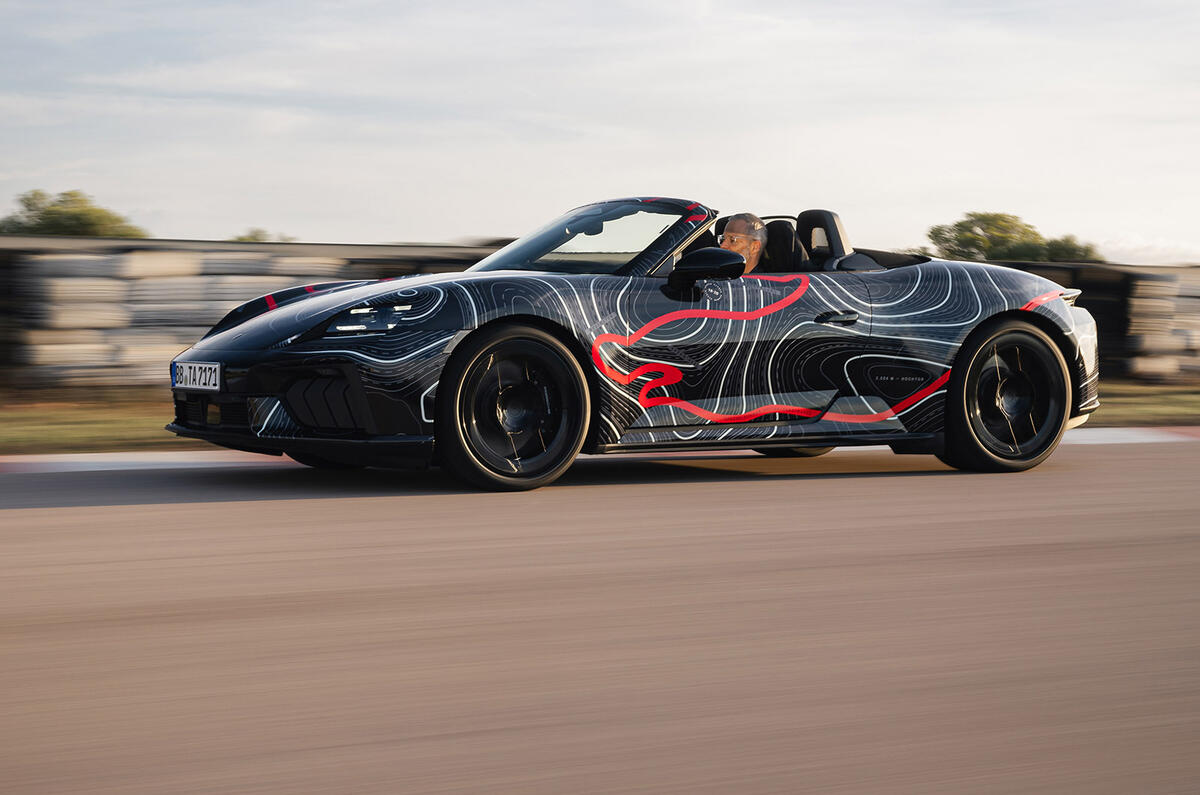
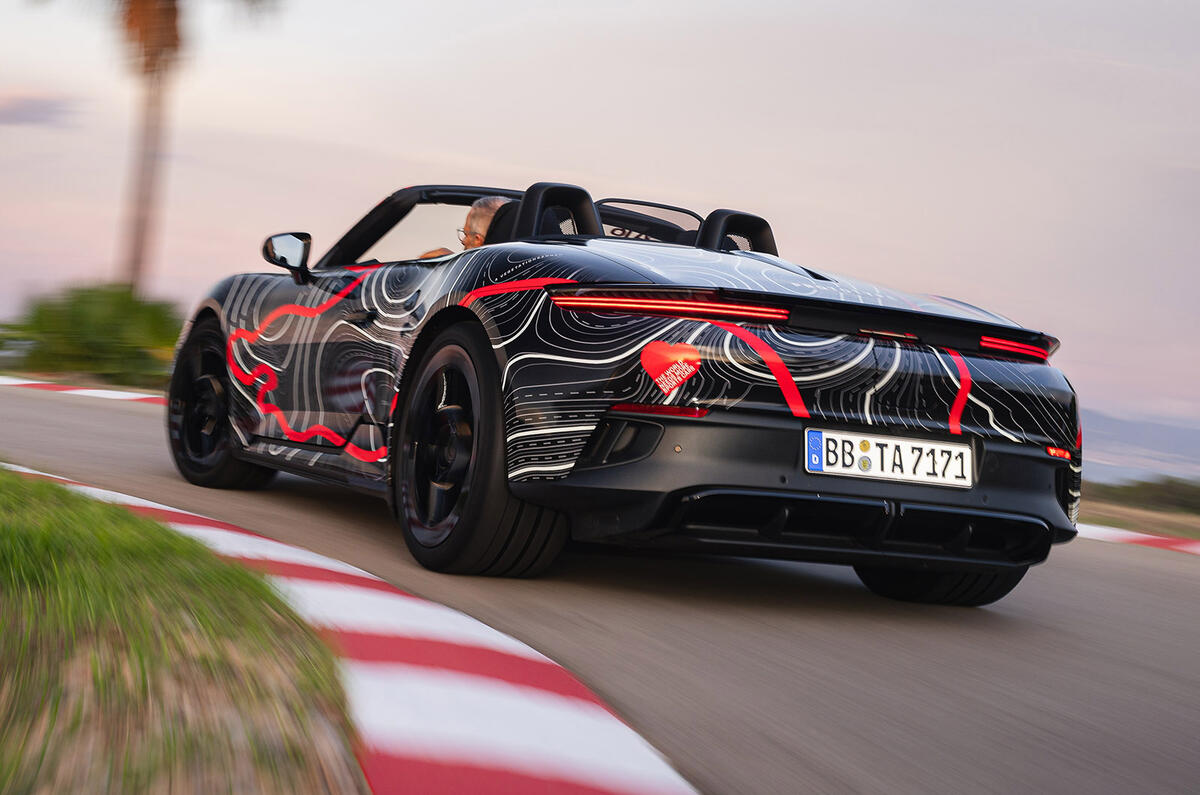
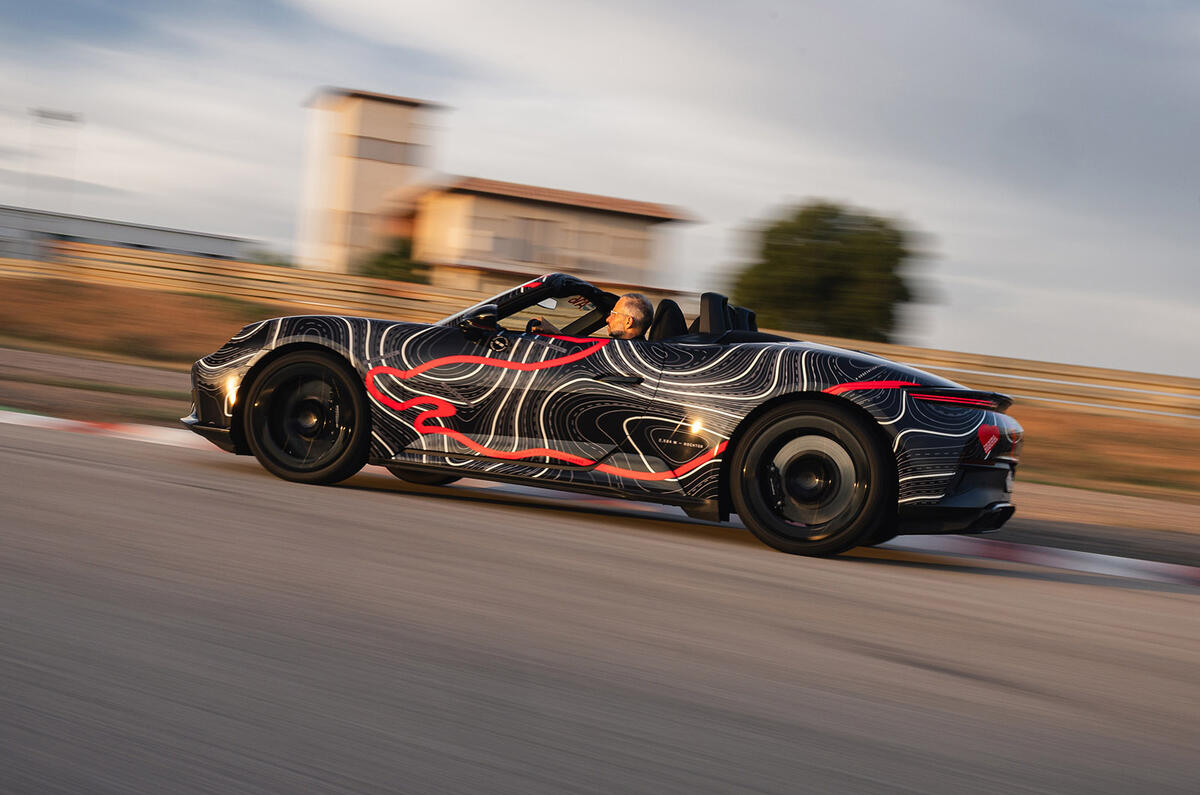
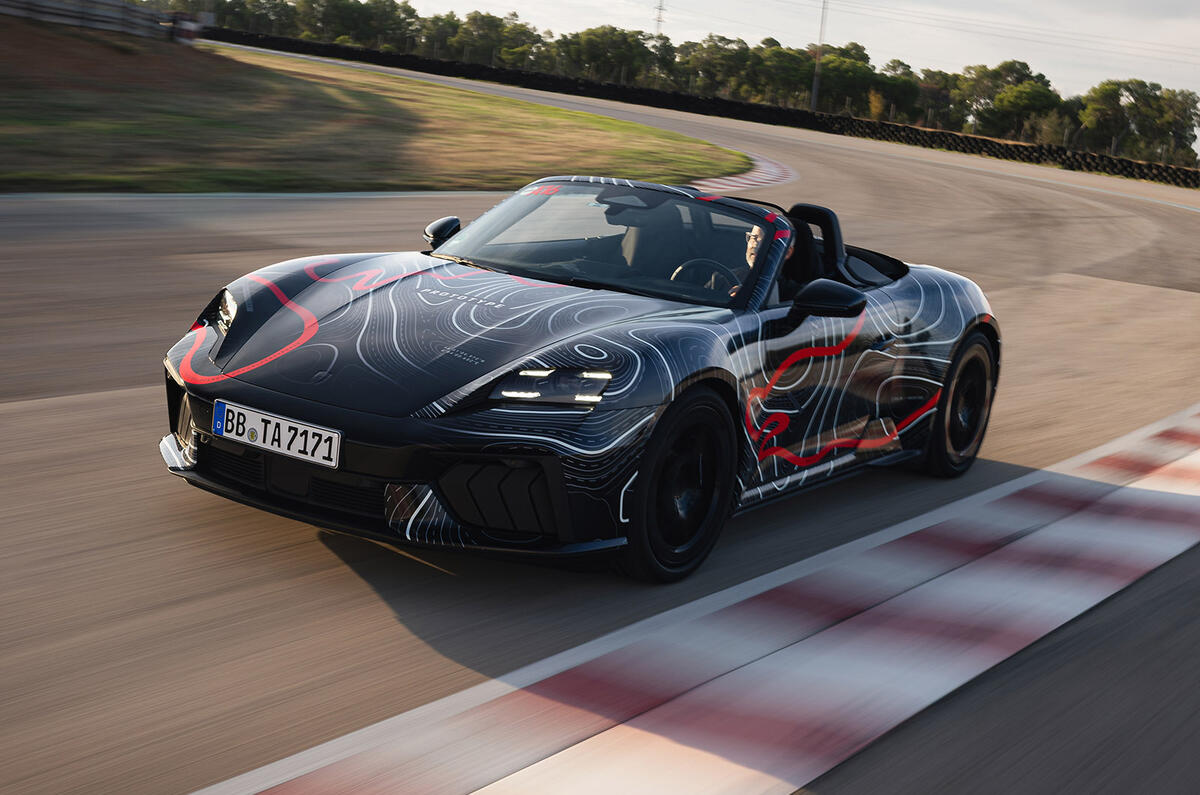
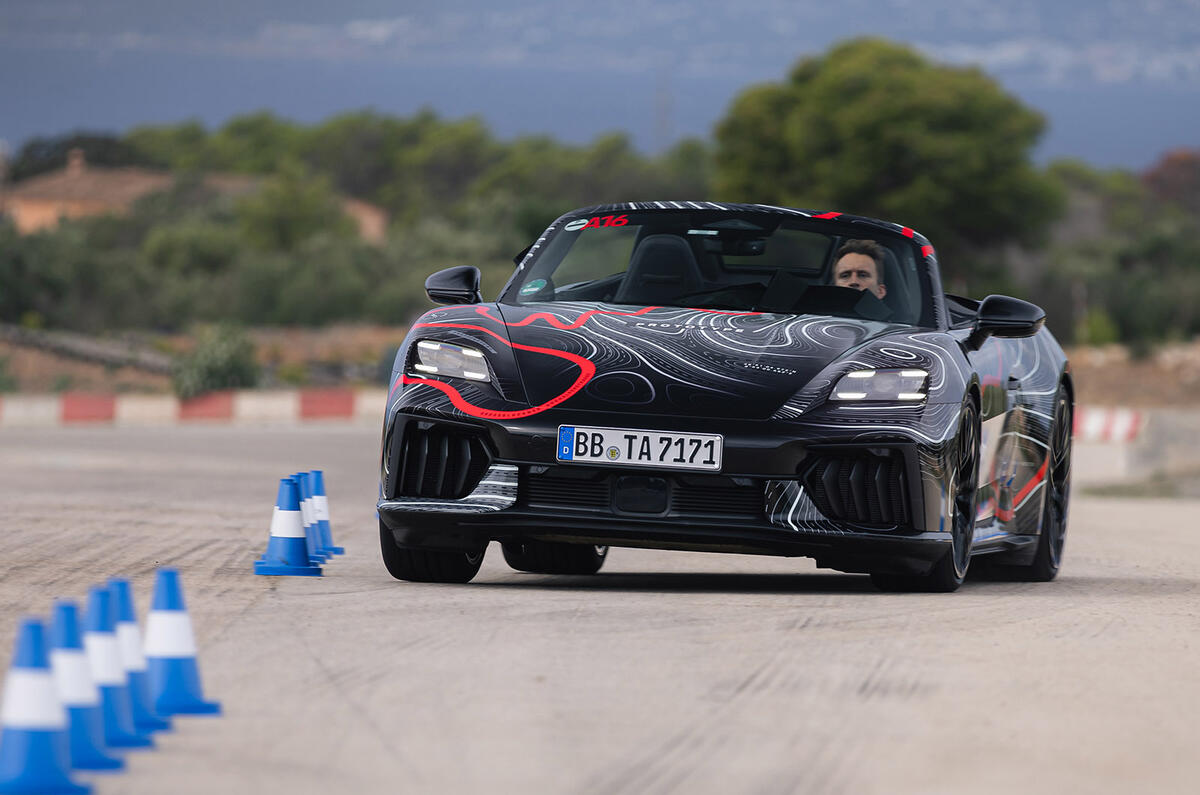
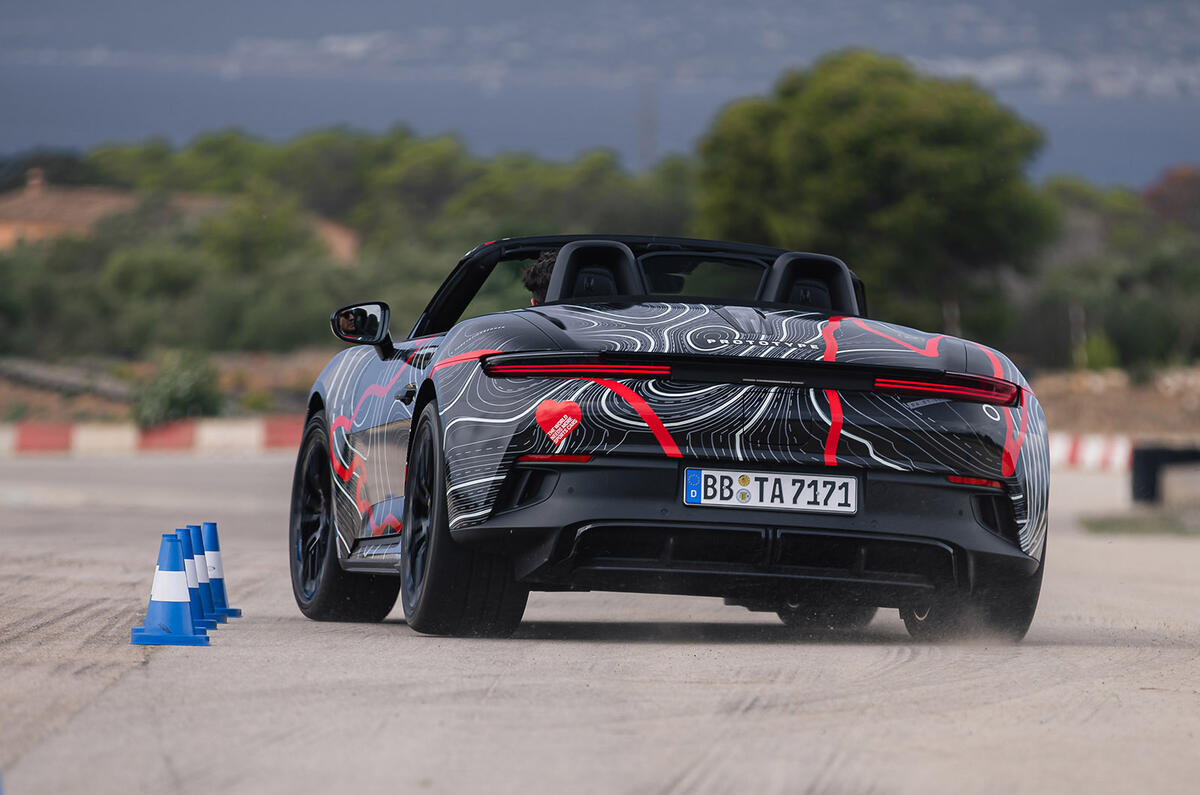
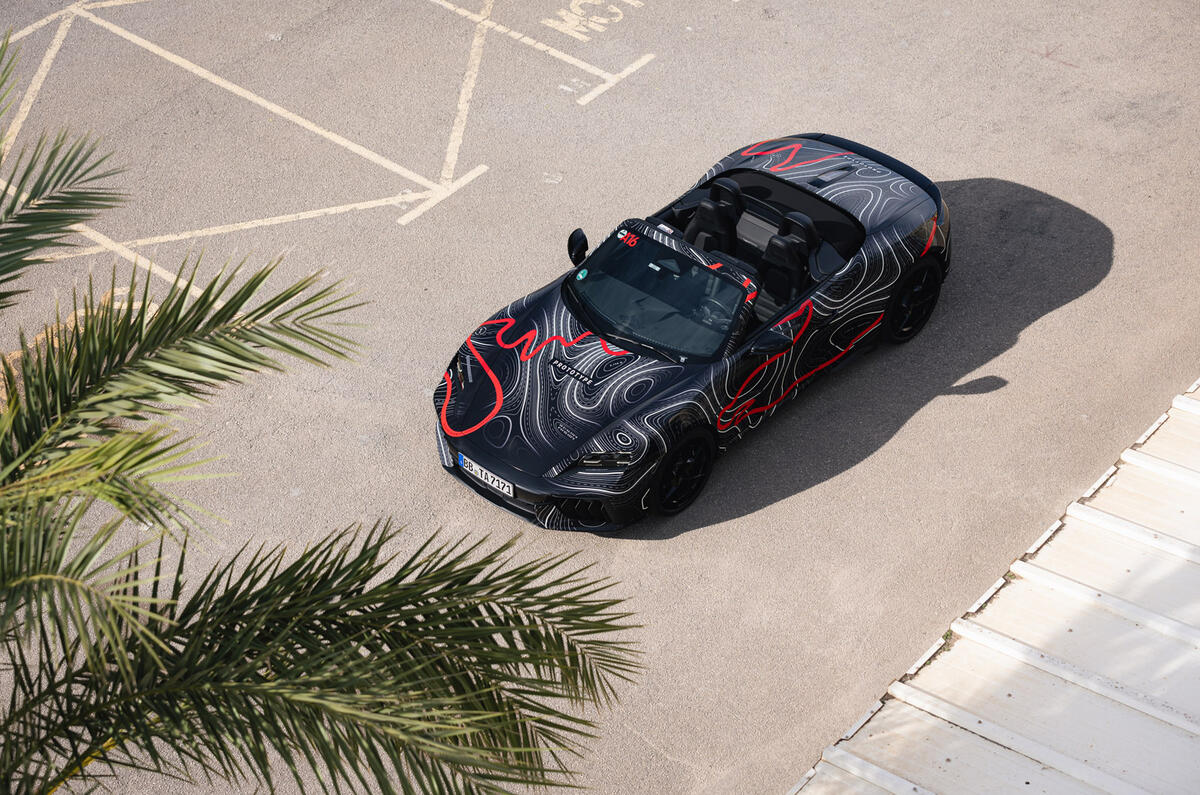
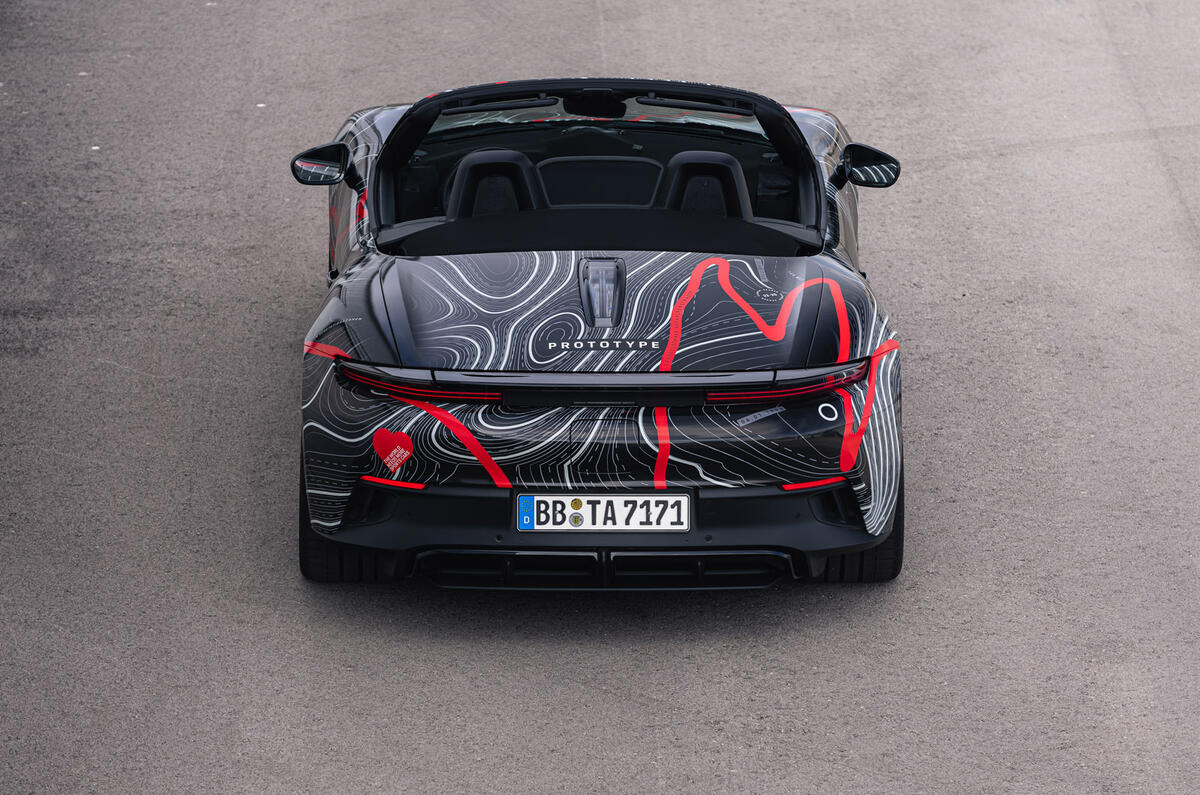
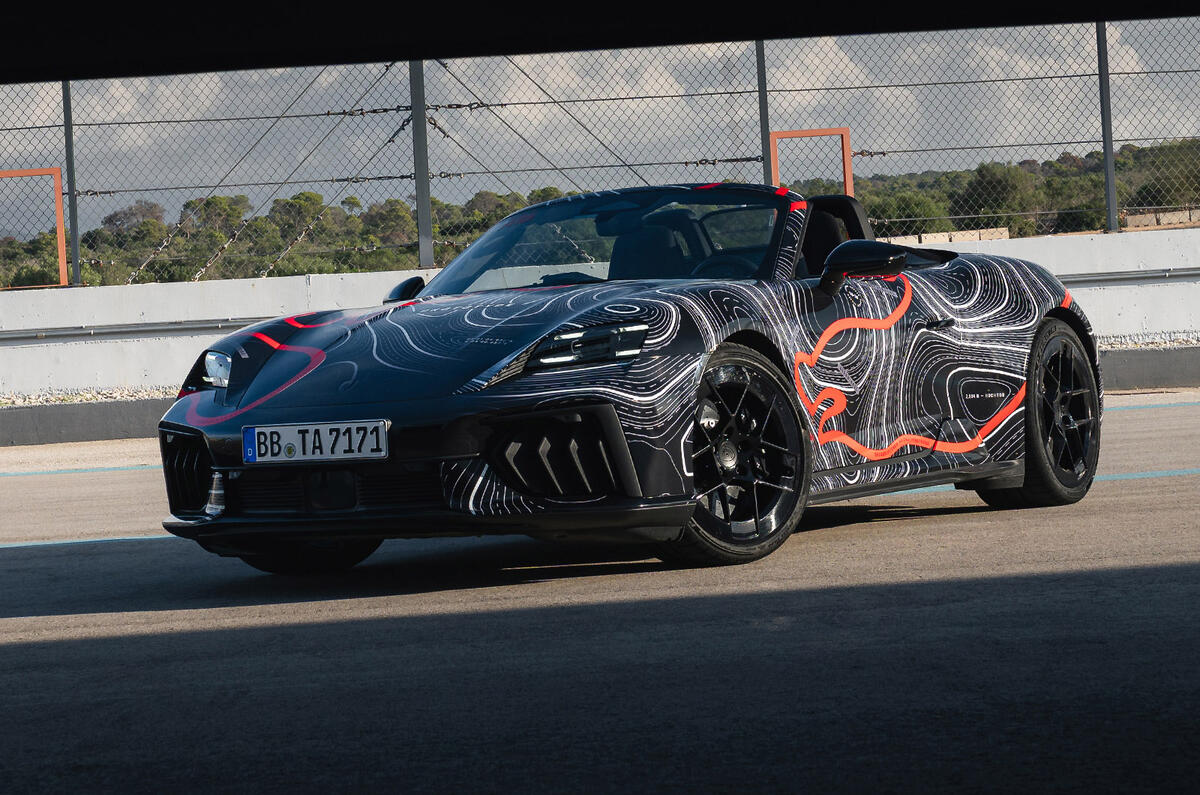
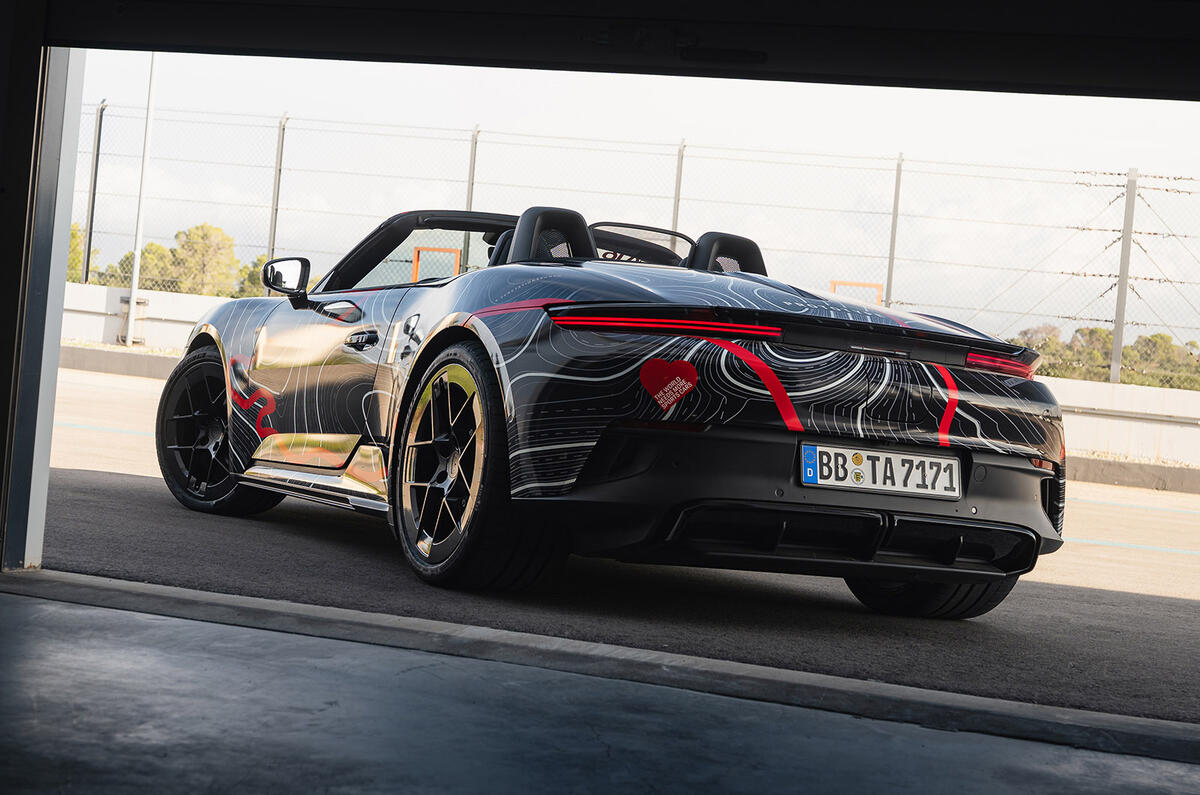
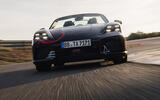
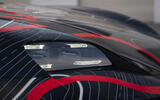
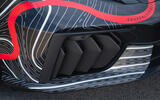
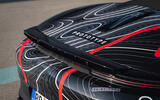
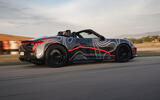
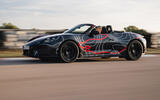
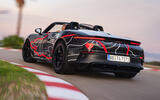
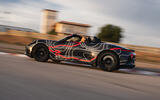
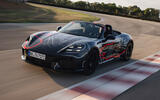
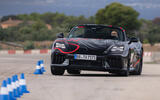
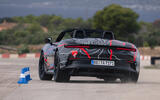
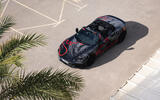
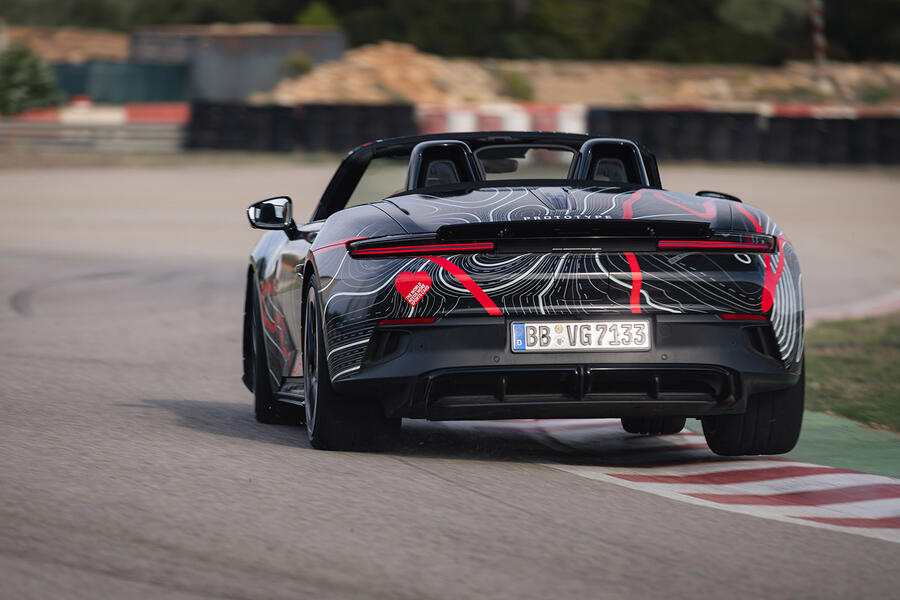
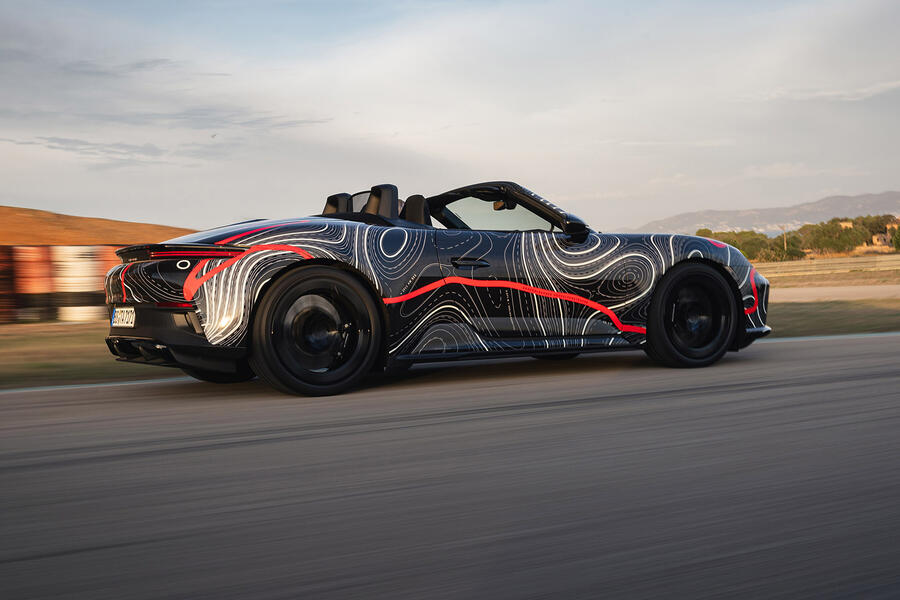
So we’re going to have to get used to the idea of the electric sportscar, and to help us along the way, Porsche is making things as familiar as possible. Our test cars were only lightly camouflaged, and it’s plain to see that the new car looks very much like a Boxster. Overall, it’s a bit bigger than the old one and it has the latest Porsche styling cues like the slatted front air intakes, but it retains much the same proportions and curves as it always has.
Back to top

Key to the familiar low-slung shape is the familiar structure. No skateboard battery here, because that would push up the whole car. The new 718 (a hard-top Cayman will follow soon after the Boxster) uses Porsche’s new E-Core architecture. Similarly to the new Jaguar Type 01, the upcoming Alpine A110 EV, and yes, the original Tesla Roadster, this puts the battery and motor more or less where you would expect an engine and gearbox – in this case behind the seats. In purely objective terms, that’s arguably worse, because the centre of gravity won’t be as low, and part of the wheelbase can’t be used for people and stuff. Then again, a roadster is more about subjective enjoyment, and having the weight in the middle means it can retain a 40:60 weight distribution and that feeling of pivoting around its non-existent gear lever that we like in mid-engined cars.

Whatever the rational argument, you need only to open the door and sit down (with the emphasis on down) to realise it all makes sense. This feels like the natural fifth generation of Boxster – regardless of powertrain. It’s low, cozy, and the driving position is perfect. We can’t show you the interior yet, but if you look at the current 911 and imagine some snazzy new air vents, you won’t far off.

The third comfort blanket is that it’s designed to sound like it has a flat six – more specifically the 3.4-litre from the 981 generation Boxster GTS. Now is not the time to decide whether fake sounds are desirable, but I can tell you that these particular fake sounds are the most believable that I’ve experienced. Like on the Hyundais, you can turn them on and off at the press of a button, but this feels another 20% more realistic. It’s achieved using an exterior speaker as well as the interior speakers, which isn’t meant for showing off per se, but simply because it would be weird if the engine sound in a convertible came only from inside.

Back to top

In practice, and roof up or down, it’s still not a perfect facsimile – particularly at high revs it sounds a bit thin and there aren’t the vibrations and reverberations off roadside furniture that you get with a real engine, but when I wasn’t actively concentrating on analysing the sound, my subconscious simply accepted it as an engine, which is a point I’ve never really got to with the Hyundais, never mind with lesser imitations. Equally, you can have silence or a more conventional single-speed space ship hum, if you wish.

From my passenger ride I can tell you that the general sensations are very familiar from other Porsches. It’s quick, planted and measured. No wonder, because while everyone was keeping schtumm on numbers, they did reveal that most of the chassis hardware is derived from the 911 GTS. That’s the steering (which includes rear-wheel steering on the high-performance version), wheel sizes (though the tyres are 10mm wider at the front) and suspension. The Porsche scholar’s ears will prick up at the latter, because the Boxster has always had strut rear suspension to clear the relatively wide boxer engines. That’s now gone in favour of the 911’s multi-link.

Even on the smooth Mallorcan roads, the ride was very firm, albeit exquisitely damped. That was on the sport suspension – there will also be a softer standard (still adaptive) option. What was pretty remarkable is that I couldn’t detect any sign of the shimmies that are normally a given with a convertible. Boxsters have always been impressive in this respect, but the structural battery pack makes the body extra stiff.

Back to top

The 911 hardware works, because despite being electric, the 718’s weight will be in the same ‘range’ as the current 911. So, worst-case scenario, it weighs as much as a 911 Turbo S, which is 1.7 tonnes – still pretty good for an EV.

In order to achieve that weight, it was never going to have a 120kWh battery and a 500-mile range. But based on what I read off the trip computer, I’m guesstimating around 80kWh and a real-world range of around 250 miles, which should make it pretty usable. Naturally, it runs 800V, so it’ll charge quickly too. No motor specs either, except that there will be two power outputs and that the fast one can do 62mph in under 3sec. That’s with just rear-wheel drive – there are no plans for a four-wheel drive version because there’s no point in trying to beat the Chinese at inert straight-line rockets. Surprising detail: by cleverly matching the gearchanges with the motor’s overboost function, it’s able to hit the same standing-start time with or without the E-Shift.

Does it have just one rear motor with a differential or one for each rear wheel? Again, they wouldn’t confirm nor deny. I wouldn’t be surprised if it has the full-monty torque vectoring set-up, partly because of that performance, and partly because of what a revelation it was on track.

The classic Porsche driving position and round wheel immediately sets the mood. At the lower speeds on our sighting lap, I didn’t immediately gel with the steering, which seems a bit too eager to bring the rear-steer into play, but as soon as we picked up the pace, it came alive in the way that the best 911 steering tends to: not crazy fast or heavy, but lightning-accurate and full of feedback.

Back to top

As you approach a corner (at speed, because EV), the brakes respond brilliantly, with a firm pedal and no sign of fatigue at all over the course of several laps, nor the sinking feeling of a heavy EV wanting to carry on straight. These cars were fitted with the carbon-ceramics, mind. From there, the 718 behaves like a pedigree mid-engined car. The front end just bites and turns, leaving you to work the rear axle as you wish.

Trailbraking gently rotates the car into the corner, and the brilliant PSM Sport mode then releases just slightly more power than the rear tyres can handle, so you can exit corners neatly, or with a bit of yaw. Or you can turn it fully off and discover one of the most intuitively throttle-adjustable cars I’ve driven. This isn’t like an ICE BMW M3 where you pitch it sideways and sort it out. Because there’s no latency to the power delivery (even in e-Shift mode), you can minutely adjust your angle.

Chassis-wise, this is as exciting and interactive as anything I’ve driven, and on track, it might as well have an engine, because when you’re mainly focused on lines, braking points and throttle application, those last few per cent of realism that the simulated engine and PDK lack, just fade away. Instead, it adds a layer of excitement, and knowing that a certain corner is best taken in third gear is quite helpful.

Is it good enough that you don’t miss the flat six (or even the flat four)? This early taster was obviously too short to say, and the question may even be beside the point given there aren’t many good alternatives left. What’s for sure is that this is one of the most exciting cars I’ve driven this year regardless of power source. But with this, the M3 and the AMG GT, BBDC 2027 is shaping up to be quite electrifying.

Back to top
Porsche 718 Boxster Electric prototype
Electric Boxster looks like a new Boxster, feels like a new Boxster and almost sounds like one, but has levels of performance and handling adjustability previously unseen in an ICE car.
Price £80,000 est
Motor tbc
Power 600bhp (est)
Torque 700lb ft (est)
Transmission single-speed reduction gearing; RWD
Drive battery Li-ion, NMC, 80kWh (est)
Kerb weight 1700kg (est)
0–62mph <3.0sec
Top speed >155mph
Energy efficiency 3.5mpkWh (est)
Electric range 300 miles (est)
Max charging rate 350kW (est)
Rivals Denza Z; Alpine A110 EV, Lotus Emira

Join our WhatsApp community and be the first to read about the latest news and reviews wowing the car world. Our community is the best, easiest and most direct place to tap into the minds of Autocar, and if you join you’ll also be treated to unique WhatsApp content. You can leave at any time after joining - check our full privacy policy here.

Illya Verpraet

Illya Verpraet Road Tester Autocar
Title: Road Tester

As a road tester, Illya drives everything from superminis to supercars, and writes reviews and comparison tests, while also managing the magazine’s Drives section. Much of his time is spent wrangling the data logger and wielding the tape measure to gather the data for Autocar’s in-depth instrumented road tests.

He loves cars that are fun and usable on the road – whether piston-powered or electric – or just cars that are very fit for purpose. When not in test cars, he drives an R53-generation Mini Cooper S or a 1990 BMW 325i Touring.