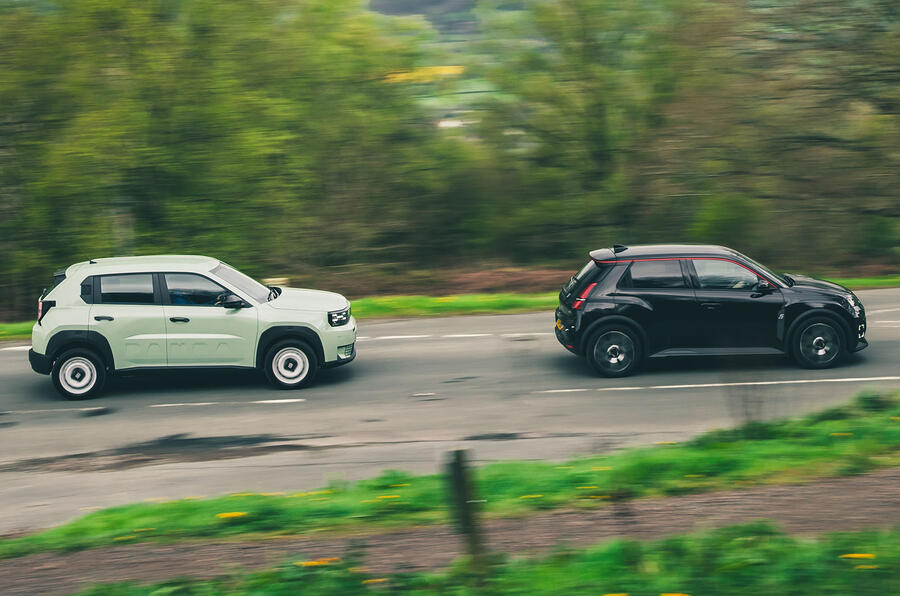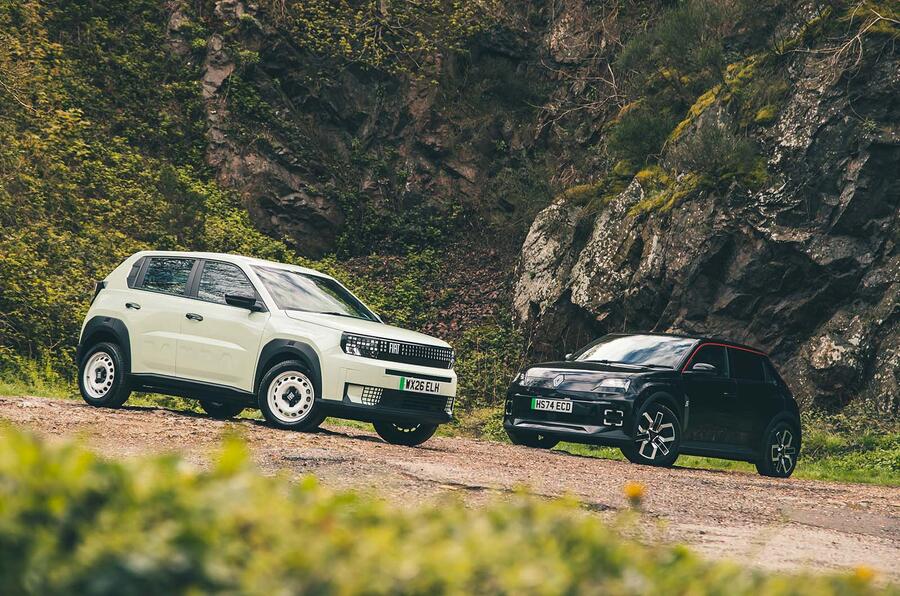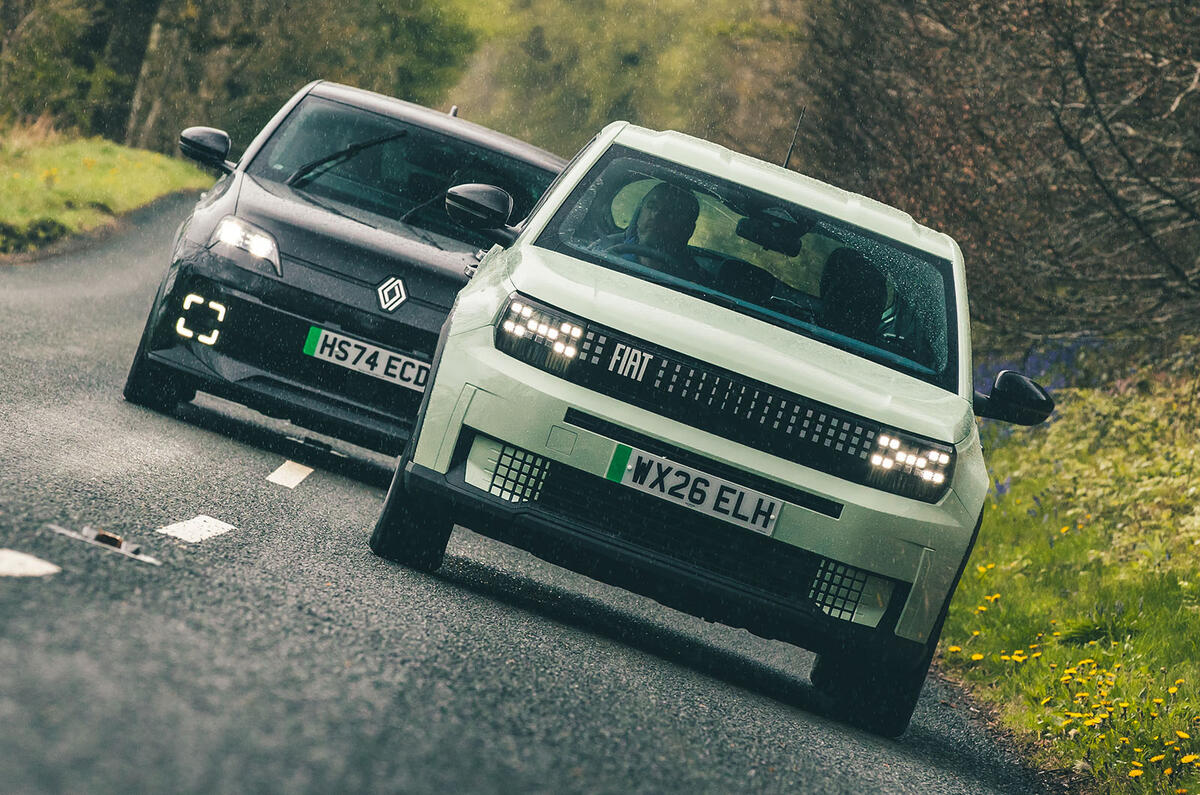

Don't panic. Yes, you are looking at a Fiat Panda and a Renault 5, but no, you haven't fallen down a wormhole and been dumped into the early 1980s.
The names may be those of familiar old stagers, but this pair of bang-up-to-date EVs represent Europe's most convincing fightback yet against the wave of ever-hotter, low-cost competition from China.
Yet there's more to this duo than eye-catching price tags and wallet-friendly finance deals. Much, much more. You see, both the 5 and the Panda were designed by teams who reckoned that if the established European brands are to have a future, they need to look to the past. In fact, it's no surprise that both cars feature the creative input of François Leboine, current design boss at Fiat and previously part of Renault's advanced vehicle design team at the time the reborn 5 was being formed.
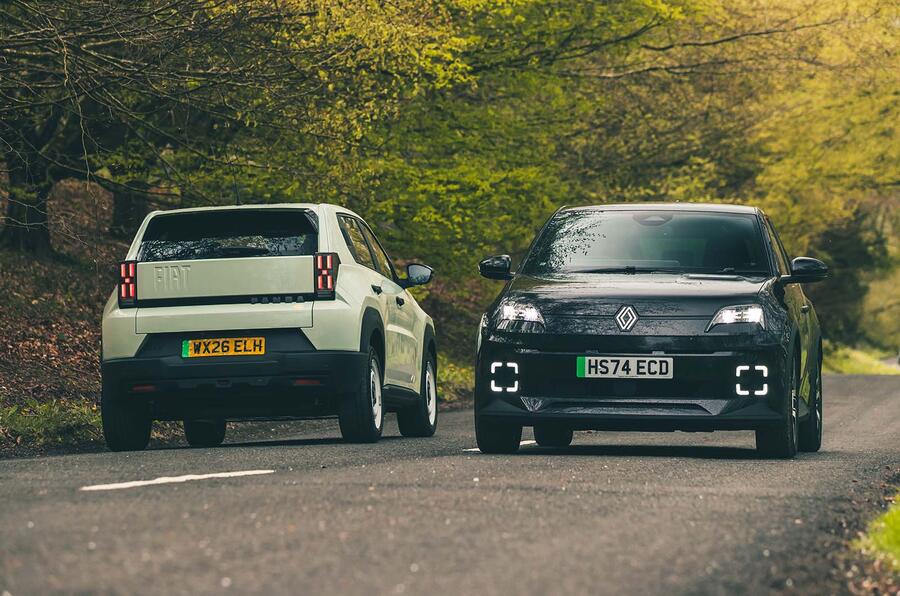
And the parallels don't end there, because each of these contenders is aimed at a similar audience, takes up roughly the same space on the road, travels a similar distance on a charge and in entry-level guise, as tested here, is priced within a biscuit of the other. Yet after spending time with our new-wave nostalgics, we have also found some crucial differences, both in design intent and driving dynamics. Which approach is better? Well, that's where it gets complicated.
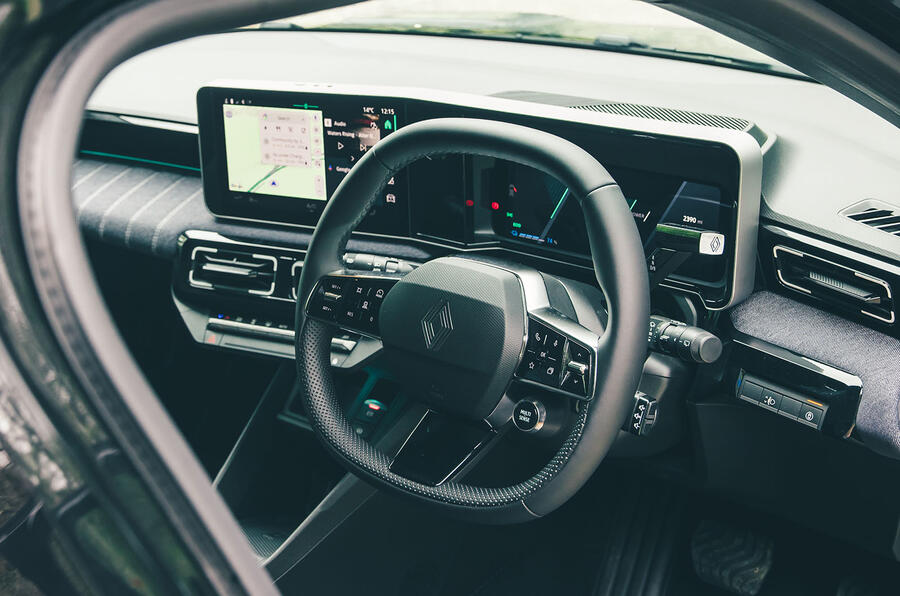
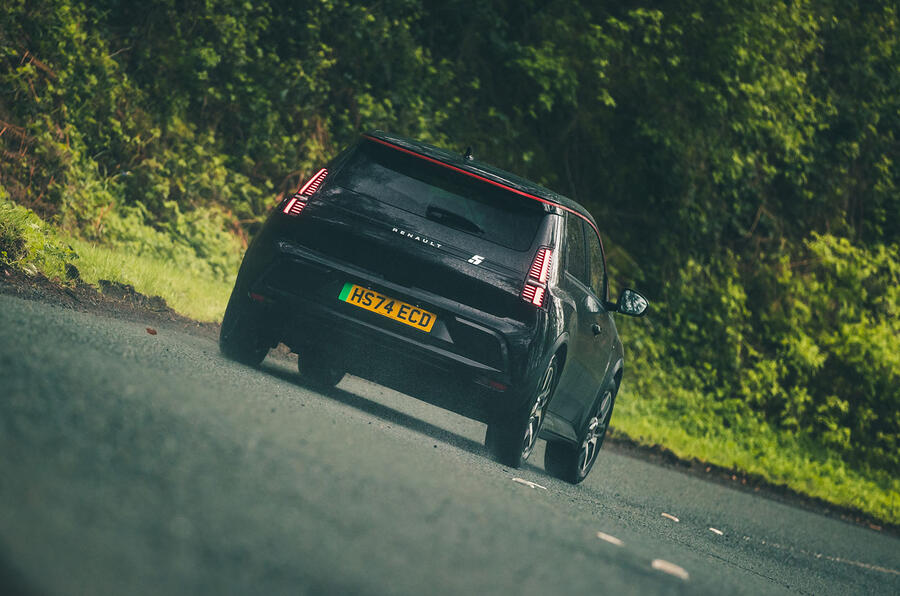
We're already very familiar with the reborn 5, which has become a firm favourite here at Autocar. Even now, a year or so after its launch, the retro-infused Renault has the power to stop traffic and start conversations. It's not just the car's futuristic yet familiar lines: it's also the neat details such as the illuminated '5' in the bonnet that doubles as a battery charge indicator and the subtly flared wheel arches that evoke the wild, mid-engined, Group B rallying 5 Turbo.
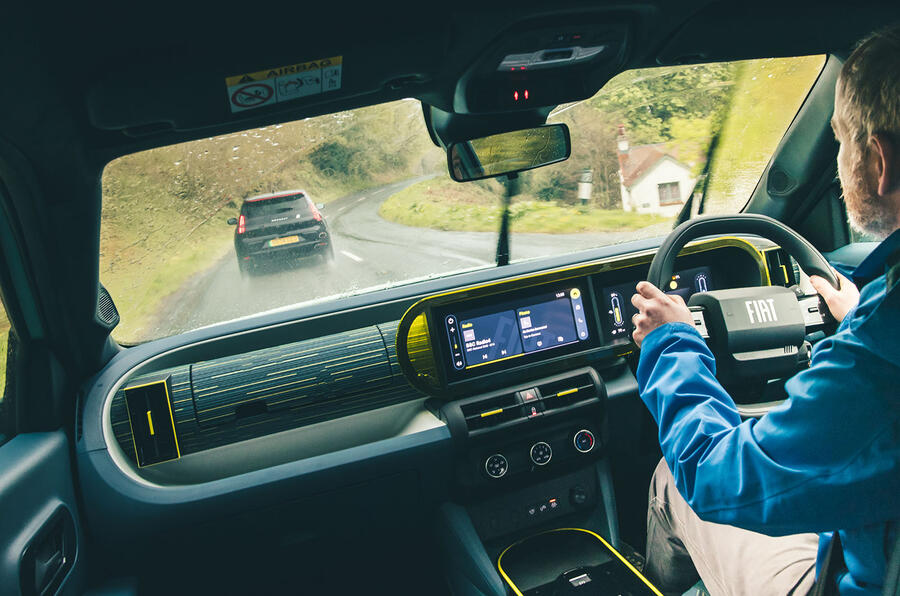
And yet today, when the minty fresh (both in its newness and its eye-catching hue) Panda rolls up to our road test rendezvous, the Renault's power to distract is instantly sapped. The new Fiat is a bigger car than its predecessor (it's a Grande Panda now - geddit?), graduating from the city car class to the supermini sector, but the square-rigged influence of the Giorgetto Giugiaro-penned original is clear to see.