Currently reading: Renault eyes data revenues from software-defined vans

Ability to minimise van downtime with new tech could prove a bountiful revenue stream for maker

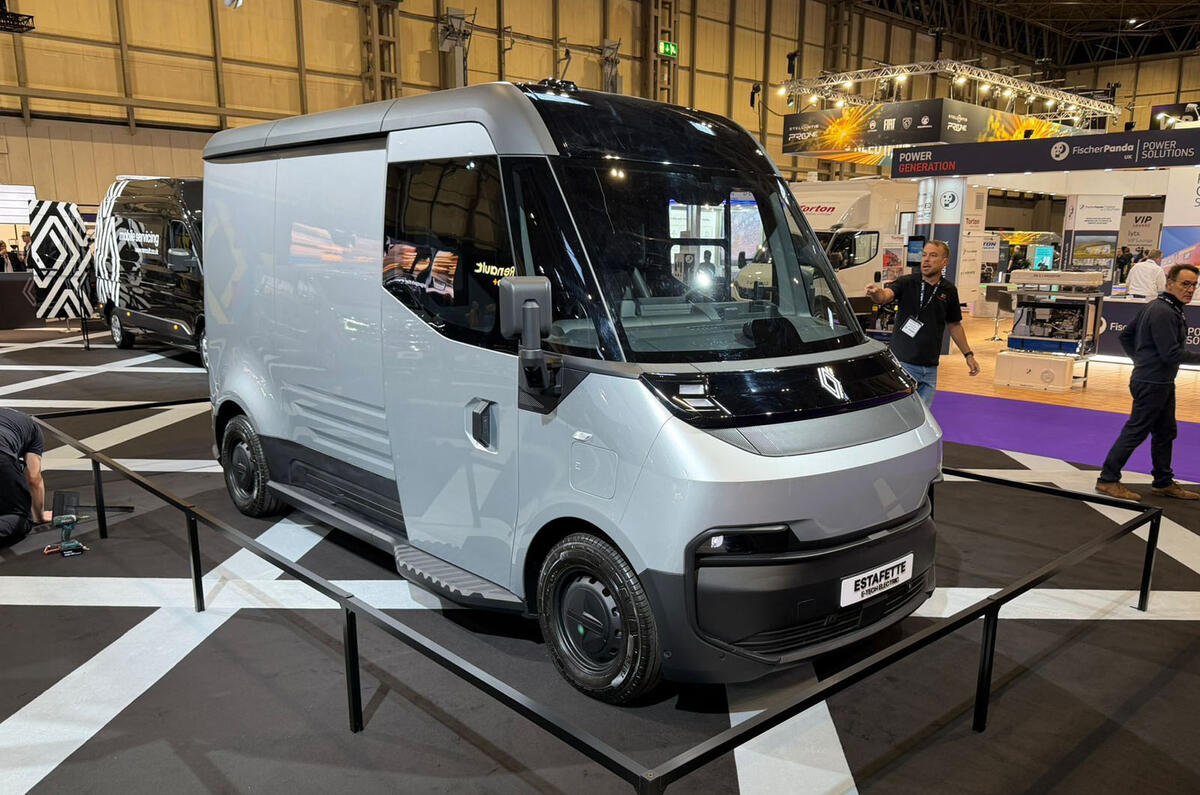
Renault is preparing to monetise connected vehicle data as it rolls out its first software-defined vans, starting with the forthcoming Trafic – but not before it has proved the worth of the new technology, according to Zak Zeghari, the Renault Group's vice-president for global sales and marketing of commercial vehicles

The move aims to capitalise on a wider trend within the fleet market of measuring and lowering the total cost of operating a vehicle.

Speaking at the UK's Commercial Vehicle Show, senior Renault executives said the move to software-defined vehicles (SDVs) would transform both how vans are developed and how they are used in operation.

The technology will be introduced on the all-electric next-generation Trafic in 2027 before being rolled out across Renault's light commercial vehicle (LCV) range as new models are introduced.

“The software-defined vehicle for us is a great asset,” Zeghari said, because it enables three key benefits: improved platform efficiency, over-the-air software updates through the vehicle’s life cycle and the ability to harness data to support customer operations.

That data focus is central to Renault’s longer-term commercial strategy. While charging customers for connected services isn't immediate, it is clearly under consideration.

“I believe that every time that there is a customer benefit, you should have a business case behind it,” Zeghari said. 

“When we can demonstrate all the benefits,” he said, Renault will look at making this a paid service. “At the end of the day, we are here to make money and to make our customer happy.”

Renault argues that SDVs will help fleets move beyond traditional total cost of ownership metrics toward a broader “total cost of usage” model, focused on uptime, operational efficiency and predictive maintenance.

The system will feed real-time data to both customers and retailers, helping reduce the amount of time vans are off the road being serviced or repaired, through early intervention.

This approach raises questions around data security, particularly with the latest artificial intelligence models being able to quickly and easily identify cybersecurity flaws in software systems. 

To combat hacks, Renault has developed a “digital twin” system, where vehicle data is processed in the cloud, with a constantly updated firewall separating it from the physical vehicle.

“In order to avoid all these cyber security attacks, we created on the cloud a digital twin of our vehicles,” Zeghari said. “Nobody’s safe, [so] we have to be very careful and then to evolve.”

Two-legged powertrain strategy
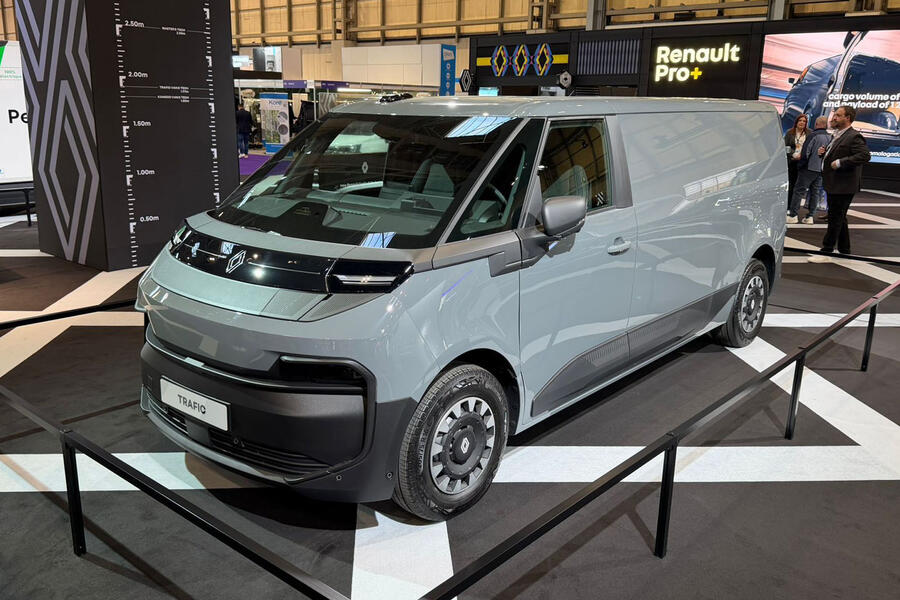
New Renault Trafic

Renault is doubling down on a clear two-pronged powertrain strategy for its LCVs: internal combustion and fully electric.

Executives ruled out plug-in hybrid and hydrogen powertrains as viable options for LCVs in the near term, citing limited demand and operational constraints.

Back to top

“Our strategy is really a two-leg strategy based on ICE and EV. We don’t believe that there is some other alternative,” said Zeghari.

Renault expects electric LCV adoption to grow steadily rather than rapidly, with the European EV mix forecast to rise from 10% to around 12% in the near term.

However, fleet uptake remains conditional on two factors: cost parity with ICE and no negative impact on operations.

“If the answer to one of these two questions is 'no', they don’t go electric,” Zeghari said.

The new Trafic E-Tech, on display in Birmingham, is designed to address those barriers, with an 800V electrical architecture enabling rapid charging and improved usability for high-intensity fleet operations.

Crucially, Renault will continue to run ICE and EV versions of key LCVs in parallel, reflecting the long lifecycle of LCV products and the uneven pace of electrification across use cases.

UK ambitions

The UK remains central to Renault’s LCV growth plans, as the French manufacturer aims to become a top-three brand in the van market.

Having climbed to fourth place in the first quarter of 2026, with nearly 7000 registrations and 21% year-on-year growth, Renault UK managing director Adam Wood said the ambition is to become a “Champions League” player.

“Our desire is to really reach those podium places within the UK,” he said, pointing to a combination of new products, a strengthened Pro+ dealership network and a focus on uptime as key differentiators.

The strategy also leans heavily on Renault’s established names and service infrastructure to counter new entrants, particularly cheaper Chinese rivals.

“I don’t believe that it’s about price," said Wood. "It’s about efficiency and the cost of usage."

Join our WhatsApp community and be the first to read about the latest news and reviews wowing the car world. Our community is the best, easiest and most direct place to tap into the minds of Autocar, and if you join you’ll also be treated to unique WhatsApp content. You can leave at any time after joining - check our full privacy policy here.

Tristan Young

Tristan Young

Tristan is a motoring journalist with more than 30 years’ experience focussed mostly on the retail and fleet sectors of the automotive industry.

Before going freelance nearly 20 years ago, his second job in journalism was on the Autocar news desk.

He’s also held jobs at Automotive Management, Fleet Week, BusinessCar and Auto Retail Bulletin. Alongside his freelance work, Tristan also runs his own publication Auto Sunday.

As well as interviewing senior auto industry execs and writing news, Tristan is a bit of a statto and loves a data-led story.

Add a comment…